+971-8000321216



Key takeaways:
- Automates regulatory processes, cuts down risk, and keeps them up to date with all the new rules like GDPR, HIPAA, PCI DSS, SOX, ISO 27001, AML, KYC, etc.
- The main drivers here are increasing regulatory demands, cyber threats, robust audits, and more use of AI and the cloud. This is why there's a rising need for these kinds of tools.
- Modern systems offer central spots to track compliance, manage audits, assess risks, deal with policies, create reports, and do real-time checks. Also, they help streamline workflows.
- Platforms are adjusted to fit specific needs, meet industry specs, and handle various compliance jobs, from healthcare to finance, manufacturing to retail, and even the government.
- Development costs for such software depend on features needed, regulation requirements, third-party APIs, security standards, deployment type, and AI integrations.
- Suffescom helps businesses create safe and scalable solutions. By supporting good governance and boosting operational efficiency, we pave the way for sustainable growth.
Ensuring compliance is more than just a routine task for businesses today, regardless of the industry they operate in. With increasing regulatory complexities and growing compliance demands, it becomes a necessity. Businesses are often required to comply with multiple regulations and frameworks, including:
- GDPR (General Data Protection Regulation)
- HIPAA (Health Insurance Portability and Accountability Act)
- PCI DSS (Payment Card Industry Data Security Standard)
- SOX (Sarbanes-Oxley Act)
- ISO 27001 (Information Security Management)
- CCPA (California Consumer Privacy Act)
- AML, and KYC, and so on.
Failure to comply with these regulations can result in financial penalties, legal liabilities, reputational damage, and operational disruptions. Therefore, organizations need robust solutions to effectively manage policies, track compliance activities, mitigate risks, and maintain regulatory adherence.
This guide explores everything you need to know about compliance management software development, including its key features, benefits, development process, costs, challenges, and real-world use cases.
What is a Compliance Management Software?
Compliance software is a digital solution designed to help organizations monitor, manage, and maintain compliance with industry regulations, legal requirements, internal policies, and security standards. Compliance management software development focuses on building scalable platforms that streamline audits, policy management, reporting, risk assessments, and regulatory monitoring.
How Does a Compliance Management Software Work?
Compliance management software continuously monitors business operations, policies, processes, and organizational data against predefined regulatory requirements and compliance frameworks.
The platform integrates with enterprise systems such as ERP, CRM, HRMS, financial software, cloud infrastructure, and third-party applications to collect compliance-related information. It then maps this data to applicable regulations, internal controls, and risk management frameworks.
Using automation and AI-integration capabilities, the software identifies compliance gaps, detects policy violations, assesses risks, triggers alerts, assigns corrective actions, and maintains complete audit trails. It also generates real-time reports and dashboards that help organizations demonstrate compliance during audits and regulatory inspections.
Typical Workflow
- Collect compliance data from internal systems and external sources.
- Map regulatory requirements to organizational policies and controls.
- Continuously monitor compliance activities and business processes.
- Detects compliance violations, risks, and operational anomalies.
- Trigger alerts and initiate remediation workflows.
- Maintain audit trails and compliance documentation.
- Generate real-time compliance reports and executive dashboards.
Collaborate to Discuss Your Compliance Management Software Requirements
Why Do Businesses Need Compliance Management Software?
As regulatory requirements continue to expand across industries, businesses are finding it increasingly difficult to manage compliance obligations through manual processes and disconnected systems. The growing importance of compliance management is reflected in market trends.
The global compliance management software market has grown massively in previous years and is expected to continue to grow from $68.4 billion in 2026 to $106.76 billion by 2030, at a CAGR of 11.8%.
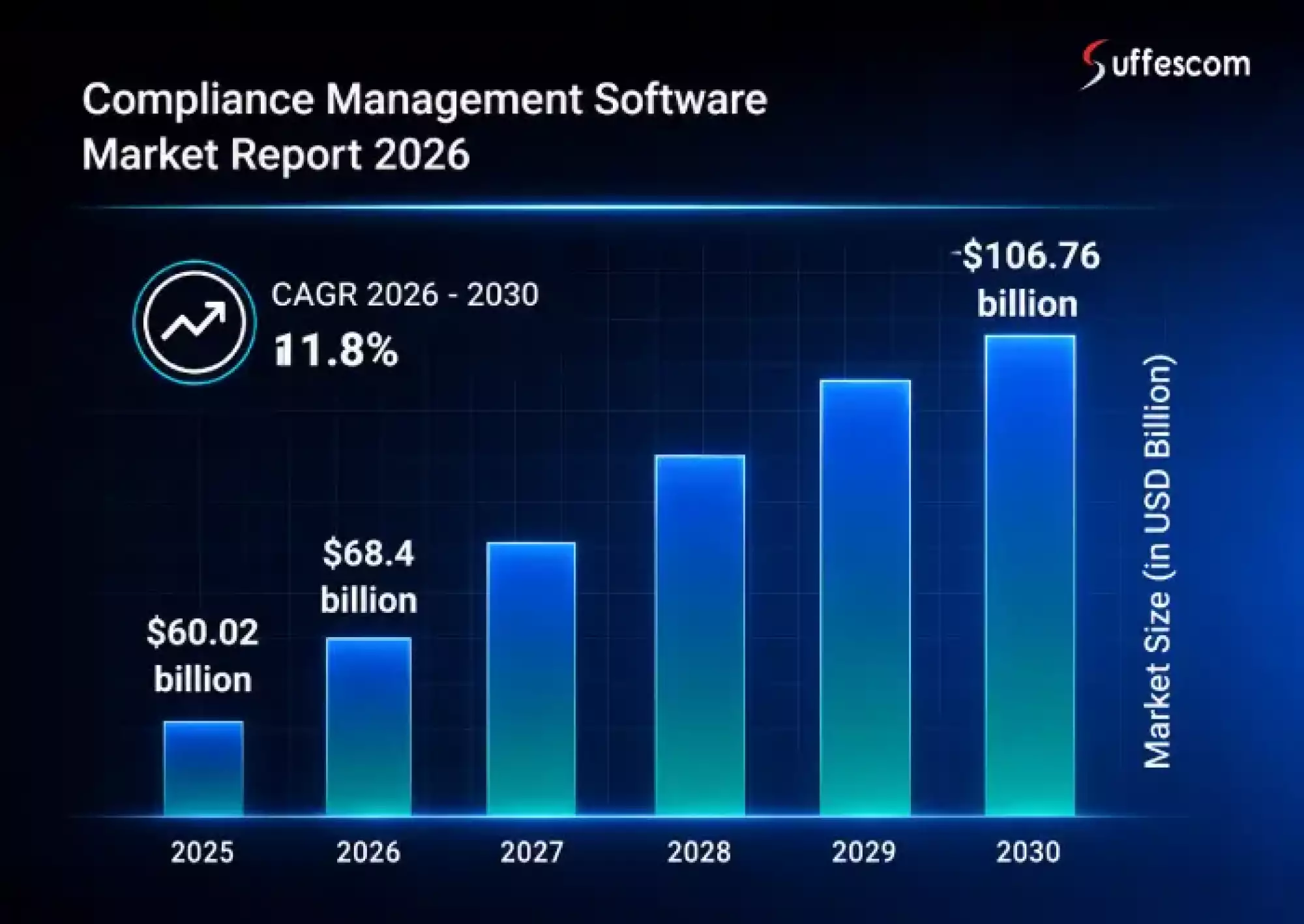
This growth is largely driven by rising cybersecurity threats, increasing regulatory complexity, demand for real-time compliance monitoring, and the widespread adoption of automated risk management solutions.
A robust compliance management software acts as a centralized platform for managing policies, monitoring regulatory changes, conducting audits, assessing risks, generating reports, and maintaining compliance records. Integrating AI into these critical processes, organisations can strengthen governance, reduce compliance-related risks, and focus more on strategic business growth rather than administrative compliance tasks.
Industry-Specific Regulatory Compliance Standards
Healthcare
Developing healthcare compliance management software helps providers maintain compliance with standards such as HIPAA, GDPR, manage documentation, automate audit processes, and safeguard sensitive healthcare information.
Core Compliances
HIPAA • HITECH • GDPR • UK GDPR • FDA 21 CFR Part 11 • (EU) 2017/745 • ISO 13485 • ISO 14971 • HL7 • FHIR • DICOM • TGA SaMD • NSQHS Standards • HITECH Breach Notification Rule • GDPR-DPAs • ISO 27799 • ONC Certification • DEA Controlled Substances Act
FinTech
Financial compliance management software supports compliance with AML, KYC, PCI DSS, SOX, and other financial regulations by enabling transaction monitoring, risk assessments, reporting, regulatory documentation management, and compliance oversight for investment management.
Core Compliances
PCI DSS • SOX • Basel III • PSD2 • AML • KYC • GDPR • CCPA • RBI Guidelines • FINRA • MiFID II • FATCA • GLBA (Gramm-Leach-Bliley Act) • NACHA Rules • SWIFT CSP • UK GDPR • EBA Guidelines • APRA CPS 234 • EMVCo Standards
Government
Government compliance management software supports policy management, audit tracking, risk monitoring, documentation control, and reporting processes to ensure regulatory compliance and operational integrity.
Core Compliances
FedRAMP • FISMA • GDPR • ISO 27001 • NIST Cybersecurity Framework • WCAG 2.1 • eIDAS • CJIS • DISA STIGs • Section 508 • ISO 22301
Retail
Retailers and e-commerce software development requires businesses to comply with consumer protection laws, payment security standards, data privacy regulations, and vendor compliance requirements.
Core Compliances
PCI DSS • GDPR • CCPA/CPRA • Consumer Protection Laws • VAT/GST Compliance • ISO 27001 • ADA Compliance • ePrivacy Directive (EU) • FTC Guidelines
EdTech
EdTech platforms enable digital learning while ensuring protection of student data, accessibility, and academic governance compliance.
Core Compliances
FERPA • COPPA • GDPR • UK GDPR • WCAG 2.1 • ISO 27001 • IDEA • PPRA • State Education Regulations (US) • Education Act Compliance (Country-specific frameworks) • Digital Education Policies (UNESCO Guidelines)
Logistics & Supply Chain
Logistics platforms support global trade, shipment tracking, warehousing, and cross-border operations with security and customs compliance.
Core Compliance Standards
ISO 28000 (Supply Chain Security) • ISO 27001 • GDPR • CTPAT (US Customs Trade Partnership) • AEO (Authorized Economic Operator) • OSHA Standards • DOT Regulations • Customs & Border Protection (CBP) Rules • ITAR (Defense Logistics) • Incoterms (ICC) • Trade Compliance Regulations (WCO Framework)
Real Estate
Real estate software manages property listings, transactions, leasing, and asset management with legal and financial compliance adherence.
Core Compliance Standards
Fair Housing Act (US) • GDPR • CCPA/CPRA • UK Housing Act Compliance • ISO 27001 • ADA Compliance • ESIGN Act (US) • eIDAS (EU Digital Signature Regulation) • Local Property Registration Laws • Anti-Money Laundering (Real Estate AML Rules)
Manufacturing
Manufacturing systems ensure production efficiency, workplace safety, environmental compliance, and global quality certification adherence.
Core Compliance Standards
ISO 9001 • ISO 14001 • ISO 45001 • ISO 27001 • OSHA Standards • CE Marking (EU) • RoHS • REACH Regulation (EU Chemicals) • Six Sigma Guidelines • IEC Standards • Industrial Safety Standards (ILO Guidelines)
Automotive & EV
Automotive and EV software supports connected mobility, autonomous systems, and vehicle safety compliance across global regulations.
Core Compliance Standards
ISO 26262 (Functional Safety) • ISO 21434 (Cybersecurity) • ISO 21448 (SOTIF) • UNECE WP.29 Cybersecurity Regulation • GDPR • ISO 27001 • FMVSS (US Safety Standards) • UNECE Vehicle Regulations • SAE Standards • EV Battery Safety Standards (UN 38.3)
Travel & Hospitality
Travel systems manage bookings, customer data, payments, and global tourism operations with security and service compliance.
Core Compliance Standards
PCI DSS • GDPR • CCPA • ISO 27001 • IATA Standards • ADA Compliance • EU Package Travel Directive • OTA Compliance Guidelines • Local Tourism Authority Regulations • Data Protection Laws (Global) • Hotel Safety & Licensing Regulations
Manual vs Automated Compliance Management
| Factor | Manual Compliance | Automated Compliance Software |
| Process Handling | Paper-based or spreadsheets | Centralized digital platform |
| Accuracy | High risk of human error | High accuracy with validation rules |
| Time Consumption | Very time-consuming | Real-time processing & automation |
| Regulatory Updates | Manually tracked (often delayed) | Automatic updates & alerts |
| Audit Preparation | Requires manual document collection | Instant audit-ready reports |
| Risk Detection | Reactive (after issues occur) | Proactive with real-time monitoring |
| Cost Efficiency | Higher long-term operational cost | Lower long-term cost due to automation |
| Scalability | Difficult to scale across regions/business units | Easily scalable for enterprises |
| Data Visibility | Fragmented and siloed | Centralized dashboards & analytics |
| Reporting | Manual report generation | Automated, real-time reporting |
| Compliance Tracking | Periodic and inconsistent | Continuous monitoring |
| Security & Control | Limited access control | Role-based access + encryption |
| Adaptability to Regulations | Slow adaptation to new laws | Quick configuration for new regulations |
Factors Driving the Growth of Compliance Management Software Solutions
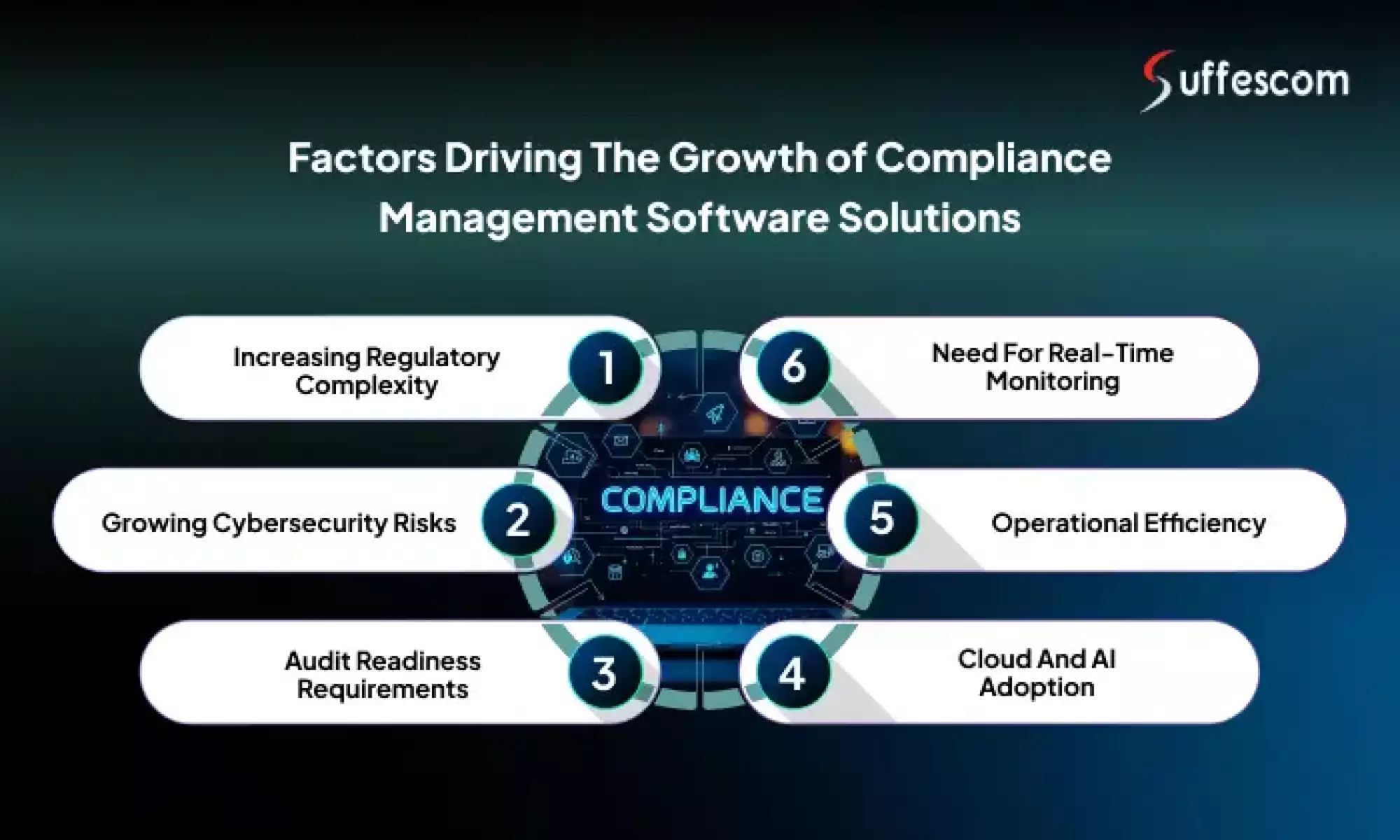
Here’s a list of factors why businesses are adopting compliance management software solutions across industries:
Increasing Regulatory Complexity
Businesses today operate within an increasingly complex regulatory environment, where compliance requirements frequently change across regions and industries. Regulations like these demand continuous monitoring and adherence. Managing these obligations manually can be time-consuming and error-prone, making compliance software development essential for maintaining regulatory compliance efficiently.
Growing Cybersecurity Risks
The rising frequency and sophistication of cyberattacks have made cybersecurity compliance a top priority for organizations. Businesses must protect sensitive customer, employee, and operational data while adhering to various security regulations. Compliance management software helps identify vulnerabilities, track security controls, manage risks, and ensure compliance with evolving cybersecurity standards.
Audit Readiness Requirements
Preparing for internal and external audits often involves collecting large volumes of documentation, compliance records, and policy evidence. Compliance management software centralizes these resources in a single platform, enabling organizations to maintain accurate audit trails, generate reports quickly, and streamline audit preparation while reducing administrative effort.
Need for Real-Time Monitoring
Traditional compliance management methods often rely on periodic reviews that may fail to identify issues promptly. Modern compliance software provides real-time visibility into compliance status, regulatory updates, policy adherence, and potential risks. This enables organizations to address compliance gaps proactively before they escalate into costly violations.
Operational Efficiency
Manual compliance processes can consume significant time and resources while increasing the likelihood of human errors. By automating tasks such as policy management, reporting, documentation, and workflow approvals, compliance management software improves operational efficiency, enhances accountability, and allows teams to focus on higher-value business initiatives.
Cloud and AI Adoption
Organizations are increasingly embracing cloud-based and AI-powered compliance solutions to improve scalability, accessibility, and decision-making. AI software solutions automate risk assessments, detect anomalies, monitor regulatory changes, and generate actionable insights, while cloud deployment enables secure access to compliance data across distributed teams and business locations.
Key Benefits of Developing Compliance Management Software
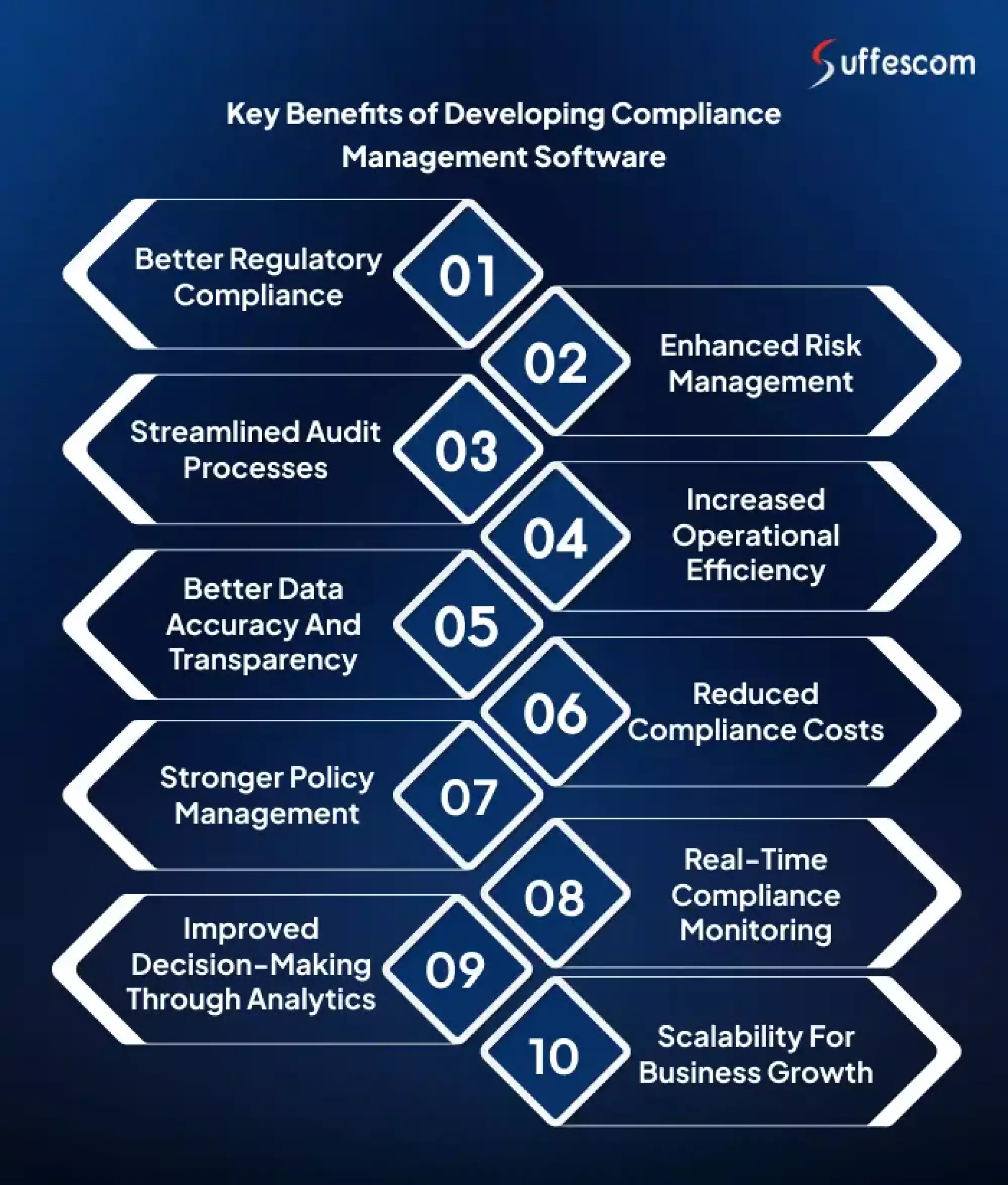
Developing compliance management software offers businesses a list of tangible benefits, as described below:
Better Regulatory Compliance
Compliance management software helps organizations stay aligned with evolving regulations, industry standards, and internal policies. By automating compliance tracking and monitoring regulatory updates, businesses can reduce the likelihood of violations, penalties, and legal complications.
Enhanced Risk Management
The software enables organizations to identify, assess, and mitigate compliance-related risks before they escalate into significant issues. Through continuous monitoring and risk assessments, businesses can strengthen governance and make more informed decisions.
Streamlined Audit Processes
Preparing for audits can be time-consuming and resource-intensive. Compliance management software centralizes documentation, maintains audit trails, and generates reports automatically, allowing organizations to conduct internal and external audits more efficiently.
Increased Operational Efficiency
Manual compliance processes often involve repetitive tasks, extensive paperwork, and fragmented workflows. By automating compliance activities such as reporting, policy management, approvals, and recordkeeping, organizations can improve productivity while reducing administrative workloads.
Better Data Accuracy and Transparency
A centralized compliance platform minimizes human errors and ensures that compliance-related information is accurate, consistent, and easily accessible. This improves organizational transparency and provides stakeholders with greater visibility into compliance performance.
Reduced Compliance Costs
Non-compliance can result in costly fines, legal disputes, operational disruptions, and reputational damage. Compliance management software helps organizations proactively address compliance issues, reducing the financial burden associated with regulatory violations.
Stronger Policy Management
The software simplifies the creation, distribution, updating, and enforcement of organizational policies. Employees can easily access the latest policy documents, ensuring consistent compliance practices across departments and business units.
Real-Time Compliance Monitoring
Modern compliance platforms provide real-time visibility into compliance status, regulatory changes, and potential risks. This allows organizations to identify compliance gaps quickly and take corrective action before issues impact business operations.
Improved Decision-Making Through Analytics
Many compliance management solutions include advanced reporting and analytics capabilities that transform compliance data into actionable insights. These insights help organizations evaluate risks, measure compliance performance, and support strategic decision-making.
Scalability for Business Growth
As organizations expand into new markets, industries, or regions, compliance requirements become more complex. Compliance management software provides a scalable framework that adapts to changing regulatory environments while supporting long-term business growth.
Simplify Regulatory Adherence with Compliance Management Software Development
Compliance Management Software Use Cases Across Different Business Needs
Compliance management software development can be tailored to meet diverse business needs, industry regulations, and operational requirements. Depending on their compliance objectives, organizations may get a custom software to address specific regulatory challenges, governance requirements, or risk management processes.
Based on Business Needs
Enterprise Compliance Software
Enterprise compliance software is designed for large organizations that operate across multiple departments, locations, or jurisdictions. It centralizes compliance activities, policy management, audits, risk assessments, and reporting into a single platform. By providing a unified view of compliance performance, these solutions help enterprises maintain regulatory adherence while improving operational efficiency and governance.
Regulatory Compliance Software
Helps organizations comply with industry-specific laws, regulations, and standards. It automates regulatory tracking, monitors compliance obligations, maintains documentation, and generates compliance reports. These solutions are particularly valuable for businesses operating in highly regulated sectors where regulatory requirements frequently evolve.
Contract Compliance Software
It enables organizations to monitor contractual obligations, vendor agreements, service-level commitments, and procurement contracts. It helps businesses ensure that all parties adhere to agreed terms, deadlines, and regulatory requirements while minimizing legal, financial, and operational risks associated with non-compliance.
ISO Compliance Software
These solutions centralize documentation, audit management, risk tracking, corrective actions, and compliance reporting, providing complete visibility into certification requirements and compliance performance. As a result, businesses can streamline ISO compliance workflows, maintain audit readiness, and demonstrate continuous adherence to quality, environmental, and information security standards.
Corporate Compliance Software
Focuses on internal governance, policy enforcement, ethics programs, and regulatory adherence. It helps organizations establish accountability, monitor employee compliance, manage corporate risks, and ensure that business operations align with both internal policies and external regulatory requirements.
Based on Compliance Functions
Audit Management
Audit management software streamlines the planning, execution, and reporting of internal and external audits. It helps organizations maintain audit trails, manage evidence collection, identify compliance gaps, and improve audit readiness while reducing administrative effort.
Risk & Governance
Risk and governance management software enables organizations to identify, assess, and mitigate compliance-related risks. These solutions provide visibility into organizational risk exposure, strengthen governance frameworks, and support informed decision-making through continuous monitoring and reporting.
Policy Management
Policy management software helps organizations create, distribute, update, and monitor compliance-related policies and procedures. It ensures employees have access to the latest policy documents while supporting version control, acknowledgments, and policy enforcement activities.
Vendor Management
Organizations working with suppliers, contractors, and third-party vendors use vendor compliance management software to ensure external partners meet contractual, regulatory, and operational requirements. This helps reduce third-party risks and maintain consistent compliance across the supply chain.
Data Privacy
With growing data protection regulations such as GDPR and CCPA, businesses need dedicated tools to manage privacy compliance. Data privacy compliance software helps organizations monitor data handling practices, manage consent records, respond to data subject requests, and ensure compliance with privacy regulations.
Top Features to Include in Your Compliance Management Software Development
The effectiveness of your compliance management software solution largely depends on the features it offers. A well-designed software not only helps organizations meet regulatory requirements but also automate compliance processes, improve visibility, and reduce operational risks. Below are the essential features every compliance management software should include.
Ongoing Compliance Tracking
Regulations and compliance requirements are constantly evolving across industries. A compliance management system should provide real-time tracking of regulatory changes, helping organizations stay informed about new requirements and maintain continuous compliance without relying on manual monitoring.
Policy and Document Management
Organizations manage a large volume of compliance-related documents, policies, procedures, and records. A centralized document management system enables secure storage, version control, document retrieval, and policy distribution, ensuring employees always have access to the latest compliance information.
Audit Management
Audit management features simplify the planning, execution, and reporting of internal and external audits. By maintaining detailed audit trails and organizing supporting documentation, businesses can improve audit readiness and reduce the time and effort required during compliance reviews.
Risk Assessment and Management
A robust compliance platform should help organizations identify, evaluate, and mitigate compliance-related risks. Risk assessment tools enable businesses to monitor risk exposure, prioritize corrective actions, and implement preventive measures to strengthen governance and regulatory adherence.
Workflow Automation
Manual compliance processes often lead to inefficiencies and errors. Streamlining tasks with workflow automation such as approvals, compliance reviews, policy acknowledgments, incident reporting, and corrective actions, reduces administrative burden while improving process consistency.
Real-Time Compliance Monitoring
Continuous monitoring capabilities provide organizations with real-time visibility into compliance performance, policy violations, and regulatory gaps. This allows compliance teams to identify issues proactively and take corrective action before they escalate into larger risks.
Reporting and Analytics
Comprehensive reporting tools enable organizations to generate compliance reports, audit summaries, risk assessments, and performance dashboards. Advanced analytics further help businesses identify trends, measure compliance effectiveness, and support data-driven decision-making.
Incident and Case Management
Compliance incidents such as policy violations, security breaches, or regulatory non-conformities require prompt attention. Incident management features help organizations record, investigate, track, and resolve compliance-related issues while maintaining a complete history of corrective actions.
Role-Based Access Control
Compliance data often contains sensitive business and regulatory information. Role-based access controls ensure that users can only access information relevant to their responsibilities, improving data security and supporting regulatory requirements related to information governance.
Training and Certification Management
Employee awareness plays a critical role in maintaining compliance. Training management features help organizations assign compliance training programs, track employee participation, monitor certification status, and ensure staff remain informed about relevant regulations and policies.
Vendor and Third-Party Compliance Management
Organizations increasingly rely on external vendors, suppliers, and service providers. Vendor compliance management capabilities help assess third-party risks, monitor compliance obligations, verify certifications, and ensure vendors meet contractual and regulatory requirements.
AI-Powered Risk Detection and Insights
Modern compliance software is increasingly leveraging artificial intelligence to improve compliance operations. AI-powered capabilities can analyze large datasets, detect anomalies, identify emerging risks, automate compliance reviews, and provide predictive insights that support proactive decision-making.
Alerts and Notification Management
Timely alerts help organizations stay informed about upcoming audits, policy updates, certification renewals, compliance deadlines, and potential violations. Automated notifications reduce the risk of missed obligations and improve overall compliance responsiveness.
Integration with Enterprise Systems
Compliance management software should seamlessly integrate its automation capabilities with existing enterprise systems such as ERP, CRM, HRM, document management, cybersecurity, and financial platforms. Integration improves data consistency, eliminates silos, and enhances overall operational efficiency.
Cloud-Based Accessibility and Security
Cloud-based compliance platforms provide secure access to compliance information from anywhere while supporting collaboration across teams and locations. Advanced security measures such as encryption, multi-factor authentication, and backup management help protect sensitive compliance data from unauthorized access and cyber threats.
Build End-to-End Compliance Management Software That Strengthens Governance
A Quick Cost Breakdown of Developing a Compliance Management Software
| Software Type | Estimated Cost |
| Basic Compliance Management Software | $40,000 – $70,000+ |
| Mid-Level Compliance Platform | $80,000 – $120,000+ |
| Enterprise Compliance Management Software | $120,000 – $300,000+ |
Key Factors Affecting Compliance Management Software Development Costs
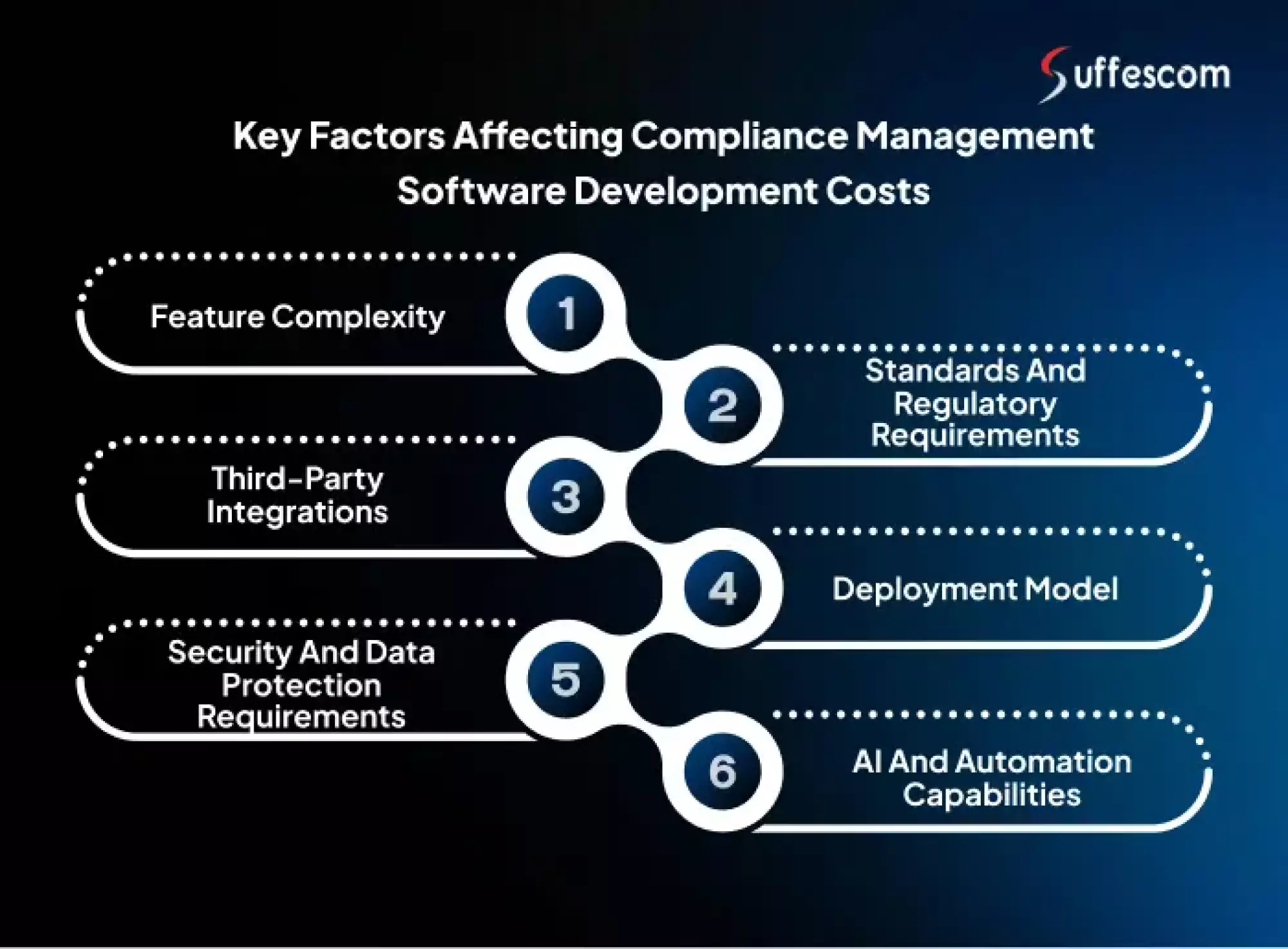
The cost of developing compliance management software varies depending on the following factors:
Feature Complexity
The number and sophistication of features directly influence software development costs. Advanced capabilities such as workflow automation, AI-powered risk analysis, audit management, and predictive compliance monitoring require additional development effort and expertise.
Standards and Regulatory Requirements
Supporting multiple regulations such as GDPR, HIPAA, PCI DSS, SOX, ISO 27001, AML, and KYC increases development complexity. Each framework may require specialized workflows, reporting mechanisms, and security controls.
Third-Party Integrations
Integrating the platform with ERP systems, CRM software, HR platforms, accounting solutions, document management tools, and regulatory databases can significantly impact development costs.
Deployment Model
Cloud-based, on-premise, and hybrid deployments have different infrastructure and development requirements. Enterprise organizations often require custom deployment environments that increase implementation costs.
Security and Data Protection Requirements
Since compliance software handles sensitive data, features such as encryption, role-based access control, multi-factor authentication, audit logs, and secure data storage are essential and add to development efforts.
AI and Automation Capabilities
Implementing AI-powered compliance monitoring, anomaly detection, risk prediction, and intelligent reporting can increase upfront costs but often delivers long-term operational savings.
Why Partner with Suffescom for Compliance Management Software Development?
Developing compliance management software requires more than technical expertise, it demands a deep understanding of regulatory frameworks, risk management practices, security standards, and business workflows. At Suffescom, we combine industry knowledge with advanced software development capabilities to build scalable, secure, and future-ready compliance solutions tailored to your unique business requirements.
Extensive Development Experience
Our team specializes in designing and developing custom software solutions that align with specific business objectives and compliance requirements. Whether you need a standalone compliance platform or an enterprise-grade solution, we build software tailored to your operational and regulatory needs.
Compliance-Focused Development Approach
We understand the complexities associated with regulatory compliance across industries. From data privacy regulations and financial compliance requirements to healthcare and enterprise governance standards, we develop fully-compliant software to help organizations reduce operational risks.
End-to-End Development Services
From requirement analysis and UI/UX design to development, testing, deployment, and post-launch support, we provide comprehensive compliance software development services. Our end-to-end approach ensures seamless project execution and long-term software reliability.
Advanced Automation and AI Integration
We leverage automation and AI-powered capabilities to streamline compliance workflows, improve risk management, automate reporting, and enhance decision-making. These intelligent features help organizations proactively identify compliance gaps and respond to evolving regulatory requirements more effectively.
Enterprise-Grade Security and Data Protection
Compliance software often handles sensitive business, financial, and customer information. We implement robust security measures such as encryption, role-based access controls, secure authentication, audit logs, and data protection mechanisms to ensure compliance and safeguard critical information.
Seamless Third-Party Integrations
Our development team can integrate compliance platforms with existing enterprise systems, including ERP, CRM, HRM, document management, cybersecurity, and reporting tools. This ensures a unified compliance ecosystem and eliminates data silos across the organization.
Scalable and Future-Ready Solutions
As regulatory requirements evolve and businesses expand, compliance software must adapt accordingly. We build scalable architectures that support new features, additional users, changing regulations, and growing business operations without compromising performance.
Dedicated Support and Maintenance
Compliance is an ongoing process, not a one-time implementation. Our team provides continuous support, software updates, performance optimization, and compliance enhancements to ensure your solution remains effective and aligned with changing regulatory requirements.
Faster Time-to-Market
With proven development methodologies, experienced teams, and agile workflows, we accelerate the development process without compromising quality. This enables businesses to deploy compliance solutions faster and start realizing operational benefits sooner.
Proven Commitment to Business Success
At Suffescom, we focus on delivering solutions that create measurable business value. Our goal is to help organizations strengthen compliance management, reduce risks, improve operational efficiency, and achieve sustainable growth through innovative technology solutions.
Concept to Compliance: Our Proven Compliance Management Software Development Process
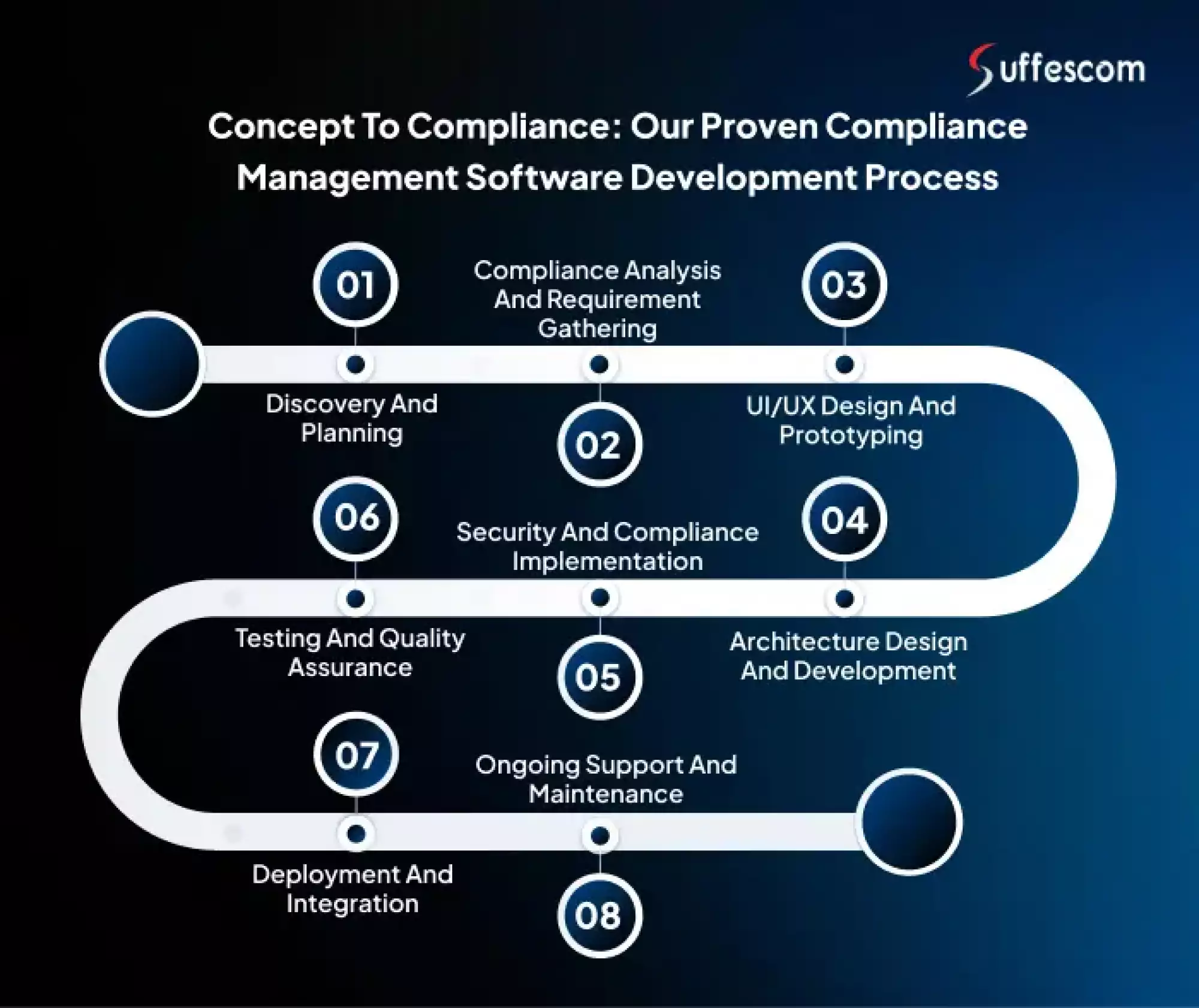
We follow a structured approach to ensure the final solution aligns with your regulatory requirements, business objectives, and operational workflows. From initial planning to deployment and ongoing support, every stage is designed to deliver a secure, scalable, and compliance-ready platform.
Discovery and Planning
Every successful compliance software project begins with a thorough discovery phase. During this stage, our team works closely with stakeholders to understand business goals, regulatory requirements, compliance challenges, and operational processes. We identify key compliance frameworks, define project scope, gather functional requirements, and establish a development roadmap that aligns with both business and compliance objectives.
Compliance Analysis and Requirement Gathering
Once the project scope is defined, we conduct a detailed analysis of applicable regulations, industry standards, and organizational policies. This helps us identify essential compliance workflows, reporting requirements, security controls, audit mechanisms, and risk management capabilities that need to be incorporated into the software.
UI/UX Design and Prototyping
Our designers create intuitive user interfaces and interactive prototypes that simplify compliance management tasks. The focus is on ensuring seamless navigation, efficient workflows, and an enhanced user experience while maintaining accessibility and usability across different user roles.
Architecture Design and Development
At this stage, the structured development team builds a robust software architecture capable of supporting compliance workflows, document management, audit trails, reporting systems, and third-party integrations. We develop scalable and secure solutions tailored to the organization's operational and regulatory requirements.
Security and Compliance Implementation
Security is integrated into every layer of the platform. We implement role-based access controls, encryption, authentication mechanisms, audit logs, data protection measures, and other security controls necessary to support compliance requirements and protect sensitive information.
Testing and Quality Assurance
Before deployment, the software undergoes rigorous testing to ensure functionality, performance, security, and compliance readiness. Our QA team validates workflows, integrations, reporting capabilities, and security measures to ensure the platform performs reliably under real-world conditions.
Deployment and Integration
Once testing is complete, the software is deployed within the client's preferred environment, whether cloud-based, on-premise, or hybrid. We also integrate the platform with existing business systems such as ERP, CRM, HRM, document management, and reporting solutions to create a unified compliance ecosystem.
Ongoing Support and Maintenance
Compliance requirements continue to evolve over time. Our team provides ongoing maintenance, security updates, feature enhancements, performance monitoring, and regulatory updates to ensure the software remains effective, secure, and aligned with changing compliance standards.
Conclusion
As regulatory requirements become increasingly complex, businesses need smarter and more efficient ways to manage compliance obligations. Compliance management software development provides a centralized platform for monitoring regulations, automating workflows, managing audits, mitigating risks, and maintaining regulatory adherence across the organization.
Whether you're building an enterprise compliance management platform, regulatory compliance solution, contract compliance system, or industry-specific compliance software, investing in the right technology can help reduce compliance risks, improve operational efficiency, and strengthen governance. By partnering with us as your preferred compliance management software development company, you can develop scalable and future-ready solutions that adapt to evolving regulatory standards while supporting long-term success.
Future-Proof Your Business with Intelligent Compliance Management Software
Frequently Asked Questions
What is compliance management software?
Compliance management software is a digital solution that helps organizations monitor, manage, and maintain compliance with regulatory requirements, industry standards, and internal policies. It centralizes compliance activities such as audits, risk assessments, document management, reporting, and regulatory tracking.
Which industries benefit the most from compliance management software development?
Compliance management software is widely used across healthcare, banking and financial services, insurance, manufacturing, retail, e-commerce, government, logistics, energy, and pharmaceutical industries. Any organization operating within a regulated environment can benefit from implementing a compliance management solution.
What features should ISO compliance management software include?
A robust ISO compliance management software should include document control, audit management, risk assessments, corrective and preventive action (CAPA) management, non-conformance tracking, policy management, certification tracking, workflow automation, reporting and analytics, and real-time compliance monitoring. These capabilities help organizations streamline compliance processes and demonstrate ongoing adherence to ISO standards.
How much does it cost to develop compliance management software?
The development cost depends on factors such as feature complexity, compliance requirements, integrations, deployment model, security measures, and customization needs. A basic MVP development may cost between $40,000 and $70,000, while enterprise-grade platforms with advanced automation and AI capabilities can exceed $300,000.
How long does it take to develop compliance management software?
Development timelines vary depending on project scope, feature requirements, integrations, and compliance standards. A basic compliance management platform may take 3–6 months to develop, while complex enterprise solutions often require 6–12 months or more for full implementation and deployment.
Why choose Suffescom for compliance management software development?
Suffescom combines industry expertise, regulatory knowledge, and advanced software development capabilities to deliver secure, scalable, and customized compliance management solutions. Our team helps businesses automate compliance workflows, strengthen risk management, integrate AI-powered capabilities, and ensure alignment with industry-specific regulatory requirements.