+971-8000321216



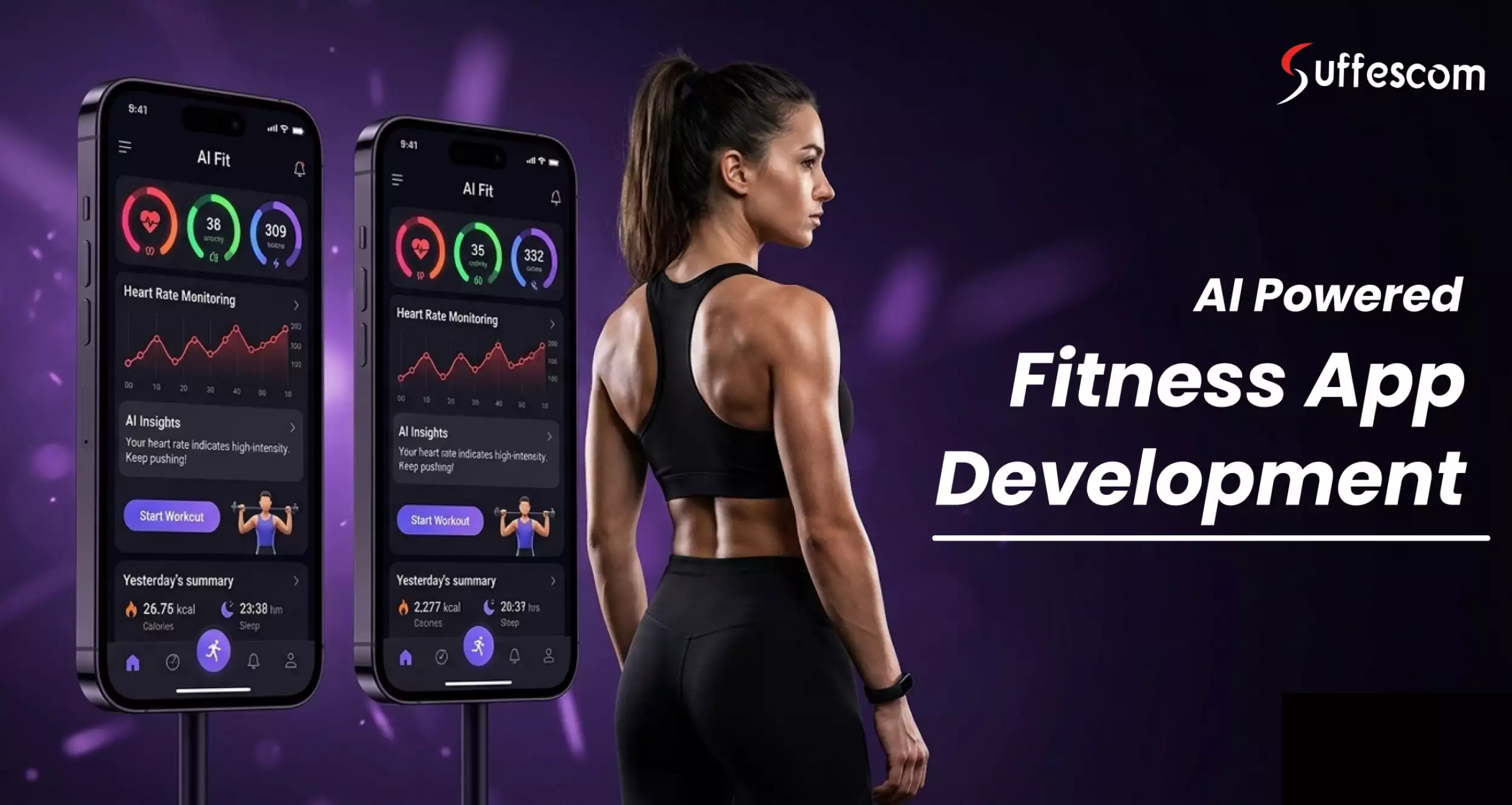
People today are more conscious than ever about their fitness, constantly looking for smarter ways to stay healthy, eat better, and get expert guidance in their daily routine.
With the global fitness app market, valued at $12.12 billion in 2025 & expected to reach $33.58 billion by 2033, growing at a CAGR of 13.40%, the demand for personalized, always-available fitness solutions continues to rise.
This is driving the adoption of AI fitness app development services, enabling more intelligent recommendations and personalized guidance on daily nutrition as well as exercise habits.
So, let's explore together how modern AI-powered fitness app development solutions are helping people stay fit, maintain a balanced lifestyle, plus achieve their wellness goals.
About the AI-Powered Fitness App Development
AI-powered fitness app development refers to building smart mobile or web applications that use machine learning (ML), data analytics & automation to deliver personalized fitness experiences.
Unlike traditional apps, these platforms analyze user data such as activity levels, health metrics, goals, and behavior to create custom workout plans, nutrition guidance, along with real-time insights.
At the core, ML models continuously learn from user interactions to:
- Adapt workout intensity & routines
- Recommend diet and recovery plans
- Predict progress & potential risks
These personalized fitness solutions often integrate with wearable and health devices (digital devices) to gather real-time data such as heart rate, sleep patterns & calories burned.
In other words, developing an AI-based fitness app serves as an intelligent virtual coach that evolves with the user to help individuals achieve long-term fitness goals more effectively.
What Makes AI-powered Fitness Apps Popular – Top Reasons Explained
The following reasons are responsible for the rising popularity of AI fitness app development solutions:
1. AI/ML Fitness Recommendation Engines
Organizations are integrating machine learning models that power personalization at scale. What it enables:
- Smart workout recommendations
- Adaptive fitness plans
- Behavioral analysis of users
2. Fitness API & Wearable Integrations
Modern fitness apps rely heavily on API-based ecosystems that connect with external devices. This consists of:
- Apple HealthKit, Google Fit APIs
- Smartwatches & fitness trackers
- IoT-enabled health devices
3. AI-Based Personal Training Engines
The modern healthcare industry demands virtual AI coaching systems that simulate human trainers. An AI workout trainer comes with in-built capabilities:
- Real-time workout correction
- Voice-based coaching assistants
- Automated fitness planning
4. Cloud-Based Fitness App Infrastructure
Cloud-native architecture (AWS, Azure, GCP) in fitness app development, benefits in:
- Scalable user management
- High-performance data processing
- Global accessibility
5. Data Analytics & User Behavior Platforms
Advanced analytics dashboards for fitness businesses include the following aspects that help businesses optimize monetization and user journeys.
- User activity tracking
- Engagement heatmaps
- Performance analytics
6. AI Chatbots & Virtual Fitness Assistants
Fitness apps now integrate NLP-powered chatbots, which help in:
- Workout guidance
- Diet suggestions
- 24/7 user support
7. Computer Vision for Workout Tracking
Advanced fitness apps use AI computer vision models that assist in:
- Tracks body posture
- Detects exercise form errors
- Provides real-time correction
8. White-Label Fitness App Solutions
Health and fitness app development companies offer ready-to-launch white-label fitness platforms that come with:
- Faster time-to-market
- Custom branding
- Reduced development cost
Enables startups & gyms to launch their fitness platforms quickly with minimal upfront investment.
9. AI-Driven Retention & Engagement Systems
AI-powered fitness solutions utilize predictive AI models to reduce churn. It includes:
- Smart notifications
- Habit-building triggers
- Personalized reminders
From Static Plans to Smart Coaching: AI-Powered Fitness Apps vs Traditional Fitness Apps
Let's explore how fitness mobile app development services are outperforming traditional fitness solutions:
| Aspect | AI-Powered Fitness Apps | Traditional Fitness Apps |
| Personalization | Highly personalized fitness plans generated using user data, behavior & AI algorithms | Generic, one-size-fits-all workout and diet plans |
| Adaptability | Continuously adapts workout intensity & nutrition plans based on real-time progress | Static plans that require manual updates |
| Insights | Provides data-driven insights and predictive analytics using machine learning | Basic activity tracking with limited insights |
| User Experience | Interactive, intelligent, and adaptive experience with AI-based coaching | Fixed & basic user experience with minimal engagement |
| Data Usage | Uses large-scale user data along with machine learning models for optimization | Limited data usage mainly for logging activities |
| Real-Time Feedback | Offers instant corrections, suggestions, along with AI coaching during workouts | No real-time guidance or delayed feedback |
| Automation | Automatically updates fitness plans, reminders & goals using AI systems | Mostly manual tracking and user-driven updates |
| Decision-Making | AI-driven recommendations based on patterns, behavior, and predictions | User-dependent decision-making without intelligent support |
| Integration | Seamless integration with wearables, IoT devices, and health trackers | Limited integration with external devices |
| Predictive Capability | Predicts performance trends, fitness plateaus, and potential health risks | No predictive intelligence or forecasting |
| Scalability | Easily scales personalized experiences for millions of users using AI models | Limited scalability in personalization features |
| Learning Capability | Continuously improves recommendations through machine learning models | No learning or adaptive capability |
Power-Packed Features Every Successful AI Fitness App Needs
Some features give an amazing user experience and make custom fitness routines automatic. An AI-based workout app helps engage users, improve performance, and provide real-time feedback.
User-centric Features
1. AI Coaching & Assistant: Provides real-time feedback on workouts & also helps trainers create personalized workout and diet plans automatically.
2. Activity & Performance Tracking: Tracks calories, workout duration, and overall performance so both users and trainers can monitor progress easily.
3. Health Tracking: Comprises wearable devices that track heart rate, sleep patterns, and other vital signs. Users gain a holistic picture of health.
4. Smart Nutrition Management: Provides personalized diet plans and adjusts them based on user activity, goals, and eating habits.
5. Easy-to-use Dashboards: Personalizable dashboards allow users to monitor workouts and progress. This offers a comprehensive, interactive fitness plan.
6. Fatigue & Recovery Prediction Engine: Detects overtraining risks and recommends optimal recovery windows to prevent performance drops.
Admin Panel Features
To-Do List: Shows users' workouts, progress, and tasks. Organizes everything neatly.
1. User/Coach Management: Offers admin functionality to view and manage user and coach data. Covers blocking/blocking off and profile modification.
2. Manage Categories: Add, modify, or remove workout plans, exercise data, and schedules effortlessly.
3. Managing Coaches: Assign coaches to clients and streamline communication.
4. Instant Alerts: Sends reminders of workouts and appointments to users and coaches.
5. Adding Multimedia: Upload photos and videos to better explain exercises.
6. Exercise Library: A complete database of exercises where users can explore workouts, and admins can add, edit, or remove exercises.
7. Reports: Shows graphical progress reports for clients and workouts.
8. News Updates: Add the latest fitness tips, trends, or health updates for users.
Personal Trainers Features
1. Online Assessments: Allows trainers to be aware of clients' fitness levels and requirements before sessions.
2. Workout Program Builder: Creates customized training schedules with a variety of workouts.
3. AI Retention & Engagement System: Analyzes user behavior, predicts drop-off risk & sends smart reminders to keep users active.
4. Chat Functionalities: Facilitates immediate trainer-client interaction for giving feedback.
5. Group Training Sessions: Allow for interactive sessions and group discussion to encourage greater participation.
From Tracking to Coaching: Types of AI Fitness & Wellness Apps
The following are the popular types of AI wellness & fitness apps that gained huge attention in recent days:
1. AI Personal Trainer Apps
An AI fitness coach is going to be popular because it helps millions of people stay fit and healthy. These solutions help to:
- Create personalized workout plans
- Adjust exercises based on user progress
- Provide real-time coaching & feedback
2. AI Nutrition and Diet Apps
These systems are specifically designed to improve eating habits along with overall health. Helps users make better food choices daily.
- Suggest personalized meal plans
- Track calories & nutrients
- Provide dietary recommendations based on goals
3. AI Activity Tracking Apps
The main task of these systems is to monitor daily fitness and movement. People who love to exercise or brisk walk can:
- Track steps, calories burned & workouts
- Sync with wearable devices
- Provide progress insights
4. AI Social and Community Fitness Apps
These apps focus on building motivation through social interaction & community engagement.
- Connect users with like-minded fitness communities
- Create challenges, leaderboards, and group activities
- Use AI to recommend groups, challenges, or partners based on user interests & goals
Makes fitness more engaging and fun by adding a social element, helping users stay motivated & consistent.
5. AI Rehabilitation & Recovery Apps
Designed for injury recovery, suggesting suitable therapy as per the problem.
- Suggest recovery exercises
- Monitor progress and movement
- Provide guided rehabilitation programs
6. AI Mental Wellness
Focus on mental health as well as physical fitness.
- Provide meditation & stress management tools
- Track mood and mental health patterns
- Suggest relaxation techniques
How an AI Fitness App Works
An AI-powered fitness app development solution works like a smart fitness coach that learns, understands, and guides based on users' routine habits. Let's evaluate how it actually works:
1. User Inputs Basic Information
This is the first and foremost step, where, before starting the app, it asks for user details to understand them. These details include:
- Age, weight, height
- Fitness goals (weight loss, muscle gain, etc.)
- Lifestyle and activity level
2. Data Collection (Daily Activity)
Now, once everything is established, the app starts collecting daily data to give users a clear picture of their routine. The collected data consists of:
- Daily activities (steps, workouts)
- Wearables (smartwatch, fitness band)
- Manual inputs (meals, water intake)
3. AI Analyzes User Data
This is where the “smart” part happens. AI fitness models process all the information:
- Understands user habits
- Tracks their progress
- Identifies patterns (like when you skip workouts)
4. Personalized Plan Creation
Based on the analysis of the collected data, the app creates:
- Custom workout plans
- Diet and nutrition suggestions
- Daily goals
5. Real-Time Guidance & Feedback
Now, when users exercise, the AI coach:
- Gives tips and reminders
- Suggests improvements
- Tracks user performance
6. Continuous Learning & Updates
The AI fitness assistant keeps learning from user behavior:
- If you improve → increases difficulty
- If you struggle, → adjust the plan
- If you skip → sends reminders
7. Progress Tracking & Insights
Once users finish their workout, the AI fitness app gives results, including:
- Calories burned
- Weight progress
- Workout consistency
Top Benefits of AI in Fitness App Development for Businesses & Users
Explore how AI fitness app development services are helping both businesses as well as users to streamline the daily operations:
| Category | Business Benefits | User Benefits |
| Market Competitiveness | Helps brands position themselves as tech-driven leaders in the AI fitness industry | Access to modern, advanced fitness solutions not available in basic apps |
| Operational Efficiency | Streamlines backend processes & reduces manual intervention | Smooth & hassle-free app usage without complexity |
| Revenue Expansion | Opens opportunities like premium features, partnerships, and upselling | More flexible options to choose plans based on needs |
| Faster Time-to-Market | Speeds up deployment of new features & updates | Users get quicker access to new functionalities |
| Reliability & Consistency | Ensures stable performance across different devices and user loads | Consistent experience without disruptions |
| Accessibility | Enables businesses to reach global audiences easily | Users can access fitness support anytime, anywhere |
| Custom Ecosystem Integration | Allows seamless connection with third-party platforms and services | Better connected experience across multiple health tools |
| Long-Term Value Creation | Builds sustainable growth through continuous improvement | Supports long-term fitness journey without switching apps |
Different Types of AI Fitness Assistant Development Solutions
Explore the various approaches to AI fitness app development services, including building a solution from scratch or using existing platforms. Each approach depends on factors like project goals, budget, technical complexity & scalability requirements.
1. Custom AI Fitness App Development: Under a custom app development approach, an AI-powered fitness app is built from scratch. Users choose a suitable platform from iOS, Android, or a cross-platform option, then AI engineers create unique features so that the app stands out and runs smoothly.
2. White Label AI Fitness App Solutions: White-label AI app solutions offer pre-built platforms that can be customized to match a brand’s design, features & user experience. They enable faster deployment while allowing businesses to align the app with their identity and specific fitness offerings.
3. Clone Development for AI Fitness Apps: Clone development solutions enable businesses to build AI-powered fitness apps that resemble top fitness apps. Developers replicate best-selling platforms by customizing features to meet business needs.
4. Wearable Integration Services: This means the fitness app has the capability to easily connect with digital or wearable devices such as Apple Watch, Fitbit & Garmin. Through real-time sync and IoT, users can fully enjoy their experience across devices.
5. AI Fitness Consultation & Strategy: During consultation, experts monitor the market, analyze competitors, and create a comprehensive roadmap before building a smart fitness coach. Experts help to decide which features your app should have and track user behavior.
How Successful Fitness Apps Earn Revenue: Key Monetization Methods
Monetization is key to sustaining and scaling a fitness app. Our successfully built platforms combine multiple revenue streams to boost profitability while enhancing user experience.
1. Freemium Model
Provide basic functionality for free while charging for premium services. Users get to try your AI workout app solution before they upgrade.
2. Subscription Plans
Monthly or annual subscriptions with tiered plans give steady, recurring revenue. Family and group plans allow the app to be adaptive for various users.
3. In-App Purchases
Provide premium workouts, coaching, and nutrition guides as extra revenue. This adds to the user experience while charging for features.
4. Advertising
Add relevant banner ads, video ads, or native promotions. It earns money without disturbing user interaction.
5. Affiliate Marketing
Work together with fitness companies, supplements, or clothing brands to make money through commissions. This promotes user interest for optimal effect.
6. Personal Training Commissions
Trainers earn commission per booking, which also benefits your platform. Promotes quality services and repeat client usage.
AI in Fitness: Real-World Use Cases Across Different Industries
Our AI fitness app development services are flexible and can be adapted to many different sectors. You can count on us to provide solutions tailored to your gym's or corporate wellness program's needs.
1. Gyms and fitness centers
AI-powered membership processing and class bookings in gyms and fitness centers. It also offers AI- insights, task streamlining, and much more.
2. Personal trainers
Personal trainers can use AI for fitness business to set up client observation and coaching sessions tailored for them with ease.
3. Corporate wellness
Launch wellness programs with the help of AI activity tracking and engagement tools in promoting a healthy lifestyle among employees.
4. Rehabilitation centers
Utilize AI to analyze patient conditions, enhance your treatment planning, and improve recovery outcomes.
5. Sports teams
AI enables performance monitoring, skill development, and data-driven athlete training programs based on AI-based intelligent insights.
6. Yoga studios
The use of AI for pose detection, meditation guidance, and flexibility measurements will create even better student experiences.
7. Nutritionists
AI will be there to facilitate meal planning, logging, and personalized counseling that will lead to better compliance and results.
8. Health clubs
Provide total wellness packages that include workout, nutrition, and mental wellness tools.
9. Home fitness brands
Build virtual fitness platforms that include an AI trainer and social elements for interactive home workouts.
What Powers Today's Intelligent Fitness Apps: Advanced Technologies
Explore how advanced technologies contribute to building effective AI-powered fitness applications:
1. Artificial Intelligence & Machine Learning: AI and ML models analyze user behavior, fitness levels, and goals to deliver personalized workout plans, nutrition suggestions, as well as performance insights.
2. Data Analytics & Predictive Insights: Advanced analytics tools process large volumes of user data to identify patterns, track progress & provide actionable recommendations for improved fitness outcomes.
3. IoT Integration: Integration with devices like HealthKit, Google Fit, Fitbit, & fitness bands enables real-time tracking of health metrics, including heart rate, steps, calories, and sleep patterns.
4. Natural Language Processing (NLP): NLP enables voice assistants as well as chat-based coaching, making user interactions more intuitive and accessible.
5. Immersive & Emerging Technologies: Blockchain technology is used to securely store sensitive data and process secure transactions.
6. AR/VR: AR/VR technology offers interactive, fun exercise sessions that keep users more engaged in virtual environments.
7. Analytics & Performance Monitoring: Real-time analytics tools track user activity, app performance, and engagement patterns. These insights are then used to optimize features, which, in turn, lead to increased retention rates & overall app effectiveness.
Transform Workouts Into Intelligent, Personalized Fitness Experiences
Integrate game-changing capabilities like personalized workout engines, real-time posture analysis, chatbot support, and wearable connectivity to create an unmatched user experience that drives engagement.
Enterprise-Grade Tech Stack for AI-Powered Fitness App Development
Explore the cutting-edge technologies used to build AI fitness coach-like solutions:
| Technology Layer | Technologies / Tools | What It Does (Simple Explanation) |
| Frontend (User Interface) |
|
|
| Backend Development |
|
|
| AI & Machine Learning |
|
|
| Data Analytics & Processing |
|
|
| Real-Time Data Processing |
|
|
| Database (Structured Data) |
|
|
| Database (NoSQL & Caching) |
|
|
| Cloud Infrastructure |
|
|
| Wearable Integration |
|
|
| API & Integration Layer |
|
|
| Security Technologies |
|
|
| Computer Vision (Advanced) |
|
|
| Voice & Chat Assistants |
|
|
| Notification Services |
|
|
| DevOps & Deployment |
| Helps developers deploy updates smoothly & manage the app efficiently. |
Advanced AI Integrations That Power Next-Gen Fitness Apps
1. AI-Powered Personalization Engine: Offers personalized workouts and an adaptive level of challenge using predictive analysis. Dynamic plans that adapt to the user's progress are provided to the users.
2. AI for Payroll & Staff Management: Automate instructor and trainer payments using AI-driven performance data and attendance reports. Perfect for gyms and multi-branch fitness businesses.
3. AI Chatbot Support for Members: Offers 24/7 chat-based support with fitness tips in real time and resolution of queries. Relieves workload from the support team while improving user experience.
4. AI Form & Posture Analysis: Utilizes computer vision for accurate exercise tracking and injury prevention. Provides immediate feedback for safer workouts.
5. AI-Powered Gamification: Includes badges, leaderboards, and challenges to motivate users. Helps to drive motivation and long-term user engagement.
6. AI Progress Tracking & Insights: Provides graphical dashboards, performance insights, and goal forecasts. Enables informed decision-making for better outcomes.
7. AI Voice Command Interface: Provides hands-free workout guidance and voice control. Allows users to guide workouts without taking attention away from exercises.
8. AI Emotional Intelligence: Assesses motivation levels and provides adaptive support for increased engagement. Provides support to maintain user consistency and morale.
9. AI Content Management: Continuously updates exercise libraries and nutrition guides. Keeps fresh and relevant content for users.
10. AI Revenue Optimization: Applies subscription management and dynamic pricing to increase profit. Facilitates businesses in maximizing ROI efficiently.
What is the Right Approach to Build an AI Fitness App: Step-by-Step Approach
Developing an effective AI workout app is not only about writing code, it’s also much more. An AI fitness app development company utilize an effective development approach to attract the best results:
1. Strategic Planning & Analysis
Before initiating the development process, it's important to understand the client's actual idea, along with expectations. Thus, experts must:
- Know the client’s requirements
- Perform proper market research
- Evaluate the target audience
- Analyze the competition
Result: This will provide a clear vision or roadmap for the development process or developers.
2. Tech Selection
Once the blueprint is ready to build a smart fitness app, it's time to select the technologies. Now experts decide:
- Frontend technologies
- Backend technologies
- AI-powered tech stack
- Database
Result: An advanced tech selection leads to scalable development.
3. Design & Prototyping
After finalizing the tech stack, experts begin the development process with UI/UX design. The UI/UX is designed by taking the following parameters into mind:
- User-centric interface
- Easy navigation flow
- Visually engaging layouts
- Seamless onboarding experience
- Clear workout & progress tracking
Result: A well-designed prototype ensures better user engagement, smoother navigation, along with higher retention rates.
4. Development & AI Integration
This is where the actual development begins. Frontend & backend teams start building the system from the ground up. This includes:
- Frontend development
- Backend development
- AI & third-party Integrations
- Database connections
Result: A well-executed development & AI integration phase ensures a high-performing, intelligent, as well as scalable fitness app.
5. Testing & Quality Assurance
After finishing the fitness mobile app development, it's time to evaluate its functionality. To ensure everything works smoothly, experts perform::
- Functional testing
- Beta Testing
- Performance & load testing
- AI model accuracy testing
- Security & data privacy testing
- Device & wearable compatibility testing
Result: A well-tested app makes sure reliability, accuracy & a seamless user experience across all devices.
6. Deployment
Once approval is received from the quality assurance team, the system is ready to launch or deploy. Now, the deployment team ensures everything is set for a smooth rollout by focusing on:
- Cloud deployment (AWS, Azure, or GCP)
- App store submission (iOS & Android)
- Server setup & scaling configuration
- Security checks and data encryption
Result: A successful deployment guarantees the app is live, stable & ready for users without performance issues.
7. Post-Launch Support
After launching the AI-powered fitness coach, continuous support becomes essential to keep the platform high-performing. At this stage, engineers focus on:
- Performance monitoring
- Bug fixing & updates
- Feature enhancements
- User feedback integration
Result: Strong post-launch support leads to long-term scalability, improved user retention & a consistently optimized app experience.
How Much Does It Cost to Build an AI-powered Fitness App?
Look at the following table to evaluate the AI fitness app development cost breakdown:
| Cost Component | Basic ($20K–$30K): MVP with essential AI features | Mid-Level ($25K–$40K): More personalization + integrations | Advanced ($40K–$60K+): Full-scale AI ecosystem with advanced analytics & scalability |
| Planning & Research | $2,000 to $4,000 | $4,000 to $6,000 | $6,000 to $10,000+ |
| UI/UX Design | $1,500 to $3,000 | $3,000 to $5,000 | $5,000 to $10,000+ |
| Core App Development | $6,000 to $10,000 | $10,000 to $15,000 | $15,000 to $25,000+ |
| AI/ML Features (Workout & Basic Recommendations) | $3,000 to $5,000 | $5,000 to $8,000 | $8,000 to $15,000+ |
| API & Integrations (Basic/Advanced) | $2,000 to $3,500 | $3,500 to $6,000 | $6,000 to $10,000+ |
| Wearable & Device Integration | $1,500 to $2,500 | $2,500 to $5,000 | $5,000 to $8,000+ |
| Admin Dashboard & Analytics | $1,500 to $3,000 | $3,000 to $5,000 | $5,000 to $8,000+ |
| Security & Data Protection | $1,500 to $2,500 | $2,500 to $5,000 | $5,000 to $10,000+ |
| Testing & QA | $1,500 to $3,000 | $3,000 to $5,000 | $5,000 to $8,000+ |
From Idea to App Store: Your AI Fitness App Launch Journey
Suffescom lets you do the whole process of AI fitness app development easily and conveniently. Experts accompany you all the way from the idea stage to the end when the app is finished developing.
1. Free Consultation: Get your dreams and goals out there. Your ideas, features, and AI integrations in a fitness app will be discussed and planned with the help of a conversation.
2. Project Proposal: There will be a detailed technical and cost estimate provided along with the project schedule, so you will be well informed.
3. Design & Development: Suffescom follows a cycle of development in agile sprints, and you are kept in the loop throughout. User feedback plays a key role in shaping the product.
4. Launch & Beyond: After launch, experts will provide you with marketing support, app maintenance, and new features as updates to ensure your app stays competitive for a longer duration.
Future Trends in AI-Powered Fitness App Development
The AI fitness ecosystem is rapidly shifting from simple tracking & guidance systems to more autonomous, predictive, as well as behavior-driven health ecosystems. The next wave of innovation will focus less on “what users do” & more on why they do it and how systems can proactively influence outcomes.
1. Behavioral Science-Driven Fitness Systems
Future fitness platforms will increasingly use behavioral psychology models to understand motivation patterns, emotional triggers & habit formation cycles. Instead of only reacting to user activity, apps will:
- Identify drop-off psychology before it happens
- Trigger behavioral nudges at the right emotional moment
- Adjust engagement strategies based on user mindset patterns
This allows fitness apps from reactive tools to behavior-shaping systems.
2. Outcome-Based Fitness Modeling
The industry is moving toward goal-outcome prediction systems, where apps focus on results instead of activities. This means:
- Predicting weight, strength, or stamina outcomes in advance
- Mapping user actions directly to expected health results
- Offering multiple “fitness paths” instead of fixed routines
Users will no longer just follow plans—they will follow outcome trajectories.
3. Decentralized Health Data Ownership
A major shift is emerging in how fitness data is stored and controlled. Future systems will enable:
- Users owning their complete health history
- Secure sharing of data across platforms only with permission
- Reduced dependency on centralized data storage models
This creates a more transparent and user-controlled fitness ecosystem.
4. Emotion-Aware Fitness Experiences
Next-generation fitness apps will begin recognizing emotional as well as cognitive states, not just physical performance. They will adapt based on:
- Stress levels inferred from usage behavior
- Motivation consistency patterns
- Mental fatigue indicators
Fitness guidance will become more emotionally responsive rather than purely physical.
5. Cross-Domain Health Convergence
AI workout apps will no longer operate in isolation. They will merge with broader wellness ecosystems such as:
- Corporate wellness programs
- Healthcare monitoring systems
- Insurance-based health models
This will position fitness apps as part of a larger preventive healthcare infrastructure.
Why is Suffescom Your Trustworthy AI Fitness App Development Partner?
The right AI-powered fitness app development company should be selected so that your idea can turn into a powerful, easy-to-handle product. Here is why Suffescom is the exact match for your project:
1. 13+ years of experience: We have developed over 150 projects and acquired a thorough understanding of health tech globally.
2. Expertise in AI and ML: The developers working with us create smart models for predictive analysis, individual workouts, and dietary recommendations.
3. Complete Services: We, as a team, coordinate the development process from the planning stage to the transfer and support with ease.
4. People-Centered Design: Our interfaces are easy to use and provide users with motivation so that they do not give up on their fitness journey.
5. Capacity to Scale: Our applications are capable of handling business growth, new functionalities, and large user counts without any slowing down.
6. Clear Communication: You will be kept informed regularly, given precise schedules, and allowed to work together freely during the entire project.
7. Multiple Engagement Options: Select the option that suits you best: fixed pricing, dedicated teams, time-and-material, or project rescue.
8. Robust Quality Assurance: Every app goes through thorough testing to be safe, fast, and free of bugs.
9. Expertise in Various Industries: We unite various industries' expertise to develop the apps that users love.
10. Cost-efficient Pricing: We offer value-based pricing and flexible payment terms that help you plan your budget.
11. Technical Excellence: Our performance-directed code, modern infrastructure, and consistent updates keep your app among the top-performing ones.
12. Global Clientele: We deal with clients from various countries as per their needs and deliver their projects successfully with committed time and performance.
Build the Best AI Workout App That Thinks, Learns & Grows With Your Users!
No matter which audience you are targeting, whether yoga enthusiasts or bodybuilders, Suffescom effectively builds the technology that turns casual users into loyal advocates of your brand.
Frequently Asked Questions
1. How does AI in fitness apps prove revolutionary?
AI in fitness revolutionizes the whole industry. It is a great development in the fitness industry to make AI apps that deliver personalized workouts, diets, and performance tracking to users.
2. How much does it really cost to build an AI fitness app?
The minimum budget for the basic version may lie between $20,000 to $30,000. The rest of the AI fitness app development cost is rising with the level of AI complexity, features, platform, as well as integrations.
3. How much time does AI fitness app development take?
Usually, it requires about 2 to 3 months, again influenced by the app's complexity and the need for integration. The MVP strategy can shorten the time frame.
4. How is AI integrated in these apps?
AI is integrated using machine learning, predictive analytics, NLP chatbots, and computer vision. Backend and UI also work together for an effortless experience.
5. What key features should an AI fitness app have?
AI fitness app development should include features such as:
- Personal training
- Diet management
- Different reports
- Connection with fitness devices
- Engaging users
- AI-driven suggestions
6. Do Suffescom offer white label solutions?
Absolutely, Suffescom has fully customizable white label apps that speed up your product launch while remaining flexible.
7. Which is the leading AI fitness app development company?
When it comes to finding a trusted AI fitness app development company, the name of Suffescom can not be hidden. The company has more than 13 years of experience, over 250 experts, and more than 150 international projects done.