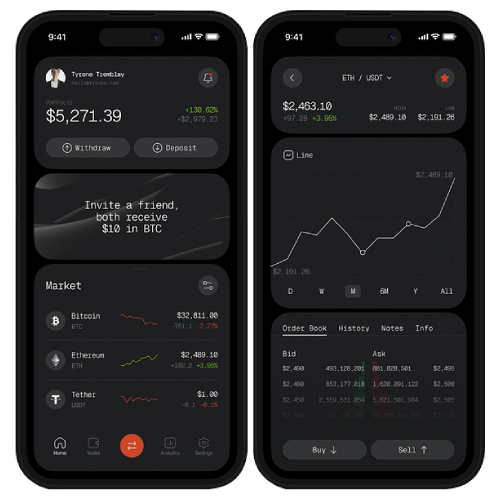
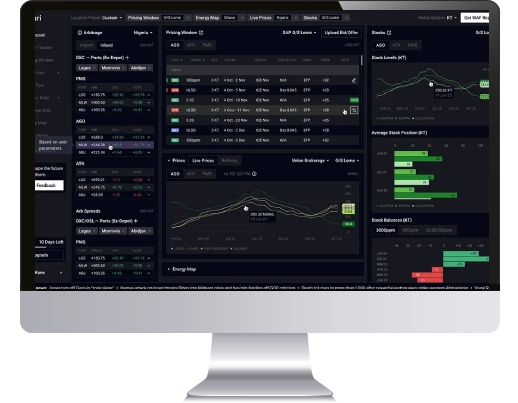
Build AI-powered, low-latency trading platforms that process millions of transactions in real time, from retail mobile trading apps to institutional algorithmic trading systems.
13+ Years Delivering Trading Solutions
250+ Development Professionals
20+ Pre-Built Trading Capabilities
100% Secure Financial Software Compliance
Stock Trading App Development
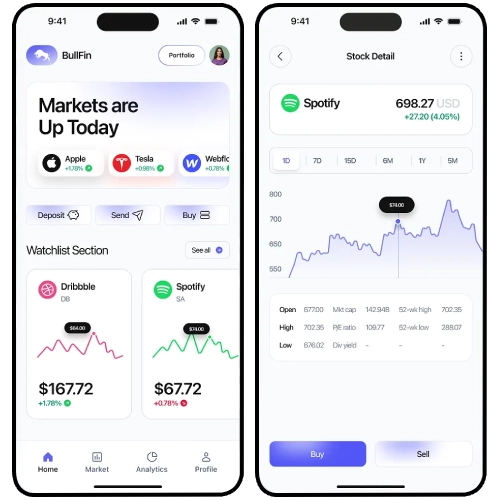
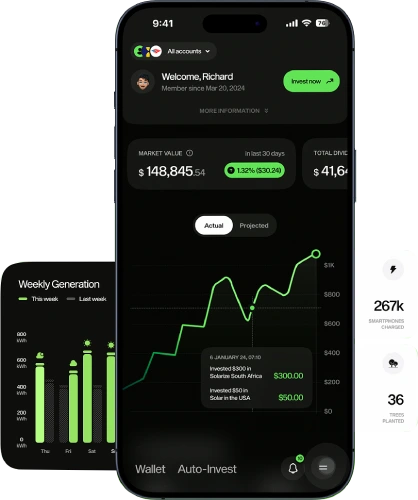
The development of a stock trading application is about building a platform through which the user can trade with financial instruments such as stocks, ETFs, options, futures, foreign exchange, commodities, and cryptocurrency in real-time using internet-based applications.
However, the creation of a fully functional stock trading app involves more than just creating the user interface. It needs a robust order management system, live market feeds, broker API integration, KYC/AML onboarding, portfolio management, as well as a secure payment gateway, all working together under the regulatory compliance framework of the SEC, FINRA, MiFID II, or SEBI
Custom Stock Trading Software Solutions for Every Business Model
Every trading business has unique operational requirements, compliance obligations, and investor expectations. Our custom trading software development services are designed to support diverse financial organizations and help them launch feature-rich stock trading platforms faster.
Stock Brokerage Firms
Create cutting-edge trading systems that incorporate sophisticated order management systems, market data feeds, customer onboarding, portfolio management, and regulatory compliance tools.
FinTech Startups
Proof-of-concept your business model by creating an MVP trading platform and developing a comprehensive investment platform equipped with artificial intelligence-based analysis, automation features, and personalized trading.
Wealth Management Companies
Provide portfolio management solutions for your clients along with a risk assessment system, performance analytics, robo-advising solutions, and automation in investment recommendation.
Investment Firms
Create high-end trading software that incorporates a low-latency trading engine, powerful reporting dashboards, market intelligence solutions, and risk management system.
Banks and Financial Institutions
Create an integrated trading ecosystem that consists of investment management, portfolio management, digital customer onboarding, compliance management, and transaction processing capabilities.
Independent Trading Platforms
Create next-gen stock market trading apps that offer social trading, copy trading, artificial intelligence analytics, and multi-device support.
Innovative Custom Trading Platform Solutions
Build scalable, feature-rich trading platforms designed for performance and compliance. Create a future-ready solution aligned with exchange regulations and business growth.
End-to-End Trading App Development Services
From strategy to deployment, we develop trading solutions built for performance, security, and growth.
Custom Trading App Development
Build custom trading platforms with real-time market data, order management, portfolio tracking, AI capabilities, and secure third-party integrations tailored to your business model.
Web & Mobile Trading App Development
Develop responsive web platforms and intuitive iOS and Android applications that deliver seamless trading experiences with synchronized data across every device.
Trading Platform UI/UX Design
Design intuitive user interfaces that simplify complex trading workflows, improve navigation, and enhance investor engagement across web and mobile platforms.
API & Third-Party Integration
Connect your platform with brokerage APIs, market data providers, payment gateways, KYC/AML solutions, and other financial services to create a unified trading ecosystem.
AI Integration for Trading Platforms
Enhance your platform with AI-powered features such as robo-advisors, predictive analytics, LLM-powered assistants, intelligent automation, and fraud detection to deliver smarter investment experiences.
Stock Trading Solutions We Develop
Our custom stock trading app developers design unique trading solutions that are aimed at the needs of brokers, fintech companies, investment firms, wealth managers, and other businesses. Our services of developing stock trading software include all stages of the trading process: from onboarding investors and portfolio management to order execution and monitoring of compliance with rules.
Retail Stock Trading Apps
Allow investors to perform trading activities using convenient mobile and web-based applications. With us, you can develop retail trading platforms that will have such features as real-time market data, watchlists, powerful charting tools, portfolio management, and other functions.
Create an investment ecosystem in which users will be able to trade not only stocks but also ETFs, mutual funds, derivatives, and other financial instruments. Our trading platform development services help to develop scalable architecture, which will be easy to scale.
Algorithmic Trading Software
Create automated trading systems that will execute trades according to certain rules, technical analysis and market conditions. Our services will help you to develop high-performance trading software with backtesting and strategy optimization features.
Social and Copy Trading Platforms
Allow users to follow successful traders, replicate investment strategies, and engage with trading communities. Our custom trading software development services help businesses create highly engaging social investing experiences.
Portfolio Management Platforms
Provide investors with comprehensive portfolio analytics, asset allocation insights, risk assessment tools, and performance tracking capabilities. These solutions can be integrated with robo-advisory engines for automated investment recommendations.
Institutional Trading Systems
Build enterprise-grade trading applications for brokerage firms, investment companies, and financial institutions that require advanced order management systems, compliance controls, reporting modules, and secure data management.
Secure and Scalable Architecture for Trading Apps
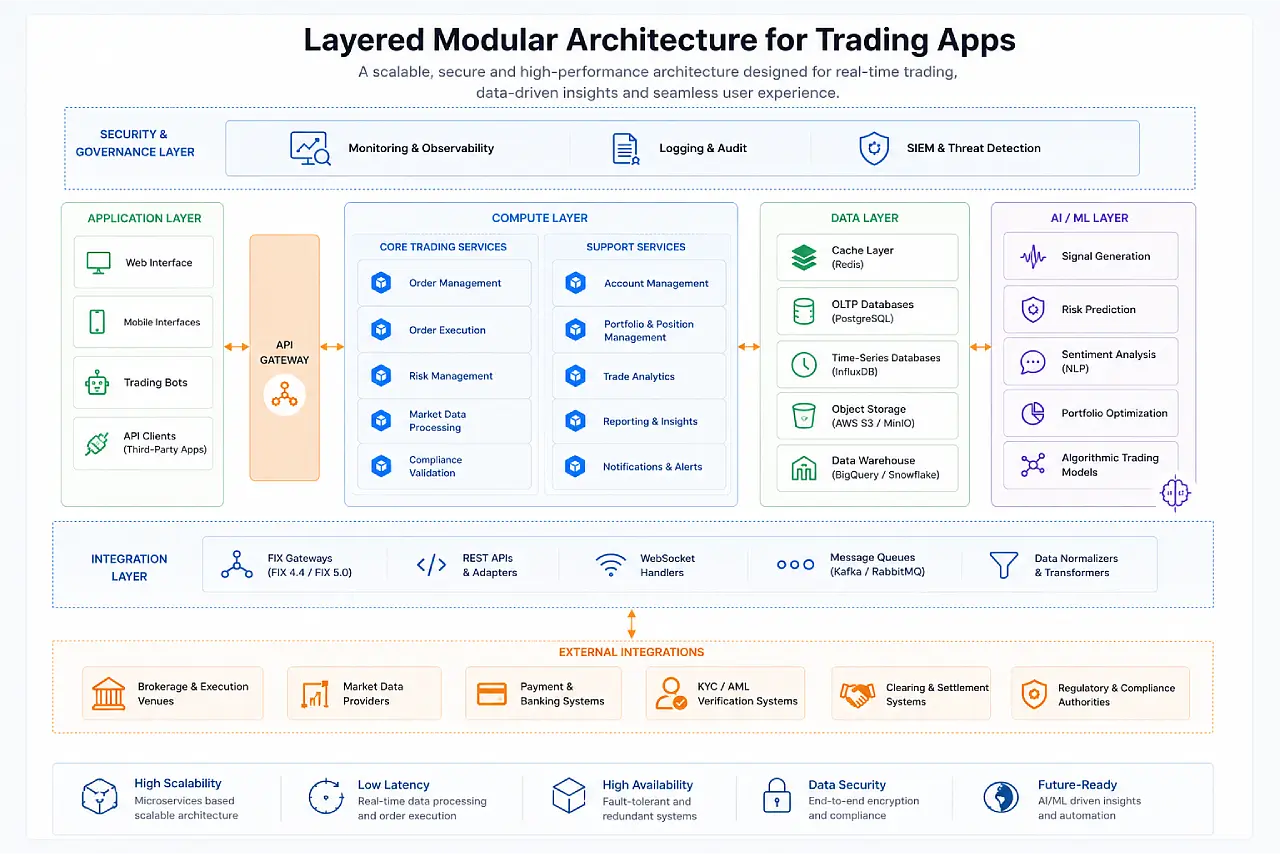
At Suffescom, we build secure, scalable architectures for web and mobile trading apps that support real-time market data, low-latency trade execution, AI-driven analytics, and seamless third-party integrations. Our trading app development services combine modular infrastructure with financial software compliance to deliver high-performance solutions for modern trading platforms.
Key Capabilities of Modern Web and Mobile Trading Applications
Modern web and mobile trading applications are not limited to simple order execution but offer a range of features that provide an intelligent, safe, and personalized experience for traders. As an experienced stock trading app development company, we can develop feature-packed applications that give investors valuable insights and help them manage their portfolios effectively.
Live Market Data
Enable your customers to receive live information about stock prices, market trends, trading volumes, relevant news and alerts for making smart investments.
Personalized Trading Dashboard
Provide users with customizable dashboards to control their watchlists, monitor investments, assess performance, and customize their trading experience.
Portfolio Management
Implement portfolio management software capabilities and help investors track asset allocation, perform analysis of portfolio performance, and rebalance their investments.
Investment Advice Provided by Machine Learning
Use machine learning to enhance your trading application development and provide users with intelligent recommendations and robo-advisor capabilities.
Virtual Assistant & Chatbot
Develop virtual assistant/chatbot solutions to make the onboarding process easier, answer questions of your users, give them valuable market insights, and increase engagement rate.
Benefits Of Building Custom Trading Software Solution
Explore how developing a trading software solution can help your business reach new heights.
Real Time Alert
Quick Access
Predictive Analysis
Faster Ordering
Multiple Trading
Minimized Risk Factor
Essential Features of a Modern Stock Trading Application
The success of a stock trading platform depends on its ability to deliver real-time market insights, seamless trade execution, and secure investment management experiences. Our stock trading app development services focus on building feature-rich applications that meet the expectations of modern investors
Real-Time Market Data
Offer live data for stock quotes, market indexes, trading volume, and stock price updates.
Ensure flawless order placing, amending, cancellation, and execution through an order management system that will support multiple orders.
Portfolio Management
Enable users to track their holdings, monitor performance, analyze asset allocation, and measure investment gains in real-time.
Onboarding and KYC Check
Ease up account creation through streamlined onboarding processes, document verification, identification, and compliance verification.
Watchlists and Alerts
Assist users in tracking preferred stocks, creating watchlists, and receiving alerts about any changes in the market, prices, and portfolio activity.
Secure Payment Transactions and Account Funding
Support deposits, withdrawals, and fund transactions in the trading accounts via secure payments.
Analytics and Reporting
Generate performance reports, profit and loss statements, portfolio summaries, and investment insights to support smarter trading decisions.
Multi-Device Accessibility
Deliver consistent trading experiences across web, mobile, and tablet applications with synchronized user data and portfolio information.
AI-Powered Features for Modern Stock Trading Platforms
As a leading trading platform development company, we integrate advanced AI capabilities into web and mobile trading apps to deliver smarter, faster, and more personalized investment experiences.
AI-Driven Market Intelligence
Leverage machine learning to analyze market trends, forecast price movements, generate trading signals, and assess investment risks in real time.
Robo Advisor Integration
Enable intelligent portfolio management with AI-powered robo-advisor solutions that automate asset allocation, portfolio rebalancing, and personalized investment recommendations.
LLM-Powered Investor Assistant
Integrate Large Language Models (LLMs) to provide conversational market insights, portfolio explanations, financial news summaries, and research assistance through natural language interactions.
AI Chatbots & Virtual Assistants
Deploy AI-powered virtual assistant/chatbot solutions to simplify onboarding, answer investor queries, provide portfolio updates, and deliver 24/7 customer support.
Intelligent Automation with RPA
Optimize operational efficiency using Robotic Process Automation (RPA) to automate KYC verification, compliance reporting, document processing, and trade reconciliation.
AI-Based Fraud Detection
Strengthen platform security with AI-driven fraud detection, behavioral analytics, transaction monitoring, and real-time risk assessment to ensure financial software compliance and protect investor assets.
Automating Microservices
By creating systems that automatically connect microservices we help make the microservices architecture more scalable and resilient.
Version Control of Workflows
Giving workflows a clear version control structure allows the tracking of changes which consequently prevents disruptions of the live environment and also enables continuous improvement.
Infrastructure Scaling & Load Balancing
We design network infrastructures that efficiently allocate workflow requests to servers to ensure a smooth performance even during heavy traffic or peak operational loads.
Challenges of Building a Stock Trading Platform and How We Solve Them
Developing a stock trading application involves far more than creating a user interface. Businesses must address challenges related to latency, compliance, market data management, security, and scalability to ensure reliable trading experiences.
Challenge 1: Real-Time Market Data Processing
Stock trading platforms rely on continuous market data streams that must be processed and delivered instantly. Delays in price updates can negatively impact trading decisions and user trust.
Our Approach
We implement high-performance data pipelines, WebSocket-based streaming infrastructure, and scalable event-driven architectures to ensure accurate real-time market updates.
Challenge 2: Low-Latency Trade Execution
Investors expect trades to be executed within milliseconds. Delays in order processing can lead to slippage, missed opportunities, and poor user experiences.
Our Approach
Our trading software architects build optimized execution engines, intelligent order routing mechanisms, and scalable backend systems that support fast and reliable trade execution.
Challenge #3: Regulatory Compliance
Financial applications must comply with regulations such as SEC, FINRA, MiFID II, SEBI, GDPR, and AML requirements depending on the target market.
Our Approach
We integrate compliance frameworks directly into platform architecture, including KYC verification, audit logs, transaction monitoring, identity management, and reporting systems.
Challenge 4: Data Security and Fraud Prevention
Trading applications process sensitive financial and personal information, making them prime targets for cyber threats.
Our Approach
Our stock trading software development solutions implement multi-factor authentication, role-based access controls, encryption protocols, secure APIs, and fraud detection systems.
Challenge 5: Platform Scalability
Trading volumes can increase dramatically during market volatility. Platforms must maintain performance during peak traffic periods.
Our Approach
We develop cloud-native architectures capable of scaling infrastructure resources dynamically to support growing user bases and trading activities without compromising performance.
Enterprise Architecture for Stock Trading App Development
As a trusted stock trading software development company, we build cloud-native architectures that ensure real-time trading, enterprise security, seamless scalability, and regulatory compliance.
Presentation Layer
Responsive web and mobile interfaces that enable investors to monitor markets, manage portfolios, execute trades, and receive real-time notifications from any device.
API & Integration Layer
A secure API gateway that manages authentication, broker APIs, payment gateways, market data feeds, and third-party financial services through centralized communication.
Trading & Market Data Layer
The core trading engine processes market and limit orders, synchronizes live market data, manages order execution, and updates portfolios with minimal latency.
Portfolio & Analytics Layer
Provides portfolio tracking, performance analytics, risk monitoring, reporting dashboards, and AI-driven investment insights to support informed decision-making.
AI & Automation Layer
Improves the experience of trading through use of machine learning, robo-advisors, Large Language Models (LLMs), virtual assistants/chatbots, and Robotic Process Automation (RPA).
Security & Compliance Layer
Secure all transactions through end-to-end encryption, multi-factor authentication, fraud detection, KYC/AML verification, and financial software compliance according to global regulatory requirements.
Cloud Infrastructure Layer
Utilize cloud infrastructure that is scalable and has containerization, auto-scaling, disaster recovery, and monitoring capability.
How to Build a Stock Trading App: Step-by-Step Development Process
A well-balanced development process is key to building a stock trading app that combines high performance, security, compliance, and great user experience. We are a reliable stock market app development company, and we use an agile methodology to create scalable and feature-packed web and mobile trading platforms.
1
Define Business Requirements
Determine your target customers, trading instruments, business model, compliance requirements, and major platform features. It will provide you with a solid foundation and product roadmap.
2
Design Platform Architecture
Create an architecture that is scalable with secure APIs, an order management system, a real-time data feed, cloud-based infrastructure, and ready-to-go compliance frameworks. With the help of a good architecture, it will be possible to ensure high availability, easy scaling, and low-latency trades.
3
Design UI/UX
Develop trading workflows, investors' dashboards, watchlists, portfolio management tools, and other interfaces that make trading simple. Your trading application will feature all user interfaces that will make complex trading activities easier for users.
4
Integrate Trading Infrastructure
Integrate market data feeds, brokerage APIs, payment gateways, KYC services, third-party finance systems, and more to enable real-time trading. Good integrations will provide the most accurate.
5
Core Features Development
Integrate core features including market data streaming, order management, portfolio management, notifications, and other features related to AI technology, such as robo advisor integration. Our team customizes the platform according to your functionality and scalability needs.
6
Security and Compliance
Make your trading platform safer by adding KYC/AML verification, two-factor authentication, encryption, fraud detection, and compliance with financial software regulations. These security measures are implemented throughout the entire development process.
7
Testing & Deployment
Ensure the proper functioning of the platform through functional, security, and performance testing and deploy it with zero downtime. Quality assurance guarantees the high performance of the trading application under actual trading conditions.
8
Maintenance & Scalability
Ensure maintenance, enhancement of your trading platform functionality, scaling of infrastructure, and performance optimization. Updates will help your platform evolve along with the changes in markets and regulations.
Technologies Powering Modern Trading Platforms
At SUffescom Solutions, we select the right technologies for every project to ensure optimal performance, seamless scalability, and secure trading operations.
Java
Python
Angular
Swift
React Native
Microsoft SQL
Redis
AWS
Docker
Stripe
OAuth 2.0
.NET
Go
Vue.js
Kotlin
PostgreSQL
Oracle
Cassandra
Microsoft Azure
Kubernetes
PayPal
Jenkins
Node.js
React.js
Next.js
Flutter
MySQL
MongoDB
Elasticsearch
Google Cloud
Linux
WebSockets
Grafana
Estimated Timeline for Stock Trading App Development
The timeline depends on the platform's complexity, feature set, third-party integrations, and regulatory requirements. A well-defined development strategy helps accelerate delivery while ensuring security, scalability, and compliance.
Platform Type
Estimated Timeline
MVP Trading App
3–5 Months
Mid-Level Trading Platform
5–8 Months
Enterprise Trading Software
8–14+ Months
Whether you're building an MVP or an enterprise-grade trading platform, partnering with an experienced stock trading software development company ensures faster development, seamless integrations, and a secure, scalable solution that evolves with your business needs.
Awards & Recognition for Delivering Software Development Excellence
Developed a cloud-native stock trading platform featuring real-time market data, AI-driven portfolio insights, and low-latency trade execution. The solution delivers secure, scalable trading experiences across web and mobile devices.
Build a High-Performance Trading Platform That Stands Out
Create secure, AI-powered trading applications with real-time market data, low-latency execution, and enterprise-grade security. We help you launch scalable platforms that are built for growth.
Why Choose Us as Your Stock Trading Software Development Company
Building a custom trading app development needs secure architectures, regulatory compliance, and real-time data processing. We combine deep fintech experience with modern engineering practices to help businesses launch scalable, high-performance trading platforms that are built for long-term growth.
End-to-End Development
From product discovery and UI/UX design to deployment and ongoing maintenance, we manage the complete development lifecycle under one roof.
Deep Fintech Expertise
Our team understands the complexities of trading ecosystems, including market data integration, order management, portfolio tracking, and brokerage connectivity.
Security & Regulatory Compliance
We build platforms with security and compliance at their core, implementing KYC/AML workflows, data encryption, fraud prevention, and industry best practices to safeguard users and financial transactions.
AI-Driven Innovation
Enhance trading experiences with intelligent capabilities such as predictive analytics, robo-advisory, conversational AI, and workflow automation that improve decision-making and operational efficiency.
Scalable Cloud Architecture
Our cloud-native solutions are designed to support increasing transaction volumes, deliver low-latency performance, and maintain high availability during peak trading activity.
Long-Term Technology Partnership
Beyond development, we provide continuous maintenance, feature enhancements, performance optimization, and infrastructure support to help your platform evolve with changing market demands.
Driving Innovation Through Proven Expertise
Delivering secure, scalable, and high-performance trading solutions backed by years of fintech experience and engineering excellence.
80+
Fintech Projects Delivered
50+
Trading & Financial Integrations
99.99%
Platform Availability
10M+
Transactions Supported
24/7
Post-Launch Support
30+
Trading Features Delivered
Client Stories
Trusted by Trading Platform Founders Worldwide
Marcus Ellison
CEO
We approached Suffescom with a clear vision for a retail stock trading app and they delivered beyond expectations. The real-time charting, broker API integration, and KYC onboarding all worked flawlessly from day one. What impressed us most was how deeply their team understood both the trading UX and the regulatory requirements — not just the code.
Ananya Krishnan
CTO
The algorithmic trading platform Suffescom built for us processes over 50,000 trades per day without a single incident. Their FIX protocol expertise and understanding of institutional-grade OMS requirements were exactly what we needed. Compliance was built in from the start — which saved us months of regulatory back-and-forth after launch.
Sofia Bergmann
Founder
We launched a copy trading platform in just 14 weeks with Suffescom's team. The social trading features, real-time portfolio mirroring, and trader performance leaderboards were exactly what our users wanted. Within 3 months of launch, we had 12,000 registered users and strong engagement — the platform just works.
FAQs
What is stock trading app development?
Stock trading app development involves building web and mobile platforms that enable users to buy, sell, and manage financial assets such as stocks, ETFs, options, and other securities. These platforms combine real-time market data, secure trade execution, portfolio management, and regulatory compliance into a seamless trading experience.
How much does stock market app development cost?
The cost typically ranges from $25,000 to $300,000+, depending on the platform's complexity, supported asset classes, integrations, security requirements, and advanced features such as AI-powered analytics or algorithmic trading.
How long does it take to build a stock trading app?
Development timelines vary based on project scope. An MVP generally takes 3–5 months, while a mid-sized platform requires 5–8 months. Enterprise-grade trading software with advanced integrations and compliance features can take 8–14 months or more.
What features should a stock trading application include?
A modern trading platform should include real-time market data, order management, portfolio tracking, watchlists, KYC verification, secure payment processing, analytics, notifications, and multi-device accessibility. Additional AI capabilities can further enhance user engagement and decision-making.
Which financial instruments can a trading platform support?
A custom trading platform can support multiple asset classes, including stocks, ETFs, mutual funds, options, futures, forex, commodities, and cryptocurrencies. The supported instruments are tailored to your business model and target market.
How is security and regulatory compliance implemented in a trading platform?
Security is built into every stage of development through features such as multi-factor authentication, end-to-end encryption, KYC/AML verification, fraud detection, and secure APIs. Compliance frameworks are implemented based on regional regulations and business requirements.
How do you integrate brokerage APIs and market data providers?
We integrate brokerage platforms, market data providers, payment gateways, and identity verification services to enable real-time pricing, seamless trade execution, and secure financial transactions while ensuring reliable platform performance.
What AI features can be added to a stock trading platform?
AI capabilities can include predictive market analytics, robo-advisory, conversational assistants, fraud detection, portfolio recommendations, and intelligent workflow automation. These features help improve operational efficiency and deliver more personalized trading experiences.
Do you provide post-launch maintenance and support?
Yes. We provide ongoing maintenance, performance optimization, security updates, infrastructure monitoring, compliance support, and feature enhancements to ensure your trading platform remains secure, reliable, and ready for future growth.
Why choose a custom trading platform over an off-the-shelf solution?
A custom trading platform offers greater flexibility, scalability, and control over features, integrations, security, and user experience. It enables businesses to build a differentiated solution that evolves with changing market demands and customer expectations.
🍪We use cookies
Our website requires some cookies to function properly.
•SUFFESCOM SOLUTIONS
Build Smarter. Scale Faster. Grow More.
Have a Vision? Let’s Turn It Into a Digital Reality.
Get a quick response from our best experts in under 10 minutes.
“
Suffescom easily understood our main goal and delivered the best digital solution. Their team was very cooperative, and it was a very good experience working with them. I would highly recommend them.
James AndersonFounder & CEO, FinTech Company
“
Working with Suffescom was a really great experience. Their developers demonstrated technical knowledge and delivered our mobile app solution with all required functionalities on time.
Sarah MitchellProduct Manager, Healthcare Startup
“
Suffescom helped us build a logistics software solution that completely improved our fleet operations. Their professionalism and transparency are what make them a reliable technology partner.
Michael RobertsCEO, Logistics Company
Our Customer Say:EXCELLENT★★★★½✓ Goodfirms
Have a project idea or need expert guidance? Share your requirements at sales@suffescom.com and our team will get back to you shortly.
Share Your Requirements. Our Experts Will Shape the Solution.
Expert consultation within 10 minutes.Your project details are completely secure under NDA protection.
Get Outstanding Business Outcomes With Future Ready Solutions
Get Free Consultation From Top Industry Experts
Begin A Generous Partnership Now
•SUFFESCOM SOLUTIONS
Build Smarter. Scale Faster. Grow More.
Have a Vision? Let’s Turn It Into a Digital Reality.
Get a quick response from our best experts in under 10 minutes.
“
Suffescom easily understood our main goal and delivered the best digital solution. Their team was very cooperative, and it was a very good experience working with them. I would highly recommend them.
James AndersonFounder & CEO, FinTech Company
“
Working with Suffescom was a really great experience. Their developers demonstrated technical knowledge and delivered our mobile app solution with all required functionalities on time.
Sarah MitchellProduct Manager, Healthcare Startup
“
Suffescom helped us build a logistics software solution that completely improved our fleet operations. Their professionalism and transparency are what make them a reliable technology partner.
Michael RobertsCEO, Logistics Company
Our Customer Say:EXCELLENT★★★★½✓ Goodfirms
Have a project idea or need expert guidance? Share your requirements at sales@suffescom.com and our team will get back to you shortly.
Share Your Requirements. Our Experts Will Shape the Solution.
Expert consultation within 10 minutes.Your project details are completely secure under NDA protection.
Have a Vision? Let’s Turn It Into a Digital Reality.
Get a quick response from our best experts in under 10 minutes.
“
Suffescom easily understood our main goal and delivered the best digital solution. Their team was very cooperative, and it was a very good experience working with them. I would highly recommend them.
James AndersonFounder & CEO, FinTech Company
“
Working with Suffescom was a really great experience. Their developers demonstrated technical knowledge and delivered our mobile app solution with all required functionalities on time.
Sarah MitchellProduct Manager, Healthcare Startup
“
Suffescom helped us build a logistics software solution that completely improved our fleet operations. Their professionalism and transparency are what make them a reliable technology partner.
Michael RobertsCEO, Logistics Company
Our Customer Say:EXCELLENT★★★★½✓ Goodfirms
Have a project idea or need expert guidance? Share your requirements at sales@suffescom.com and our team will get back to you shortly.
Share Your Requirements. Our Experts Will Shape the Solution.
Expert consultation within 10 minutes.Your project details are completely secure under NDA protection.
 +971-8000321216