+971-8000321216



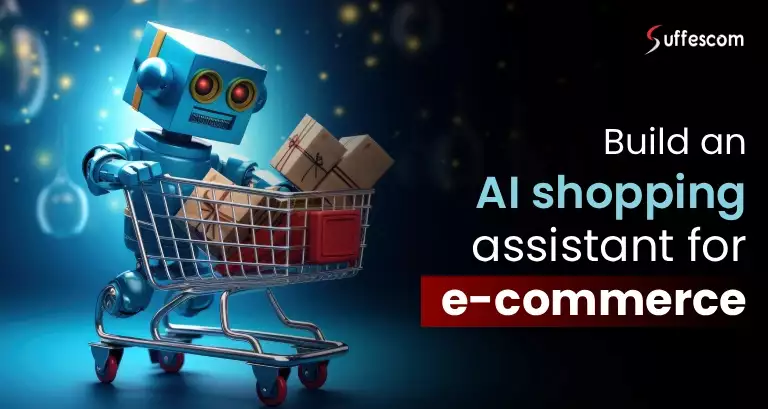
In the retail industry, AI can dramatically influence how customers find, compare, and most importantly, purchase products online. A key part of this change is the rise of AI-powered shopping assistants, which are conversational tools designed to guide customers through the buying journey.
Because modern shoppers increasingly expect fast, convenient shopping experiences, we are witnessing a major trend in which every major store is either integrating an AI chatbot into its existing platform or going for AI shopping assistant system development.
One prominent example is Amazon, which introduced its generative AI shopping assistant Rufus in 2024. It helps customers search for products conversationally, compare specifications, and receive recommendations within the shopping interface.
According to a global survey by the Capgemini Research Institute, 71% of consumers want generative AI integrated into their shopping experience, signalling a strong demand for AI shopping assistant platform development. Retailers are also responding to this shift as recent data suggests that 97% of retailers have either implemented AI or are actively developing AI capabilities in their stores.
If you are also planning to implement the same for your store, scroll down to learn how to approach AI shopping assistant development the right way.
Create a Smart AI Shopping Assistant for Your Business
Key Features in AI-Powered Shopping Assistant Development
An AI shopping assistant platform development is not just about integrating an AI chatbot into your system. It can transform the entire shopping experience. Here is what makes our AI shopping assistant platform development stand out:
1. Conversational Natural Language Interaction
The AI shopping assistant understands and responds to customer questions in plain language, whether in writing or speech. This enables users to find products, check details, and explore options without needing specific search terms or navigation.
2. Personalised Product Recommendations
AI analyzes past behavior, browsing patterns, and purchase history to suggest items that are most relevant to each shopper. This personalization increases engagement and boosts average order value by showing what customers are most likely to buy.
3. Smart Search & Intent‑Based Queries
Instead of a traditional keyword search, the assistant interprets user intent and context to return precise results. Customers can ask conversational questions like "show me budget laptops with long battery life" and get accurate matches.
4. Visual Search and Image‑Based Discovery
Shoppers can upload pictures of products they like, and the AI will find visually similar items in the catalog. This feature removes barriers when customers don't know product names or descriptions.
5. Predictive Cart Recovery Reminders
AI identifies signs of cart abandonment and sends proactive reminders or suggestions to nudge customers back to complete their purchase. This helps reduce lost sales and strengthens conversion rates.
6. Dynamic Personalized Homepage Content
AI adjusts featured products, categories, and promotions based on individual preferences and browsing history, making the shopping experience feel uniquely tailored for every visitor.
7. Automated Customer Support
The assistant provides instant answers to common customer queries, such as order status, shipping info, returns, and more, without waiting for a live agent. This reduces support costs while improving overall customer satisfaction and speed.
8. Cross‑Sell and Upsell Suggestions
During browsing or checkout, the AI suggests complementary or higher‑value products that match the current user's interests. These smart prompts are based on historical data and increase average order value.
9. Personalized Offers and Deals
Instead of showing generic sales banners, the assistant delivers discounts and special deals tailored to what each customer is most likely to engage with, improving deal redemption and loyalty.
10. Price Monitoring and Target Alerts
Customers can set preferred price thresholds, and the AI will automatically notify them when a product drops to that price. This helps users buy at the best time and encourages better engagement with your platform.
11. Auto‑Purchasing at Target Prices
Some AI assistants can automatically buy products for customers once the price reaches a pre‑set level. This feature adds convenience and increases conversions for price‑sensitive shoppers.
12. Product Comparison Tools
Rather than manually comparing items, customers can ask the assistant to contrast features, prices, and benefits of multiple products. This makes the decision process faster and more informative.
13. Contextual Memory Across Interactions
AI remembers user preferences and learns from repeated interactions, creating a smoother, more personalized experience over time. Returning customers feel recognized, which increases retention and loyalty.
14. Real‑Time Inventory Awareness
Shoppers don't get disappointed by out‑of‑stock recommendations because the AI uses live inventory data. It shows stock levels and suggests alternatives when items are unavailable.
15. Integrated Omnichannel Experience
Whether customers interact via the web, a mobile app, or a voice interface, the assistant delivers consistent recommendations and responses. This ensures a seamless customer journey across all touchpoints.
16. Behavioral Tracking and Segmentation
AI monitors how users behave, for example, what they click, how long they browse, and what they ignore, and creates segments to tailor future interactions accordingly. This deep personalization improves targeting and conversion.
17. Predictive Trend Analysis and Forecasting
By analyzing large datasets, the AI predicts upcoming demand patterns and suggests merchandising and recommendation adjustments, helping businesses stay ahead of changing customer preferences.
18. Multilingual Support
For global audiences, the assistant understands and responds in multiple languages, enabling a broader reach and better user experience for international customers.
19. Secure Personal Data Handling
AI systems protect customer information through encryption and privacy‑compliant practices, building trust while using data only to enhance personalized shopping.
20. Voice Assistant Integration
Customers can interact using voice commands through smart devices and mobile apps, creating a frictionless, hands‑free shopping experience that's especially useful for mobile and assisted commerce.
Launch Your AI-Powered Shopping Assistant
Our AI Shopping Platform Development Services
Given the unique needs of retail stores and e-commerce businesses, we offer a wide range of AI solutions designed to meet the distinct challenges of each business. Take a look:
Custom AI e-commerce platform development
In this type of AI shopping assistant platform development, we help you build a fully tailored AI-powered online store. It gives you complete control over your design, features, and customer experience, and is scalable and data-driven. This option is ideal for businesses that want a unique, end-to-end platform with full customization and AI integration.
AI shopping assistant development
Businesses that seek to engage users personally, reduce shopping friction, and increase conversion through guided interactions should pursue this kind of AI-powered shopping assistant development. It can work within your existing e-commerce system. Here, we mainly focus on building conversational assistants that interact directly with shoppers. Unlike recommendation engines or search tools, this guides the customer in a human-like, interactive way through the buying journey.
AI recommendation engine integration
If your focus is primarily on increasing upsells, cross-sells, and personalized product discovery without redesigning the full platform, then this option is the best fit. In this type of AI retail shopping assistant development, we place a major emphasis on designing the platform to automatically suggest products based on behaviour, preferences, and trends.
This is one of our most popular services alongside AI shopping assistant development. It also works well with your existing system. The key difference between the two is that, unlike a shopping assistant, the recommendation engine doesn't interact with customers directly. Instead, it automatically analyzes behaviour to suggest products.
AI Chatbot Integration for Retail
Businesses that want to reduce support costs and provide fast, reliable services without full AI shopping assistant capabilities can rely on this type of AI shopping assistant platform development. We can create an automated customer support system for instant query resolution and ensure it can handle questions, support, and interactions without interruption.
AI search and personalization engines
This kind of AI shopping assistant system development is ideal for businesses looking to build smarter, context-aware search and personalized product displays in their stores. It helps users find products way more quickly and dramatically improves the engagement.
Development Roadmap: Timeline and Cost
Full-scale Custom AI Retail Assistant Software Development
Building a complete AI-powered e-commerce platform from scratch gives your store full control over features, branding, and advanced AI capabilities. This is ideal for businesses looking for a fully customized AI shopping experience.
How much does it cost to build an AI Shopping Assistant?
Generally, the cost of developing an AI shopping assistant platform depends on platform complexity, the number of AI modules, integrations, and scale. Based on our experience building AI-enabled retail platforms, here's an approximate breakdown of cost by development stage:
| Stage | Timeline | Estimated Cost | Description |
| Planning & Strategy | 1 week | Free consultation | Define goals, AI requirements, and map the customer journey. |
| Design & Architecture | 2–4 weeks | $5,000 – $10,000 | UX/UI design, platform architecture, and AI module planning. |
| AI Development & Integration | 4–6 weeks | $10,000 – $25,000 | Develop AI modules (shopping assistant, recommendation engine, personalization, search) and integrate with platform features. |
| Testing & Optimization | 2 weeks | $5,000 | Performance testing, usability improvements, and AI tuning. |
| Launch & Monitoring | 1 week | $3,000 - $5,000 | Deploy platform, monitor AI, and make initial adjustments. |
Build and Integrate an AI Chatbot Shopping Assistant for Retail Websites
For stores that already have an e-commerce platform, integrating an AI chatbot shopping assistant can enhance the shopping experience without rebuilding the entire system. This approach is faster, more cost-effective, and allows you to leverage existing infrastructure.
How Much Does It Cost?
The AI shopping assistant development cost depends on the complexity of your existing platform, the number of AI features you need to integrate, and other integration requirements. Based on our experience, here's an approximate breakdown by stage:
| Stage | Timeline | Estimated Cost | Description |
| Assessment & Strategy | 1 week | Free consultation | Analyze existing platform, define chatbot goals, and AI requirements. |
| AI Assistant Setup & Customization | 1–2 weeks | $5,000 – $10,000 | Configure chatbot AI, define conversation flows, and integrate recommendation logic. |
| Integration & Testing | 1–2 weeks | $2,000 – $5,000 | Connect chatbot to website/app, test performance, and refine responses |
| Launch & Monitoring | 1 week | $1,500 – $3,500 | Deploy chatbot, monitor interactions, and collect initial data for optimization |
The Core Tech Stack for Robust AI-Empowered Ecommerce Development
Approaching AI e-commerce chatbot development demands the right combinations of AI models, frameworks, data systems, and infrastructure. Here is a breakdown of the core technologies that enable us to deliver an intelligent AI virtual assistant for online shopping:
| Foundation Models | GPT 4 Turbo, Gemini 1.5 Pr, Mistral AI, Claude 3, and Llama 3 |
| Agent frameworks | Langchain, crewAI, Microsoft Autogen, haystack, and Llamaindex |
| Memory & Data | Pincone, Redis, PostgreSQL, Weaviate, and Chroma |
| Tools & Actions | Scrapy, Langchain, and Playwright |
| Evaluation & Monitoring | Prometheus, Arize, Langsmith, Grafana, and Weights & Biases |
| Deployment & Infrastructure | Kubernetes, Microsoft Azure, Vertex AI, Amazon Bedrock, and Docker |
Your Store With and Without an AI Shopping Assistant Chatbot
Let's take a quick look at how building a store with an AI shopping assistant from the ground up, or integrating one into your existing platform, can completely change how your store performs and how customers experience it.
| Feature | Stores Without an AI Shopping Assistant | Stores With AI Assistant |
| Product Discovery | Customers browse manually; may get frustrated | Conversational guidance and smart search help shoppers find products quickly |
| Personalized Recommendations | Generic suggestions | Tailored product suggestions based on behavior, preferences, and trends |
| Upsell & Cross-sell Opportunities | Often missed | AI identifies complementary products and suggests them at the right time |
| Customer Engagement | Low, passive browsing | Interactive, dynamic experiences keep shoppers engaged longer |
| Conversion & Sales Performance | Moderate, relies on manual promotions | Higher conversion rates and average order value through targeted recommendations |
| Real-time Insights & Analytics | Mostly post-purchase | Tracks shopper behavior in real time for smarter marketing and inventory decisions |
| Scalability | Limited by human staff | Handles thousands of shoppers simultaneously without compromising experience |
| Customer Retention & Loyalty | Transaction-focused, impersonal | Personalized, consistent, and memorable experiences drive repeat visits |
Why Choose Our Custom AI Shopping Assistant Development Services
As a veteran software development agency, we bring deep technical expertise and real-world experience to the table that can help you build AI-enabled solutions that don't just work but drive real results. Here is why our clients trust us:
Track Record
We have successfully delivered a wide range of AI and e-commerce projects across industries, consistently meeting scope, deadlines, and quality expectations. Our commitment to on-time delivery and transparent communication has earned us strong reviews on top review platforms, with clients regularly praising our responsiveness and dedication.
| Review Platform | Average Rating | Average Reviews |
| Clutch (Verified B2B Reviews | 4.9/5 | 100+ reviews |
| GoodFirms | 4.9/5 | 50+ reviews |
| Techreviewer | 4.9/5 | Multiple platform scores aggregated |
| Community Feedback Review Sites | 5/5 | Selected independent reviews |
Industry Recognition
Our work in AI-enabled commerce and digital transformation has been acknowledged by industry leaders. We have received various awards and recognitions in areas such as the following, reinforcing our position as a trusted partner for forward-looking brands:
- Innovation in AI development
- AI eCommerce Development Solutions
- Excellence in software delivery
- AI Training Assistant Development
- Leadership in retail technology solutions
| Recognition | Year | Description |
| Clutch Global Leader Award | 2024 | Recognized as a top B2B services provider globally based on client feedback and service excellence. |
| G2 Grid Leader Awards (Spring & Winter) | 2025 | Earned Grid Leader status for outstanding technology performance and customer satisfaction. |
| Ranked in Clutch Top 1000 Companies | 2025 | Placed among the Top 1000 high‑performing service providers worldwide. |
| Best Design Award (DesignRush) | 2025 | Award for excellence in design and user experience. |
AI Expertise
Our core strength lies in advanced AI technologies. We specialise in:
- Conversational AI & Chatbots
- AI development services
- Predictive Analytics & Behavioural Modelling
- AI MVP App Development
- Custom AI Integration for Retail Platforms
- AI Integration Services
Our contributions to AI‑based products have also been recognised in industry circles, showcasing our capability to deliver high‑impact AI solutions that perform in real business environments.
Request a Demo of an AI Shopping Assistant Platform
Bottom Line!
In today's modern ecommerce, the difference between a satisfied customer and a lost sale often comes down to how effectively your AI shopping assistant supports the buying journey. Integrating an AI shopping assistant is a powerful way to enhance the experience, but it's not just an add-on. But if not implemented correctly, AI can also slow down your platform, create friction, and fail to deliver the benefits it promises. That's why you need a team with hands-on experience delivering AI shopping solutions in real retail environments. At Suffecom, we help you assess your store's needs, navigate technical challenges, and build a clear roadmap to building a high-performing AI shopping assistant. Talk to our experts to get a personalized quote and an exact timeline to build your solution.
FAQs
Do I need to rebuild my platform, or can I just integrate the AI?
You don't always need to rebuild your platform. AI shopping assistants can often be integrated into your existing website or app, depending on your current setup and technical requirements. Talk to our expert now to evaluate your needs and get guidance on choosing the best approach that delivers the best results with minimal disruption.
Can the AI assistant work in multiple languages or across different regions?
Modern AI assistants can be trained or configured to handle multiple languages, regional product variations, and even local shopping preferences. This ensures that your customers receive a personalised experience regardless of location. We help set up the AI so it can adapt dynamically as you expand to new markets.
How do you ensure the AI assistant fits my customer journey?
Before development, we map out your customer journey in detail, identifying touchpoints where AI can add the most value. The AI's conversational flows, suggestions, and personalisation are then customised to guide customers naturally, ensuring a smooth experience that aligns with your brand and business goals.
How often does the AI need updates or retraining?
The AI assistant is built to learn from ongoing customer interactions, but periodic updates and retraining help maintain accuracy and relevance. For most retail businesses, a review-and-optimisation cycle every few months ensures that recommendations, search results, and conversation quality stay up to date with changing customer behaviour and product inventory.
Can the AI automatically protect sensitive information?
Our AI solutions are designed to protect customer privacy and comply with data regulations. Sensitive information such as personal data, payment details, or behavioural data can be protected automatically. We also implement security measures to keep data safe across all integrations.
Where can I get AI shopping assistant development services?
You can partner with Suffescom Solutions, a trusted provider development services for AI-powered in eCommerce, delivering scalable and customizable shopping assistant solutions.