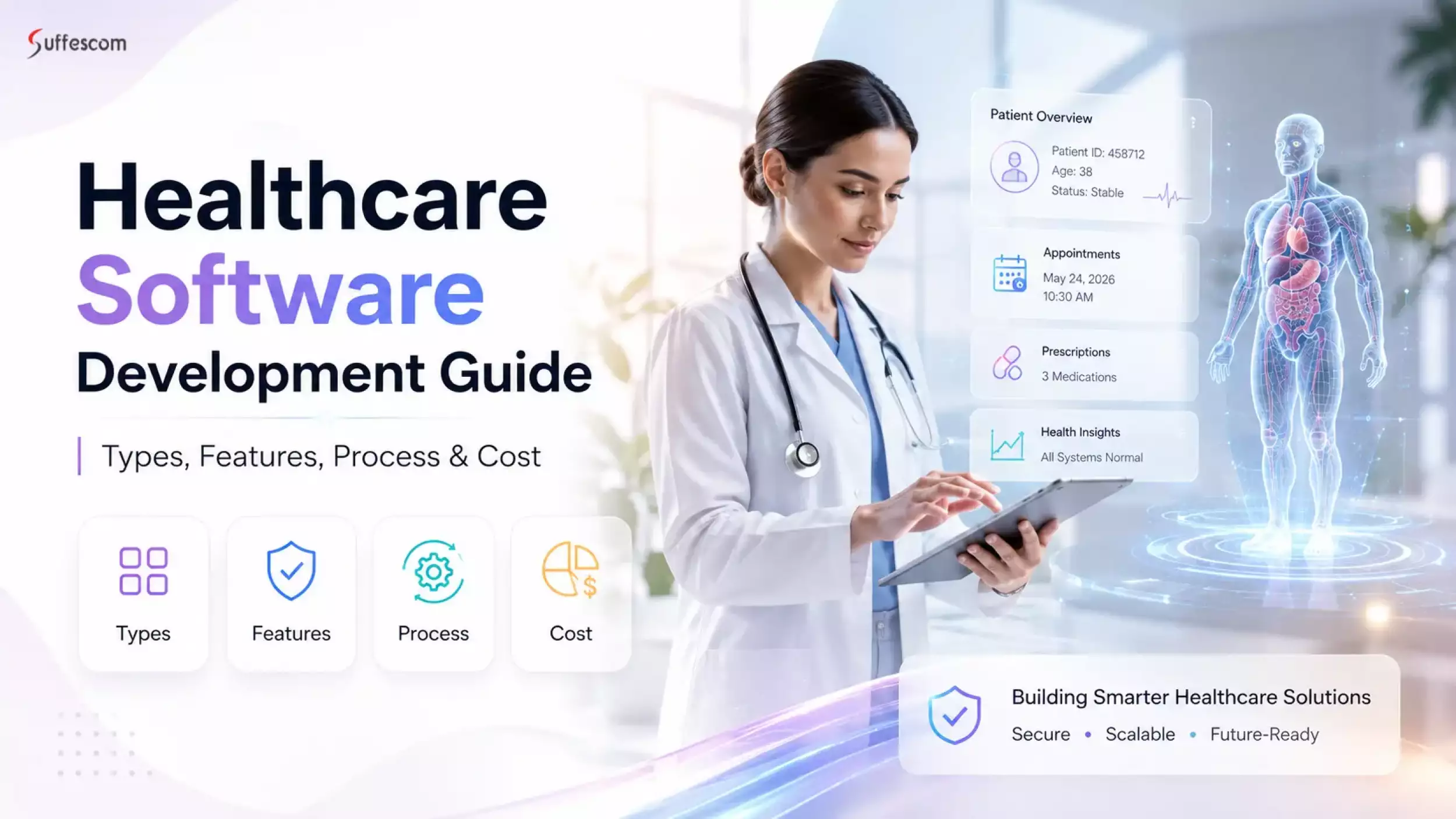
Healthcare software development refers to the development, implementation, integration, testing, deployment, and maintenance of software tools used in the provision of healthcare services, engagement of patients, healthcare management, financial processing, and health data management. Based on the nature of the business need, the software developed can include an EHR extension, patient portal, telemedicine service, remote patient monitoring system, practice management system, revenue cycle management, analytics tool, or intelligent healthcare software.
Healthcare software differs from traditional SaaS because the end-users of such products are in highly regulated, interdependent, and sometimes time-sensitive environments. Software could affect the process through which information is captured, shared, reviewed, and actioned on. As a result, issues of privacy, security, interoperability, availability, accessibility, and usability become important product features. In cases where the organization uses electronic health information, the HHS HIPAA Security Rule defines the necessary safeguards for ensuring the confidentiality, integrity, and availability of ePHI.
Organizations evaluating a healthcare software initiative typically need to answer four questions:
What kind of software do we require?
Should we develop the software, purchase it, or do both?
What should be its key functions and integrations?
How much will it cost to develop and own?
These decisions must take into consideration issues such as compliance, accessibility, data migration, AI governance, implementation and adoption, scalability, and business impact.
This guide covers each aspect of the decision-making process in order to allow healthcare organizations to evaluate their options in software from both a technological and business perspective.
Quick Answer: Healthcare Software Development at a Glance
Healthcare software development should start with the workflow and results that need to be addressed by the solution, not from technology stacks or features. The best solution will be determined by the users, model of operations, data infrastructure, integration needs, regulatory framework, scalability, and product roadmap.
- Major software categories: Clinical software, applications for patients, operational systems, financial and administrative software, and healthcare data and intelligence platforms.
- Core capabilities: Authentication, role-based access, auditability, data protection, workflow management, reporting, accessibility, and interoperability.
- Integration standards: Depending on specific use cases, healthcare software may be integrated with FHIR, HL7, DICOM, CDA, EHR APIs, lab systems, pharmacy platforms, devices, and others. HL7 describes FHIR as a standard for the exchange of healthcare data.
- Build vs. buy: In-house software allows you to have control over the workflow and differentiate yourself, while off-the-shelf solutions can help to build standardized software faster.
- Development cost: Specialized healthcare MVPs can be significantly cheaper compared to an enterprise-level platform with integration, migration, security, and AI needs.
- Development lifecycle: Discovery, workflow design, UX/UI, architecture, development, testing, validation, implementation, training, and continuous improvement should be planned as consecutive steps.
What Is Healthcare Software Development?
Healthcare software development is the complete product-engineering process to develop digital systems to serve the needs of all participants in the healthcare industry: hospitals, doctors, patients, insurance companies, healthtech organizations, etc. It covers product discovery, requirement gathering, workflow assessment, UX/UI design, architecture, development, integration, testing, security assessment, deployment, monitoring, maintenance, and further enhancement.
The important distinction is that healthcare software is not just regular software where medical terminology is applied to its interface. It is developed under the influence of sensitive health data, clinical workflows, interoperability, patient safety, regulation, accessibility, auditability, and implications of system downtime or misinformation.
Healthcare software development vs. general software development
A healthcare application runs in the context where the ramifications of poor software choices could have repercussions beyond productivity loss. While a regular software application focuses on time-to-market and features development, the software in the healthcare industry has to juggle these goals with privacy, usability, reliability of systems, integration issues, and regulatory compliance requirements.
PHI and ePHI: The application in the healthcare industry could create, receive, maintain, or transmit PHI. In accordance with HIPAA's Security Rule, ePHI needs to be protected with appropriate administrative, physical, and technical safeguards. The HHS HIPAA Security Rule defines these safeguards in a technology-neutral and scalable way that takes into account the size and capabilities of the organization.
Clinical workflows: Workflows of the healthcare sector are usually non-linear. When dealing with a patient, a healthcare practitioner might look at past encounters, medications, allergies, observations, test results, notes, and treatment plans. This means that the software has to be able to accommodate real-life workflows, incomplete information, exceptions, and handoffs.
Patient safety: Applications that impact clinical workflow must go through more extensive testing than traditional functionality tests. Incorrect data, ambiguous warnings, inaccessible documents, or bad recommendations could affect decisions made by the health care professionals. The requirements of a product must set an appropriate way of validating and reviewing the application according to its risk profile.
Interoperability: Healthcare organizations typically use systems from several vendors. The introduction of the new application may require integration with EHRs, labs, pharmacies, imaging systems, payers, devices, identity services, and analytics tools. Therefore, an integration architecture can affect the product feasibility, deployment time, scalability, and maintainability.
Regulatory obligations: Requirements vary based on the nature of the organization, its geographical location, the data, its contractual relationships, and functionality of the product. For example, HIPAA applies to covered entities and business associates, whereas other regulatory obligations can come into effect based on the product's situation.
Auditability: The healthcare organization might need to identify who accessed what, what action was performed, and when that action was performed. Therefore, auditability becomes a requirement to be considered in the application architecture, access control, logging, and monitoring systems.
Uptime and availability: Some healthcare applications require the use of workflow processes that operate beyond normal business hours or cannot be replaced if there is a failure. The availability strategy should take into consideration redundancy, backup, disaster recovery, and recovery plan.
Accessibility: Patients and professionals will differ with respect to their physical ability, type of devices, language skills, internet connection quality, and proficiency in using computers. Accessibility considerations should come into play right from the design phase.
Clinical usability: A technologically advanced system can still fall short if it necessitates too much navigation or displays information in such a way that it disrupts user workflow. The usability of healthcare technology should be based on the ability of the users to accomplish their tasks.
Who uses healthcare software?
Healthcare software can be used by multiple stakeholders simultaneously. Every group has their own role, access, need for information, and criteria for success. It is unlikely that a common user interface or process flow will fit all parties equally.
| User | Typical software needs | Primary goals |
| Hospitals & health systems | EHR integrations, clinical systems, analytics | Care coordination |
| Clinics & practices | Practice management, scheduling, billing | Operational efficiency |
| Providers | Clinical documentation, CDS | Faster, safer care |
| Patients | Portals, telehealth, apps | Access & engagement |
| Payers | Claims, utilization management | Cost control |
| Healthtech companies | Digital health platforms | Product differentiation |
| Administrators | Analytics, workforce, RCM | Visibility & productivity |
The same functionality of software can have different values for every stakeholder. Patients may want easy access to appointments and records, while providers would want quick clinical context, and the administration would be concerned about utilization, labor force, and finance. Enterprise healthcare products must accommodate these needs without making everyone use the same process.
When does a healthcare organization need custom software?
Custom healthcare software will be considered worth exploring when off-the-shelf solutions cannot cover important business processes without extensive configuration and manual effort. Fragmentation of processes, limitations of legacy systems, lack of interoperability, specific models of care delivery, repetition of administrative work, and customized patient experience can all be signs that custom software is needed.
Custom development also makes sense when the software itself is one of the sources of competitive advantage for the company. A healthcare technology company implementing a new care delivery model may require control over its roadmap, data architecture, integration, and user interface, rather than rely on the roadmap of a commercial platform.
Nevertheless, custom software shouldn't always be considered the better choice. The purchase and implementation of mature off-the-shelf software capable of solving a standardized problem can be considered faster and safer.
Types of Healthcare Software
Healthcare software can be categorized based on the function it serves within the healthcare system. Clinical software serves clinicians, patient-oriented software helps patients get better access to healthcare services, operational software ensures resource coordination, financial software helps manage the economic aspect of healthcare delivery, and data software converts raw data into useful knowledge.
Clinical healthcare software
Clinical healthcare software helps healthcare professionals and organizations deliver diagnosis, treatment, documentation, medication management, lab work, imaging, and other processes. Such software usually requires extensive collaboration with domain experts because the behavior of the application affects the way clinical information is entered, accessed, processed, and used.
EHR and EMR software
EHR and EMR software help manage data that are used in the delivery of patient care. This depends on the type of software; the records may contain patient demographic data, encounters, diagnoses, medications, allergies, observations, orders, results, documentation, and other patient-related information.
The development of an EHR system is quite complicated compared to traditional record management software. The system should have a clinical data model, access control, documentation workflow, connectivity and integration functionality, among others.
Clinical decision support systems
Clinical decision support systems are systems providing information, warnings, suggestions, or analytics intended to help health care practitioners. CDS systems can be anything from rules-based alerts and drug interaction checking through to more complex predictive and AI-powered functionalities.
The regulatory status of CDS is determined by its purpose and function. FDA guidelines published in January 2026 describe criteria to be applied to some specific CDS functionalities, while the rest of the software functionalities can stay within the scope of the FDA.
e-Prescribing software
e-Prescribing software enables electronic medication order processing and links practitioners with pharmacies, drugs, patients' data, formularies, and clinical decision support services.
The software must have more than just the capability to create an electronic prescription. The process should include authentication, patient identification, drug history, prescription status, provider authorization, warning messages, and proper auditability. Integration requirements will significantly differ depending on the market, pharmacy ecosystem, and organization.
Medical imaging and PACS
Medical imaging software allows storing, accessing, displaying, distributing, and managing diagnostic images. PACS environments commonly rely on DICOM, making the standard relevant to applications that work with radiology and other medical imaging workflows.
The imaging system may be linked to modalities, reporting systems, patient records, cloud solutions, and specific viewers. Therefore, it must consider large file sizes, metadata handling, performance, permissions, and access to the study archive.
Laboratory information systems
A laboratory information system deals with specimen management, test processing, reporting, quality process workflow, and communications with other health IT solutions. The requirements of an LIS may differ based on the lab itself, the instruments it uses, test volumes, reporting policies, and interfaced systems.
Interfacing is especially important since manual importing of laboratory results leads to extra administrative burden and chances for errors in results transcriptions and patient matching. The connected LIS will provide access to verified results to authorized users and systems without the need for reentry.
Pharmacy management systems
Pharmacy management systems can provide the capabilities for prescriptions, dispensation, inventory management, medication management, payment transactions, reporting, and provider communications. The features needed would depend on what kind of pharmacy operation the system is meant to service. The design needs to separate workflow from clinical significance of the medications while securing adequate access, synchronization, and auditing.
Patient-facing healthcare software
Patient-facing software transforms healthcare into digital applications. Such programs have to be able to offer convenient access while maintaining the requirements for security, accessibility, communication, proper user authentication, and interoperability with the underlying systems that contain the actual healthcare information.
Patient portals
Patient portals can offer features like appointments, patient records, lab results, communications, documents, forms, payment, and other functionalities. Their utility increases when the information is kept up-to-date and synchronized with the core systems of the organization instead of requiring the organization to have an entirely different patient portal system separate from their core systems. This is the approach we followed in our patient portal development with EHR integration project, where portal data stayed connected to the underlying clinical records.
The experience needs to include identity verification, account recovery, consent, accessibility, notifications, and clarity regarding the information that might be difficult for patients to comprehend.
Telemedicine and virtual care platforms
Telemedicine software can include appointment scheduling, secure communications, video visits, documentation, prescriptions, billing, notifications, and follow-up procedures. Video functionality is but one aspect of the entire digital-care process.
A comprehensive virtual care platform needs to tie together the interaction with the patient's identity, scheduling, recordkeeping, documentation, and follow-up as needed. This minimizes the danger of building yet another separate channel into the healthcare ecosystem.
Mobile health applications
Mobile Health Applications may be useful for appointment management, medication adherence, symptom tracking, wellness programs, care plans, communication, and self-management. Development needs to take into account mobile permissions, notifications, capabilities of mobile devices, connectivity, accessibility, synchronization, and security of data.
The relevant regulation will depend on the functionality of the application and its interaction with healthcare providers. These boundaries need to be set in the course of product discovery, rather than assuming that all mobile health applications fall under one regulation.
Remote patient monitoring software
RPM systems gather information about patients from connected devices or other sources and represent that information as dashboard entries, alerts, trends, or workflow.
The engineering problem is not just the receipt of information from a device. The problem involves the proper association of information with a patient, validation of information, thresholding, prioritization, distribution of alerts, and history keeping.
Digital therapeutics platforms
Digital therapeutics use software-based interventions to facilitate specified health-related outcomes. Based on the intended use, the platforms could be designed with elements of behavior workflow, personalization, outcome tracking, clinical data, engagement, and regulatory evaluation.
The product team needs to decide about the intended use and what evidence will be needed beforehand because the decision will influence the platform design, content, testing process, and marketing.
Healthcare operations software
Operational software helps manage the infrastructure around providing care. Such systems can help organize appointments, resources, staff activities, inventory, admissions, and administration processes in individual facilities or networks of healthcare organizations.
Hospital management systems
Hospital management systems are used to organize the flow of administrative tasks and processes like admissions, patient administration, scheduling, resources, facilities, personnel, stock control, and reporting.
Organizational setup, permissions, data integrity, and integration become significant factors to consider in enterprise solutions that involve various departments and facilities.
Practice management software
Practice management systems assist in organizing administrative tasks like registration, scheduling, billing, reporting, personnel management, and operations management.
The best systems integrate these tasks instead of isolating them into separate modules. Information from scheduling can impact billing, personnel management, reminders, patient communications, and reporting.
Appointment and scheduling software
Healthcare scheduling software handles provider availability, appointment type, appointment duration, appointment location, appointment cancellation, appointment rescheduling, waiting lists, appointment reminders, and online appointment bookings.
In some cases, advanced scheduling will have to take into account such things as provider specialty, equipment needed for the procedure, room availability, type of visit, patient preference, and organizational policies. In some cases, integration with existing scheduling or EHR systems might be required in order not to have conflicts in scheduling.
Staff and workforce management
Workforce and staff scheduling software could handle workforce scheduling, time management, staffing needs, credential management, shift planning, and reporting.
Healthcare organizations that have several departments or several facilities will have to have workforce visibility on a central level but with the possibility for department-level schedule management by local managers.
Inventory and supply-chain software
Healthcare inventory management systems manage supplies, equipment, pharmaceuticals, ordering, vendor management, inventory, usage, and replenishment.
Improved visibility may be helpful in decreasing shortages and overstocking while offering a more detailed view of resource management for administrators.
Financial and administrative healthcare software
Software for finances and administration links the activities in the clinical field to the processes needed to ensure coverage, handle claims, bill, and measure financial performance.
Revenue cycle management software
RCM software may offer features related to registration, insurance verification, charge capture, coding workflow, claims, claim status tracking, denial management, account reconciliation, and financial reporting.
Areas that may be suitable for automation are those where people frequently transfer data from one system to another or manually categorize known exceptions. Automation is most beneficial when it focuses on areas with problems rather than being indiscriminate to any financial process.
Medical billing software
Medical billing software packages keep track of invoices, billing documents, payment details, adjustments, claims procedures, and reports.
The necessary features differ based on specialty, payor mix, payment method, billing procedure, and current accounting system, so workflow analysis is essential prior to deciding on the features.
Claims management systems
Claiming platforms provide for the processing of claims in terms of claim generation, claim transmission, tracking of claims, management of claim status, handling of exceptions, claim reconciliations, and other administrative functions.
Its efficiency is greatly influenced by the nature of the data that goes into the claim. The integration and validation may turn out to be as important as the claiming platform itself.
Insurance eligibility and verification
The eligibility system assists organizations in confirming insurance information prior to the delivery of the service. Early confirmation of the insurance information can prevent problems that might occur later and give an opportunity to solve possible contradictions.
Healthcare data and intelligence platforms
Platforms for data allow connecting information gathered through various sources of operations to enable performance analysis, pattern recognition, and decision-making processes.
Healthcare analytics and BI
Healthcare analytics and business intelligence platforms can offer dashboards for utilization, financial metrics, employee activity, patient engagement, throughput, quality measurements, and other organization-wide metrics.
The most effective analytics solutions start with decision-making needs and then determine what data will be needed to make those decisions. Having all available data gathered and visualized creates more noise than insights.
Population health management
Platforms for population health collect data from different patients to facilitate risk stratification, coordination of care, outreach, prevention programs, and outcomes.
This kind of platform requires great attention when integrating data since the significance of analysis at the population level relies on the quality of underlying patient data.
Healthcare data platforms
Platforms for healthcare data deliver infrastructure for the ingestion, transformation, governance, storage, and delivery of data from various systems.
It can become a basis for analytics, reporting, research, AI, operational intelligence, and other downstream applications. Proper data governance should be incorporated into the design of the platform because bad definitions and ownership principles can render any workload running on top of the platform useless.
AI-powered healthcare software
Healthcare software using artificial intelligence technology can be applied for documentation, searching, coding, prediction, patient assistance, workflow automation, and selected decision support cases.
It is necessary to start with a clear goal when applying AI technology because it can only add complexity without delivering value when used without understanding which workflow or decision needs improvement.
How to choose the right healthcare software type
One must start with the problems that the business or clinic is experiencing. Time, coordination, access, information quality, money, and decision-making may all be negatively impacted. One needs to recognize what the problem is before deciding on a software type.
| Business problem | Best-fit software | Key capabilities |
| Long patient wait times | Scheduling/practice management | Automated scheduling |
| Poor patient engagement | Patient portal | Messaging, appointments |
| Manual billing | RCM | Claims automation |
| Remote chronic care | RPM | Device connectivity |
| Fragmented records | EHR/integration platform | FHIR APIs |
| Clinical workflow inefficiency | Custom clinical platform | Workflow automation |
| Lack of operational visibility | Analytics platform | Dashboards, BI |
The organization also needs to consider if they need an independent application, an extension for their current system, an integration layer, or some hybrid approach. This will ensure that you do not develop a category of product that needs costly re-engineering down the line.
Turn Healthcare Workflows Into Scalable Digital Systems
A healthcare software initiative becomes easier to scope when the workflow, users, integrations, and expected outcome are clearly defined before development begins.
Essential Features of Healthcare Software
Features of healthcare software should be prioritized based on the target audience of the product, its data, integration needs, user flows, and business goals. The presence of many features does not mean that the software will be a more advanced solution for healthcare. Too much functionality may lead to higher implementation costs, complicated interfaces, and problems with validating the basic workflow.
A reasonable approach to features considers the foundation features of the application and workflow-related functionality. Identity, authorization, auditability, security, and integrity of data are the features that are needed to have the foundation, and the rest of the features such as scheduling, documentation, messaging, billing, analytics, and AI are introduced depending on the goal of the product.
Core healthcare software features
Role-based access control
Role-Based Access Control is a function that decides who will have access to what resource or action. The healthcare application may include roles like physicians, nurses, administrators, billers, patients, support staff, executives, and external business partners, who all have varying functions.
The enterprise access control approach can take into account organizational structure, department, relation to the patient, type of resource and action, and other contextual factors. This way, the application can allow least privilege access without hampering valid operations.
Patient and provider profiles
Patient profiles establish a standardized identity for those patients that are identified in the application. These will vary depending on the use cases and may contain demographic information, patient identifiers, contact details, preferences, care relationships, and other information that may be necessary for the workflow.
Provider profiles may have their specialties, credentials, affiliation with organizations, availability, and permissions. It should also be developed in a way that enables further integrations such that external identifiers can be associated with identities without duplicating them.
Appointment scheduling
The scheduling functionality needs to be able to accommodate the provider's availability, appointment types, duration, location, cancellations, rescheduling, waiting lists, reminders, and online bookings based on the organizational model.
This functionality becomes much more complicated in case appointments need to be synchronized with EHR or the existing scheduling solution. The architecture needs to decide how synchronization conflicts and failures will be managed.
Secure messaging
Secure messaging allows for a secure conversation channel between authorized users. It depends on the solution whether it includes conversations, file attachment, notifications, read status, escalation, retention, and auditing.
The process flow should also identify regular communication from those situations where an emergency response is required. A secure channel of message transmission should not accidentally become a replacement for the emergency process.
Clinical documentation
Requirements for clinical documentation include the need to maintain a balance between structured information and the ability to use unstructured information as dictated by clinical documentation requirements. Templates can speed up documentation processes, while free-text functionality helps document things that do not fit in predefined fields.
When appropriate, the documentation design can take into consideration issues related to authoring, timestamps, revisions, versioning, review, sign-offs, and access controls.
Notifications and reminders
Notifications can assist with appointments, task follow-ups, medication-related tasks, administrative requests, care plan actions, and operational escalations.
Useful prioritization should be the aim, and not generating as many notifications as possible. Preferences, suppressions, escalations, delivery methods, and urgency levels may assist in ensuring that important messages do not become hard to discern.
Reporting and dashboards
The design of dashboards should be based on decisions to be made by the target audience. Executives might require enterprise-wide metrics, administrators might require operational metrics, and clinicians might require workflow-specific patient metrics.
An overall architecture for reporting should include consistent metric definitions. Without them, different people will give you different answers to your business questions since they might employ different calculations or data sources.
Billing and payment management
Depending on the software product, billing functions might include invoices, balances, payments, refunds, adjustments, claims-related information, and reconciliations.
Payment functionality needs to be properly isolated from the clinical information but still enable authorized personnel to correlate financial transactions with the services or workflows that caused them.
Search and data retrieval
Healthcare professionals might require searching for information within a large number of patient records or documents. The search functionality needs to provide relevant filtering capabilities, permissions, structured fields, dates, documents, and patient context.
However, the architecture must make sure that search convenience does not circumvent any authorization controls or reveal records the user is not supposed to have access to.
Security and privacy features
Security should be incorporated into the product architecture from the beginning.
Encryption at rest and in transit
Confidential healthcare data needs to be adequately secured in storage and transmission. The architecture of encryption needs to address issues such as databases, backups, files, APIs, communication between devices, and integration channels.
Encryption is just one part of the security design. Other important considerations include identity management, authorization, key management, configuration, vulnerability management, monitoring, and operational controls.
Multi-factor authentication
The multi-factor authentication process provides an additional verification step besides the use of passwords. In enterprise applications, there is also a requirement for SSO, identity provider integration, user lifecycle management, and authentication policies specific to an organization.
In designing the process, the goal is to ensure that the authentication processes are secure but do not hinder legitimate healthcare processes in the course of performing work.
Audit logs
Audit logs serve as proof of activities related to users, data, permissions, and administration. The audit logs could be used for investigation, compliance procedures, troubleshooting, and accountability purposes.
The logging process must specify what is relevant, how to protect the logs, how long they should be kept, who has access to them, and how to detect suspicious activity.
Session management
Session controls need to cover expiration, inactivity, token management, concurrent sessions, logout, device management, and credential changes.
The correct setup will vary based on risk and workflow considerations. For instance, high-sensitivity administrative tasks may need stricter session controls compared to lower-risk tasks.
Consent management
Consent management could pertain to the permissions involved in information exchange, communication, research, data processing, or other workflows.
It is important for the system to recognize different kinds of consents and make sure that the subsequent services and integrations comply with the necessary restrictions rather than considering consent to be just a check-box.
Data retention and deletion controls
Healthcare data may have to be retained depending on factors such as data category, jurisdiction, organization policies, contracts, and purpose of data.
The application should have a controlled process for data retention, archiving, deletion, and proper disposal when requested. HHS guidelines also cover the proper disposal and re-use of media with ePHI data.
Backup and disaster recovery
Backups need to be secured, monitored, and tested for proper restoration. Disaster recovery planning must include not only application dependencies but also infrastructure configuration, credentials, integration, and communication.
Disaster recovery needs to outline the goals of recovery rather than relying on the assumption that simply having automatic backups ensures business continuity.
Interoperability features for healthcare systems
HL7 and FHIR APIs
FHIR offers the framework of resources and interfaces for standardized data exchange in the healthcare environment. According to HL7's current specifications, FHIR is a standard for healthcare data exchange and includes implementation guides and profiles supporting different interoperability needs.
FHIR resources and profiles required will vary depending on the specific use case. "FHIR compatible" does not guarantee that the two systems will integrate successfully through mapping, authorization, testing, and implementation processes.
DICOM integration
DICOM standards are applicable when there is a need to exchange, store, view, or manage diagnostic images along with the related information.
In addition, imaging solutions may require connectivity to PACS, modalities, reporting systems, patients' records, and dedicated viewers, which requires performance planning and volume management.
EHR integration
EHR integration allows the connection of data such as demographics, appointments, encounters, medication, allergies, observations, clinical documentation, laboratory results, and others.
However, the extent of EHR integration needs to be defined based on the workflow and not from the misconception that all available EHR data need to be connected.
Laboratory and pharmacy integrations
Integrations between laboratory and pharmacy involve linking specialized systems to other workflows in the healthcare ecosystem. Specifications should be developed on data mapping, unique identifiers, status management, authentication, error processing, and synchronization processes for each external system.
Identity matching and patient-data synchronization
Identity mapping allows linking of data from different systems to a patient or practitioner. The design should provide specifications on identifiers, identity-mapping rules, duplication processing, and reconciliation.
AI-enabled healthcare software features
The introduction of AI should be limited to situations where it is intended to play an explicit role.
Ambient documentation will create notes from conversations between the physician and the patient for review by the physician, who will then create the official notes.
Clinical decision support will provide information or recommendations, but any supervision should depend on the consequences of incorrect information being provided.
Predictive analytics will identify patterns associated with demand, risks, utilization, or performance when the data set and predictive model have been validated accordingly.
Medical coding support will flag documentation or suggest codes for human review.
Patient triaging may assist in routing and prioritizing patients when the scope is properly constrained, validated, and supervised.
Intelligent search will assist authorized personnel in finding information in large pools of structured and unstructured data.
AI workflow automation will reduce routine tasks like classification, extraction, summarization, routing, and task generation.
Privacy, validation, monitoring, human supervision, limitations of AI models, and regulatory classification are other issues that need to be considered during AI implementation. The current guidance issued by the FDA for CDS systems does distinguish some non-device functions from software functions subject to device regulation.
Accessibility and usability features
Accessibility must be considered a requirement rather than an aspect of visual design added after-the-fact. Patient portals can accommodate users of different physical abilities, languages, devices, reading skills, and network environments. WCAG 2.2 offers the most current framework for the development of more accessible web content.
Some things that need to be considered include keyboard accessibility, screen reader compatibility, legible interfaces, multi-language interfaces, low bandwidth interface behavior, responsiveness, clear error messages, consistent and predictable navigation, and accessible interaction targets.
Healthcare professionals can also appreciate accessible interfaces since a logical information hierarchy and consistent interaction require less mental processing power in the high-stress environment of health information management.
Must-have vs. nice-to-have healthcare software features
Feature selection must depend on the nature of the product and its risks. Core identity and security features will be needed in the first release of the product, while analytics/AI is not critical until after the core workflow is in place.
| Feature | MVP | Phase 2 | Enterprise |
| Authentication | ✓ | ||
| RBAC | ✓ | ||
| Audit logging | ✓ | ||
| Scheduling | ✓ | ||
| FHIR integration | ✓* | ||
| AI automation | ✓ | ||
| Predictive analytics | ✓ | ||
| Advanced BI | ✓ | ✓ | |
| Multi-organization support | ✓ |
*Depending on the product/use case.
Healthcare Software Interoperability: APIs, FHIR & EHR Integration
Interoperability plays an essential role in defining the capabilities of a healthcare application in exchanging data with the surrounding technological environment. As most hospitals, clinics, laboratories, pharmacies, insurance providers, medical devices, and other healthtech software tools tend to have their own technological environment, the practical value of an application might depend significantly on its interoperability capabilities.
Interoperability is also important in terms of operational efficiency. If systems are not capable of exchanging data, then users might turn to manual data entry, using spreadsheets, exporting files, maintaining duplicate records, and verifying data again.
Why interoperability matters in healthcare
An application within the healthcare industry must determine the origin of its data, the authority of the system on each piece of data, which systems need updates, and how any conflict is resolved.
For instance, in a situation where the patient changes their contact information, the architecture must decide which system holds that information and the method of distributing it. When there is no authority, two integrated systems may overwrite one another or present conflicts.
Interoperability is also an issue for scalability. In a situation where an application is highly dependent on one company's proprietary interface, the cost of deploying it is increased in the future. The integration layer allows you to decouple your internal business logic from external systems.
HL7 vs. FHIR vs. DICOM
| Standard | Primary purpose | Common use |
| HL7 v2 | Clinical data exchange | Hospital systems |
| FHIR | API-oriented healthcare data exchange | Apps/EHR integration |
| DICOM | Medical imaging exchange | PACS/imaging |
| CDA | Structured clinical documents | Health records |
FHIR is an HL7 healthcare information exchange standard. The resource-based structure of FHIR allows creating a consistent representation format for healthcare data, whereas the use of implementation guides and profiles facilitates the adaptation of the standard for particular purposes.
HL7 v2 is still very important in existing clinical settings, especially for event-driven messages. DICOM is related to medical images, while CDA is normally used for clinical documents. These standards may be implemented concurrently in a healthcare setting.
What EHR integrations typically involve
Depending on the application, EHR integration may involve:
- patient demographics;
- appointments;
- encounters;
- medications;
- allergies;
- observations;
- clinical documents;
- laboratory results;
- authorization and access;
- data synchronization.
The scope of the integration must be defined according to the needs of the users' workflows. A portal for patients may require appointments, demographics, some records, and communications, whereas an analytics tool requires a wide range of information.
Common healthcare integration challenges
Legacy systems may use older interfaces or proprietary technologies that require additional integration effort.
Inconsistent data occurs when different systems represent the same healthcare concept using different structures, terminology, or identifiers.
API limitations can restrict which information is available, impose rate limits, or require vendor approval and additional configuration.
Identity matching becomes challenging when patient identifiers differ across systems or demographic information is incomplete.
Duplicate records can be created when matching logic fails to recognize that multiple records belong to the same person.
Synchronization failures can occur because of network errors, authentication problems, vendor downtime, malformed payloads, or partial transactions.
Vendor-specific implementation differences remain relevant even when two systems support the same standard. Profiles, optional fields, workflows, permissions, and implementation guides can vary.
How to design an integration-ready healthcare application
Integration considerations should come as early as the discovery phase, when the team will do the inventory of external systems, data ownership, determine needed resources/messages, authentication needs, and how failure should be handled.
The separate integration layer allows doing all the transformations, routing, validation, retries, monitoring, and reconciliation without putting the knowledge about external systems throughout the whole application.
The system design should account for transient availability as well. The external system might be down or too slow; therefore, there should be some controlled way of retries, queuing, error handling, and reconciliation rather than making a temporary failure of integration cause data corruption in the system.
Custom Healthcare Software vs. Off-the-Shelf: Which Is Right for Your Organization?
The decision of choosing either the "build" or the "buy" approach requires careful analysis from both business and technological perspectives. The price is essential, yet the workflow compatibility, implementation speed, integration challenges, vendor dependency, roadmap control, flexibility, support burden, and overall cost of ownership might play just as significant a role.
What is off-the-shelf healthcare software?
Commercial software aimed at providing standard solutions for a certain customer segment or market is called off-the-shelf healthcare software. This software may offer mature features without the need for the organization to implement all the required functionality.
The main strength of off-the-shelf software is speed. The existing products may already include integration, documentation, support services, and workflows. The organization, however, might require changes in the workflow or pay for customizing the product.
When custom healthcare software makes more sense
Custom development becomes more appealing when the workflow is strategically significant, highly specialized, inadequately supported by commercial software packages, or essential to the competitive advantage of the organization.
It can also make sense in situations where the organization requires control over integrations, data architecture, user experience, product roadmap, and other unique features which are unlikely to be provided by commercial vendors.
When buying commercial software is the better option
Commercial software becomes more reasonable if the requirement is standard and there are existing products that satisfy the requirement well.
The purchasing approach will help save time and effort on implementation while helping the organization's engineering efforts focus on other aspects that provide differentiation. Even then, one should consider factors such as cost, subscription fees, integration, customizability, vendor lock-in, and future roadmaps.
Custom vs. off-the-shelf healthcare software comparison
| Factor | Custom | Off-the-shelf |
| Customization | High | Limited |
| Initial cost | Higher | Lower |
| Deployment | Longer | Faster |
| Workflow fit | Exact | Standardized |
| Ownership/control | Greater | Vendor dependent |
| Scalability | Designed around needs | Product dependent |
| Maintenance | Organization/vendor | Vendor |
| Differentiation | High | Limited |
The hybrid approach: Buy the core, build the differentiator
Organizations do not always go down the route of either building everything or buying everything. The hybrid strategy involves having a commercially available product in place for standard functionalities but developing custom software on top of the workflows that will differentiate.
Examples include:
- commercial EHR + custom patient application;
- commercial billing + custom RCM workflow;
- existing telehealth + custom care-coordination layer;
- EHR + custom analytics platform.
This strategy can help avoid redundant engineering while maintaining control over the user experience.
Build-vs-buy decision checklist
Before making the decision, evaluate:
- Is the workflow standardized or unique?
- Does the capability differentiate the organization?
- Can commercial software support the required workflow without extensive workarounds?
- Which integrations are already available?
- How portable is the data?
- Who controls the product roadmap?
- What happens if the vendor changes pricing or functionality?
- What will customization cost over several years?
- Can the solution support future organizations and facilities?
- Which compliance and security responsibilities remain with the organization?
- What internal resources will implementation and support require?
The most optimal decision is one that will deliver the best combination of operational fit, implementation time, strategic control, risk, and cost.
Healthcare Software Development Process: From Discovery to Deployment
Healthcare software development should eliminate uncertainty with each step of the process. It should answer specific questions that will increase the clarity of the next step and ensure that teams are not investing in resources before understanding the workflows, requirements, integration, and risks.
Phase 1: Discovery and requirements gathering
The discovery phase defines the problem, stakeholders, workflows, technical limitations, integration, and results expected prior to developing extensively. Activities include interviews, workflow mapping, business requirements, technical requirements, regulatory analysis, integration inventory, and user personas.
Workflow mapping needs to consider exceptions, rather than just the optimal flow. Exceptions like cancellations, data gaps, authorization issues, emergencies, incomplete documentation, and cross-departmental transfer may affect how the product behaves significantly.
The discovery deliverables need to define priorities, dependencies, risks, assumptions, integration needs, roles of the user, and an initial road map.
Phase 2: Healthcare UX/UI design
Healthcare UX designs interfaces that are understandable and usable by translating validated workflows. Before moving on to visual elements, design should address information hierarchy, navigation, permissions, task flows, feedback, and error management.
Designing for clinicians
Clinical interfaces should provide the necessary information in a way that allows rapid decision-making and documentation without any extra navigation steps. It is crucial to know the current workflow and what breaks the workflow.
Designing for patients
Patient experiences require attention to clarity, accessibility, trustworthiness, responsiveness, and navigation. Instructional language needs to take into consideration varying levels of knowledge about health issues and technologies.
Usability testing and clinical validation
It is important to test important workflows using representative users before implementation, which is costly to change. Tests may uncover confusing terminology, lack of information, unnecessary steps, poorly designed alerts, and assumptions that were not clear to the development team.
Phase 3: Architecture and technology planning
Architecture converts product specifications into a technical solution that can handle the load and evolve in the future. Key aspects to consider are cloud architecture, API design, database architecture, security architecture, interoperability, scalability, and disaster recovery.
In addition, the architecture should determine data ownership, authorization limits, integration responsibility, logging, monitoring, deployment environment, backup, and recovery.
Good architecture is not always the most complicated one. In the case of MVP, a simpler architecture would do the trick, but for an enterprise platform that will support several organizations, it might be necessary to have more service isolation and operational boundaries.
Phase 4: MVP development
MVP is not meant to replicate every conceivable feature but to test the most crucial assumption of the product and the workflow.
Activities during development can include creating a backlog, sprint planning, implementation, code review, automation testing, CI/CD pipeline, integration activities, and compliance gates.
The security and data handling considerations should appear in the acceptance criteria in the course of development. Leaving that to the final stage may lead to architectural changes and schedule shifts.
Phase 5: Testing and quality assurance
Healthcare QA needs several complementary layers.
Functional testing
Functional testing confirms the requirements, business rules, access controls, workflow processing, notifications, validations, and error handling.
Security testing
Security testing assesses authentication, authorization, session management, vulnerabilities, configuration, APIs, data exposure, dependencies, and other relevant attack surfaces.
Performance testing
Performance testing tests how well the application operates under typical and peak loads. It should take into account how the system would react to delays or unavailability of the dependent systems.
Integration testing
Integration testing confirms data exchanges, authentication, transformation, validations, retries, synchronization, and failure handling with the systems integrated with the product.
Accessibility testing
Accessibility testing confirms that supported users can effectively use the product using the proper interaction method and accessibility technology.
User acceptance testing
UAT confirms if the user can complete actual tasks using the product. The test should use realistic scenarios and not just check individual functionality.
Clinical workflow validation
If the application is part of the clinical workflows, the appropriate subject matter experts should validate that the information presentation, behavior, alerts, and documentation processes support proper use.
Phase 6: Compliance validation and deployment
Before releasing into production, the organization must validate that the appropriate requirements concerning security, privacy, contractual terms, regulatory obligations, documentation, testing, access, and operations have been met.
Deployment planning should cover production configuration, migration procedures, rollback options, monitoring, incident handling, backup validation, access management, and support assignments.
Phase 7: Training, adoption and rollout
Training should be role-specific. Doctors, administrators, billers, support staff, and patients could use the very same platform in completely different ways.
Phased rollout would minimize the implementation risk since it enables organizations to find out any operational issues with the software before its rollout to all departments.
Phase 8: Maintenance and continuous improvement
Healthcare software is a living product beyond initial deployment. Maintenance includes updates for security vulnerabilities, dependencies, integration, performance, compliance, analysis, usability, infrastructure, and workflows.
Continuous improvement should be driven not only by new feature requests but also by production data, user feedback, security information, operational statistics, and organizational changes.
Launch Healthcare Software With a Controlled Path From Discovery to Production
A strong healthcare software roadmap connects product requirements, workflow validation, architecture, interoperability, security, testing, and adoption before the system reaches production.
HIPAA Compliance and Healthcare Software Security Requirements
Healthcare software security is an ongoing engineering and governance effort. This covers the application, its underlying infrastructure, its users, vendors, integrations, policies, monitoring, incident management, and procedures around the system.
The HIPAA Security Rule sets out the required administrative, physical, and technical safeguards regarding ePHI for covered entities under its jurisdiction. According to HHS, the rule is intended to be scalable and technology neutral, letting organizations choose appropriate means depending on their particular situation and risks.
HIPAA requirements for healthcare software
The first step is assessing whether HIPAA applies to the organization and to its relations. Not all health-related applications will fall under HIPAA regulations, and responsibilities will depend on the organization's role, data flows, and relationships with covered entities or business associates.
Software development teams need to identify how ePHI enters the system, what components process it, where it is stored, to what vendors it is transmitted, who has access to it, and how it flows from one system to another.
Administrative, physical and technical safeguards
Administrative safeguards include policies, procedures and activities related to risk management, workforce issues, security management and contingency planning.
Physical safeguards include issues related to facilities, workstations, devices, media and physical access to systems that contain ePHI.
Technical safeguards pertain to technical mechanisms such as access control, user authentication, audit controls, integrity controls and data transmission security. HHS defines these as the essential building blocks of the Security Rule.
Therefore, the software alone does not constitute the full compliance environment. The cloud infrastructure, employees' practices, vendors' involvement, physical environment, and incident handling procedures play an important role too.
PHI vs. ePHI: What developers need to know
PHI stands for protected health information as defined under HIPAA, whereas ePHI stands for protected health information that is stored or transmitted in an electronic format, subject to the Security Rule.
Developers should understand the full life cycle of information, which includes gathering, processing, transmission, storing, accessing, altering, backing up, archiving, retaining, and disposing of information. This is more valuable than marking a database as HIPAA-compliant.
Role-based access and least-privilege architecture
Access should be granted according to the requirements of a user or a service to fulfill its roles. In the case of enterprise healthcare platforms, considerations might include role, organization, department, patient relation, resource, action, and context.
The principle of least privilege limits unnecessary exposure since, in case of compromise or misuse of credentials, less privilege will be available to those.
Encryption and secure data transmission
Data should be properly secured during its storage and transit. The encryption strategy should take into consideration databases, backups, files, API, devices, integration, and any other data path.
Security architecture considerations should also include key management, secrets, certificates, service-to-service authentication, secure configuration, and monitoring.
Audit trails and monitoring
Audit trails give visibility regarding any actions related to systems and ePHI that can be used for security investigations, troubleshooting, compliance activities, and accountability.
HHS mentions the need to implement audit trails and authentication as the technical safeguards of the Security Rule and mechanisms of protecting ePHI from unauthorized access and transmission.
Business Associate Agreements
A Business Associate Agreement may be needed in situations where the vendor provides services related to the processing of PHI on behalf of the covered entity or another business associate.
Institutions must understand the data flow and the contractual relationship instead of making an assumption that because a vendor is using the cloud technology or healthcare jargon, it has some sort of status in law.
Security risk assessment
The security risk assessment should include threats, vulnerabilities, impact, existing controls, and residual risk. The HHS guidance on HIPAA risk analysis gives details about how a covered entity and business associates can identify and assess risks and vulnerabilities relating to
The assessment must guide architecture, priorities, controls, testing, monitoring, and remediation instead of staying as paperwork separate from engineering.
Backup, disaster recovery and business continuity
Backups need to be secure and periodically tested for the purpose of recovery. Disaster recovery plans must also consider application dependencies, infrastructure configuration, credentials, integration, and communication.
An effective disaster recovery plan defines the goals of recovery, the roles involved, the process of escalation, and verification to ensure that the organization knows how to recover its services.
Other regulations and standards to evaluate
Depending on the particular product, market, data involved, and usage, there may be other frameworks that need to be evaluated, such as:
- HITECH;
- FDA requirements;
- state privacy laws;
- 42 CFR Part 2;
- GDPR;
- SOC 2;
- HITRUST.
These are not necessarily applicable to every healthcare-related product in all cases, but need to be considered based on the particular organization's context.
Software that performs clinical decision support functions needs to be assessed in light of FDA guidelines issued in January 2026, as the FDA draws the line between certain non-device CDS functions and software functions that fall under device oversight.
Healthcare Software Development Cost
The cost of developing healthcare software depends on what the software needs to do, with whom it has to integrate, the sensitivity of the data involved, how many users and enterprises it will serve, and how much infrastructure support is required by the company.
Both patient-oriented MVPs and large-scale enterprise clinical platforms can be classified under the category of healthcare software but with vastly differing engineering considerations.
How much does healthcare software development cost?
As part of initial budgeting, the following cost ranges can be considered indicative budgeting bands rather than concrete estimates:
| Project level | Typical scope | Planning cost range |
| MVP | Focused workflow/product | $10,000–$40,000+ |
| Mid-complexity | Multiple workflows/integrations | $40,000–$100,000+ |
| Enterprise | Complex integrations/compliance | $100,000–$150,000+ |
Real project cost may go above or below the above bands, depending on the scope, architecture, integrations, compliance needs, data migration, AI features, infrastructure, testing, personnel composition, and delivery geography.
These estimates should therefore be used for structuring the discussion and budget scenarios, and not as indicative market costs or development costs.
What determines healthcare software development cost?
Software complexity
Software becomes complex if the platform has many workflows, complicated permissions, real-time processing, big data sets, device integration, complicated reporting, or multi-organization support.
The number of screens does not mean anything by itself. Even a rather small software product can be complex in its technical implementation if it has many integrations or deals with complicated workflows.
Number of user roles
Various types of users might need their own dashboards, permissions, workflows, notifications, and test scenarios.
Enterprise software may additionally need organizational-level administrators, delegation, department-level settings, and partner roles.
Integrations
Integration may end up being one of the main sources of cost due to each integration requiring authentication, mappings, testing, monitoring, error handling, vendor coordination, and maintenance.
Therefore, a project with five crucial integrations might be far more expensive than an equal-sized application with no integrations at all.
Compliance requirements
Compliance may influence such things as architecture, access control, logging, documentation, testing, vendor choice, infrastructure, risk management, and operations.
Cost implications will depend on the organization's compliance needs and the nature of data flows in the product rather than a particular "HIPAA feature."
AI/ML functionality
AI cost factors are related to model, data preparation, evaluation, inference architecture, integration, monitoring, privacy controls, human oversight, and governance.
In fact, a simple summary tool based on AI technology and a clinical predictive model will likely need completely different validation and operations processes.
Data migration
Migrating legacy data can entail data profiling, data mapping, cleansing, transformation, validation, reconciliation, phased migration, and post-migration verification.
Migration thus needs to be considered on its own rather than as a minor part of the deployment process.
UX requirements
Internal applications as well as external platforms will have varying requirements for research, accessibility, usability, localization, responsive design, and support.
Infrastructure
Costs associated with infrastructure can involve computation, databases, storage, network, monitoring, backup, disaster recovery, security, and other cloud services.
The architecture needs to anticipate both present and future requirements to ensure that infrastructure is not a surprise operating cost.
Testing and security
Healthcare applications might necessitate more extensive testing due to the need to evaluate various users, integrations, confidential information, workflows, and failure modes.
The effort to deliver an application can be impacted by security testing, penetration testing, accessibility testing, integration testing, performance testing, and user acceptance testing.
Geographic location and team composition
The development cost depends on the geographical location, seniority level, specialization, engagement type, and team composition.
Architects, developers, UX designers, QA engineers, DevOps engineers, security engineers, data engineers, and healthcare-specific experts might put in different kinds of effort.
Post-launch maintenance
The first version is not the entire life cycle of the application. Further work includes updates to security, infrastructure, integration, support, changes in compliance, upgrades in dependencies, optimizations, and other requirements.
Healthcare software development cost by software type
| Software | Relative complexity | Main cost drivers |
| Patient portal | Medium | EHR/API integration |
| Telemedicine | Medium–High | Video, payments, records |
| RPM | High | Devices, alerts, integrations |
| EHR | Very high | Clinical workflows, interoperability |
| RCM | High | Claims/payment integrations |
| Analytics | High | Data pipelines, governance |
| AI healthcare platform | High–Very high | Models, validation, infrastructure |
Hidden costs healthcare organizations should budget for
This estimate does not include the total costs incurred during the entire project lifecycle. Organizations should also allocate budgets for EHR vendor fees, API costs, infrastructure costs, security assessment, penetration test, certification costs, if any, data migration, clinician training, change management, support, and compliance updates.
Vendor fees may differ depending on the outside platform as well as the mode of integration. Infrastructure costs could also rise as more and more people use the system.
Clinician training and change management deserve special consideration since even a successful deployment could fail when clinicians have problems with the adoption of the workflow.
The most effective financial model is one that takes into account total cost of ownership involving all aspects like development, deployment, infrastructure, integration, support, maintenance, security, upgrade, and change management.
Technology Stack for Healthcare Software Development
A technology stack for a healthcare application must be chosen depending on its needs instead of following a set of pre-defined popular frameworks. Factors affecting this decision include security, compatibility, expected scale, maintainability, skillset of the development team, infrastructure, and data needs.
Frontend technologies
A choice of frontend technologies is determined by application users, devices, accessibility needs, performance requirements, and user interactions.
A patient-facing mobile application can have a different set of technical requirements compared to the web-based application aimed at clinicians that is intended for use on big monitors. The main goal here is a maintainable application that performs well in an actual user environment.
Backend technologies
Backend solutions must provide support for business logic, authentication, authorization, API support, transactions, integrations, background tasks, notifications, logging, monitoring, and scalability.
This solution must also fit the skills of the development team. An excellent technological choice that does not have any local expertise can cause problems later due to hiring and support.
Databases and healthcare data storage
Database design should mirror the information handled by the application. Structured clinical data, transactional data, documents, imaging, events, analytics, and searching might have different storage strategies.
Data classification will determine how access, retention, backup, encryption, replication, and governance are handled.
Cloud infrastructure
A cloud platform may be capable of offering scalable computing, database services, storage, networking, monitoring, backup, and deployment capabilities.
However, the utilization of a major cloud service provider is not sufficient for ensuring compliance. The organization must still configure its services, secure access, comprehend vendor relations, and deploy necessary controls.
APIs and integration layer
An integration layer could separate the application's internal business logic from the external health care system. The integration layer would handle transformation, authentication, routing, validation, retries, monitoring, and reconciliation.
The separation would allow easier inclusion of additional integrations without having to completely redesign the product.
AI/ML infrastructure
AI-driven applications could need model serving infrastructure, data pipelines, evaluation systems, search/retrieval abilities, monitoring, access control, and governance.
The architecture needs to define what data models can see, where outputs are stored, who can look at them, and how wrong or unsure answers are dealt with.
Security tooling and observability
Centralized logging, secret management, vulnerability management, security monitoring, performance monitoring, alerting, and incident response functionality can be helpful for enterprise healthcare applications.
The observability approach should be developed to help the team understand not only the application but also its integrations and should not generate too much log data.
How to choose a healthcare technology stack
Technology decisions should be evaluated against:
- security;
- scalability;
- interoperability;
- maintainability;
- compliance;
- team expertise;
- long-term TCO.
Fashionable architecture does not necessarily equate to an appropriate healthcare technology solution. The best option will be the stack that the organization can manage securely, reliably integrate, scale properly, and maintain through the product lifecycle.
How AI Is Changing Healthcare Software Development
AI is transforming healthcare software development by adding new types of automation in areas such as documentation, search, analytics, patient services, coding, and some decision support.
This is a substantial change, although healthcare organizations must separate productivity support from the AI capabilities that could potentially affect key clinical or operational decisions.
Generative AI in healthcare applications
AI generators have been applied in healthcare to summarize information, write content, classify data, search information, extract information, generate responses, and complete repetitive knowledge-based tasks.
The best systems will be those that have well-defined parameters for the amount and type of information the system can use, the tasks the system can do, and the types of outputs it can produce.
Ambient clinical documentation
An ambient documentation system is capable of processing clinical conversations and creating draft notes for the clinician's approval.
The engineering problems are not limited to transcription. The system must deal with speaker recognition, context, correctness, corrections, provenance, secure storage, access control, and the difference between the draft notes and the official clinical records.
AI-powered patient support
AI assistants can assist the patient in navigating services, finding information, formulating their queries, or performing administrative functions.
The system must clearly separate the administrative aid from the clinical advice. In case the issue crosses the line, the right procedures for escalation and human assistance are necessary.
Predictive analytics
Predictive models can recognize patterns concerning the demand, utilization, risk, performance, or other aspects.
The usefulness of the model is defined by the data quality, model validation, population applicability, monitoring, and proper interpretation. It must be reviewed upon deployment due to changes in the patient population and operations.
Intelligent medical coding
AI can be used in coding processes through identification of relevant documentation, suggestion of potential candidates, or information requiring review.
The product must be designed in a way to make the process transparent and hold individuals responsible for coding decisions when human review is necessary.
AI-powered clinical decision support
Clinical decision support powered by artificial intelligence can supply healthcare providers with relevant information, pattern detection, or even recommendations. As the above-mentioned outputs affect clinical decisions, such tools have to go through validation, monitoring, and oversight.
The FDA's January 2026 Clinical Decision Support Software guidance clarifies that some functions are classified as non-device treatment, while others can be regulated by the FDA.
AI risks healthcare organizations must address
Hallucination: AI models can hallucinate fluent but inaccurate information. Hence, verification is required for workflows, not confident language.
Bias: Training, model behavior, and implementation might cause unequal performance among populations. Therefore, evaluation must include appropriate populations and not just accuracy alone.
Privacy: Healthcare organizations require controls for prompts, source data, retrieved information, model input and output, logs, and third-party AI services.
Model drift: The real-world workflow and data used after deployment can evolve. This requires monitoring for degradation and reassessment when necessary.
Explainability: People using an AI system require an explanation of how an output was generated, especially if the output can affect important decision-making.
Human review: Required review must correlate with the potential consequences of erroneous results. Different tasks can require different human involvement.
Validation: An AI system should be tested with realistic scenarios before production and monitored after deployment.
Regulatory classification: AI functionality should be assessed according to its actual purpose and behavior rather than assuming that every healthcare AI feature falls into the same regulatory category.
Common Healthcare Software Development Challenges and How to Avoid Them
Treating compliance as a final-stage task
Where security and regulatory compliance issues come to light at the last minute, there could be expensive alterations in the architecture. Applicable compliance issues should be identified during the discovery process and should then be converted to technical and operational requirements before the development process gets far along.
Underestimating EHR integration complexity
Even an EHR that has APIs may still require a lot of configurations, authentication, coordination with the vendor, reading through implementation guides, data mapping, and handling errors, and thus its integration scope must be determined before final cost and timeline estimates are set.
Building too many features before validating the workflow
Products that incorporate many features require considerable input before the organization is sure that the fundamental flow resolves the issue that is being addressed. The ideal MVP should verify the fundamental flow before adding more features.
Ignoring clinician adoption
A platform can be technically sound and yet have poor operational performance by causing needless clicks, duplicating documentation, creating too many alerts, or disrupting workflows. Clinicians and other representative users must be included in the discovery, design, usability testing, and acceptance process.
Poor data governance
Differences in identity, ownership, nomenclature, and synchronization protocols can harm both reporting and AI efforts. Companies should establish ownership, data quality, lineage, retention, access, and synchronization policies before adding analytics functionality.
Inadequate security testing
Testing functionality does not prove security. Healthcare apps should be tested for such things as authentication, authorization, API access, configuration, exposure, vulnerabilities, infrastructure, and other possible attack vectors.
Underestimating maintenance costs
Healthcare software needs ongoing care once launched. Updates to security, infrastructure modifications, integration, compliance, dependencies, support, and enhancements all add to the lifetime cost of healthcare software.
Choosing a technology partner based only on hourly rates
The slower rate at which the system is developed can prove to be costly in case of deficiencies in architecture, testing, security, integration planning, documentation, and post-deployment support. When evaluating vendors, therefore, one should focus on overall capability and not just cost per hour.
Launching without an adoption strategy
Software impacts people's way of working. The lack of proper training, communication, transition management, support, and feedback can cause users to develop workarounds that devalue the platform.
Adoption planning should therefore go hand in hand with the implementation process rather than being an afterthought.
Why Choose Suffescom for Healthcare Software Development?
Selecting the appropriate healthcare software development company is not just about assessing coding skills and software portfolio. The ideal partner will need to comprehend clinical and operational processes, understand integration and security needs, be able to design an application with scalability in mind, consider usability aspects, and ensure continued software support after launch. Suffescom applies all of these approaches to healthcare software development, using its expertise in product engineering, integration, AI, secure development, UX/UI, deployment, and continuous optimization throughout the entire life cycle of the project.
Healthcare-Centric Software Development
Suffescom provides healthcare software development services to develop custom platforms for hospitals, clinics, startups, and healthcare enterprises. This service area encompasses workflow, integration, AI, cloud infrastructure, and healthcare support development. The list of healthcare solutions developed by Suffescom involves EHR/EMR, telemedicine, patient management, clinical decision support, RPM, billing, RCM, imaging, laboratory, pharmacy, and many more healthcare solutions.
Security and Compliance-Focused Development
Healthcare projects require security approaches throughout architecture, authentication, authorization, data processing, integrations, testing, monitoring, and deployment. The healthcare solution offered by Suffescom is described as one that requires HIPAA, HITECH, FHIR, HL7, RBAC, auditing, encryption, MFA, backup, and API security architecture.
Healthcare Integrations and Interoperability
Healthcare platforms often need to be integrated with existing EHRs and other specialized healthcare software. The set of healthcare integration capabilities of Suffescom includes FHIR, HL7, DICOM, EHR/EMR systems, laboratory, pharmacy, billing, telemedicine, healthcare CRM, analytics, devices, and hospital-management platforms.
Scalable Architecture for Healthcare Platforms
Healthcare platforms can scale in terms of users, facilities, workflows, integrations, and patient records. According to Suffescom, the company develops scalable EHR and healthcare architectures for organizations of different sizes and healthcare workflows.
AI and Automation for Healthcare Workflows
AI can be integrated within healthcare workflows such as documentation, medical transcription, predictive analytics, decision support, workflow automation, and many other specific use cases. Suffescom healthcare AI service also includes medical imaging analysis, administrative automation, remote monitoring, and data management applications.
User-Focused Healthcare UX/UI
Different users in a healthcare setting can have a very different range of responsibilities and technical knowledge. The UX approach can enable differentiation of clinician, administrator, patient, and other user experiences without losing visibility of key information and predictable actions.
Agile Development and Continuous Feedback
Iterative delivery allows checking the requirements, workflows, integration, and behavior of the whole product before its full development. According to Suffescom, there is an end-to-end healthcare development process from discovery to solution planning, UX/UI design, development, deployment, and post-deployment support.
End-to-End Healthcare Software Development Support
Healthcare software may need assistance with product strategy, architecture, UX/UI, software development, integration, quality assurance, deployment, and maintenance. The service offering for healthcare software from Suffescom includes consulting, custom development, modernization, integration, artificial intelligence-driven services, and maintenance.
Post-Launch Maintenance and Optimization
Post-launch healthcare software needs to maintain its performance, security, integrations, compliance-related changes, infrastructure, and user needs. According to Suffescom, post-launch healthcare software maintenance entails upgrading the software in order to add new features and fix any bugs.
Conclusion: Build Healthcare Software Around Outcomes, Not Features
Software for the healthcare sector needs to be built based on an outcome rather than the number of features in the product. This process should start with identifying areas in which users lose time, information gets siloed, manual processing carries risks, and current systems hinder the organization from providing the intended experience.
Next, organizations would need to identify the right category of software to develop and decide whether custom development, commercial software, or something in between offers the best long-term solution. Interoperability, security, accessibility, data management, and compliance need to be taken into consideration at the very beginning of the process, as they could influence architecture, development costs, and longevity of the project.
A minimum viable product can serve as a way to validate the most valuable workflow while the organization scales its product. On the other hand, budgeting needs to consider integration costs, infrastructure, migration, training, maintenance, security, and change management rather than just development costs alone.
Large healthcare platforms are not always the best. The best healthcare software solutions are the ones that fit real workflows, integrate smoothly with surrounding technologies, safeguard private information, are usable in any circumstance, and deliver value for the organization.
Ready to turn a healthcare workflow into a scalable digital platform?
Suffescom can help evaluate your requirements, define the product roadmap, plan healthcare integrations, design the architecture, and develop a solution aligned with your operational and business objectives.
Frequently Asked Questions About Healthcare Software Development
What features should healthcare software include?
Some common features are authentication, role-based access control, user profiles, scheduling, secure messaging, documentation, notifications, reporting, searching, audit logging, interoperability, and security controls.
However, the list of features will depend on the specific category of software. Each EHR, patient portal, RPM solution, or RCM system will need its own set of workflows and corresponding features.
How do you make healthcare software HIPAA compliant?
Being HIPAA-compliant cannot be achieved by adding a single feature or a label. The entity must first establish its need for HIPAA compliance and then provide necessary administrative, physical, and technical safeguards to ePHI.
Technical controls may vary from access control, authentication, audit controls, integrity controls, transmission security, monitoring, risk assessment, to proper vendor management, depending on the situation. HHS categorizes these safeguards as part of the Security Rule.
What is the difference between custom and off-the-shelf healthcare software?
Custom healthcare software focuses on the unique workflows of an organization and offers more control over functionality, integration, architecture, and roadmap. Off-the-shelf software is commercially available and offers standard functionality that is configurable.
Custom development might demand more upfront investment, whereas commercially available products might create costs such as subscriptions, customizations, integration, and dependence on vendors.
Is custom healthcare software worth the cost?
Custom healthcare software might prove to be valuable when there is strategic importance in workflows, no flexibility in commercially available software, unique integration needs, or competitive advantage due to software.
The following factors need to be considered: Workflow Improvement, Total Cost of Ownership, Integration Needs, Scalability, Value, Strategic Importance, Vendor Dependency.
What is the role of FHIR in healthcare software development?
FHIR stands for Fast Healthcare Interoperability Resources, and it is a set of standards from HL7 to exchange health data via specified resources and interfaces. It can be used to provide interoperability of healthcare applications and EHR systems if all systems involved have appropriate resources, profiles, authorization, and implementation guides.
FHIR can simplify the process of exchange but cannot resolve the problem of mapping data, user identity management, authorization, validation, implementation by vendors, and testing of workflows.
How does EHR integration work?
Integration with EHR means connecting an application with an electronic health record using various APIs, interfaces, standards, or other methods of exchange.
It may include demographics, scheduling, encounters, medication administration, allergies, observations, clinical documents, lab results, permissions, and synchronization, depending on the specific product.
What technology stack is best for healthcare software?
There is not one technology stack that will be ideal for all healthcare applications. The correct choice will depend upon security, interoperability, scalability, maintainability, compliance, skills of the development team, type of application, infrastructure, and costs.
Therefore, technology choices should align with product and architecture needs instead of trying to fit a healthcare workflow into an existing framework.
Can AI be integrated into healthcare software?
Yes. AI can facilitate documentation, search, patient help, coding, predictive analytics, workflow automation, and some clinical decision support functions.
These implementations need to ensure validation, privacy, monitoring, oversight by humans, and assessment of regulations. Treatment by the FDA varies according to the specific software function and its intended use; the current guidance on CDS distinguishes some non-device CDS functions from other software functions.
How much does it cost to maintain healthcare software?
Maintenance fees will depend on such factors as infrastructure, integrations, number of users, security needs, support needs, compliance needs, and how often you need product changes.
Organizations should budget for cloud services, monitoring, security patches, dependency upgrades, integration maintenance, support, bug fixing, performance improvements, compliance-related changes, and new capabilities, rather than budgeting for maintenance as a minor and fixed cost.
How do you calculate healthcare software ROI?
ROI for healthcare software must be linked to measurable gains. Depending on the type of software product, an organization can look at such gains as administrative hours saved, appointments used, claims denied, documentation time, patient engagement, throughput, service capacity, or support workload.
The calculation must take into account the development, implementation, infrastructure, integrations, training, change management, support, and maintenance.
What should I ask a healthcare software development company?
Inquire about expertise in healthcare, EHR connectivity, FHIR/HL7 support, security, QA process, compliance strategy, architecture, AI governance, ownership of the source code, data ownership, communication, post-release support, maintenance, and overall economics of the project.
Don't forget to inquire about how the firm manages scope changes, failed integrations, security issues, production problems, and changes in requirements.
Should a healthcare startup build an MVP first?
Building an MVP is good for a health startup that requires validation of a certain user problem, workflow, market hypothesis, or product concept before scaling the platform.
An MVP should cut down on unnecessary scope without sacrificing proper security, privacy, data integrity, accessibility, or architectural foundation needed for the platform's intended purpose.https://www.suffescom.com/development/pharmacy-inventory-management-software