Suffescom is a tech company specializing in developing logistics software for businesses that wish to bring their logistics processes into the future. Logistics software development by Suffescom takes into consideration the needs of the business, the scalability of the architecture, user experience, automation, and real-time information.
We have a lot of experience dealing with connected technologies like mobile, web, cloud, and AI, among others, and we are prepared to help your business develop logistics software solutions that improve operational visibility, reduce manual work, and support growth across locations and teams.
Source: Grand View Research
As one of the most experienced logistics software development companies, Suffescom offers a complete range of services for planning, designing, development, integration, and support of logistics software applications.
Consulting services allow us to advise our clients on choosing the proper technology solution considering the goals of the project, workflows, target audience, and current infrastructure. We analyze all the necessary aspects and develop a roadmap for implementation.
We offer user-friendly design of user interfaces for logistics managers, drivers, warehouse workers, administrative staff, and customers. Every interface is designed to make all the complex processes easy and accessible to tracking, operational data, and essential actions.
Our customized logistics software development service emphasizes the creation of software according to the unique business processes you have and not vice versa.
We build scalable web applications and mobile applications, which will allow logistics staff to work on operations from their office, from warehouses, from their vehicles, and from customers. This will provide solutions that may work for different user roles and at the same time provide the same data and functionality across platforms.
We interface our logistics software with any ERP, CRM, accounting, payments, mapping, GPS, IoT, carriers, and third-party systems already in place. Such integrations help build an ecosystem of technologies within which data can flow freely from one platform to another without entering manually.
AI development systems and workflow automation in logistics are used where they can add value. It can vary depending on the specific project but includes such tasks as demand forecasting, automated decision-making, document processing, recommendations, and workflow automation.
Our cloud development services help businesses build scalable and accessible logistics applications with infrastructure designed around their performance and availability requirements. We can also assist with the cloud migration, deployment, monitoring, and optimization of systems as they scale.
Our quality assurance engineers will thoroughly test logistics software for functionality, performance, security, and usability to ensure it meets high standards. We identify issues throughout development to help deliver stable software that performs reliably under real-world operational conditions.
We provide ongoing maintenance to ensure that logistics systems remain secure, integrated, and optimized after deployment. Additionally, for organizations using outdated infrastructure, we can help them modernize their infrastructure, integration, technology, and other features without having to start from scratch.
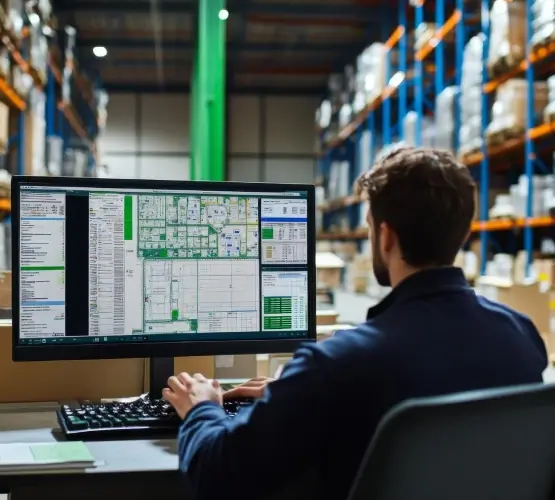
Every project demonstrates our concept of custom logistics software
development where the functionality, integration, scalability, and user interface meet the needs of the client.
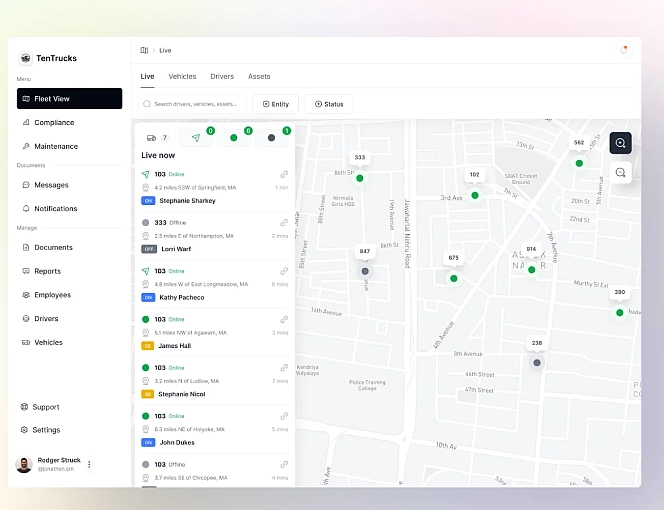
Business Requirement: The transportation company needed a single platform to manage their shipments, dispatches, carriers, and deliveries. The current system of the company was manually intensive.
Our Solution: Suffescom, being a trusted logistics software development company, developed a custom transportation management platform with shipment management, dispatching, route tracking, carrier coordination, real-time status updates, and operational dashboards.
Outcomes:
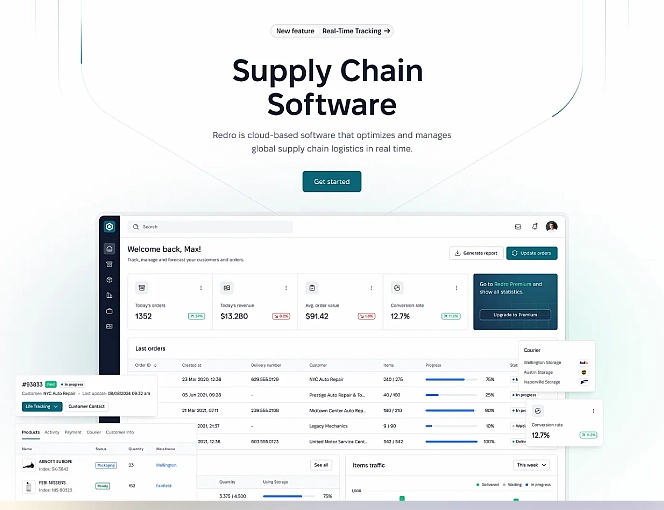
Business Requirement: The manufacturer planned to invest in supply chain technology, but first sought professional advice. They required a technology roadmap for inventory management, procurement, logistics, and system integration.
Our Solution: Suffescom provided consulting across business process analysis, technology evaluation, solution architecture, integration planning, and product roadmap development.
Outcomes:
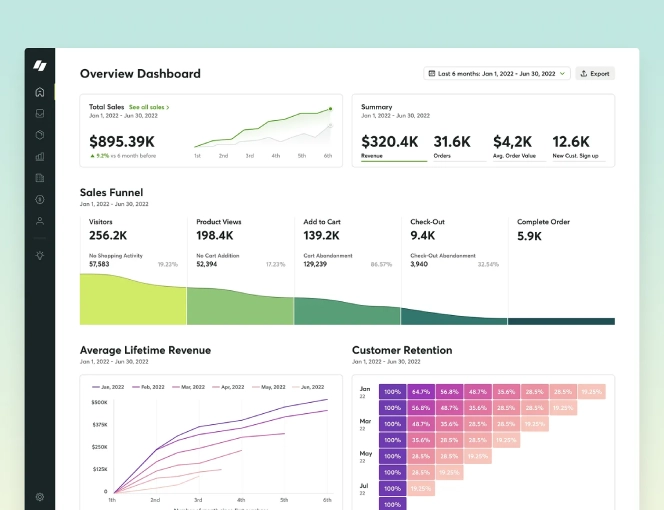
Business Requirement: An eCommerce business needed ongoing technical assistance for its delivery ecosystem as order volumes increased. The company required improvements to delivery tracking, third-party integrations, performance, and customer-facing logistics features.
Our Solution: Suffescom provided continuous technical assistance covering API integrations, delivery tracking, performance optimization, bug resolution, feature enhancements, and system maintenance.
Outcomes:
Every logistics business has different workflows, operational challenges, and technology requirements. As a logistics software development company, Suffescom builds logistics software solutions tailored to specific transportation, warehouse, fleet, supply chain, and delivery needs.
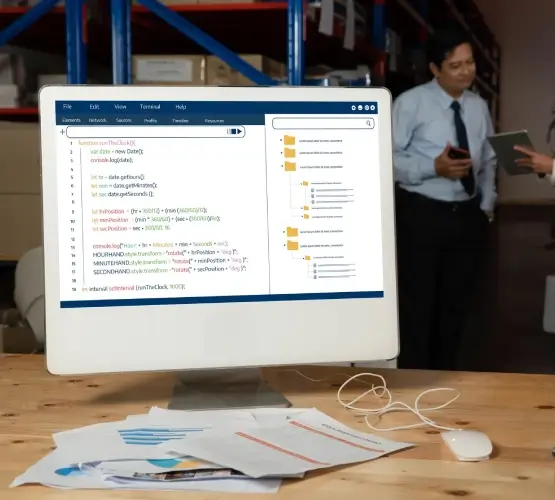

The transportation management system (TMS) enables organizations to organize and control the process of transporting goods. We develop systems for shipping planning, carrier management, freight monitoring, dispatching, routing, and deliveries.

Our fleet management software will help you manage your fleet, vehicles, drivers, fuel, and other fleet-related activities in one centralized place. With GPS tracking, monitoring drivers, and performance analysis, you may get more control over the fleet.

We develop warehouse management solutions for the automation of receiving, storage, picking, packing, transfer, and order fulfillment operations. The real-time information and automated processes allow our warehouse staff to increase the efficiency and accuracy of their work.

The last-mile software connects dispatchers, drivers, companies, and customers in the last mile of the delivery process. It may involve functions like assigning drivers, routing, real-time tracking, updates on the status of deliveries, proof of delivery, and notifications for the customers.

We create supply chain management software that combines order management, suppliers, inventory control, warehouse management, procurement, logistics, and transportation software development services into a single integrated system.

We build software that helps freight transporters coordinate bookings, logistics, documentation, carriers, and tracking of shipments. Centralizing these processes can streamline the entire process of freight movement for various stakeholders involved.

Route optimization platforms use operational data to help determine efficient delivery and transportation routes. Depending on requirements, we can incorporate mapping, traffic information, vehicle constraints, delivery windows, and intelligent optimization capabilities.

The real-time tracking software gives you visibility into shipments, vehicles, orders, and deliveries during their transit. Businesses can keep track of their status, get alerts, and provide accurate information to their customers about the deliveries using web or mobile interfaces.

We create software for monitoring temperature-controlled shipping and storage, helping businesses monitor shipments, environmental conditions, alerts, and compliance-related data. IoT sensors and connected devices can be integrated for continuous monitoring.

We develop logistics marketplaces for multiple parties, which include shippers, carriers, drivers, freight suppliers, and customers. Our platforms may enable functions including listing, booking, matching, payment, messaging, tracking, rating, and administrative operations.

Keep track of the vehicles, shipments, and deliveries through a GPS-enabled tracking system. The managers would be able to monitor movement, know the current status, and even know of any delays and notify the customers of delivery status.

Control vehicles and drivers from a single panel with information on assignments, availability, maintenance schedule, fuel consumption, performance, and other data about drivers. Alerts would help you respond to any crucial situations more quickly.

Route planning takes into consideration factors such as delivery locations, vehicle capacity, traffic conditions, delivery windows, and other factors. Intelligent optimization can help reduce unnecessary travel and improve delivery planning.

Centralize orders and coordinate dispatch activities through a single platform. Teams can assign deliveries, schedule shipping, update statuses, and track order status without depending on separate tools.

Monitor inventory movement in warehouse, storage, and fulfillment facilities. The tools will have capabilities for inventory receiving, inventory picking, packaging, transfer, scanning, and live inventory updates.

Update your drivers, managers, customers, and other stakeholders about their status with automated notifications. The alerts could be based on delivery status changes, detours, delays, low inventory, vehicle issues, or any other predefined events.

Get insights from your operational data with dashboards and custom reporting. Businesses have the ability to monitor their deliveries, vehicle utilization, fuel consumption, order volumes, warehouse operations, and many other parameters.

Customer portals can be set up, which enable customers to place orders, track consignments, check delivery status, document access, and receive updates. This self-service portal would help lessen dependency on manual status checks.

Drivers should be provided with mobile applications for job assignments, navigation, customer information, delivery status, proof of delivery, communications, and status reporting. Information can be synchronized in real-time with the centralized logistics platform.

Users can be granted access to those parts of the logistics platform that concern their activities. Such access control will allow protecting sensitive information from disclosure and using the same platform by different departments.

Invoices, freight payments, billing procedures, and transaction management can be performed through the logistics platform. Integration with payment gateways and accounting systems can further streamline financial operations.

Connect the platform with ERP, CRM, accounting, mapping, payment, carrier, GPS, IoT, and other third-party API systems. APIs help different applications exchange data without creating isolated technology environments.
Capture digital signatures, photographs, timestamps, delivery notes, and other confirmation details at the point of delivery. This creates a centralized record that businesses and customers can reference when needed.

Support businesses operating across different regions with configurable languages, currencies, units, and location-specific settings. This makes the software more adaptable for international logistics operations.
The use of modern logistics software is becoming increasingly dependent upon the integration of connected systems that provide visibility, reduce repetitive tasks, and allow for quicker decision-making. Suffescom provides a fusion of new technologies and logistics needs to develop scalable and intelligent platforms.
Integrating AI and ML helps platforms cope with big data and pattern recognition, which helps in making quicker decisions. Our experience in the development of logistics software helps organizations make use of demand forecasting, route planning, predictive maintenance, and decision-making in their processes
IoT integrates cars, containers, warehouses, sensors, and other physical objects into logistics platforms. Device information in real time could help track location, temperature, car condition, stock moves, and many more operational aspects.
GPS and telematics technology systems are continuously able to provide details about vehicles and driver behavior. Combining location and vehicle data helps achieve real-time vehicle tracking, route tracking, fleet analytics, geofencing, and performance management.
Predictive analytics uses data about previous and current operations to create future predictions. Logistics management software development firms can use such predictive capabilities in areas such as demand forecasting, delivery estimation, capacity management, maintenance forecasting, and resource planning.
With RPA, routine activities that involve following specific rules can be automated, like data entry, document handling, order processing, billing, and synchronizing of systems. This will minimize the involvement of manual processes and enable the team to focus on other value-added activities.
Blockchain can make it possible to create an immutable transaction ledger between the different parties within the supply chain. Our blockchain development technology facilitates logistics software applications for increased transparency, product provenance, shipment records, and document verification.
Cloud infrastructure enables logistics applications to scale as users, transactions, locations, and data volumes increase. The cloud technology architecture is also suitable for enabling remote access, centralizing data storage, integration, backups, and regular software updates.
A logistics system creates a lot of data through order fulfillment, transportation, warehousing, customers, sensors, and delivery. Data analytics aids in analyzing the collected data in order to create trends, performance measurements, and data-driven planning.
Computer vision enables software to interpret images and video for specific logistics use cases. Depending on requirements, logistics software development can incorporate computer vision for barcode recognition, package identification, warehouse monitoring, damage detection, and automated visual verification.
The use of generative AI could improve logistics applications through intelligent agents, document summarization, natural language data search, automated writing, and chatbots. This technology should be applied in accordance with data security, precision, and specific business needs.
Suffescom's reputation as a reliable logistics management software development company has earned recognition across leading technology and business platforms. These awards reflect our commitment to delivering dependable, scalable logistics software solutions.

Business Awards 2025
Recognized for app excellence in Mobile Technology

Appfutura
Top App Development Company

GoodFirms
Top AI Development Company

Clutch
Top 100 Companies 2025

ITFirms
World’s Top Mobile App Development Companies 2025

Clutch
Top Developers in India 2025

Global 100 - 2026
Best Information Technology & Services Firm of the Year - US
A structured approach is needed to convert complex logistics needs into a dependable and scalable software system. In this regard, Suffescom, being a logistics software development company, adopts an approach that puts the business objectives, user requirements, integration, security, and scalability at the core of the logistics software development.
In the first step, we study your business model, process flows, target audience, current infrastructure, and business goals. We determine the areas where you need custom software development for the logistics industry and define the requirements prior to starting the development.
Our architects translate requirements into a practical technical strategy and scalable system architecture. When developing custom logistics software solutions, we outline all required technologies, architectures, API integrations, information flows, infrastructure, security considerations, and major components that will be needed for sustained growth.
User flows, wireframes, prototypes, and interfaces are developed considering the requirements of logistics managers, drivers, warehouse workers, administrators, and customers. Our aim here is to facilitate complicated business processes while providing intuitive interfaces on both web and mobile platforms.
The development team develops the software using appropriate technologies and methods of development. In case you need to develop logistics software from scratch or redevelop an already existing one, we use modular architecture and iterative development to make your software more testable, maintainable, and scalable.
We connect the platform with ERP, CRM, GPS, mapping, payment, IoT, carrier, accounting, and other required systems. Our logistics software development services ensure these integrations work together to create connected logistics software solutions and streamlined data flows.
Every major component is checked for proper functionality, performance, usability, security, compatibility, and reliability of integration. Our QA engineers check workflows on different devices, environments, and roles in order to make sure that the software works properly in practice in logistics.
Following the validation stage, the software is prepared for production in the necessary cloud, web, mobile, or enterprise environment. As a logistics software development company, we configure infrastructure, databases, monitoring, security controls, and deployment processes for a stable launch.
Our logistics software development services don’t stop at implementation; they include performance monitoring, technical support, security patching, bug fixes, and additional features to ensure your solution remains reliable and flexible as business needs evolve.
The cost of developing a custom logistics solution is estimated to be from $30,000 up to $150,000+, depending on the software's complexity, features, integrations, platforms, and technology requirements.
The cost of developing logistics software will depend on certain parameters such as the scope, functionalities, technologies, and customization to be used. Such factors include:

Software Complexity
An application that includes necessary processes is easier to develop than one with support for several processes, roles, automations, and data flows.

Number of Platforms
The number of platforms for which the software is being developed affects the development process since developing software for different platforms takes more time.

UI/UX Complexity
Complex dashboards, interactive maps, real-time tracking interfaces, and user experience for certain roles demand more work than simple interfaces.

Features & Functionalities
Elements like route optimization, fleet management, inventory management, order management, analytics, notifications, and automation could also add to the scope of the entire project.

Third-Party Integrations
Integration with third-party platforms like ERP, CRM, GPS, payment gateway systems, map applications, carrier applications, IoT devices, and others may lead to increased development and testing tasks.

AI and Automation
Advanced analytics, intelligent recommendations, AI forecasting models, document automation, and workflow automation may need further data engineering, modeling, and infrastructure effort.

Security Requirements
Authentication, role-based access, encryption, secure APIs, audit trails, and other security measures can influence development effort, particularly for enterprise platforms handling sensitive operational data.

Backend & Cloud Infrastructure
Database architecture, API development, server architecture, cloud computing, scalability, monitoring systems, backups, and performance needs all make up part of the total software development cost.

Testing & Quality Assurance
Testing and quality assurance for large-scale custom logistics software development projects is essential for ensuring that the software works properly across a variety of environments.

Post-Launch Maintenance
Maintenance, security updates, bug fixes, performance optimization, infrastructure maintenance, and adding new features also need to be taken into account in terms of the overall cost of the software.
Rather than reinvent the wheel, companies could utilize existing platforms and customize them according to their logistics processes. Suffescom enables the configuration and integration of the platform so that time can be saved during development and implementation.

Odoo customization for logistics, warehouse, fleet, inventory management, accounting, and customer relationship management (CRM).

Extend Salesforce to connect customer management with logistics, shipment, and supply chain workflows.

Customize Dynamics 365 to connect logistics operations with finance, sales, inventory, and supply chain processes.
Our clients value Suffescom for transparent communication, technical expertise, and a collaborative approach to software development.


We were constantly losing track of trucks, and I’d spend half my morning calling drivers just to find out where they were. That’s mostly gone now. I still keep a spreadsheet as a backup out of habit, but honestly, I barely need it anymore.

Honestly, we knew we needed to improve our supply chain process, but we weren’t sure what technology would actually fit our business. The team helped us look at our processes, understand the gaps, and work through the technology and integration options. Having a clear roadmap made it much easier to decide what to do next.

As our orders grew, we started running into more tracking and integration issues. We needed someone who could handle the technical side without slowing down our operations. Suffescom helped us improve the tracking, fix issues faster, and keep our delivery systems working as they should.

The logistics software must be capable of processing streaming data, interacting systems, and real-time activities without losing performance. In the process of developing logistics software solutions, companies have to keep in mind these essential aspects.
We build an effective and smooth flow of information among applications, databases, devices, and external sources to ensure that the required information reaches the right people in a timely manner. This is essential for tracking, dispatch, stock control, and delivery operations.
The system works well with multiple users and must continue to perform well as the number of users grows. Scaling architectures, optimized databases, caching, load management, and cloud-based technologies enable us to support growing transaction volumes and operations.
Slowing down of APIs, inefficient queries, multiple calls to the database, and poorly designed logic of the application may influence the overall logistics process. The logistics software development includes optimization of these bottlenecks to maintain responsive workflows.
Logistics platforms often depend on GPS, mapping, ERP, CRM, payment, carrier, and IoT systems. Properly designed APIs and architecture can ensure that these systems communicate continuously and consistently, without becoming a performance bottleneck.
Performance optimization isn't finished when the product is released. We continuously monitor and analyze the application, APIs, databases, infrastructure, and any errors that occur within the system to identify specific areas for improvement in efficiency and reliability.
At Suffescom, we bring together logistics-specific engineering and expertise in designing scalable digital products. We enable enterprises to get from their operational needs to reliable logistics software solutions with a focus on usability, integration, and long-term growth.
With 13+ years of experience in software and digital product development, our team understands how to build solutions for different business models and operational requirements. We apply this experience to create dependable logistics software solutions designed for real-world use.
We cover all phases of the development life cycle, from discovery, business analysis, UI/UX design, development, integration, testing, deployment, and support. This provides businesses with one tech partner for their entire software development journey.
Every logistics process has its own workflows, users, systems, and difficulties. The development of custom logistics software allows us to add new functions based on your requirements rather than adapting your work process to some fixed pre-developed software.
We use advanced technologies like artificial intelligence, the Internet of Things, cloud computing, mobile, web, APIs, data analytics, and others. The choice of the technology stack depends on the requirements of the project, helping create practical and future-ready software.
Our software architecture is built keeping the future in mind. This allows you to scale the number of users, locations, integrations, transactions, and features that your platform will support, changing operational demands.
Logistics software often needs to communicate with multiple external systems. We integrate ERP, CRM, GPS, mapping, payment, IoT, carrier, accounting, and other platforms to create connected workflows and consistent data movement.
We have cross-functional teams consisting of software developers, UI/UX designers, QA engineers, project managers, and other specialists. The organization of this kind contributes to the smoothness of the development process.

We choose our technology stack based on software features, scalability, integrations, and performance needs. Our stack is highly flexible and can be used for developing even complex logistics enterprise systems.






























Logistics software development comprises the development of computer programs that assist organizations in handling their transportation, fleet management, warehousing, inventory, delivery, and logistics management operations.
We are a reputable logistics software development company offering fleet management, warehouse management, last-mile delivery, shipment tracking, freight management, route optimization, supply chain software, and transportation software development services.
Yes. Our custom logistics software development services cover discovery, design, development, integrations, testing, deployment, and ongoing support.
Yes. We can tailor workflows, features, integrations, and user experiences for industries such as retail, eCommerce, manufacturing, healthcare, food delivery, and transportation.
Depending on project requirements, we use technologies such as React, Node.js, Python, Flutter, React Native, AWS, Azure, PostgreSQL, MongoDB, AI, IoT, and cloud technologies.
Yes. We can integrate GPS, mapping services, telematics, and location APIs to support real-time vehicle, shipment, and delivery tracking.
Yes. AI can support forecasting, route optimization, predictive maintenance, and automation, while IoT can connect vehicles, sensors, warehouses, and other physical assets.
Yes. We integrate with ERP, CRM, accounting, payment, GPS, mapping, carrier, warehouse, IoT, and other third-party systems through APIs and suitable integration methods.
A logistics software project can typically range from USD $30,000 to $150,000+, depending on features, platforms, integrations, and complexity. These are planning estimates, not fixed prices.
Development can take approximately 3 to 9+ months, depending on project scope. Complex enterprise platforms may require additional time for integrations, migration, testing, and deployment.
Major factors include software complexity, number of platforms, UI/UX requirements, integrations, AI or IoT functionality, backend architecture, security, testing, cloud infrastructure, and ongoing support.
Yes. An MVP can focus on essential workflows and features, allowing businesses to launch sooner and expand the platform with additional functionality as requirements and user needs evolve.
Yes. Our logistics software development services can include maintenance, bug fixes, security updates, performance optimization, infrastructure support, and feature enhancements.
Yes. We can customize and extend platforms such as Odoo, Salesforce, and Microsoft Dynamics 365 based on your business requirements.
Yes. We develop web dashboards and mobile applications for administrators, logistics managers, drivers, warehouse teams, customers, and other users.
Look for a partner with experience in logistics software development, strong integration capabilities, and the ability to build software that can scale with your operations. Evaluate their expertise across UI/UX, backend architecture, mobile and web development, APIs, cloud infrastructure, security, testing, and post-launch support.
• SUFFESCOM SOLUTIONS
Build Smarter. Scale Faster. Grow More.
Have a Vision? Let’s Turn It Into a Digital Reality.
Get a quick response from our best experts in under 10 minutes.
Suffescom easily understood our main goal and delivered the best digital solution. Their team was very cooperative, and it was a very good experience working with them. I would highly recommend them.

Working with Suffescom was a really great experience. Their developers demonstrated technical knowledge and delivered our mobile app solution with all required functionalities on time.

Suffescom helped us build a logistics software solution that completely improved our fleet operations. Their professionalism and transparency are what make them a reliable technology partner.

Share Your Requirements. Our Experts Will Shape the Solution.
• SUFFESCOM SOLUTIONS
Build Smarter. Scale Faster. Grow More.
Have a Vision? Let’s Turn It Into a Digital Reality.
Get a quick response from our best experts in under 10 minutes.
Suffescom easily understood our main goal and delivered the best digital solution. Their team was very cooperative, and it was a very good experience working with them. I would highly recommend them.
Working with Suffescom was a really great experience. Their developers demonstrated technical knowledge and delivered our mobile app solution with all required functionalities on time.
Suffescom helped us build a logistics software solution that completely improved our fleet operations. Their professionalism and transparency are what make them a reliable technology partner.
Share Your Requirements. Our Experts Will Shape the Solution.
• SUFFESCOM SOLUTIONS
Build Smarter. Scale Faster. Grow More.
Have a Vision? Let’s Turn It Into a Digital Reality.
Get a quick response from our best experts in under 10 minutes.
Suffescom easily understood our main goal and delivered the best digital solution. Their team was very cooperative, and it was a very good experience working with them. I would highly recommend them.
Working with Suffescom was a really great experience. Their developers demonstrated technical knowledge and delivered our mobile app solution with all required functionalities on time.
Suffescom helped us build a logistics software solution that completely improved our fleet operations. Their professionalism and transparency are what make them a reliable technology partner.
Share Your Requirements. Our Experts Will Shape the Solution.
Fret Not! We have Something to Offer.