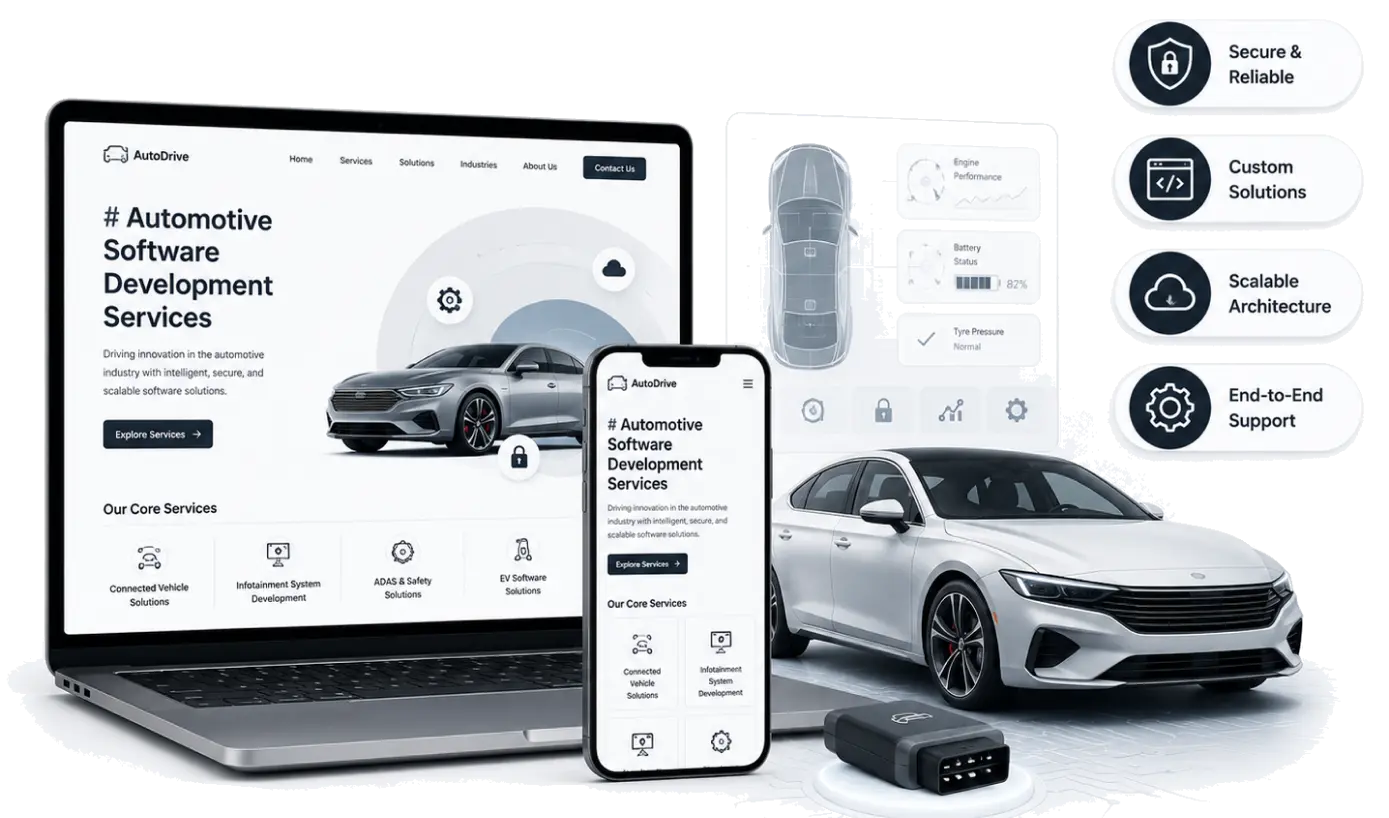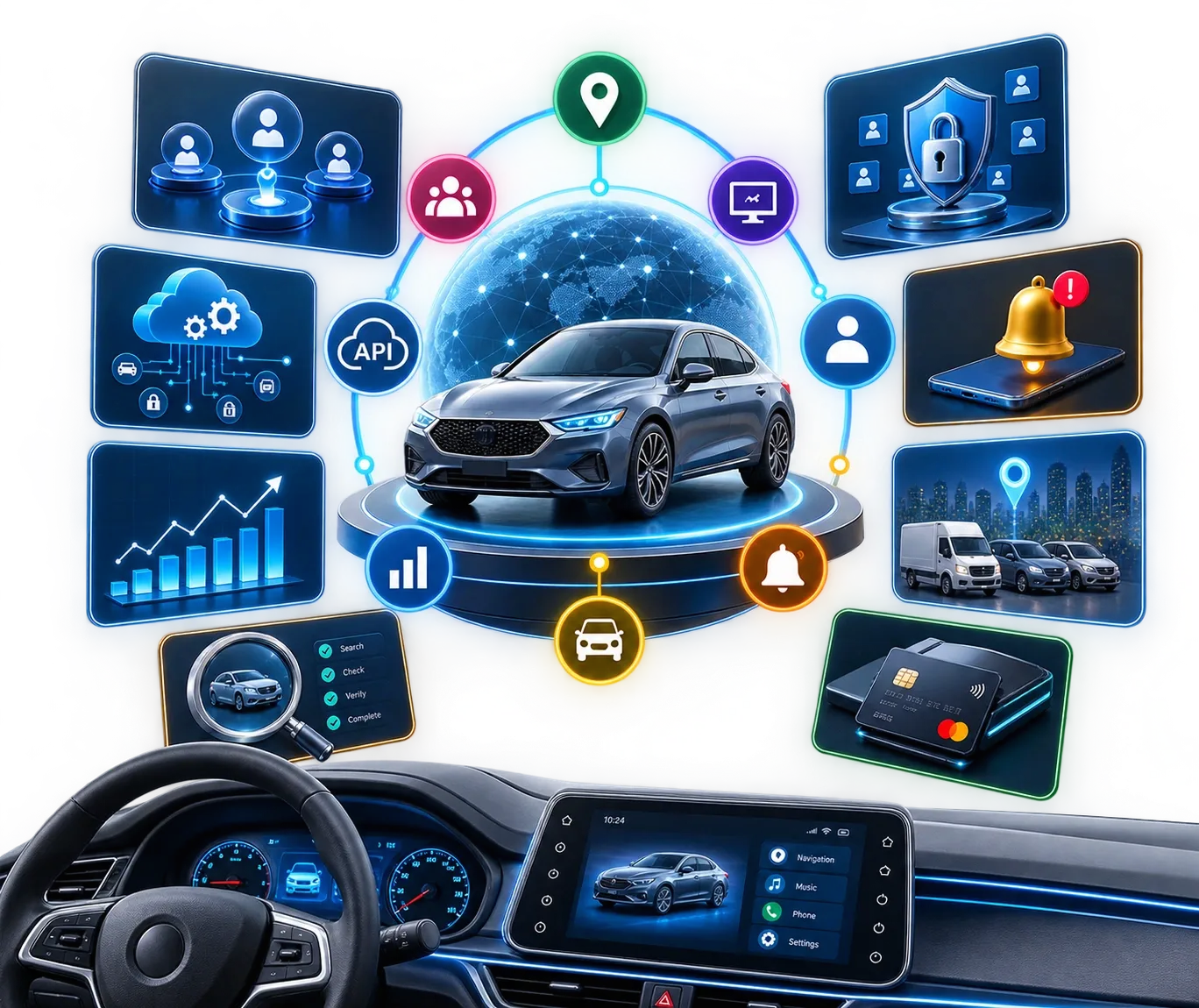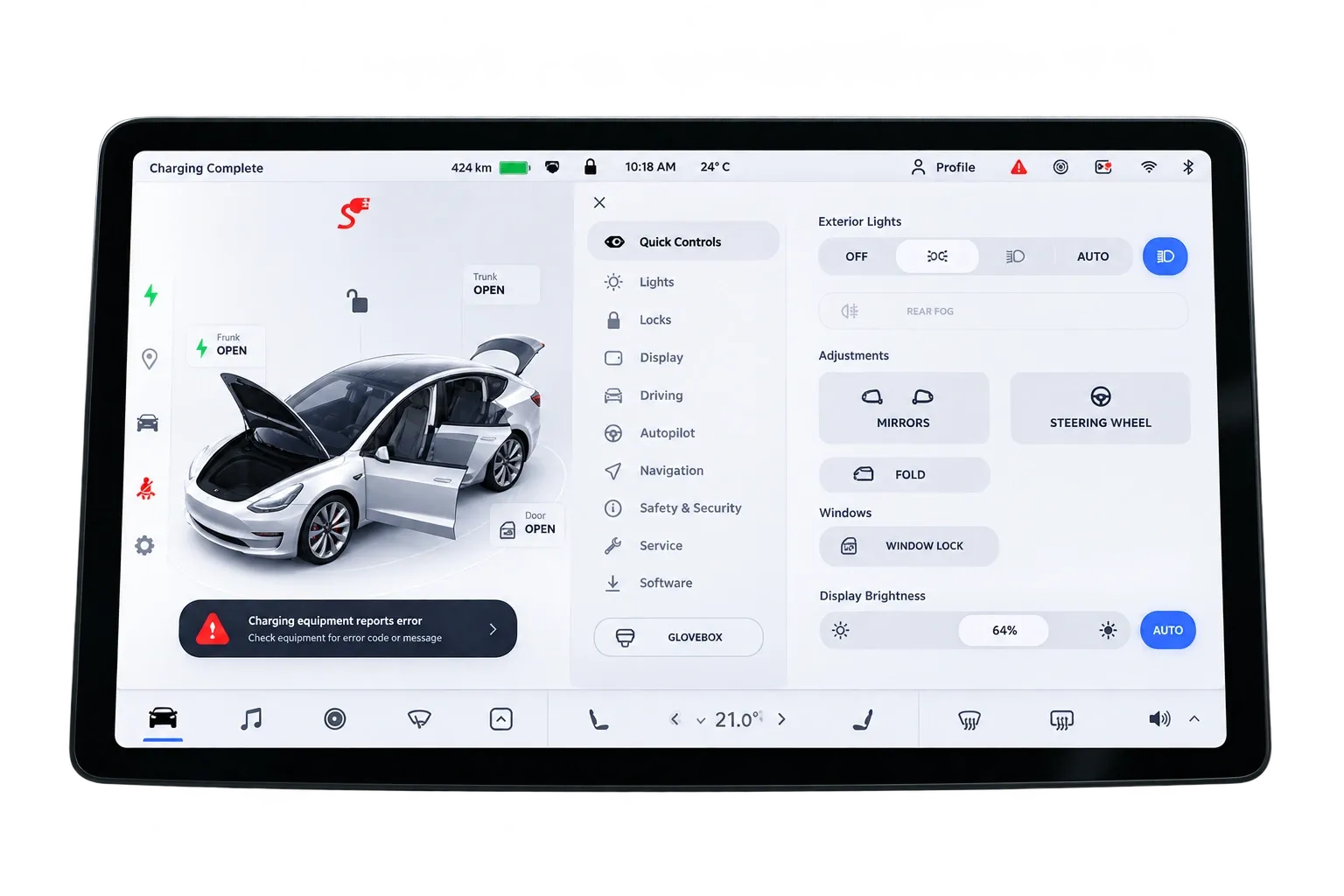
Suffescom, a reputable automotive software development company, provides a variety of automotive software development services that combine technology, cars, information, and users. Our team creates innovative digital solutions for automotive organizations that need to streamline their processes and offer new products to the market.
Our specialists use their extensive experience, advanced technologies, and business-oriented approach to create custom software for your automotive company.

We offer automotive software engineering services that range from strategy and product design to development, testing, modernization, and support. We combine our technical expertise with automotive needs to create reliable software solutions.
Our solutions have been tailored to meet the needs of specific industries through specialized workflows, connected vehicles' data, and operations.
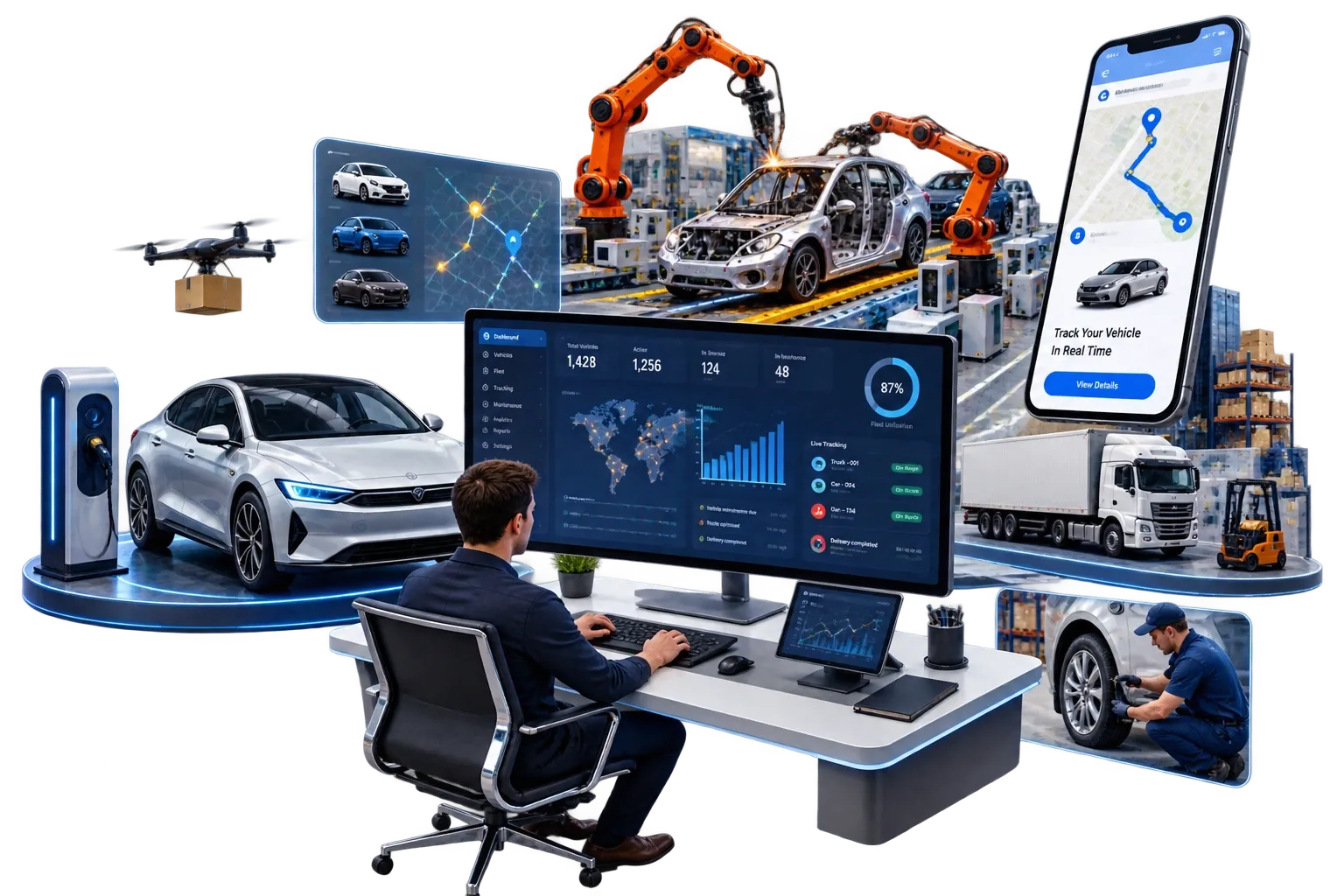
Manufacturing processes, vehicle platform management, supply chain management, quality, and enterprise software.
Dealer management, inventory management, CRM, sales, services, and customer engagement.
Fleet management, maintenance management, utilization, driver management, and rental management.
Fleets, dispatching, route planning, delivery, and fleet operations
Connected vehicle platform, telematics, APIs, and mobility services
Scheduling, Dispatch, Driver Management, Payment, Tracking, and Pricing
Inventory, products, ordering, procurement, and logistics management.
Electric vehicle charging platforms and fleets, EV battery data, EV charging stations, and energy management.
Service management, tire inventory, work orders, customer management, and service management.
Car listings, search, dealership connections, payments, financing, and transaction management.
Showcase your expertise through real-world software products built for automotive businesses. From connected applications and digital platforms to intelligent systems and enterprise software, our portfolio demonstrates how we turn complex requirements into scalable, production-ready solutions.
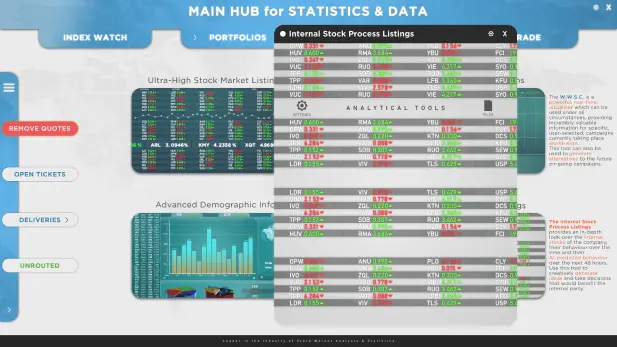
A mobility company needed to centralize vehicle data from multiple sources while giving its operations team real-time visibility. Fragmented systems were slowing down monitoring, reporting, and decision-making.
We implemented and integrated a centralized vehicle data platform that included APIs, vehicle systems, and backend services. The system simplified the process of data collection and offered an interface for monitoring and analysis purposes.
faster data processing
less manual reporting
faster issue identification
improved operational visibility
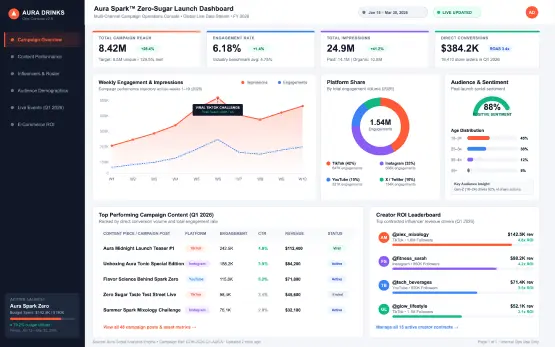
An automobile manufacturing company was making use of old software that was complicated to maintain and integrate into new systems. The issue of limited scalability had become a problem for the company.
We modernized the existing architecture and migrated critical components to a scalable software environment. New APIs and modular components enabled smoother integration with modern applications and enterprise systems.
faster system response
lower maintenance effort
faster integration cycles
reduction in technical issues
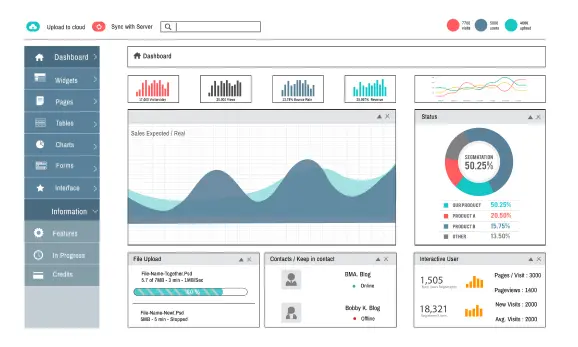
A fleet operator needed better visibility into vehicle activity, maintenance, and driver operations and wanted to hire a reliable automotive software development company. Its existing processes relied heavily on manual tracking and disconnected data sources.
We developed a centralized fleet management platform integrating vehicle data, operational workflows, reporting, and administrative functions into one system.
faster operational reporting
fewer manual processes
improved maintenance tracking
faster access to fleet data

Simplify the dealership's relationship management, sales, inventory control, service, and reporting processes. It streamlines key processes to enhance dealership visibility, automate tasks, and ensure consistent customer experiences.

Design e-commerce websites for vehicles, spare parts, accessories, and automotive services. Offer users the ability to discover, inventory, pay, order, manage, and engage through e-commerce in the automotive industry.

Make the logistics of delivery, routes, logistics processes, and delivery easier through our logistics software development services . Real-time tracking and data gathering through logistics software can facilitate the process of logistics management.

Build an on-demand mobility platform application to connect customers, drivers, vehicles, and admins. From bookings to real-time tracking, payments, pricing, notifications, and fleet management, we create flexible platforms for today's mobility industry.

Collect all data related to the vehicle and its operation using telematics software for tracking, diagnostics, driver behavior monitoring, and fleet management. Use GPS technology, vehicle devices, APIs, and cloud-based systems to get the maximum out of your real-time data.

Build software for electric vehicle businesses, charging networks, fleet operators, and mobility providers. Our EV software development services can connect vehicles, charging infrastructure, users, and business systems through a centralized digital platform.

Unify critical business processes through centralized software. We develop high-performance enterprise-grade software solutions for CRM, ERP, inventory, procurement, finance, supply chain, manufacturing, and after-sales operations across automotive organizations.

Transform automotive data into actionable business intelligence by utilizing comprehensive dashboards, detailed reporting, KPIs, and advanced analytics tools. Assist teams in making sense of sales, inventory, customers, vehicles, and operations from a single data source.

Bring fragmented automotive data into a structured and accessible environment. Our solutions support data integration, processing, governance, and synchronization across vehicles, enterprise applications, dealerships, and other business systems.

Manage vehicles, drivers, maintenance, utilization, and operations through central fleet management software . The use of real-time visibility and automation allows for effective fleet management through reduced manual work and improved decision-making.

Visibility in the entire supply chain process, including procurement, inventory, manufacturing, transportation, and deliveries, with software can help automotive companies manage their supply chain activities, track critical information, and respond more effectively to operational changes.

Manage all the orders from order creation to order fulfillment with the help of order management software that connects inventory, customers, payments, shipping, and internal workflows. Improve order visibility while reducing manual processing and data inconsistencies.
Connect your automotive software solutions to the automotive solutions that support today’s modern automotive operations.

Connect OEM solutions to exchange VINs, vehicle specs, servicing records, warranties, and connected vehicle data.

Capture telematics data from vehicles, odometer readings, fuel/battery level, diagnostic information, status of the vehicle, and performance of the vehicle.

Integrate telematics services for GPS tracking, vehicle diagnostics, driver behavior, trips, faults, and telematics data.

Enable vehicle tracking, route optimization, navigation, geofencing, ETA calculation, distance tracking, and location services.

Obtain ECU data, DTCs, sensor data, engine parameters, and health data of the vehicle through compatible interfaces.

Connect charging networks to manage charger availability, connector status, charging sessions, energy usage, and billing data.

Exchange vehicle, customer, policy, coverage, and claims information between automotive software and insurance systems.

Connect authorized registration systems to exchange VIN, ownership, inspection, registration, and vehicle documentation data.

OEM and aftermarket part numbers, fitments, specifications, compatibility, inventory, prices, and ordering information are available to you.
We work with proven enterprise and commerce platforms to enable automotive companies to implement faster, operate more efficiently, and avoid reinventing the wheel when it comes to building business capabilities.
Design Salesforce solutions to meet automotive sales, customer relationship management, service operations, marketing, and customer engagement needs.
Use Odoo's modular business applications to support automotive workflows across CRM, inventory, accounting, sales, purchasing, manufacturing, and fleet operations.
Creates and implements scalable automotive eCommerce solutions for various vehicles, parts, and accessories, ensuring a smooth shopping experience for customers.
For complex B2B, B2C, and multi-channel automotive operations, SAP Commerce makes it possible to develop enterprise-grade commerce solutions.
Acumatica's robust cloud ERP seamlessly integrates essential processes like financial management, inventory control, and customer interactions.
Leverage Microsoft Dynamics 365 to manage automotive sales, customer service, finance, inventory, supply chain, and field service operations.
The choice of technologies is made by taking into account the requirements of the projects, the need for integration, and other factors. Thus, we will be able to create automotive software development solutions that are capable of evolving together with our client’s business.
We leverage artificial intelligence and machine learning to provide the analysis of automotive data and its intelligent visualization. There are a lot of areas where AI integration might be helpful, from automation and decision-making to computer vision and personalization.
IoT connects vehicles, sensors, devices, and software to create a continuous flow of real-time information. We use IoT technologies to support connected environments, remote monitoring, asset visibility, and communication between physical devices and digital systems.
Digital twin technology creates a virtual representation of a physical vehicle, component, production asset, or automotive operation using real-time and historical data. We develop digital twin solutions that help automotive businesses monitor assets, simulate scenarios, identify potential issues, and optimize performance without relying solely on physical testing.
Cloud technology provides the scalable infrastructure needed to support modern automotive applications and data-intensive workloads. We build cloud-enabled environments that support application hosting, data storage, real-time processing, integrations, and reliable access across distributed systems.
Automotive businesses generate large volumes of data from vehicles, customers, operations, and connected systems. We use big data and analytics technologies to organize this information, identify meaningful patterns, monitor performance, and support faster, data-driven business decisions.
APIs and microservices help create flexible software architectures where applications and systems can communicate efficiently. We use them to connect automotive platforms, third-party services, databases, and enterprise applications while making software easier to scale, maintain, and extend.
Computer vision enables software to interpret and analyze images, video, and visual information. We apply this technology to automotive use cases such as vehicle inspection, object detection, driver monitoring, quality control, and automated visual analysis.
Blockchain could be used to create clear and verifiable digital documentation of the automotive processes that need more transparency and data integrity. We could use blockchain technology in areas such as supply chains, transactions, identity documents, and data transfer.
AR/VR-based software solutions help improve automotive sales, training, product visualization, and consumer engagement. Interactive experiences are created by us that let users experience the vehicle, environment, and digital data in an immersive way.
We develop feature-loaded software in accordance with particular business needs but also considering usability, performance, security, and scalability.
Track vehicles, assets, deliveries, or any other connected operations with real-time data on location and status. Tracking services will enable your team to have better visibility and respond faster to changing operations.
Bring important operational and business information into a centralized, easy-to-understand interface. Custom dashboards help different users monitor KPIs, activities, alerts, and performance without switching between multiple systems.
Control access to automotive applications based on user responsibilities and organizational roles. Flexible account and permission management helps ensure users can access the information and functions relevant to their work.
Keep users informed about important events, updates, and actions through timely automated notifications. Notifications can be triggered by system events, vehicle activity, transactions, maintenance requirements, or workflow changes.
Centralize information about vehicles and connected assets to make monitoring and administration easier. Businesses can maintain records, track usage, monitor status, and manage important vehicle-related activities from one platform.
Enable secure digital transactions across automotive applications and platforms. Integrating payment functionality supports purchases, bookings, subscriptions, service payments, and other transaction-based automotive workflows.
Help users quickly find vehicles, products, customers, orders, services, or other records within large automotive databases. Flexible search and filtering make information easier to access and reduce time spent navigating complex systems.
Create comprehensive reports and detailed insights derived from applications and operations data. Companies can analyze their performance and track trends in order to compare results and make data-driven decisions.
Connect automotive applications to third-party services, enterprise systems, and external platforms. APIs allow for flexible system integration and data exchange among various automotive software ecosystem components.
Protect applications, accounts, and sensitive business information through security-focused functionality. We use authentication and access controls in automotive software to improve user safety and control over critical systems.
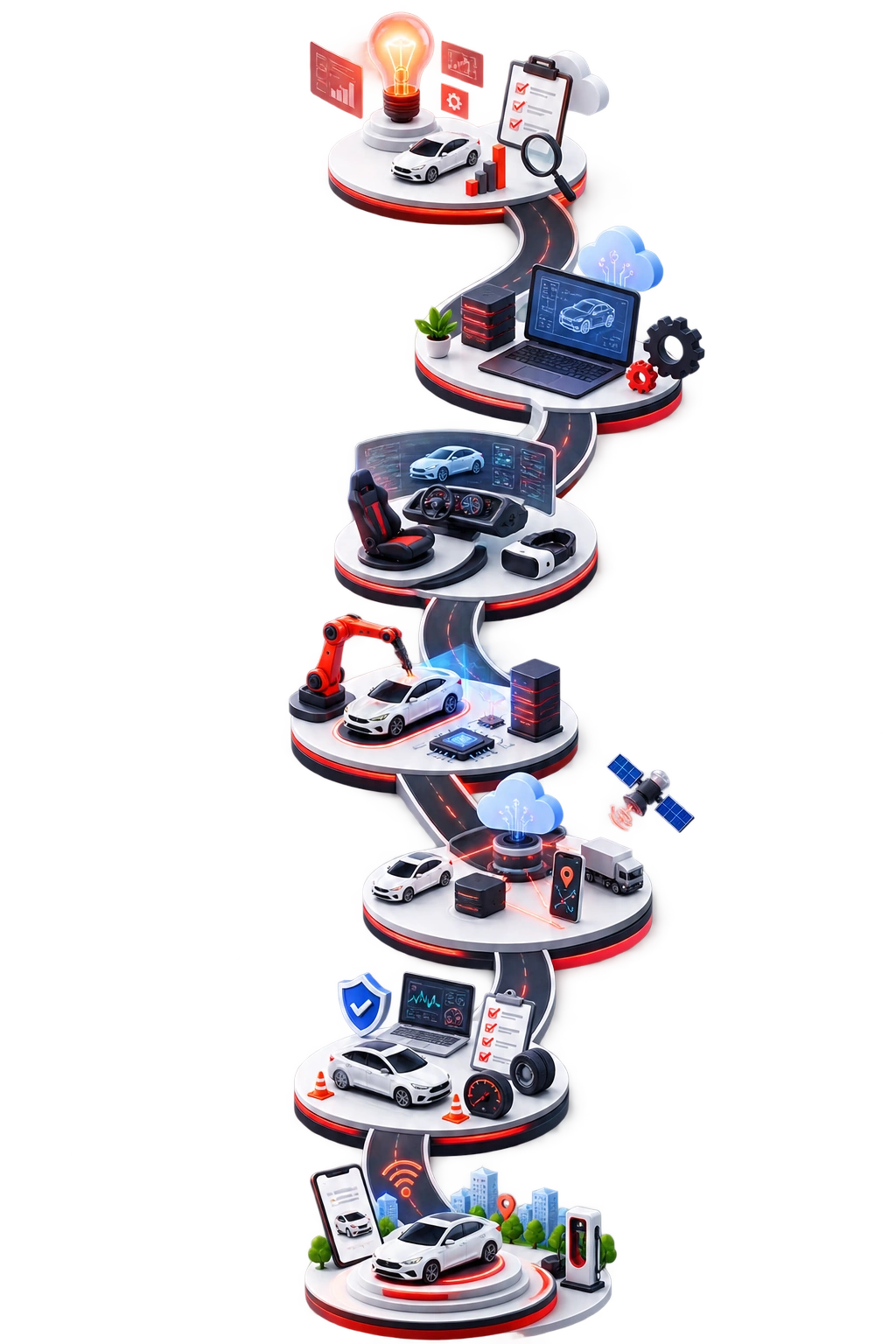
Following a structured development process allows us to translate complicated requirements from the automotive sector into robust software products. We utilize business discovery, technical analysis, development, testing, and optimization practices to ensure that we develop software products in line with your business needs and requirements.
Here, we have to understand your requirements, users, current technology infrastructure, and your technical needs. It will help us to determine the scope of the project, dependencies, and feature priorities and define development objectives.
The architects will create the software architecture, system components, integration process, data flow, and technology needs. The appropriate architecture and technology will be chosen with scalability, performance, security, and expansion in mind.
The team will turn the requirements into an outstanding user experience and interface design. Wireframes and prototypes help validate workflows and complex functionalities and establish the product experience before starting development.
We develop the software in iterative stages, regularly reviewing and refining features throughout the project. This approach keeps stakeholders involved, provides clear visibility into progress, and allows the product to adapt as business requirements evolve.
We integrate automotive applications with OEM APIs, vehicle APIs, telematics platforms, CAN/OBD-II data sources, DMS, CRM, ERP, GPS providers, charging networks, payment gateways, mapping APIs, IoT platforms, and other connected systems.
Our software solution goes through tests for functionality, performance, compatibility, usability, and security. Testing assists us in detecting weaknesses at an early stage and ensuring reliable functioning of our application in the expected environment.
After the software meets all the agreed requirements, we set up the production environment and deploy the application. Our automotive software developers supervise the entire launch procedure and address any new issues that may arise during this critical phase.
Having launched the app, we manage the work of the software, solve all possible problems, and improve the program according to our client’s needs. As a result, the program is able to maintain a high level of security and reliability throughout its operation.
Automotive software development pricing is determined by such factors as the level of complexity of the product, its integration, platform, data, and scalability. A simple business application may require a smaller investment, while connected, enterprise-grade, or data-intensive systems can require significantly more engineering effort.
The software needs to be robust enough to handle connectivity among different systems, large amounts of data, multiple parties, and continuously changing technology. Early consideration of the above-mentioned aspects will help you design software that is reliable, safe, and easy to maintain.
Many companies in the automotive industry continue using legacy systems that were not designed to work with the new generation of software. Connecting such legacy systems with new software needs proper planning of APIs and architecture.
Information related to vehicles, customers, inventories, fleet management, and others could be stored in separate systems. To synchronize information in various systems, it is important to have efficient data channels and integration architecture.
Automotive applications may need to handle fleets, vehicles, charging sessions, dealer locations, service orders, transactions, GPS events, and high-volume telematics data. Scalable architecture helps software maintain performance across business requirements.
Automotive platforms deal with processing personal information about customers, cars, operations, and other corporate data. Authentication, access control, data encryption, a secure API, monitoring, and proper data management are essential to prevent breaches.
Telematics systems, fleet management systems, connected cars, and mobility platforms frequently require real-time communication. Software should be able to exchange data in real time despite connection issues, diverse network environments, and large data sets.
The automotive software application might be required to run on mobile, web, embedded, and connected platforms. In order to ensure consistency of the functionality and user interface on various devices and platforms, careful development and testing are required.
The automotive software may have to integrate with payment gateways, maps, CRM, ERP, telematics, IoT, and many other third-party software and services. There are extra dependencies, data, and testing factors to take into account with every integration.
The automotive landscape keeps changing because of the introduction of electric vehicles, connected mobility, artificial intelligence, IoT, and software-defined cars. It becomes easier to add new features when developing flexible automotive software services.
Managing software updates for connected vehicles is complex due to varying models, hardware, and software versions. The system must ensure update compatibility, secure delivery, and version tracking without disrupting vehicle functionality.
Automotive software can process sensitive customer, vehicle, payment, location, and operational data. Compliance requirements can vary depending on the application, geography, data type, and automotive use case.








The biggest improvement for us was having everything in one place. Before this project, our teams were pulling data from different systems and spending a lot of time trying to make sense of it. The team understood the technical side quickly, but more importantly, they understood what our operations team actually needed.

We knew the old system needed to change, but replacing everything at once wasn't realistic. The team helped us take it step by step, which made the transition much easier for everyone internally. We hired Suffescom as our automotive software development company to modernize the platform without putting our existing operations at risk.

We were still relying on spreadsheets and manual updates for a lot of our day-to-day fleet work. That was becoming difficult to manage as we grew. Having a single platform where the team can actually see what's happening has made a noticeable difference to how we operate.

Purpose-built software solutions could help automotive companies to achieve simplified processes, integrate disconnected systems, and improve the digital experience. The correct solution will not only generate tangible benefits for the business, but it will also remain flexible enough to allow future development.
Automation of repetitive processes and workflow optimization should be implemented across the business, including sales, services, inventory, fleet management, and other key functions, to enhance efficiency and productivity.
Gather data about cars, customers, inventory, sales process, operations, and other variables in a system. This will allow for the collection of centralized and visible data about the business's performance in order to make faster and better decisions.
Deliver a better digital experience with mobile apps, websites, dealerships, marketplaces, and other services. Features tailored to your customers’ needs and seamless interactions online can assist businesses in improving their engagement.
Automating manual processes can save you time and effort as well as eliminate redundant operations and costs. Additionally, effective software helps companies manage growing workloads and optimize existing operations.
Develop software to handle more users, vehicles, transactions, locations, and data as the company expands its operations. The scalable architecture will let the company easily add new functionalities and services to the system.
Integrate ERP, CRM, telematics, payment gateways, inventory systems, IoT sensors, and other business applications. Enhanced connectivity will reduce information silos and streamline data flow in the automotive ecosystem.
Dashboards, alerts, and analytics offer real-time access to vehicle data, operational data, client data, and so on. Real-time data allows companies to solve problems quickly, evaluate performance, and react to changes that happen.
Build flexible automotive software services that will be able to evolve according to the changing business needs, new technologies, and demands from the customers. A flexible design will make integration and expansion much easier.
To choose the right software development partner, one should consider something else except for coding skills. With over 13 years of industry experience and engineering expertise, we develop software that addresses your company's operational needs and supports future growth.
Our expertise is in understanding the technological and process requirements of the automotive industry regardless of whether it pertains to dealerships, fleet management, mobility services, logistics, eCommerce, or enterprise-level automotive business.
Each automotive business operates based on its unique business processes, systems, users, and objectives. Software will be designed to fit the needs of your automotive business rather than forcing your business to conform to a fixed software product or process.
Our automotive software services are designed with future scalability in mind, allowing apps to grow user count, transactions, data, and integration. Scalability will allow the system to accommodate not only new functionality but also the growth of the platform itself.
The majority of automotive companies use various applications, platforms, devices, and data sources. The combination of multiple APIs, ERP/CRM solutions, payment gateways, telematics, IoTs, and other technologies ensures smooth data flow and connectivity.
We ensure security through the entire development lifecycle, from architecture to deployment. Proper security practices like authentication, authorization, API security, data protection, and others have been employed based on the project requirements and risks.
We use an iterative methodology of development that ensures visibility and feedback on the project progress. It also allows making sure that software is properly aligned with the business needs and requirements and can be changed when required.
We utilize technologies that are needed to implement artificial intelligence, IoT, cloud computing, big data, analytics, APIs, and connected applications in our automotive software solutions. The tech stack depends on the features, integrations, performance, and scalability requirements.
It is possible to deliver end-to-end support at all stages of the software life cycle, including discovery, architecture, development, testing, deployment, and improvements. Hiring a reliable automotive software development partner ensures consistency and continuity.
Our efforts in the field of software development and innovative technologies were recognized by industry platforms and the technology community. They are a reflection of our application engineering excellence, innovations, results for clients, and business solutions for various industries.

Business Awards 2025
Recognized for app excellence in Mobile Technology

Appfutura
Top App Development Company

GoodFirms
Top AI Development Company

Clutch
Top 100 Companies 2025
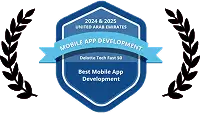
ITFirms
World’s Top Mobile App Development Companies 2025

Clutch
Top Developers in India 2025

Global 100 - 2026
Best Information Technology & Services Firm of the Year - US
We make use of a range of conventional development frameworks along with new cloud, data, and connectivity technologies for developing dependable automotive software services.























• SUFFESCOM SOLUTIONS
Build Smarter. Scale Faster. Grow More.
Have a Vision? Let’s Turn It Into a Digital Reality.
Get a quick response from our best experts in under 10 minutes.
Suffescom easily understood our main goal and delivered the best digital solution. Their team was very cooperative, and it was a very good experience working with them. I would highly recommend them.

Working with Suffescom was a really great experience. Their developers demonstrated technical knowledge and delivered our mobile app solution with all required functionalities on time.

Suffescom helped us build a logistics software solution that completely improved our fleet operations. Their professionalism and transparency are what make them a reliable technology partner.

Share Your Requirements. Our Experts Will Shape the Solution.
• SUFFESCOM SOLUTIONS
Build Smarter. Scale Faster. Grow More.
Have a Vision? Let’s Turn It Into a Digital Reality.
Get a quick response from our best experts in under 10 minutes.
Suffescom easily understood our main goal and delivered the best digital solution. Their team was very cooperative, and it was a very good experience working with them. I would highly recommend them.
Working with Suffescom was a really great experience. Their developers demonstrated technical knowledge and delivered our mobile app solution with all required functionalities on time.
Suffescom helped us build a logistics software solution that completely improved our fleet operations. Their professionalism and transparency are what make them a reliable technology partner.
Share Your Requirements. Our Experts Will Shape the Solution.
• SUFFESCOM SOLUTIONS
Build Smarter. Scale Faster. Grow More.
Have a Vision? Let’s Turn It Into a Digital Reality.
Get a quick response from our best experts in under 10 minutes.
Suffescom easily understood our main goal and delivered the best digital solution. Their team was very cooperative, and it was a very good experience working with them. I would highly recommend them.
Working with Suffescom was a really great experience. Their developers demonstrated technical knowledge and delivered our mobile app solution with all required functionalities on time.
Suffescom helped us build a logistics software solution that completely improved our fleet operations. Their professionalism and transparency are what make them a reliable technology partner.
Share Your Requirements. Our Experts Will Shape the Solution.
Fret Not! We have Something to Offer.