+971-8000321216



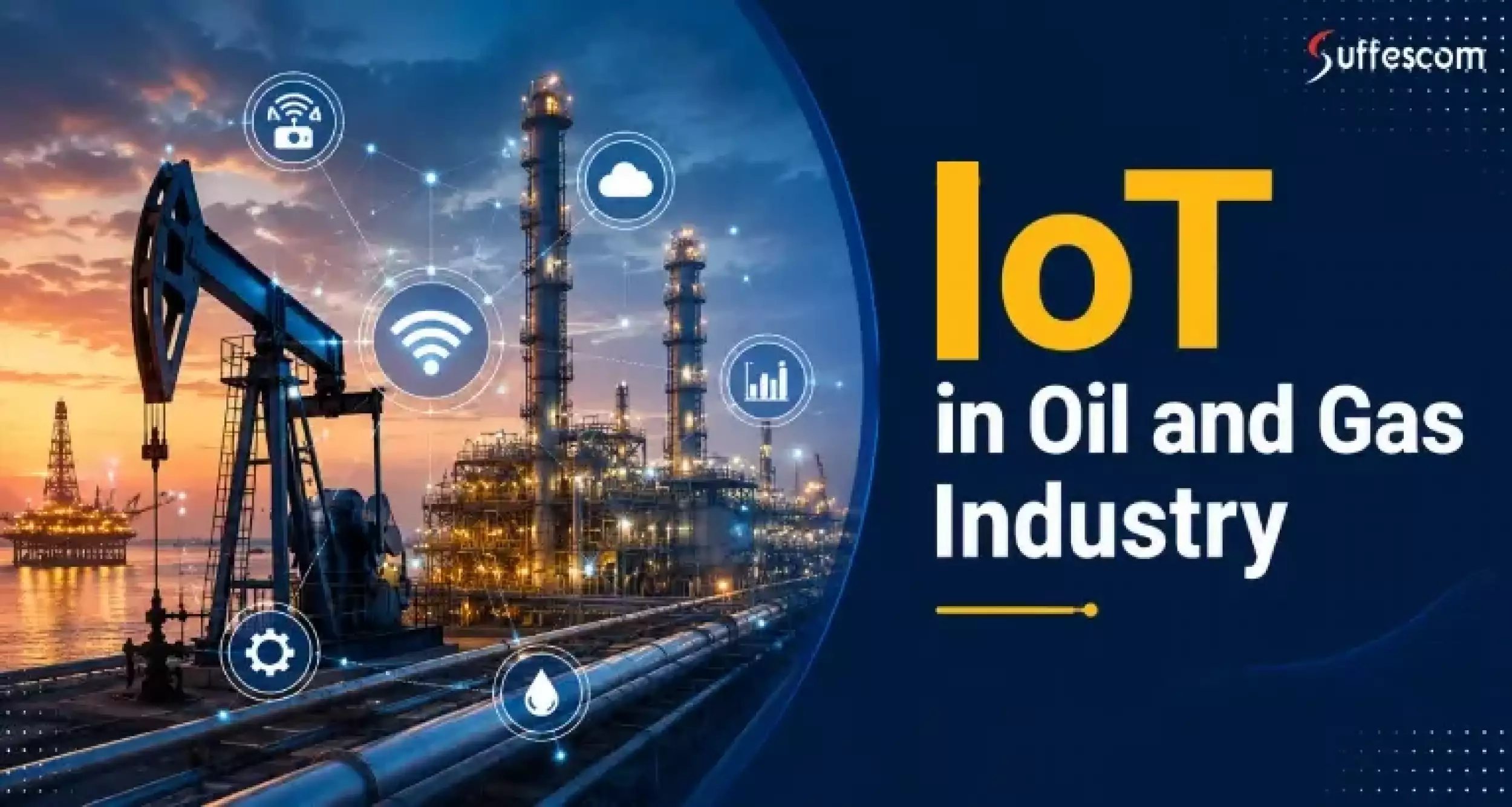
The oil and gas industry has been known to be one of the most asset intensive and complicated industrial sectors in the world. From exploration to drilling, transportation to refining and distribution, the oil and gas industry has large infrastructure located in remote locations that pose challenges to its management.
Among the technologies driving this transformation, the Internet of Things (IoT) has emerged as a game-changing innovation. With the use of intelligent devices and cloud computing platforms along with real time analysis of data, IoT is transforming how oil and gas companies conduct their businesses..
According to industry reports, the global Industrial IoT market is expected to witness substantial growth over the next decade, with the oil and gas sector representing one of the largest adopters. With AI, edge computing, digital twins, and 5G connectivity becoming prevalent, more opportunities are being presented in the field of connected oil and gas operations.
There has been a rapid increase in the adoption of IoT in the operations of oil and gas industries as a result of the rising demand for visibility, predictive maintenance, remote asset management, and sustainability efforts. Modern oilfields, pipelines, and refineries are now increasingly using IoT-powered ecosystems to gather and analyze huge amounts of operational data.
Transform Your Oil and Gas Operations with Advanced IoT Solutions
Key IoT Technologies Powering Modern Oil and Gas Operations
The success of IoT implementation depends on a combination of interconnected technologies working together to collect, process, transmit, and analyze operational data.
Smart Sensors and Monitoring Devices
Sensors form the foundation of every IoT ecosystem. These devices continuously collect critical information related to:
- Pressure levels
- Temperature variations
- Flow rates
- Equipment vibrations
- Corrosion levels
- Gas concentrations
- Tank levels
By capturing real-time operational data, sensors help operators identify abnormalities before they become costly failures.
Low-Power Wide Area Networks (LPWAN)
Oil and gas facilities often operate in remote locations where traditional communication infrastructure is limited.
LPWAN technologies provide:
- Long-distance communication
- Low energy consumption
- Reliable connectivity
- Cost-effective deployment
These networks enable seamless communication between thousands of sensors deployed across large operational environments.
Edge Computing
Edge computing processes data closer to the source rather than transmitting all information to centralized cloud servers.
Benefits include:
- Reduced latency
- Faster decision-making
- Lower bandwidth consumption
- Improved operational reliability
This capability is particularly important for offshore platforms and remote drilling operations where connectivity may be limited.
Artificial Intelligence and Machine Learning
AI-powered systems transform raw sensor data into actionable insights.
Key capabilities include:
- Predictive maintenance
- Failure forecasting
- Production optimization
- Demand prediction
- Anomaly detection
The growing adoption of AI in oil and gas industry processes, combined with IoT-driven data collection, helps organizations predict equipment failures, optimize operations, and prevent costly production downtime.
Cloud Computing
Cloud platforms serve as centralized hubs for data storage and analysis.
Cloud solutions offer:
- Scalable infrastructure
- Remote accessibility
- Data integration
- Enterprise-wide visibility
Operators can access operational insights from anywhere while maintaining secure collaboration across departments.
5G Connectivity
The emergence of 5G technology provides:
- Ultra-low latency
- High bandwidth
- Reliable communication
- Massive device connectivity
These capabilities support advanced IoT deployments across large industrial environments.
Digital Twins
Digital twins create virtual replicas of physical assets.
Organizations use digital twins to:
- Simulate equipment performance
- Test operational scenarios
- Predict failures
- Improve asset utilization
By combining digital twins with IoT data, companies gain deeper operational intelligence.
Top Benefits of Implementing IoT in Oil and Gas Operations
The adoption of IoT in oil and gas industry environments delivers substantial business advantages across operational, financial, and safety dimensions.
Enhanced Operational Efficiency
Real-time monitoring enables organizations to identify bottlenecks, optimize workflows, and maximize equipment performance.
This leads to:
- Increased productivity
- Better resource utilization
- Reduced downtime
- Faster decision-making
Predictive Maintenance
Traditional maintenance approaches often rely on fixed schedules that may not accurately reflect equipment conditions.
IoT-based predictive maintenance allows companies to:
- Monitor equipment health continuously
- Detect anomalies early
- Schedule maintenance proactively
- Reduce unexpected failures
As a result, maintenance costs decrease while asset lifespan increases.
Improved Worker Safety
Oil and gas facilities present numerous safety hazards.
IoT solutions improve safety through:
- Gas leak detection
- Wearable monitoring devices
- Remote asset inspections
- Emergency response systems
These technologies help minimize human exposure to dangerous environments.
Reduced Operational Costs
Continuous monitoring and optimization significantly reduce unnecessary expenditures.
Cost savings come from:
- Lower maintenance expenses
- Reduced fuel consumption
- Fewer equipment failures
- Minimized production losses
Better Asset Utilization
Organizations gain complete visibility into equipment performance.
This enables:
- Asset optimization
- Capacity planning
- Lifecycle management
- Inventory control
Environmental Protection
IoT technologies support sustainability initiatives by monitoring emissions, leaks, and environmental conditions in real time.
Regulatory Compliance
Automated monitoring and reporting simplify compliance with industry regulations and environmental standards.
IoT Applications in Oil and Gas Industry
The growing adoption of IoT has unlocked numerous operational use cases across the oil and gas value chain.
Predictive Equipment Maintenance
IoT-enabled sensors continuously track equipment performance indicators such as vibration, pressure, and temperature.
Organizations can:
- Detect wear and tear early
- Predict failures
- Prevent costly breakdowns
- Improve equipment reliability
Pipeline Monitoring
Pipelines span thousands of miles and require constant monitoring.
IoT solutions help identify:
- Pressure drops
- Leakages
- Corrosion
- Unauthorized access
This reduces environmental risks and operational losses.
Remote Asset Monitoring
Remote oilfields often face monitoring challenges.
IoT systems provide:
- Real-time equipment visibility
- Automated alerts
- Remote diagnostics
- Reduced site visits
Production Optimization
Connected systems continuously analyze production data to identify opportunities for operational improvements.
Benefits include:
- Increased output
- Reduced waste
- Enhanced efficiency
- Better planning
Fleet Management
Transportation plays a crucial role in oil and gas logistics.
IoT-powered fleet solutions enable:
- Vehicle tracking
- Route optimization
- Fuel monitoring
- Driver safety management
Environmental Monitoring
Sensors monitor air quality, emissions, water contamination, and hazardous substances to support environmental protection efforts.
These examples highlight the expanding range of iot use cases in oil and gas industry environments.
How IoT is Transforming Upstream, Midstream, and Downstream Operations
Upstream Operations
Upstream activities include exploration, drilling, and production.
IoT technologies support:
- Smart drilling systems
- Reservoir monitoring
- Remote asset management
- Production optimization
Operators gain greater visibility into field performance and resource extraction processes.
Midstream Operations
Midstream activities involve transportation and storage.
IoT improves:
- Pipeline integrity monitoring
- Leak detection
- Tank management
- Logistics optimization
Organizations can ensure safer and more efficient transportation networks.
Downstream Operations
Refining and distribution processes benefit from:
- Smart refinery management
- Energy optimization
- Equipment monitoring
- Quality control systems
The result is improved efficiency and reduced operational costs across the downstream value chain.
IoT-Driven Asset Lifecycle Management in Oil & Gas
Oil and Gas Industry heavily depends on valuable assets like drilling rigs, pipelines, pumps, compressors, storage facilities and refinery equipment. The use of IoT (Internet of Things) technology allows collecting data in real time, performing analytics and intelligent management of assets at all stages of the lifecycle of the asset.
1. Asset Acquisition
The process of asset acquisition is the initial phase of the lifecycle in which the organization buys assets according to its requirements and future strategies.
With IoT being integrated into the oil and gas industry, companies can be more informed about their purchasing decisions, using real-time and historical information about the assets. This approach improves equipment selection, reduces operational risks, and optimizes total lifecycle cost
Key benefits include:
- Data-driven equipment selection based on actual operational needs.
- Better vendor evaluation through performance benchmarking.
- Improved budgeting and capital expenditure planning.
- Reduced risk of investing in underperforming or incompatible assets.
- Enhanced visibility into asset specifications and compliance requirements.
2. Installation and Commissioning
After acquisition, assets must be properly installed, configured, tested, and commissioned before entering operational service.
IoT sensors and connected devices simplify the commissioning process by continuously monitoring installation parameters and equipment performance.
Key advantages include:
- Automated validation of installation quality.
- Real-time monitoring of system performance during startup.
- Faster detection of configuration errors and equipment defects.
- Improved compliance with safety and regulatory standards.
- Digital documentation of installation and commissioning activities.
3. Operational Monitoring
Monitoring is one of the key processes in the asset life cycle. After assets have become functional, monitoring should be done continually to guarantee their proper functioning.
The IoT system collects data about the equipment’s operation through sensors that monitor temperature, pressure, vibrations, flow, fuel consumption, etc.
Benefits of IoT-enabled operational monitoring include:
- Real-time visibility into asset health and performance.
- Early detection of anomalies and operational inefficiencies.
- Improved production output and resource utilization.
- Enhanced safety through continuous monitoring of critical equipment.
- Remote monitoring capabilities for offshore rigs and remote facilities.
- Data-driven decision-making for operational optimization.
4. Maintenance Management
Maintenance management is essential for ensuring asset reliability and extending equipment lifespan. Traditional maintenance approaches often rely on fixed schedules, which can lead to unnecessary servicing or unexpected failures.
IoT transforms maintenance by enabling predictive and condition-based maintenance strategies.
Key capabilities include:
- Predictive maintenance using real-time equipment data.
- Automated alerts for abnormal operating conditions.
- Reduced unplanned downtime and production losses.
- Optimized maintenance scheduling and workforce allocation.
- Lower repair and replacement costs.
- Extended asset lifespan through proactive interventions.
For example, vibration sensors installed on pumps and compressors can detect early signs of wear, allowing maintenance teams to address issues before a breakdown occurs. This significantly improves reliability and operational continuity.
5. Asset Retirement
Asset retirement occurs when equipment reaches the end of its useful life, becomes economically unviable, or no longer meets operational requirements.
IoT-generated historical data provides a comprehensive record of asset performance, maintenance history, operational costs, and failure trends..
Key benefits of IoT-driven asset retirement include:
- Accurate assessment of remaining asset value.
- Data-backed decisions regarding replacement or refurbishment.
- Reduced risks associated with aging infrastructure.
- Improved planning for capital investments and upgrades.
- Enhanced compliance with environmental and safety regulations.
- Better documentation for asset disposal and decommissioning processes.
Organizations can maximize returns on investments while ensuring safe and efficient retirement of aging assets.
IoT and AI Integration for Intelligent Oil & Gas Operations
The convergence of AI and IoT in oil and gas environments is enabling smarter and more autonomous operations.
AI systems process enormous volumes of sensor data generated by IoT devices.
Together, these technologies deliver:
- Predictive maintenance
- Intelligent automation
- Risk assessment
- Production forecasting
- Energy optimization
- Equipment diagnostics
Machine learning algorithms continuously improve operational efficiency by identifying patterns that humans may overlook.
As adoption increases, intelligent oilfields are becoming a reality, where AI-driven systems automatically adjust operations based on real-time conditions.
Common Challenges of IoT Adoption in the Oil and Gas Industry
While there are many advantages to IoT technology when it comes to oil and gas industries, it is not without its difficulties. Businesses have to overcome various technical, operational, and monetary barriers in order to utilize their full potential. It is important to know what these difficulties are to help companies adopt the technology.
1. Cybersecurity Risks
As IoT devices continuously collect and transmit data across networks, they create additional entry points for cyber threats. Oil and gas infrastructure, including pipelines, drilling platforms, refineries, and storage facilities, often contains critical systems that are attractive targets for cybercriminals.
A security breach can lead to operational disruptions, financial losses, environmental incidents, and safety hazards.
Key concerns include:
- Unauthorized access to connected equipment and networks.
- Data breaches involving operational and business-critical information.
- Malware and ransomware attacks targeting industrial systems.
- Increased vulnerability due to a large number of connected devices.
- Compliance challenges related to cybersecurity regulations and standards.
To mitigate these risks, organizations must implement strong encryption, multi-factor authentication, network segmentation, continuous monitoring, and regular security updates across all IoT environments.
2. Legacy System Integration
Many oil and gas enterprises continue to use old equipment that was never intended for IoT integration. The implementation of new IoT solutions to the existing system of operations in the oil and gas industry can be a complicated and lengthy procedure due to the lack of interoperability and connectivity of legacy assets.
Legacy assets often use outdated communication protocols and lack the connectivity capabilities required for real-time data exchange..
Common integration challenges include:
- Incompatibility between old equipment and modern IoT platforms.
- Limited availability of digital interfaces in aging assets.
- Difficulty consolidating data from multiple systems.
- Increased implementation complexity and project timelines.
- Potential disruptions to ongoing operations during system upgrades.
Organizations often need middleware solutions, custom integrations, or phased modernization strategies to bridge the gap between legacy infrastructure and IoT-enabled operations.
3. Connectivity Challenges
Oil and gas exploration are often performed in distant geographical locations such as offshore platforms, desert areas, hilly areas, and remote drilling sites. Maintaining good connectivity in such distant locations can become challenging at times.
Internet-of-things (IoT) devices depend upon communication networks for transmitting real-time data. Connectivity issues may lead to delayed transmission of data and poor visibility, and limited effectiveness of monitoring and predictive maintenance systems.
Major connectivity issues include:
- Limited network coverage in remote operational areas.
- Signal interference caused by harsh environmental conditions.
- High latency affecting real-time decision-making.
- Dependence on satellite or specialized communication networks.
- Increased infrastructure costs for maintaining reliable connectivity.
To overcome these challenges, companies often adopt hybrid communication technologies, including satellite networks, private LTE, 5G, edge computing, and low-power wide-area networks (LPWAN).
4. High Initial Investment
The implementation of IoT technology involves huge expenses associated with hardware, software, networking, and even employee training. Additional expenses will be needed for system integration, cybersecurity, and maintenance.
Cost-related challenges include:
- Procurement of sensors, gateways, and connected devices.
- Deployment of communication and networking infrastructure.
- Software licensing and analytics platform expenses.
- Employee training and change management initiatives.
- Ongoing maintenance, upgrades, and cybersecurity investments.
Companies often address this challenge through phased deployments, pilot projects, and ROI-focused implementation strategies that demonstrate value before scaling operations.
5. Data Management Complexity
The Internet of Things environment generates huge amounts of data from various objects and processes. Management, processing, storing, and analyzing this data become complicated issues for such an environment as a result of the growing number of devices connected to each other.
Poor data management strategy can prevent people from making useful decisions based on the collected data. Absence of the unified source of information can make IoT solutions less efficient.
Key data management challenges include:
- Handling large volumes of real-time and historical data.
- Ensuring data accuracy, consistency, and reliability.
- Integrating information from multiple operational sources.
- Managing data storage and processing requirements.
- Transforming raw data into actionable business insights.
Advanced analytics platforms, cloud computing, artificial intelligence, and data governance frameworks play a crucial role in helping organizations manage and utilize IoT-generated data effectively.
The Impact of Edge Computing on Oil and Gas IoT Systems
As the oil and gas industry increasingly adopts IoT technologies, the volume of data generated by connected sensors, equipment, and operational systems continues to grow. Traditional cloud-based architectures often struggle to process this data quickly enough for mission-critical operations.
1. Faster Decision-Making
Oil and gas operations often require immediate responses to changing conditions, equipment failures, safety incidents, or production anomalies. Relying solely on cloud-based systems can introduce delays due to data transmission and processing times.
Edge computing processes data locally at the asset, facility, or operational site, allowing critical decisions to be made almost instantly. .
Key benefits include:
- Immediate detection of equipment abnormalities.
- Faster response to safety and environmental incidents.
- Real-time operational adjustments to optimize production.
- Reduced delays caused by cloud data transmission.
- Improved decision-making in remote and offshore locations.
By enabling rapid action, edge computing helps minimize risks, downtime, and production losses.
2. Reduced Bandwidth Usage
Oil and gas facilities generate massive amounts of sensor data every second. Continuously transmitting all this information to centralized cloud platforms can place significant strain on communication networks and increase operational costs.
Edge computing filters, processes, and analyzes data locally before transmitting only relevant information to the cloud..
Advantages include:
- Lower network bandwidth consumption.
- Reduced communication and data transmission costs.
- More efficient utilization of cloud storage resources.
- Prioritization of critical operational data.
- Improved performance in bandwidth-constrained environments.
- Organizations can optimize network infrastructure while maintaining access to valuable operational insights.
3. Improved Reliability
Many oil and gas operations are located in remote environments where internet connectivity may be limited or intermittent. Dependence on continuous cloud connectivity can create operational risks if communication networks fail.
Edge computing allows systems to continue functioning independently even when network connections are unavailable.
Key reliability benefits include:
- Continued operations during network outages.
- Reduced dependence on centralized cloud systems.
- Greater system resilience in remote locations.
- Improved uptime for mission-critical assets.
- Consistent monitoring and control capabilities.
This reliability is especially important for offshore platforms, pipelines, drilling sites, and other geographically isolated facilities.
4. Enhanced Security
The oil and gas industry handles highly sensitive operational and infrastructure data. Transmitting large volumes of information across multiple networks increases the potential attack surface for cyber threats.
Edge computing enhances security by keeping much of the data processing and storage closer to the source..
Security advantages include:
- Reduced exposure of critical data during transmission.
- Lower risk of cyberattacks targeting centralized systems.
- Improved control over sensitive operational information.
- Enhanced compliance with industry security standards.
- Faster identification of potential security threats.
When combined with encryption, access controls, and network segmentation, edge computing strengthens the overall cybersecurity posture of IoT deployments.
5. Real-Time Analytics
Real-time analytics is essential for optimizing production, improving asset performance, and preventing equipment failures. Traditional cloud architectures may introduce delays that limit the effectiveness of time-sensitive analytics.
Edge computing enables immediate analysis of operational data directly at the source. Advanced algorithms can evaluate sensor readings, identify anomalies, and generate actionable insights within milliseconds.
Key applications include:
- Predictive maintenance for critical equipment.
- Real-time monitoring of drilling and production activities.
- Detection of leaks, pressure fluctuations, and safety hazards.
- Optimization of energy consumption and operational efficiency.
- Automated alerts and responses to abnormal conditions.
By providing instant insights, edge computing helps organizations make proactive decisions that improve productivity, safety, and asset reliability.
Real-World Examples of IoT Transforming Oil and Gas Operations
Several industry leaders have successfully adopted IoT technologies.
1. Smart Pipeline Monitoring
IoT-enabled sensors installed along pipelines continuously monitor pressure, flow rates, temperature, and structural integrity. These sensors can detect leaks, corrosion, or abnormal operating conditions in real time, allowing operators to respond before minor issues escalate into major incidents. Smart pipeline monitoring improves safety, minimizes environmental risks, and reduces costly downtime. It also enables remote oversight of vast pipeline networks spread across challenging terrains.
2. Offshore Platform Monitoring
Offshore oil and gas platforms operate in harsh and remote environments where equipment reliability is critical. IoT devices continuously track the performance of drilling equipment, pumps, compressors, and safety systems, providing real-time operational insights. Remote monitoring allows engineers onshore to assess asset conditions without frequent site visits. This improves operational efficiency, enhances worker safety, and reduces maintenance costs associated with offshore operations.
3. Intelligent Refineries
Modern refineries use IoT technologies to monitor and optimize complex production processes. Connected sensors collect data on temperature, pressure, energy consumption, and equipment performance across multiple processing units. Advanced analytics help operators identify inefficiencies, improve resource utilization, and maintain product quality. As a result, intelligent refineries can increase production efficiency while reducing operational costs and energy waste.
4. Predictive Maintenance Programs
Oil and gas companies are increasingly implementing IoT-driven predictive maintenance programs to improve asset reliability. Sensors monitor equipment health indicators such as vibration, temperature, and operating performance, enabling early detection of potential failures. Maintenance teams receive alerts before breakdowns occur, allowing repairs to be scheduled proactively. This approach reduces unplanned downtime, extends equipment lifespan, and lowers maintenance expenses.
5. Environmental Compliance Monitoring
Environmental regulations require oil and gas companies to closely monitor emissions, waste management, and potential environmental hazards. IoT sensors provide continuous tracking of air quality, water quality, methane emissions, and other environmental parameters. Real-time monitoring helps organizations quickly identify compliance issues and take corrective action when necessary. This not only supports regulatory compliance but also strengthens sustainability initiatives and environmental stewardship efforts.
These examples demonstrate how iot applications in oil and gas industry environments are generating measurable business value.
IoT and Environmental Monitoring: Supporting Sustainable Energy Operations
As environmental regulation norms get implemented and sustainability takes on more significance, the oil and gas sector is making greater use of Internet of Things technology to reduce their environmental footprint. IoT-based monitoring systems allow real-time monitoring of emissions and environmental conditions, allowing companies to work sustainably and efficiently..
1. Emissions Tracking
The IoT sensors are essential in monitoring greenhouse gases such as methane, carbon dioxide, and volatile organic compounds (VOC). The sensors continually gather and send data that help determine the source of the emissions, allowing operators to take prompt measures for mitigation. The real-time monitoring of emissions is essential in minimizing the negative effects on the environment and also in helping organizations meet the regulatory standards set by the environmental laws.
2. Oil Spill Detection
Oil spills can have serious negative impacts on the environment and lead to substantial monetary and reputation losses for the company. The oil spill monitoring system that is enabled by IoT employs sensor networks, drones, and other connected devices to help detect the leakages and spills at their very beginning stages. Immediate alerts will allow the response team to quickly act and prevent contamination and higher clean-up expenses.
3. Water Quality Monitoring
Water is an important input in several oil and gas activities, and efficient water management becomes necessary for this reason. Water is regularly monitored using IoT sensors that track its characteristics like pH, temperature, dissolved oxygen, salinity, and contamination in the water sources. Real-time monitoring of water provides an opportunity to understand pollution hazards, maintain quality of water, and make wise use of water.
4. Compliance Monitoring
Environment compliance is another critical concern that is of importance to many oil and gas organizations operating under tight regulatory guidelines. With the help of IoT-based systems, organizations are able to automate the gathering and tracking of environmental information and monitor their performance at all times. They can easily detect any discrepancy from regulatory requirements and take necessary action before getting into trouble.
5. Resource Optimization
The IoT technology enables businesses to manage their energy, water, fuel, and other important resources effectively through insightful analysis of their consumption and performance levels. Through analytics, areas of inefficiencies or wastage of resources are identified allowing companies to make appropriate changes. Optimization of resources does not only decrease operational expenses but minimizes environmental impact in the form of energy usage and emissions.
Build Intelligent Oil and Gas Systems with Custom IoT Development
Partner with Suffescom Solutions to Build Advanced IoT Solutions
As oil and gas companies continue their digital transformation journey, selecting the right technology partner becomes essential for achieving long-term success.
Suffescom Solutions specializes in delivering innovative digital solutions tailored to complex industrial environments. With expertise in IoT development, AI integration, cloud computing, and enterprise software engineering, the company helps organizations build scalable and secure connected ecosystems.
Our IoT App Development for oil and gas industry services include:
- Custom IoT solution development
- Smart sensor integration
- Predictive maintenance platforms
- Asset monitoring systems
- AI-powered analytics solutions
- Cloud and edge computing integration
- Digital twin implementation
- Industrial automation systems
Whether your goal is improving operational efficiency, reducing downtime, enhancing worker safety, or supporting sustainability initiatives, our experts can develop customized IoT solutions aligned with your business objectives.
Partner with Suffescom Solutions to accelerate innovation and unlock the full potential of connected oil and gas operations.
Frequently Asked Questions (FAQs)
1. What is IoT in the oil and gas industry?
IoT in the oil and gas industry refers to the use of connected sensors, devices, and software platforms that collect and analyze real-time operational data to improve efficiency, safety, and decision-making.
2. What are the major benefits of implementing IoT in oil and gas operations?
Key benefits include predictive maintenance, reduced downtime, enhanced worker safety, improved asset utilization, environmental monitoring, and operational cost savings.
3. How does AI enhance IoT solutions in oil and gas?
The integration of AI and IoT in oil and gas enables predictive analytics, automated decision-making, anomaly detection, and intelligent asset management.
4. What are the most common IoT use cases in oil and gas industry operations?
Common use cases include predictive maintenance, pipeline monitoring, remote asset management, environmental monitoring, production optimization, and fleet management.
5. Why is edge computing important for oil and gas IoT systems?
Edge computing enables real-time data processing near operational assets, reducing latency, improving reliability, minimizing bandwidth usage, and supporting faster decision-making.