+971-8000321216




The ride-hailing industry has evolved from a disruptive concept into a global standard for urban mobility. What started with companies like Uber and Lyft has now inspired thousands of founders to enter the market with innovative, localized, and niche transportation solutions. However, building and scaling a taxi app is far more complex than launching an MVP. Many founders begin with no-code tools to accelerate development, but quickly encounter roadblocks.
This blog explores where founders typically get stuck, how no-code plays a role in early-stage growth, and how expert partners like Suffescom help transform initial ideas into scalable, high-performance taxi platforms.
Why Taxi Startups Aim to Scale Like Uber and Lyft Today
When it comes to scaling ride-hailing apps, performance and infrastructure play a critical role. The aspiration to replicate Uber-like success is not accidental. It is rooted in a proven business model that has reshaped urban transportation worldwide.
1. Market Demand and Scalability Expectations
Urban populations are growing, and with them, the demand for efficient, on-demand transportation. Consumers expect convenience, real-time tracking, seamless payments, and reliable service. This creates a massive opportunity for startups that can deliver scalable ride-hailing solutions.
2. Why Founders Chase Uber-Like Growth Models
The uber business model demonstrates how a platform can scale globally by connecting drivers and riders efficiently while leveraging dynamic pricing and data-driven decisions. Founders are drawn to this because:
- It offers exponential scalability
- It enables multi-city expansion
- It supports diversified revenue streams
However, replicating this model requires more than just an app; it demands robust infrastructure and long-term scalability planning.
Scale Your Taxi App with Experts—No Matter the Stage
The Rise of No-Code in Taxi App Development
No-code platforms have revolutionized how startups approach product development, especially in the early stages.
What No-Code Means in Mobility Startups
No-code allows founders to build an Uber-Like App Without writing Any code, using visual interfaces and pre-built components. This eliminates the need for deep technical expertise at the MVP stage.
Benefits: Speed, Cost-Efficiency, MVP Launch
- Faster time-to-market
- Lower initial development costs
- Ability to test ideas quickly
- Reduced dependency on large development teams
For early-stage validation, no-code is incredibly effective. It allows founders to build a Ride-Sharing App prototype and validate demand before investing heavily.
Observed Steps Where Founders Get Stuck in No-Code Builds
Despite its advantages, no-code has clear limitations, especially when startups begin scaling.
1. Tool Limitations and Scalability Gaps
Most no-code platforms are not designed for high-performance applications. These are common taxi app scalability issues that appear when user traffic grows :
- Apps become slower
- Backend processes fail to scale
- Custom logic becomes difficult to implement
2. Integration Issues (Payments, Maps, Dispatch)
Taxi apps rely heavily on integrations:
- Real-time GPS tracking
- Payment gateways
- Driver allocation algorithms
No-code tools often struggle with complex integrations, leading to broken workflows and unreliable user experiences.
3. Poor UX and Backend Constraints
User experience is critical in ride-hailing. Founders often face:
- Limited UI customization
- Delayed response times
- Inefficient data handling
At this stage, many startups realize that their no-code foundation cannot support long-term growth.
Struggling to Scale? Let Experts Take Your Taxi App Further
Common Mistakes Founders Make While Building No-Code Apps
Understanding why taxi app MVPs fail helps founders avoid expensive rebuilds, performance failures, and scalability limitations that often appear once the app starts gaining real users and traction.
1. Lack of Technical Validation
Many founders rush to launch an MVP without validating whether the chosen no-code platform can handle future scaling needs. This leads to major issues later, such as limited customization, poor backend performance, and the need to rebuild the entire system from scratch once user demand increases.
2. Over-Relying on No-Code Tools
No-code platforms are excellent for rapid prototyping, but treating them as a long-term solution can restrict growth. Founders often depend too heavily on built-in features, which limit flexibility, customization, and the ability to implement advanced functionalities required for scaling.
3. Ignoring Scalability Early
Failing to plan for scalability during the initial development phase creates serious operational challenges as the user base grows.
This results in:
- System crashes: The app may fail under high traffic due to weak backend infrastructure and limited server handling capacity.
- Performance bottlenecks: Slow loading times, delayed responses, and laggy interfaces degrade the user experience significantly.
- Poor customer retention: Users are likely to abandon the app if they experience frequent issues, leading to lower engagement and revenue loss.
4. Choosing the Wrong Tech Stack
Even within no-code environments, not all tools are built for scalability or complex integrations. Selecting the wrong platform can cause compatibility issues with APIs, payment systems, or third-party services, making it difficult to upgrade or transition to custom development later.
5. Delaying Performance Optimization
Many founders ignore performance improvements in the early stages, assuming they can fix them later. However, performance issues accumulate over time, increasing technical debt and making optimization more complex and costly. Early optimization ensures smoother scaling and better user experience.
Role of No-Code Experts in Scaling Your Taxi App Fast
This is where expert intervention becomes critical, as no-code specialists ensure your app is not only launched quickly but also built on a foundation that supports long-term scalability, flexibility, and performance without frequent rebuilds.
1. Strategic Architecture Planning
No-code experts focus on designing a strong technical foundation from the beginning, ensuring that the app can evolve as the business grows.
They ensure:
- Modular architecture: The app is structured in independent components, making it easier to update, scale, or replace features without affecting the entire system.
- Future-ready integrations: Systems are designed to support third-party services like payment gateways, maps, and APIs, ensuring smooth expansion as new features are added.
- Smooth transition to custom builds: A clear upgrade path is defined so the app can move from no-code to custom development without data loss or major disruptions.
2. Choosing the Right No-Code Stack
Not all no-code platforms are suitable for building scalable taxi apps. Experts analyze and select the most appropriate tools based on business needs and growth plans.
Experts evaluate:
- Platform capabilities: Whether the tool can handle required features such as real-time tracking, user management, and complex workflows.
- Integration support: The ability to connect with external services like payment systems, GPS, and analytics tools without limitations.
- Scalability limits: How well the platform performs under increased user load and whether it can support future expansion without performance issues.
3. Avoiding Rebuild Costs Later
One of the biggest advantages of working with experts is minimizing the risk of starting over. Poor planning often leads to complete redevelopment, which is costly and time-consuming.
A well-structured approach ensures:
- The MVP is built with scalability considerations from the start
- Technical limitations are identified early and addressed proactively
- A clear roadmap is created for transitioning into custom development when required
This reduces unnecessary expenses, saves time, and allows founders to focus on growth rather than fixing foundational issues.
Take Your Taxi App to the Next Level—Start Scaling Today
When to Shift from No-Code MVP to Custom Taxi App Build
Recognizing the right time to transition is crucial for sustained growth.
1. Signs Your App Has Outgrown No-Code
- Increasing user complaints about performance
- Frequent crashes or downtime
- Inability to add advanced features
- Integration failures
2. Hybrid vs Fully Custom Approach
Some startups adopt a hybrid model:
- Retain no-code for admin panels
- Use custom development for core functionalities
Others move entirely to custom solutions for maximum flexibility.
3. Cost vs Performance Trade-Offs
While custom development requires a higher investment, it offers:
- Better performance
- Greater control
- Long-term scalability
At this stage, many founders also choose to hire node developer teams to build scalable backend systems capable of handling real-time operations.
Features Required for a Scalable Taxi App Like Uber Today
To compete effectively in the ride-hailing market, your app must include core features that not only support daily operations but also enable long-term scalability, reliability, and a high-quality user experience for both riders and drivers.
1. Real-Time Tracking and Dispatch System
This is the backbone of any taxi app. A robust real-time tracking and dispatch system ensures that rides are assigned quickly and accurately while providing live location updates to users.
Accurate GPS tracking ensures:
- Efficient ride allocation: Matches riders with the nearest available drivers using real-time location data, reducing idle time and improving system efficiency.
- Reduced wait times: Enables faster pickups by optimizing driver assignment and minimizing delays during high-demand periods.
- Improved user trust: Real-time visibility of driver location and trip progress builds transparency, reliability, and confidence among users.
2. Payment Gateways and Driver Management
A seamless payment system combined with effective driver management is critical for smooth operations and user satisfaction.
A scalable app must support:
- Multiple payment options: Integrates credit/debit cards, digital wallets, and cash payments to cater to diverse user preferences and increase transaction success rates.
- Driver onboarding and verification: Ensures that only verified drivers join the platform through document checks, background verification, and training processes.
- Earnings tracking and incentives: Provides drivers with clear insights into their earnings, bonuses, and incentives, helping improve engagement and retention.
3. AI-Based Route Optimization
Advanced algorithms play a key role in improving operational efficiency and enhancing the overall ride experience.
Advanced algorithms improve:
- Route efficiency: Identify the fastest and least congested routes in real time, reducing travel time and improving ride completion rates.
- Fuel consumption: Optimize routes to minimize unnecessary detours and idle time, helping drivers save fuel and reduce operational costs.
- Customer experience: Ensure smoother rides with fewer delays, accurate ETAs, and better trip planning, leading to higher user satisfaction and repeat usage.
Favor.it
Taxi Booking App
The app creates an ecosystem where users who need favors (ride-sharing and package delivery) can easily connect with those who can provide these favors.
View Case Study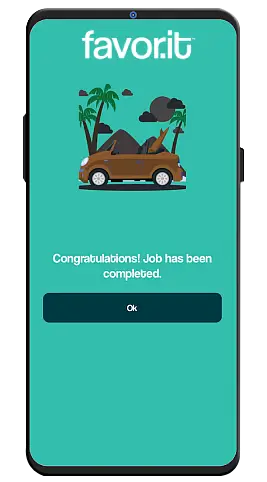
How Suffescom Helps Founders Build Scalable Taxi Apps Fast
This section explains how Suffescom enables founders to move beyond basic MVPs and build high-performance, scalable taxi platforms. By combining no-code speed with a custom development strategy, they reduce risk, optimize architecture, and ensure long-term growth readiness.
1. No-Code MVP + Custom Scaling Roadmap
Suffescom doesn’t treat no-code as a final solution; it’s a strategic starting point. They help founders quickly launch an MVP using no-code tools to validate the business idea, user demand, and core features.
At the same time, they design a scaling roadmap that outlines how the app will evolve into a custom-built solution. This avoids the common problem of rebuilding from scratch later. Founders benefit from:
- Faster go-to-market with minimal investment
- Early feedback from real users
- A clear transition plan to a scalable backend
2. End-to-End Development Support
Instead of fragmented services, Suffescom provides a complete development lifecycle under one roof. This ensures consistency, efficiency, and faster execution.
- Product Strategy: Defining core features, user flows, and monetization models
- UI/UX Design: Creating intuitive interfaces for riders and drivers
- Backend Development: Building scalable systems for ride matching, payments, and data handling
- Testing & Optimization: Ensuring performance, security, and bug-free deployment
This holistic approach eliminates communication gaps and accelerates product delivery.
3. Industry-Specific Expertise
Taxi app development requires domain knowledge beyond general app building. Suffescom brings specialized expertise in mobility solutions, which helps founders avoid trial-and-error mistakes.
They understand:
- Market Dynamics: Analyze pricing strategies, peak-hour demand fluctuations, and regional customer preferences to design competitive fare models and ensure your taxi app adapts effectively to different geographic markets.
- User Behavior: Understand how riders book rides, preferred payment methods, driver expectations, and app usage patterns to create a seamless experience that improves retention and satisfaction on both sides of the platform.
- Technical Requirements: Implement robust systems like real-time GPS tracking, intelligent dispatch algorithms, and dynamic surge pricing to ensure efficient ride allocation, reduced wait times, and optimized operational performance.
This insight allows them to design solutions that are not only functional but also competitive.
4. Tailored Solutions for Startups and Enterprises
Every founder operates at a different stage; some need rapid MVPs, while others require enterprise-grade systems. Suffescom adapts its approach accordingly.
- For Startups: Focus on building lean MVPs with essential features, enabling quick market validation, user feedback collection, and cost-efficient development without heavy upfront investment or complex infrastructure.
- For Enterprises: Deliver advanced, feature-rich solutions with multi-city scalability, high-performance infrastructure, and robust backend systems capable of handling large user bases and complex operational requirements.
They customize:
- App features based on business model
- Architecture based on expected user load
- Development approach based on budget and timeline
This flexibility ensures that the solution fits the business, not the other way around.
5. Long-Term Support and Scaling Strategy
Launching the app is just the beginning. Sustained growth requires continuous improvement and system upgrades.
Suffescom provides:
- Continuous Updates: Regularly introduce new features, integrations, and improvements based on market trends, competitor analysis, and user feedback to keep the taxi app relevant, competitive, and aligned with evolving customer expectations.
- Performance Monitoring: Continuously track key metrics such as app speed, server uptime, crash reports, and user behavior to identify issues early and ensure a smooth, reliable experience at scale.
- Feature Enhancements: Refine existing functionalities by improving usability, optimizing workflows, and enhancing driver and rider experiences to boost operational efficiency, engagement, and overall customer satisfaction.
They also help founders plan scaling strategies, such as:
- Expanding to new cities
- Adding new service categories (bike taxis, rentals, etc.)
- Optimizing the backend for higher traffic
6. Strategic Approach for Scalable Growth
Suffescom encourages founders to take a strategic approach rather than guessing their way through development.
Through consultation, founders can:
- Evaluate their current app: Analyze architecture, performance, integrations, and UX to identify technical gaps, bottlenecks, and inefficiencies that may limit reliability, speed, and future scalability as user demand increases.
- Assess scalability readiness: Examine backend capacity, database structure, APIs, and infrastructure to determine whether the system can handle increased traffic, real-time operations, and multi-city expansion without performance degradation.
- Plan next steps: Based on findings, define a clear roadmap to either optimize the existing no-code setup or transition toward a custom-built solution that supports long-term growth, flexibility, and advanced features.
This expert guidance helps founders make informed decisions and avoid costly mistakes.
Conclusion
Building a taxi app today is not just about launching quickly; it’s about scaling efficiently. No-code platforms offer a powerful starting point, enabling founders to validate ideas and enter the market faster. However, as user demand grows, the limitations of no-code become evident.
The key to success lies in understanding when to transition, avoiding common pitfalls, and working with experts who can guide the journey from MVP to a fully scalable platform.
By combining no-code agility with custom development expertise, founders can create robust, high-performance taxi apps capable of competing in a demanding market. With the right strategy and support, scaling your app like Uber is not just an ambition; it becomes an achievable outcome.