+971-8000321216



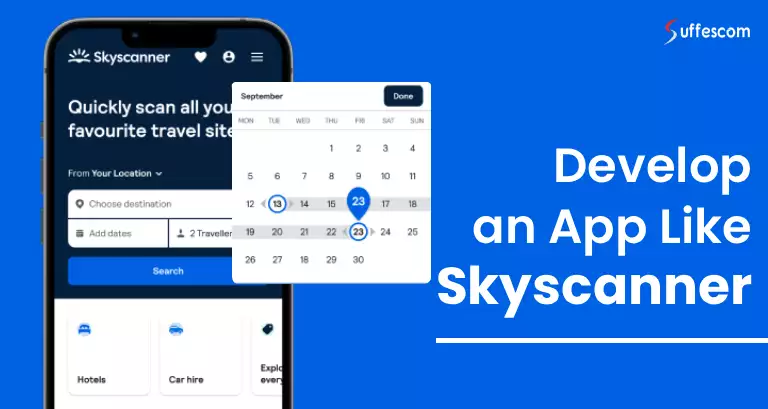
Flight and travel search platforms have been around for years. Skyscanner, for example, has simplified how millions of travelers compare flights, hotels, and car rentals by aggregating hundreds of service providers in one place, handling over 1 billion searches per month.
However, even the most widely used platforms have their limitations. Users regularly report frustrations and dissatisfaction with the platform experience. According to aggregated user feedback and review data, people often complain about price inconsistencies, third-party booking issues, incomplete search results, and usability gaps.
However, this creates a window for innovators who want to solve these key challenges and provide a better solution to an already existing large user base. And our air ticket booking app development, like Skyscanner, is all about that, giving you a fast, affordable way to build a travel search platform that addresses these issues, delivers enhanced experience capabilities, and lets you capture market demand with a technically robust product.
If you are planning to create a Skyscanner clone, scroll down to read more about features, tech stack, costs, and our development process.
Develop a Travel Booking App Like Skyscanner
Core Capabilities of Skyscanner Clone
Skyscanner is a global metasearch engine and a comprehensive online travel platform. It aggregates data from airlines, car rentals, hotels, and travel agencies, enabling users to search, compare, and plan their trips all in one place. Unlike a standard travel app development that only offers direct bookings or limited options, the clone app operates on multiple levels. Let's look at the core capabilities of our next-gen app streamlined for travel planning.
Multi-Provider Aggregation
It aggregates travel data from hundreds of airlines, hotels, car rental providers, and travel agencies so users see all available options in a unified list. The real-time data ensures freshness and broad coverage across services.
Powerful Search Engine
It supports flights, hotels, and car rentals with intelligent ranking and sorting. Users can find the best balance of price, speed, and convenience. It includes detailed filters that include everything from price, duration, stops, airline/cabin class, hotel star rating, amenities, and more.
Flexible & Exploratory Search
- Flexible data searches: Allow the users to see prices across a whole month or year
- 'Everywhere' search: It allows users to find the cheapest destinations from their origin.
Price Alerts & Monitoring
Users can set price alerts for specific routes or dates and receive notifications when fares change. This helps them choose the optimal time to book.
Multi-City & Complex Itineraries
It supports advanced trip planning with multi-city flights, not just one-way or round-trip options. This is great for business trips, tours, or flexible travel planning.
Hotel Search & Comparison
Compares hotel prices from major booking platforms with filters like location, price, star rating, guest rating, and amenities. Users can also view results on an interactive map.
Real‑Time Price Data
The platform can fetch live pricing via APIs to ensure fares and availability are up‑to‑date rather than outdated or cached.
Price Trends & Forecasts
Visual price charts, historical price graphs, and even predictive suggestions are available to help travelers understand when to book.
Multi‑Region Support
The platform supports multiple languages and currencies as well as localized results, making it usable globally with tailored pricing.
Cross‑Platform Experience
Responsive web, mobile web, PWA, and native iOS/Android apps ensure a smooth user experience across devices.
Intelligent Ranking & Recommendations
Search results are based on relevance, convenience, quality scores, and even user preferences.
Analytics & Personalization
Tracks user behavior to provide personalized suggestions like preferred routes, favorite dates, and tailored deals.
Affiliate & Monetization Support
Supports affiliate links, partner leads, and monetization mechanisms where travel providers pay commissions for bookings or leads generated via the clone.
To create a Skyscanner clone, you need a robust travel metasearch system that integrates multiple travel providers, real-time data APIs, and intelligent search features to deliver smooth trip planning and price comparison for users.
Limitations of Skyscanner and How Our Platform Solves Them
Even though Skyscanner is a powerful travel metasearch platform, its architecture can sometimes lead to certain limitations in user experience and booking reliability. Our air ticket booking app development like Skyscanner focuses on addressing these gaps through improved system design and tighter integration control.
| Issues With Skyscanner | What causes it | What do we do to solve it | Result |
| Price changes after clicking a deal | Prices are pulled from many third-party providers and may update before booking. | Real-time price syncing and validation before showing results. | Users see more accurate pricing and fewer surprises |
| Users are redirected to many different websites | The platform relies heavily on third-party booking partners. | Support for direct booking and controlled partner integrations. | A smoother and more consistent booking experience. |
| Some unreliable travel providers | Large open partner networks make it hard to control listing quality. | Partner approval and listing management tools. | Higher quality deals and more trusted providers. |
| Missing regional travel options | Global platforms often prioritize major airlines and providers | Integration with regional airlines, agencies, and local services. | Better coverage for local markets. |
| Complex search experience | Multi-step redirects and inconsistent UI across devices. | Simplified interface optimized for web, mobile apps, and PWA. | Faster and easier travel searches. |
| Limited monetization flexibility | Fixed metasearch business model. | Multiple revenue options like ads, commissions, and featured listings. | More ways for businesses to generate revenue. |
AI & Smart User Experience Features
AI-powered search, predictive pricing, and personalized recommendations are redefining air ticket booking app development like Skyscanner, making travel planning faster and smarter.
| Feature | What It Does | Benefit for Users |
| Smart Fare Prediction | Analyzes historical data, trends, and user behavior to predict flight prices. | Helps travelers book at the right time, saving money. |
| Personalized Travel Recommendations | Suggests flights, hotels, and packages based on past searches and preferences. | Creates tailored journeys that increase engagement and satisfaction. |
| Creates tailored journeys that increase engagement and satisfaction. | Adjusts prices in real time based on demand, seasonality, and competition. | Ensures competitive deals for users while maximizing revenue. |
| Voice Search & AI Chatbot | Users can search, book, or manage trips using voice commands or chat assistance. | Simplifies the booking process and reduces friction |
| Bird's Eye/Map View | Visual map-based search for hotels, flights, and rental locations. | Makes exploration easier and more interactive. |
| Intelligent Admin Dashboard Insights | AI-powered analytics for platform admins. | Helps optimize operations, understand user behavior, and make data-driven decisions. |
Advanced Booking, Payment & UX Features
From quick booking confirmations to flexible payment options, air ticket booking app development like Skyscanner prioritizes convenience and reliability.
| Feature | What It Does | Benefit for Users/Businesses (Admin) |
| Multiple Room Listings & Bookings | Enables booking of several rooms or accommodations in a single transaction. | Ideal for families, groups, or complex travel plans. |
| Multiple Homepage Layouts | Allows customization of the landing page to highlight services, deals, or promotions | Improves branding flexibility and engagement. |
| Wishlist/Saved Trips | Allows users to save flights, hotels, and packages for later. | Increases repeat visits and easier trip planning. |
| Invite Friends/Referral System | Users can share deals or invite friends to join the platform. | Encourages viral growth and customer acquisition. |
| Crypto Wallet Integration | Accepts cryptocurrency payments alongside traditional methods. | Expands payment options, appealing to modern users. |
| Fraud Detection & Secure Payments | AI-powered monitoring of transactions for unusual activity. | Ensures safe, trustworthy payments for users and businesses. |
| Ready-to-Launch & Fully Customizable Platform | Pre-built, scalable, and customizable to specific market needs. | Reduces development time while giving full control over design and features. |
A Travel Platform That's Easy for Everyone to Use
A modern travel platform is more than just a tool for searching flights or hotels; it is a complete ecosystem that must connect travellers, service providers, admins, and third-party integrations. We built our Skyscanner clone to make every party's experience intuitive and easy. Here is how:
1. Simplifying the Experience for Travelers
With the following features at the key focus during the development, we make sure travelers can easily search, compare, and book trips:
- Intuitive design across web, iOS, Android, and PWAs
- Smart search & AI recommendations for personalized travel options
- Flexible booking options, including multi-room bookings and wishlist features
- Secure, diverse payments including fiat, multi-currency, and crypto wallets
2. Streamlining Tools for Service Providers
Airlines, hotels, and car rental providers need simple yet powerful tools to manage their services. We build them inside the platform so service providers can manage their offerings, optimize revenue, and maintain consistent service quality with minimal effort:
- Easy-to-use dashboards for listing and updating services
- Real-time availability updates and dynamic pricing controls
- Notifications for new bookings and performance analytics
- Automated invoicing, commission tracking, and partner support channels
3. Empowering Admins with Full Control
With the following features and functionalities, admins can manage the entire platform and increase their operational efficiency:
- Multi-tier admin access with role-based permissions
- Real-time dashboards for bookings, revenue, and analytics
- Fraud detection and secure payment monitoring
- Dispute resolution and customer support management
4. Integrating Third-Party Services Seamlessly
For reliable global functionality, we connect the clone to the popular services that power online travel platforms.
- Airline, hotel, and car rental APIs
- Global Distribution Systems (GDS) for live availability
- Payment gateways, loyalty programs, and travel insurance services
Types of Platforms We Can Help You Build
When developing a flight booking app like Skyscanner, we understand that users expect flexibility. That's why we build solutions that work across multiple platforms, ensuring your app reaches travelers wherever they are, on the web, mobile, or as a progressive web app. Our software development agency supports various kinds of platform development, as detailed below:
1. Progressive Web App (PWA)
PWAs combine the best of web and mobile apps. They are fast, responsive, and installable on any device without an app store. They come with the following capabilities:
- Offline capabilities and push notifications
- Smooth updates without requiring app store approval
- Cost-effective development since one PWA works across platforms
2. Mobile Apps (iOS & Android)
Native mobile apps deliver the best performance and user experience for travelers on the go. They come with the following benefits:
- iOS and Android versions fully customized to your brand
- Optimized UI/UX for smaller screens
- Access to device features like GPS, camera, and notifications
3. Website/Web Portal
A full-featured web platform ensures that your business is accessible from any browser. Here are some typical benefits of website or web portal development:
- Responsive design for desktops, tablets, and mobile browsers
- SEO-optimized pages to attract organic traffic
- Full functionality, including search, booking, payments, and account management
Future-Proof Travel Platform with Full Control and Flexibility
When building flight booking apps like Skyscanner, one of the biggest concerns for businesses is vendor lock-in, which is basically being tied to a specific provider for hosting, integrations, or software updates. But with our Skyscanner clone app development, you will not have to face this as we approach the design to give you full control over your platform, so you can scale, customize, and adapt without limitations. Here is how:
- Flexible hosting option: We deploy your platform on your preferred cloud provider or on-premises.
- Open Integrations: Your platform can easily connect with new APIs, payment gateways, or service providers without restrictions.
- Customizable Architecture: Over time, you can modify, extend, or upgrade features as your business grows.
- Ownership of Data: You retain full access to your user, provider, and transaction data.
Robust Technology Stack Behind Skyscanner Clone App Development
Approaching Air Ticket Booking App Development Like Skyscanner clone requires a robust and secure technology stack. We use technologies that support real-time search, complex booking logic, multi-platform delivery, and advanced analytics, ensuring your platform is reliable and future-ready:
| Layer | Technology/Tools | Why We Use It |
| Frontend (Customer & Provider Apps) | React Native/Flutter | Cross-platform mobile apps for iOS & Android with native-like performance |
| Web Frontend/ PWA | React.js / Next.js | Helps build faster and more interactive interfaces |
| Backend/Server | Node.js (with Express)/Laravel/Django | Handles high traffic, complex booking logic, and API orchestration |
| Database | PostgreSQL/MySQL | Reliable relational database for user accounts, bookings, and transactions |
| Search Engine/Caching | Elasticsearch/Redis | Enables ultra-fast search, filtering, and caching of travel data |
| Payment Gateway & Wallets | Stripe, PayPal, Crypto Wallets (e.g., Coinbase Commerce) | Secure, multi-currency, and crypto-friendly payments |
| Secure, multi-currency, and crypto-friendly payments Third-Party Integrations | Airline APIs, Hotel APIs, GDS (Amadeus, Sabre, Travelport) | Aggregates live travel data for flights, hotels, and rentals |
| Cloud | AWS/Google Cloud/Azure | Secure cloud infrastructure with load balancing and auto-scaling |
| AI & Analytics | Python (TensorFlow/ Scikit-learn), Tableau/Power BI | Fare prediction, dynamic pricing, personalized recommendations, and admin insights |
How Much Does It Cost to Build a Platform Like Skyscanner?
A Skyscanner clone is a multi-layered solution, including user apps, service provider dashboards, admin panels, AI features, and third-party integrations. Below is the estimated cost for travel app development:
| Component | Estimated Cost Range |
| Customer App (iOS + Android) | $5,000 – $8000 |
| Web Portal/PWA | $5000 – $8000 |
| Backend & API Development | $10,000 – $15,000 |
| Admin Dashboard | $8000 – $10,000 |
| AI Features | $5000 – $8000 |
| Payment Gateway Integration | $2000 – $3000 |
| Testing, QA & Deployment | $2000 - $4000 |
Skyscanner Clone App Development Timeline
Air ticket booking app development, like Skyscanner, involves the following key stages, along with the time each stage typically takes.
| Stage | Estimated Time |
| Requirement Analysis & Planning | 1 – 2 weeks |
| UI/UX Design & Prototyping | 2 – 4 weeks |
| Backend & API Development | 5 weeks |
| Frontend Development | 2 weeks |
| AI & Advanced Feature Integration | 2 weeks |
| Testing & QA | 1 week |
| Deployment & Launch | 1 week |
Get the Exact Cost to Build a Skyscanner-Like App
Conclusion
While travel search and booking platforms like Skyscanner have already proven their value to millions of users worldwide, there are still gaps in UX and price transparency, which create a great opportunity for businesses that want to build a next-generation travel meta search platform. Our clone app development service opens a way for you to deliver a solution that comes with faster search, smarter recommendations, and a smooth booking experience.
If you are looking to launch fast without draining your budget and time in costly builds, our clone app development is just for you. We also provide white-label solutions and fully custom development, tailored to your business goals. Talk to our expert consultants today to get a clear understanding of the development roadmap, timeline, and cost required to create a travel platform that captures market demand and keeps your users coming back.
FAQs
Have you built apps similar to Skyscanner before?
Our agency has extensive experience developing travel meta search platforms and booking solutions similar to Skyscanner. We have delivered over hundreds of projects that combine features like real-time flight, hotel, and car rental search, user-friendly dashboards for providers, and robust admin control panels.
Can the platform support AI-driven fare predictions, personalized recommendations, or dynamic pricing?
We integrate AI and machine learning algorithms to provide:
- Fare predictions based on historical trends, demand, and seasonality
- Personalized travel recommendations tailored to user preferences and browsing behavior
- Dynamic pricing tools for service providers to optimize revenue while remaining competitive
How secure is the platform? Do you provide fraud detection, secure payments, and data privacy compliance?
Security is a top priority. That's why, while we create a Skyscanner clone, we include:
- Encrypted payments through PCI-compliant gateways (Stripe, PayPal, crypto wallets)
- AI-driven fraud detection to monitor transactions and flag suspicious activity
- User data protection in compliance with GDPR and other relevant privacy regulations
Regular security audits and updates to ensure a safe and trustworthy platform for both users and providers.
Is the admin dashboard customizable for managing providers, bookings, and analytics?
Yes, the admin dashboard is fully customizable to fit your business needs:
- Manage users, service providers, and bookings efficiently
- Track revenue, commissions, and platform performance through real-time analytics
- Configure roles, permissions, and reporting to maintain control over every aspect of the platform
Can we launch a minimal viable product first and add features later?
We follow a flexible development approach that allows you to:
- Launch an MVP with core functionalities like travel search, bookings, and payments
- Gather real user feedback to prioritize advanced features
- Gradually integrate AI recommendations, multi-room booking, wishlists, and more