+971-8000321216



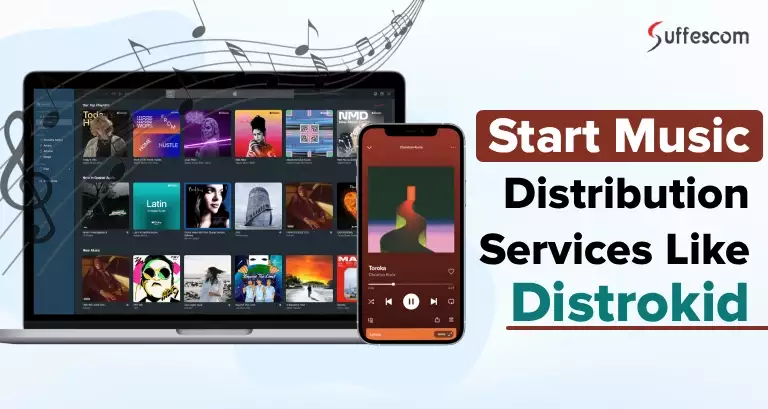
The global music industry is undergoing a significant change with the growing popularity of music streaming platforms. The traditional music distribution methods that were based on record labels have now been replaced with new music distribution systems that enable artists to take control of their music business with the help of music distribution services that connect artists with their global audiences.
This change in dynamics has led to a greater need for DIY music distribution platforms, where artists can distribute their content on their own terms. This shift opens up opportunities for businesses looking to create a music distribution platform like Distrokid with scalable and artist-centric features. Music distribution platforms are not just about distribution; they have evolved to become a complete ecosystem for artists, offering features for analysis, promotion, royalty management, and engagement with the audience.
Growth Stats:-
1. The global music streaming market is expected to grow beyond $50 billion by the year 2030, thus indicating a promising scope of business growth through Distrokid clone development services.
2. More than 65% of the world’s music revenues are now generated through streaming platforms, indicating that digital distribution has emerged as the most prominent form of revenue generation. The need to create platforms that can easily integrate with the prominent streaming platforms has also emerged as significant.
3. Over 100,000 tracks are uploaded daily on different platforms, which underscores the need for efficient and scalable platforms for the distribution of audio content without compromising performance.
Decoding the Distrokid Clone Platform Ecosystem
A Distrokid clone is not just an exact replica of another platform. We took that brand name just to clarify what exactly a business app delivers, and it is a flexible and expandable platform that is meant to adapt to the dynamic requirements of the industry. Central audio distribution platform that enables artists, labels, and music publishers to distribute their audio content to multiple platforms while retaining full ownership and control.
The ecosystem works on a streamlined and automated workflow, which ensures efficiency in the entire process. Once the artist uploads music, the system works on the metadata, which includes information about the songs, contributors, and licenses. This metadata goes through a structured distribution pipeline, which ensures compliance with the requirements of the platforms before the music reaches the platforms.
As the content is used, revenue is generated in the form of streams and downloads. The royalty management system ensures that the artist gets paid accurately for his or her content. This smooth operation of the process not only makes things easier but also creates a sense of trust with the artist.
- Spotify Artist Verification Support
- Customizable Label Name
- Team Collaboration Tools
- Metadata Management
- Royalty Management System
- Content Moderation System
Note - Product & Trademark Notice
This product and registered trademarks belong to their respective owners and are used only for identification purposes to better explain the development vision.
Launch Your Music Distribution Software Like Distrokid with Essential Features
A successful platform is a blend of functionality, usability, and high-end features, which can provide a smooth experience for artists as well as administrators. All features are significant in a successful platform, which can provide efficient, scalable, and satisfactory experiences for users.
Artist Management and Control
An intuitive artist dashboard is crucial for artists to manage their content effectively and give full control to upload their unlimited tracks, lyrics, replace song audio without losing streams, monitor their performance, and manage their releases along with customizable label names and release dates.
- Access daily streaming stats
- Edit track details with metadata tools
- Manage multiple artist profiles
- Custom pricing options for monetization
Distribution and Revenue Systems
The integrated distribution pipeline feature is responsible for delivering music content to different streaming platforms. The pipeline is reliable and capable of handling a large volume of data.
A good metadata management system will ensure that information for each track is correct and formatted correctly to minimise the chances of mistakes. The royalty management system is an essential component for calculating earnings and making payments. The ability to create a royalty split allows for the fair compensation of various contributors to a work.
- Fast processing and delivery of uploaded content
- Automated distribution pipeline for global music release
- Real-time royalty management system
- Royalty splits for multiple artists and collaborators
Analytics and Insights
Data-driven insights are critical for artists who want to grow their audience and improve their strategy. Features like daily streaming stats and analytics/stats offer useful insights about listeners and their behavior.
Artists can also track their music on Spotify and Apple Music, which gives them real-time information about performance on these platforms as well. Features such as the Spotify registered artist checkmark help artists build credibility and a professional presence.
- Trend analysis for streams and engagement
- Listener behavior and retention metrics
- Custom reports and downloadable data
- Track-level and album-level insights
Promotion and Growth Tools
Promotion is a key component of success in the music industry. A well-designed platform includes built-in tools that help artists expand their reach and connect with their audience.
- Promo Cards enable artists to create visually appealing content for social media sharing
- Spotify Canvas Generator enhances engagement through short looping visuals
- HyperFollow simplifies pre-save campaigns and audience tracking
- Playlist discovery tools help artists connect with curators and increase visibility
These tools collectively support audience development, making it easier for artists to grow their fan base and improve their reach.
Accessibility and Storage
Convenience and accessibility are two of the most important aspects of user experience. By giving mobile app access to artists, they will be able to manage their accounts and monitor their performance without having to be in a desktop setting.
Besides, features such as instant file sharing of up to 1 TB allow the user to store and share large media files. This feature is critical in handling large media files such as audio and video files, thus ensuring smooth operations.
- Cross-platform compatibility (web, Android, iOS)
- Fast upload and download speeds with CDN support
- Backup and recovery options for data protection
- Cloud-based storage for secure and scalable data handling
| Feature Category | Key Capabilities | Business Impact |
| Artist Management | Dashboard, unlimited uploads, customization | Improves user retention and engagement |
| Distribution | Distribution pipeline, metadata management | Ensures accurate and scalable delivery |
| Monetization | Royalty management, royalty splits | Builds trust and financial transparency |
| Analytics | Streaming stats, performance insights | Enables strategic decision-making |
| Promotion | HyperFollow, Promo tools, playlist search | Drives audience growth |
| Accessibility | Mobile access, file sharing | Enhances convenience and usability |
| Compliance | Licensing, synced lyrics | Reduces legal risks |
Advanced Capabilities That Take Your Platform to the Next Level
To remain competitive in a rapidly evolving market, platforms must go beyond basic functionality and offer advanced features that add real value to users.
Music Mastering and Enhancement
With built-in mastering tools, artists can instantly master their tracks, ensuring that they get high-quality masters without relying on other mastering services. Tools such as unlimited mastering are also important, as they enable artists to tweak their sound as many times as they want, ensuring that they get the best results.
Such tools not only help in improving the quality of the music, but they also make the platform a complete solution for artists, eliminating the need for other tools or services.
Video Distribution Capabilities
The addition of music video distribution tools will allow artists to further expand their scope of operation. The feature will allow artists to engage their audience by releasing music videos along with their music. This will lead to more revenue generation.
This feature is especially important today as visual media plays a vital role in audience engagement and brand creation.
Licensing and Monetization Flexibility
Advanced monetization features, such as cover song licensing, synchronized lyrics in Apple Music, and customizable pricing for iTunes, help artists control their content in a way that ensures compliance with industry standards while maximizing earning potential.
Why Investing in Distrokid Clone Development is a Smart Business Move
Investing in Distrokid clone development offers a wide range of benefits for both businesses and users, making it a strategic choice in the current market landscape.
For businesses:
- Enables the creation and start of music distribution services like Distrokid that can grow with user demand
- Provides opportunities for recurring revenue through subscription models and premium features
- Positions the platform as a premium solution for independent artists and labels
For artists:
- Simplifies the process of music publishing and distribution
- Offers transparent and reliable royalty tracking
- Provides access to tools that support audience growth and engagement
Strategically, this approach reduces development time, minimizes risks, and allows businesses to enter the market quickly with a competitive offering.
Technology Framework Powering Distrokid Clone Development
| Layer | Technologies | Purpose |
| Frontend | React.js, Vue.js | Builds responsive and user-friendly interfaces |
| Mobile | Flutter, React Native | Enables cross-platform mobile applications |
| Backend | Node.js, Python | Handles scalable server-side operations |
| Architecture | Microservices | Ensures flexibility and scalability |
| Cloud | AWS, Google Cloud | Provides storage and streaming capabilities |
| CDN | Cloudflare, Akamai | Optimizes content delivery speed |
| Integrations | Spotify, Apple Music APIs | Enables seamless distribution |
| Payments | Stripe, PayPal | Facilitates royalty payouts |
A carefully selected technology stack ensures that the platform can handle growth, maintain performance, and deliver a seamless user experience, which is essential in music distribution software development, such as platforms like Distrokid.
Distrokid Clone Lifecycle: From Idea to Launch
A successful music distribution platform development process involves a well-thought-out and execution-oriented development process, especially for businesses planning to launch a music distribution platform like Distrokid. Each phase of development is critical to ensure that the final product is not only scalable and secure but also meets both business and user-level expectations. This structured development process not only reduces risks but also speeds up time-to-market with quality.
1. Requirement Analysis and Strategic Planning: The beginning of the development journey starts with a thorough understanding of the business model, the audience, and the objectives of the platform. This stage requires identifying the key functionalities of the system, including the distribution workflow, the royalty system, and the user roles. Proper planning is necessary so that each component is geared towards the needs of the market and does not incur unnecessary costs in the future.
- Identify target users (artists, labels, admins)
- Analyze competitors and market gaps
- Finalize platform scope and roadmap
2. UI/UX Design and Prototyping: Once the requirements are established, attention is given to creating a user interface that is user-friendly and engaging. The wireframes and prototypes are developed using tools such as Figma, Adobe XD, Sketch and more to conceptualize the interface of the platform, including the Artist Dashboard, admin panel, etc. A user-friendly interface is important to increase user retention and to enable artists to easily use the platform without any technological issues.
- Define user personas and user journeys
- Create wireframes for core screens (Artist Dashboard, upload flow)
- Design high-fidelity UI layouts
3. Core Platform Development: In this stage, our developers build the back end of the system, including the distribution pipeline, metadata, and royalty engine. Scalability is also a major aspect of this stage that ensures the system can handle a lot of uploads and can grow as the number of users grows.
- Build a distribution pipeline for multi-platform delivery
- Develop a metadata management system for accurate tagging
- Implement royalty management and payout logic
4. Third-Party API Integration: Integration with external services such as Spotify, Apple Music, and YouTube Music is also critical for a smooth distribution process. Payment gateways are also integrated for the smooth flow of royalty payments. The integration enables the platform to work effectively within the music industry.
- Identify required APIs (Spotify, Apple Music, YouTube Music, payment gateways)
- Obtain API keys and configure authentication
- Implement API endpoints and data sync logic
5. Testing, QA, and Performance Optimization: Rigorous testing is done to ensure that any problems, whether they relate to performance, security, or usability, are addressed. This involves functional testing, load testing, and security testing. Optimization is done to ensure that the platform provides a smooth experience, even with heavy use.
- Bug fixing and regression testing before final release
- UI/UX testing for a smooth user experience across devices
- Security testing to protect user data and transactions
6. Deployment and Launch: Once the testing is successful, the platform is deployed on a cloud-based infrastructure that offers the benefits of scalability and high availability. The deployment strategy is critical to ensure that the deployment is done with the least amount of downtime.
- Configure backend servers and databases
- Integrate CDN for media delivery
- Monitor platform performance
7. Post-Launch Support and Continuous Improvement: The launch is just the beginning. Monitoring, updating, and enhancing the platform are crucial for keeping it competitive. Regular updating based on user feedback is vital for the success of the platform in the long term.
- Resolve user issues quickly
- Roll out feature updates based on user feedback
- Ensure security patches and compliance updates
Development Cost Breakdown and Investment Insights
| Development Level | Estimated Cost | Key Features | Best For |
| Basic MVP | $15,000 – $20,000 | Core distribution, basic dashboard, limited analytics | Startups |
| Mid-Level | $20,000 – $30,000 | Advanced analytics, royalty system, integrations | Growing businesses |
| Advanced | $30,000 – $40,000+ | AI analytics, full customization, scalable infrastructure | Enterprises |
Critical Considerations for Long-Term Success
In order to develop a sustainable and competitive music distribution platform, there are critical issues that need attention during and after development. Failure to do so may result in operational problems.
- Scalability: The platform has the ability to manage increased user activity, large file uploads, and high-volume streaming without compromising performance.
- Compliance and Licensing: Compliance with copyright laws, such as cover song licensing, is a crucial aspect that can not be ignored to avoid any legal issues that may arise during the operation of the platform.
- Security and Data Protection: Data protection, financial transactions, and intellectual property are given high priority. The use of secure encryption and payment systems creates a sense of trust among the users.
- User Experience and Accessibility: A smooth user experience plays a significant role in retaining users. A simple and easy interface leads to increased user engagement and satisfaction.
The Future of Music Distribution Platforms: Trends Defining the Next Wave
The music distribution industry is constantly changing. This change is fueled by the latest technological developments and the needs and demands of users. A music platform that is able to adapt to the latest trends will have a competitive advantage.
- AI-Powered Insights: Artificial intelligence is helping music platforms offer insights to artists. This can be done through personalized insights and predictive analytics.
- Blockchain-Based Royalty Systems: Blockchain can be used for a more transparent system of royalty payments.
- Growth of the Creator Economy: The creator economy is growing rapidly. This change is fueled by the need for music platforms to offer full control and ownership.
- Expansion of Multi-Format Content: Audio, video, and interactive content are becoming a necessity for engaging audiences.
Scale Smarter and Dominate the Music Distribution Industry with Suffescom Solutions
The fast growth rate of digital music consumption has given rise to a highly dynamic and lucrative business environment. Creating a business through investing in the development of a Distrokid clone will not only help you establish a music distribution platform but also provide opportunities for the growth, monetization, and engagement of artists.
However, success in this competitive environment is not only achieved by having a viable tool. It needs a strategic approach, cutting-edge technology, and a comprehensive understanding of the music environment. This is where the right partnership with a development company can be a real game-changer.
Suffescom is a leading clone app development company that offers industry expertise and technical proficiency to assist businesses in developing successful music distribution platforms. Our complete development services include concept design to deployment and scaling, making the process smooth and efficient.
With a clear emphasis on scalability, innovation, and user-centricity, Suffescom Solutions helps you build a platform that truly stands out in the market. If you are looking to take your idea and turn it into a powerful and profitable music distribution business, working with Suffescom Solutions is the next step towards making it all happen.
FAQs
Does Suffescom Solutions provide customization in music distribution platforms?
Yes, Suffescom Solutions delivers fully customizable Distrokid clone platforms, allowing businesses to integrate unique features, branding, and advanced monetization tools.
How do artists earn money through such platforms?
Artists earn revenue from streams, downloads, and licensing, with earnings calculated and distributed via a built-in royalty management system.
What is royalty splitting in music distribution platforms?
Royalty splitting allows multiple contributors to receive their share of earnings automatically based on predefined percentages.
Is it possible to get a low-priced solution for Distrokid clone development without compromising quality?
Yes, businesses can opt for low price models in Distrokid clone development by prioritizing core features while maintaining scalability and performance standards.
Why choose Suffescom Solutions for Distrokid clone development?
Suffescom Solutions offers scalable, feature-rich music distribution platforms with expert development, advanced integrations, and tailored solutions for long-term business growth.
Does Suffescom Solutions offer post-launch support and upgrades?
Suffescom Solutions provides continuous support, maintenance, and feature enhancements to ensure your platform remains competitive and scalable in the evolving music industry.