The healthcare industry is rapidly evolving with the rise of telemedicine and mobile technology. Today’s patients expect quick, convenient access to medical services, making doctor on demand apps an essential solution for virtual consultations.
For businesses and healthcare providers, investing in such apps is a smart move but understanding the Doctor On Demand App Development Cost is crucial. It helps in planning budgets, selecting the right features, and choosing an efficient development strategy.
How On-Demand Doctor Apps Are Growing Rapidly in 2026 and Beyond
The telemedicine ecosystem has moved from optional to essential. In 2026, doctor-on-demand apps are no longer niche; they are a core layer of healthcare delivery. Rising smartphone penetration, improved internet infrastructure, and post-pandemic behavioral shifts have accelerated adoption globally.
Key 2026 Stats & Future Outlook
- The global telemedicine market is projected to exceed $200+ billion by 2030
- Over 65% of patients now prefer virtual consultations for primary care
- Doctor-on-demand apps are seeing 30–40% YoY growth
- AI-driven diagnostics and wearable integrations are expected to dominate the next decade
Looking ahead, the next wave will include:
- Predictive healthcare using AI
- Integration with IoT health devices
- Fully automated triage systems
Ready to Build Your Doctor On Demand App?
Key Features of a Doctor On Demand App
To understand the doctor on demand app development, you must first evaluate the features you want to include.
1. Patient Panel
Allows users to register, book appointments, consult doctors via video, make payments, and access prescriptions and medical history easily.
- User registration and profile creation
- Appointment scheduling
- Video/audio consultation
- Secure payment gateway
- Access to medical history and prescriptions
2. Doctor Panel
Enables doctors to manage profiles, handle appointments, review patient records, and provide e-prescriptions efficiently through a centralized dashboard.
- Profile management
- Appointment management
- Patient records access
- E-prescription functionality
3. Admin Panel
Helps administrators manage users and doctors, monitor analytics, track payments, and control overall app operations and system performance.
- User and doctor management
- Analytics dashboard
- Payment tracking
- Content and system management
4. Advanced Features
Includes AI-based diagnosis, real-time chat, multilingual support, and wearable integration to enhance user experience and improve healthcare service delivery.
- AI-based symptom checker
- Real-time chat support
- Multi-language support
- Wearable integration
The more advanced features you add, the higher your overall development cost.
Factors Affecting Doctor On Demand App Development Cost
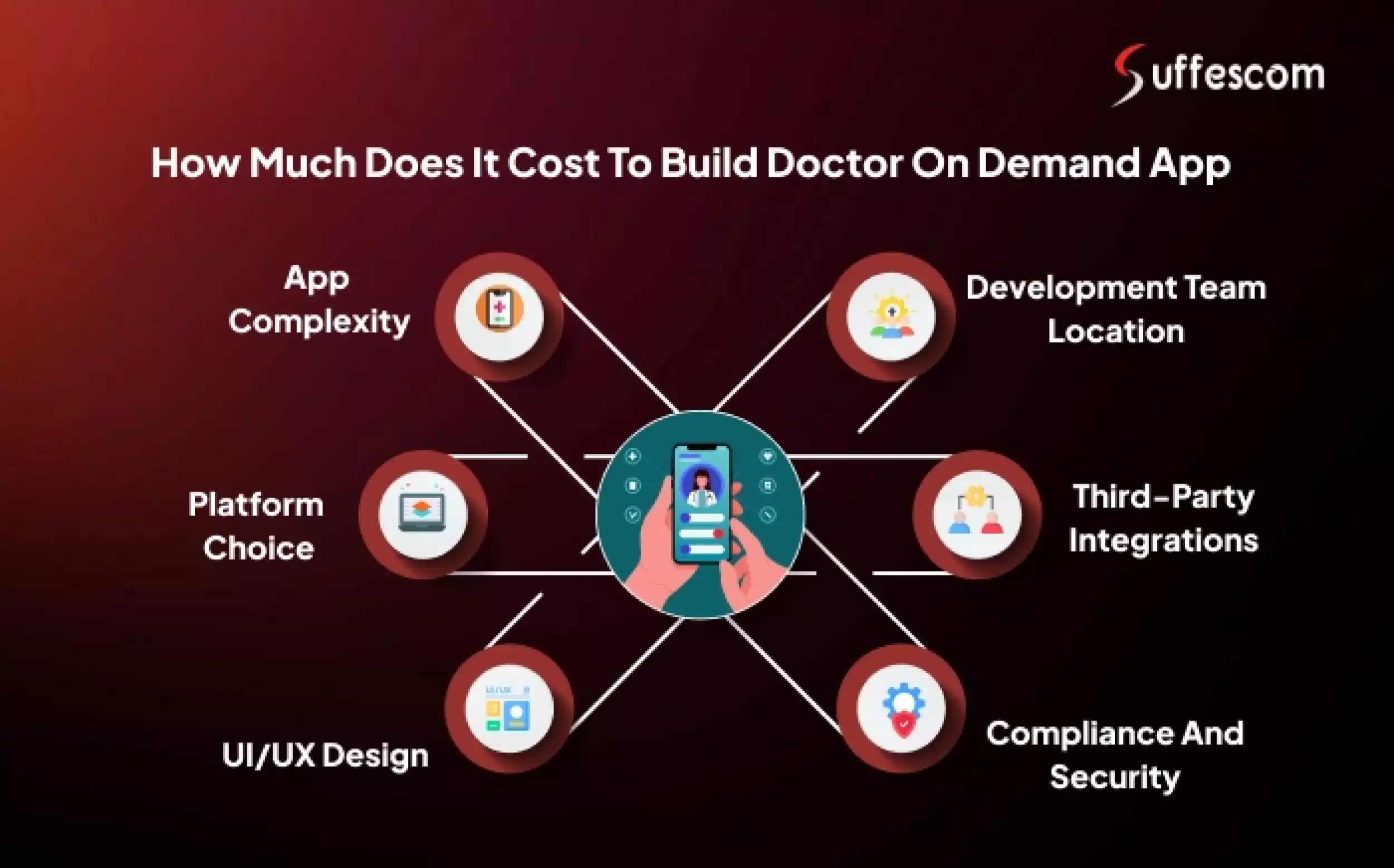
Several variables influence the total cost to build a doctor on demand, and understanding them helps you optimize your budget.
1. App Complexity
The more features your app includes from basic booking to AI analytics the higher the development time, effort, and overall cost increases.
- Basic: Limited features
- Medium: Video + payments
- Advanced: AI + analytics
2. Platform Selection
Choosing native apps for iOS and Android costs more, while cross-platform development reduces time and budget with a single codebase.
- Native (iOS/Android) vs Cross-platform
3. Development Location
Hiring developers in regions like India is cost-effective, while teams in the US or UK charge higher rates for similar work.
- India/Eastern Europe: Cost-efficient
- US/UK: Premium pricing
4. Third-Party Integrations
Integrating APIs like video calling, payment gateways, and cloud services adds functionality but also increases development complexity and cost.
- Video APIs, payment gateways, cloud
5. Compliance
Meeting regulations like HIPAA or GDPR ensures data security but requires additional development effort, testing, and legal considerations, increasing overall costs.
- HIPAA/GDPR increases cost but is mandatory
Estimated Cost Breakdown of Doctor On Demand App Development
Understanding the Doctor On Demand App Development Cost is essential for planning a realistic budget and aligning your business goals with technical requirements. The total cost varies based on the app’s complexity, feature set, and scalability needs. A basic version with limited features will cost significantly less than a fully advanced platform with AI integrations, real-time analytics, and high-end security compliance. Additionally, how you distribute your budget across design, development, and maintenance phases also impacts the overall investment. Below is a clear breakdown to help you estimate costs effectively.
Overall Development Cost
| App Type | Estimated Cost Range |
| Basic App | $5,000 – $10,000 |
| Medium Complexity App | $10,000 – $15,000 |
| Advanced App | $20,000 – $30,000+ |
Cost Distribution
| Development Phase | Percentage Allocation |
| UI/UX Design | 5% – 10% |
| Development | 20% – 30% |
| Testing & QA | 5% – 10% |
| Deployment & Maintenance | 10% – 15% |
If you’re planning to build a scalable healthcare solution, starting with an MVP (Minimum Viable Product) is a smart strategy. It reduces initial costs, speeds up launch time, and allows you to enhance features based on real user feedback.
Looking to Reduce Development Costs?
Doctor On Demand App Development Timeline and Key Phases
The mobile app development timeline plays a crucial role in determining cost.
1. Planning & Research (Free)
As analyzed from B2B marketplaces, 90% of agencies provide free consultation, proposal, and roadmap creation services. This is a major advantage for startups.
2. Design Phase (10% of Total Cost)
In this stage, UI/UX designers create wireframes and visual layouts. It defines user flow, improves user experience, and ensures the app interface is intuitive, engaging, and easy to navigate.
At this stage:
- Developers coordinate with graphic designers
- Covers UI + UX specialists
- Defines app structure and user flow
3. Backend Development (20%)
This phase focuses on building server-side logic, database management, APIs, and security systems. It ensures smooth data handling, secure communication, and reliable app performance behind the scenes.
Includes:
- Server architecture
- Database
- APIs
- Security systems
4. Frontend Development (30%)
Frontend development creates the user-facing interface of the app. It includes designing screens, enabling user interactions, and optimizing performance to deliver a smooth and responsive user experience.
- Mobile app interfaces
- User interaction layers
- Performance optimization
5. Right Tech Stack and Integration Charges
This stage involves selecting technologies and integrating third-party services like payment gateways, video APIs, and cloud platforms. Custom integrations or APIs can significantly increase overall development costs and complexity.
This stage includes:
- Third-party API costs
- Cloud services
- Payment integrations
If founders choose custom API development, costs can increase by up to 50% of total development cost.
Types of APIs Commonly Used
- Video Consultation APIs
- Twilio: ~$0.004/min
- Agora: ~$3.99 per 1000 minutes
- Payment Gateways
- Stripe: ~2.9% + $0.30 per transaction
- Razorpay (India): ~2% per transaction
- Cloud Services
- AWS / Google Cloud: $50–$500/month (scalable)
6. Testing & Deployment (2–4 Weeks)
This phase ensures the app is bug-free, secure, and performance-optimized. It includes testing, fixing issues, and deploying the app on stores for smooth launch and user accessibility.
- Bug fixing
- Performance testing
- App store submission
If bugs arise:
- Timeline increases
- Budget remains mostly unaffected
- Indirect cost = delayed launch
Additional Costs:
- Google Play Store: $25 (one-time)
- Apple App Store: $99/year
These continue as recurring operational costs.
Technology Stack Required for Doctor On Demand App Development
Choosing the right technology stack directly impacts performance and scalability.
Technology Stack Overview
| Category | Technologies Used |
| Frontend | React Native, Flutter |
| Backend | Node.js, Django |
| Database | MongoDB, PostgreSQL |
| Video Integration | WebRTC, Twilio |
| Cloud Services | AWS, Google Cloud |
A modern tech stack ensures faster performance, better security, and scalability for future growth.
Top Monetization Strategies for Doctor On Demand Apps
To recover your Doctor On Demand App Development Cost, you need a strong monetization model.
1. Consultation Fees
Charge users per session with doctors.
2. Subscription Plans
Monthly or yearly plans for unlimited consultations.
3. Commission Model
Take a percentage from doctors for each consultation.
4. In-App Purchases
Offer premium features like priority booking.
5. Advertisements
Partner with healthcare brands for ads.
Key Challenges in Doctor On Demand App Development Process
Developing a healthcare application is not as straightforward as building a standard mobile app. It involves handling sensitive data, ensuring seamless communication, and meeting strict regulatory requirements. These challenges directly impact the overall Doctor On Demand App Development Cost and project complexity.
1. Data Security
Healthcare apps deal with highly sensitive patient information, including medical history and personal details. Ensuring strong data encryption, secure APIs, and protected databases is critical. Any security breach can lead to legal issues and loss of user trust, making security a top priority during development.
2. Regulatory Compliance
Complying with healthcare regulations such as HIPAA or GDPR is essential. These laws require strict data handling practices, which can increase development time and cost. Ensuring compliance from the beginning helps avoid penalties and ensures smooth app operations.
3. Real-Time Communication
A doctor on demand app relies heavily on real-time video and audio consultations. Maintaining high-quality, lag-free communication requires robust infrastructure and reliable third-party integrations, which can be technically challenging.
4. User Trust and Adoption
Building trust among users is crucial for success. Patients need to feel confident about the accuracy of consultations and the security of their data. A well-designed UI/UX, verified doctor profiles, and transparent services help in gaining user confidence.
Plan Your Doctor On-Demand App Development
Effective Tips to Reduce Doctor On Demand App Development Cost
Managing the cost of building a doctor-on-demand service efficiently is essential, especially for startups and growing healthcare businesses. By making strategic decisions during the development process, you can significantly reduce expenses without compromising quality or performance.
1. Start with an MVP
Launching a Minimum Viable Product (MVP) allows you to focus on essential features like appointment booking and video consultations. This approach minimizes initial investment and helps you validate your idea before scaling further.
- Starts from $5,000
- Focus on core features
- Faster launch and validation
2. No-Code / Low-Code Builders
Using no-code or low-code platforms is a practical approach for founders who want to launch quickly without heavy development investment. These tools allow you to build functional prototypes or even basic apps without deep technical expertise. It’s especially useful for validating ideas or demonstrating concepts before committing to full-scale development.
- Cost: Hourly or up to $4,000
- Ideal for prototypes and early-stage testing
- Faster development with minimal coding effort
- Limited scalability for long-term growth
3. White Label / Ready-Made Solutions
White-label or ready-made app solutions are pre-built applications that can be quickly customized and launched under your brand. This approach significantly reduces development time and cost, making it ideal for startups looking to enter the market fast without building everything from scratch.
- Pre-built app infrastructure
- Faster deployment and go-to-market time
- Customization available based on business needs
- Cost-efficient for early-stage startups
Conclusion
The Doctor On Demand App Development Cost depends on multiple factors, including features, complexity, technology, and development approach. While the initial investment may seem high, the long-term benefits of scalability, revenue generation, and improved patient care make it worthwhile.
If you’re planning to enter the telemedicine space, now is the perfect time. By carefully planning your budget, choosing the right tech stack, and leveraging strategies like Outsourcing App Development, you can build a high-quality app without overspending.
FAQs
1. How much does it cost to develop a doctor on demand app?
The cost typically ranges from $5,000 to $30,000+, depending on features, complexity, and development location.
2. How long does it take to build a doctor on demand app?
The mobile app development timeline usually ranges from 3 to 6 months, depending on the project scope.
3. What features are essential for a doctor on demand app?
Key features include user registration, appointment booking, video consultation, payment integration, and an admin dashboard.
4. Can I reduce development costs without compromising quality?
You can optimize costs by starting with an MVP, using cross-platform frameworks, and considering Outsourcing App Development.
5. Is investing in a doctor on demand app profitable?
It is highly profitable with the right monetization strategy and growing demand for telemedicine.