Software Development for Home Healthcare Providers: Complete Guide

By Sunil Paul | July 03, 2026

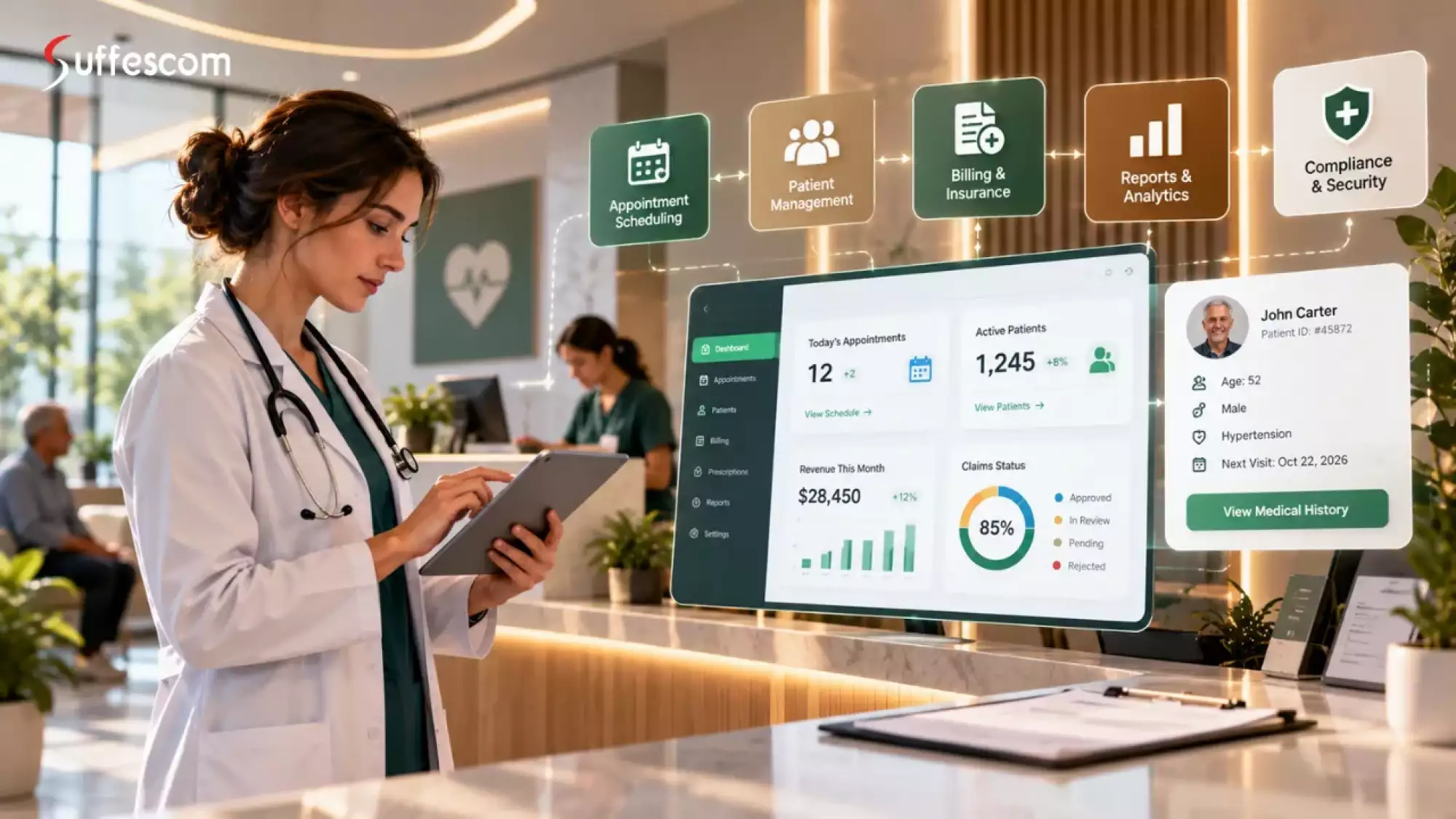
Home Healthcare Software Development for Home Care Providers

Key takeaways:

  • Custom software solves staffing shortages and complex compliance mandates where generic, off-the-shelf EHRs fall short.
  • The global home healthcare software market is projected to reach $10.5 billion by 2036, led by clinical homecare systems.
  • Field caregivers require reliable mobile apps that work seamlessly without cellular service and automate EVV tracking.
  • Smart scheduling algorithms and route optimization significantly cut down back-office admin tasks and staff travel times.
  • Using native FHIR and HL7 APIs is critical for secure, real-time data exchange with legacy hospital EHR networks.
  • Building a tailored, secure platform typically costs between $25,000 to $90,000+ and takes 4 to 10 months to deploy.

Want similar results? → Get a Free Quote

Running a home healthcare agency is a balancing act. You have to coordinate staff on the move, keep patients safe, and handle piles of government paperwork, all at the same time. Clunky, basic home healthcare software only makes this harder.

The global home healthcare software market is projected to reach $10.5 billion by 2036, with clinical homecare systems holding a dominant 52.0% usage share. (source).

This guide breaks down the essentials of home health tech. Inside, you will discover the exact tools caregivers need on the road, like apps that work without internet and smart scheduling that cuts down drive time. 

Whether you want to upgrade your agency or build a new platform, this roadmap shows you how to create software for home healthcare service providers that saves time and improves patient care. 

Key Market Drivers in Home Healthcare Software Development 

A combination of demographic changes, staffing crises and evolving care models is forcing home healthcare providers to rethink how they operate, turning custom healthcare software from a luxury into an operational necessity.

Aging Population & Chronic Disease Management 

The rise in complex, long-term conditions requires continuous tracking via robust clinical management systems.

Healthcare Workforce Shortages 

Burnout is high, meaning agencies need agency management solutions to automate administrative tasks and free up field staff. 

Transition to Value-Based Care Models 

Reimbursements now tie to patient outcomes, making home health software critical for tracking clinical data and reducing hospital readmissions. 

Rising Patient & Family Expectations 

Families expect modern digital convenience, including transparent patient portals and real-time updates. 

Expansion of Remote & Virtual Care

The boom in telehealth requires platforms that seamlessly integrate remote patient monitoring tools to track vitals from home. 

Modern software solutions for home care providers must support the needs of caregivers, administrators, patients, and families while ensuring security, compliance, and seamless communication across the care journey.  

Core Features of a Modern Home Healthcare Platform

An enterprise-grade home healthcare software solutions platform cannot be built as a rigid, one-size-fits-all portal. Your operations span the back office, transit routes, and private residential spaces. To eliminate administrative drag and eliminate human error, the software architecture must deliver specialized, seamless workflows optimized for three distinct user segments.

1. The Caregiver Mobile App (Field Mobility Tools)

Field clinicians require a high-performance, lightweight piece of software for caregivers out on the road. The system must minimize screen time during active patient visits, allowing them to focus entirely on clinical outcomes rather than manual data entry.

Offline First Database Functionality

Caregivers routinely treat patients in rural or low-connectivity zones. The application must feature an encrypted local database (such as SQLite or Realm) that allows clinicians to review care plans, log vitals, and chart visits offline. The system silently executes a background data-reconciliation sync the moment cellular service returns.

Integrated Electronic Visit Verification 

Built-in GPS geofencing and dual-factor time-stamping automatically record clinical visits. This allows agencies to seamlessly meet strict federal and state EVV compliant software development mandates without forcing staff to manage tedious manual timesheets.

Point of Care Documentation

Intuitive digital flowsheets, wound care photo uploads with anatomical markers, and voice-to-text clinical dictation enable fast, accurate charting right at the patient's bedside.

Real-Time Alerts & Notification Engine

Instant push notifications push vital updates to the field regarding immediate care plan modifications, critical medication adjustments, or emergency scheduling shifts.

2. The Agency Dashboard (Back-Office Administration & Operations)

For administrators, billers, and coordinators, the central dashboard acts as an operational command center. It leverages automation to replace repetitive manual logistics with secure, scalable workflows.

AI-Powered Smart Scheduling

The platform replaces chaotic whiteboards with an advanced, automated scheduling software for caregivers. Intelligent matching algorithms instantly pair the ideal field staff with a patient based on clinical certifications, language preferences, availability, and geographic proximity.

Route & Travel Optimization

Integrated mapping engines (such as the Google Maps API) calculate the fastest driving sequence for the day. This cuts down staff travel times, lowers agency mileage expenses, and protects field clinicians from burnout.

Automated Billing & Claims Scrubbing

A robust home health billing software engine validates insurance eligibility in real time and tracks prior authorization horizons. It automatically checks claims for formatting or structural errors before electronic submission, acting as a highly efficient home care claims management software framework that accelerates cash flow.

OASIS & Compliance Safeguards

Built-in validation check-gates guide clinicians through mandatory assessments. This native architecture enforces strict compliance with the latest OASIS-E2 compliant software schemas, reducing audit risks and preventing downstream payment rejections.

3. Patient & Family Portal (Engagement & Transparency Hub)

Modern care requires active collaboration. Providing transparent windows into the care lifecycle builds patient trust and makes it simple to communicate with caregivers home care software applications.

Secure Communication Hub

Fully HIPAA compliant home healthcare software messaging and low-latency video consultations allow family members, field caregivers, and managing physicians to collaborate instantly.

Real-Time Schedule Transparency

Families gain complete peace of mind through a clear view of upcoming visits, complete with photos, verified credentials, and brief bios of the scheduled arriving caregivers.

Telehealth & Remote Patient Monitoring Integration

Specialized remote patient monitoring software development allows the portal to connect natively with Bluetooth medical devices (like blood pressure cuffs or glucometers). It streams live health telemetry data directly to the agency's clinical alert dashboard.

Medication & Care Reminders

Automated app alerts and SMS reminders prompt patients to adhere to medication schedules or perform physical therapy exercises between face-to-face nurse visits.

Key Regulatory & Compliance Requirements 

When executing software development for home healthcare service providers, compliance cannot be an afterthought, it must be baked into the foundational source code. Building a platform that meets strict medical authority standards means mastering three major regulatory frameworks:

HIPAA Compliance Software Development

To safeguard Protected Health Information (PHI), any modern HIPAA compliant home health software must implement multi-layered security protocols:

Data Encryption

High-grade AES-256 encryption for data at rest and TLS/SSL protocols for data in transit.

Access Governance

Stringent Role-Based Access Controls paired with Multi-Factor Authentication ensuring staff only access patient data relevant to their shift.

Immutable Audit Logs

Automated, unalterable system logs tracking exactly who viewed, edited, or transmitted patient records to withstand strict federal audits.

EVV Compliant Software Requirements

Under the federal 21st Century Cures Act, states mandate Electronic Visit Verification software for all Medicaid-funded home visits. Your platform's backend must securely capture and timestamp six undeniable data points:

  1. Exact type of care service performed.
  2. The specific individual receiving the service.
  3. The specific caregiver providing the service.
  4. The exact date of the service.
  5. The verified location of service delivery (via secure GPS geofencing).
  6. The precise clock-in and clock-out times.

OASIS-E2 Compliant Software Standards

Effective April 1, 2026, CMS officially transitioned to the OASIS-E2 data standards for adult post-acute assessments. This update introduced new item metrics, including structural reclassifications like replacing M0069 (Gender) with A0810 (Sex), updating transportation items (A1255), and expanding sensory screenings (Hearing, Vision, Language) to the Resumption of Care (ROC) time point. 

Custom software architecture must incorporate hardcoded, conditional validation logic that prevents a clinician from submitting an incomplete or self-contradictory assessment, eliminating the risk of downstream payment rejections.

Tech Architecture & Tech Stack for Home Healthcare Software Development 

The right technology architecture enables home healthcare software to deliver secure, scalable, and real-time healthcare services across multiple users, devices, and locations. 

A cloud-native, API-driven architecture ensures seamless communication among patients, caregivers, healthcare providers, pharmacies, laboratories, insurance platforms, and third-party healthcare systems.

Tech Architecture for Home Healthcare Software Development

Recommended Tech Stack for Home Healthcare Software Development

Modern home healthcare software development stack prioritizes scalability, interoperability, security, and performance. Cloud infrastructure supports growing patient volumes, while FHIR and HL7 integrations enable smooth data exchange with existing healthcare systems. 

Real-time communication technologies power virtual consultations, and strong encryption, authentication, and access controls help organizations meet regulatory requirements such as HIPAA and GDPR. 

This combination creates a reliable foundation for building software solutions for home care providers that are secure, connected, scalable, and ready to support evolving healthcare demands.  

Frontend Development

  • React.js for responsive web portals
  • Angular for enterprise healthcare platforms
  • Flutter for cross-platform mobile apps
  • React Native for faster mobile app development

Backend Development

  • Node.js for scalable real-time applications
  • ASP.NET Core for enterprise-grade healthcare systems
  • Java Spring Boot for large healthcare ecosystems
  • Python (FastAPI/Django) for AI-enabled healthcare applications

Database

  • PostgreSQL
  • MySQL
  • MongoDB
  • Redis (Caching)

Cloud & Hosting

  • Amazon Web Services 
  • Microsoft Azure
  • Google Cloud Platform  

APIs & Integrations

  • REST APIs
  • GraphQL
  • FHIR APIs
  • HL7 Integration
  • EHR/EMR Integration
  • Pharmacy APIs
  • Laboratory APIs
  • Insurance Verification APIs

Security Technologies

  • OAuth 2.0
  • JWT Authentication
  • AES-256 Data Encryption
  • TLS/SSL Encryption
  • Multi-Factor Authentication  
  • Role-Based Access Control  

Real-Time Services

  • WebRTC
  • WebSockets
  • Twilio APIs
  • Agora SDK

AI & Automation  

DevOps & CI/CD

  • Docker
  • Kubernetes
  • Jenkins
  • GitHub Actions
  • Terraform

Step-by-Step Development Process for Home Healthcare Software

Building successful home healthcare software requires a structured development approach, backed by reliable IT services for home care providers, that balances clinical workflows, compliance requirements, and user experience. 

By avoiding short-cuts and adhering to a rigorous engineering lifecycle, development teams can build a scalable platform that eliminates operational risk and drives user adoption.

1. Discovery & Business Requirement Analysis 

Every project begins by defining high-level business objectives, target end-user personas, and state-specific regulatory baselines. At this stage, technical architects document your primary care delivery models whether Private Duty, Medicare-Certified Home Health, or Hospice and map out your core data integration requirements (such as state-specific EVV API aggregation endpoints).

2. Clinical Workflow Mapping & System Topology

Architects create detailed data-flow diagrams mapping out exactly how field caregivers, office administrators, patients, family members, and third-party systems (like local pharmacies and clinical labs) interact within the ecosystem. By visualizing every touchpoint, you identify potential operational bottlenecks and establish strict user-permission guardrails before writing a single line of code.

3. Accessibility-First UI/UX Prototype Design

Designers build clickable, high-fidelity prototypes of the administrative dashboard, patient portal, and caregiver mobile app. Because field staff often operate under high-stress conditions or low-light household environments, interfaces prioritize massive touch-targets, extreme contrast ratios, and intuitive navigation that complies with WCAG 2.1 AA accessibility standards to minimize documentation errors.

4. Architecture Selection & Secure Database Design 

Technical leads establish a secure, cloud-native backend infrastructure frequently leveraging AWS or Microsoft Azure's HIPAA-compliant hosting modules. The database architecture is split: a relational database (like PostgreSQL) handles highly structured, transactional clinical data, while a NoSQL engine (like MongoDB) handles dynamic care logging. Concurrently, an offline-first data sync strategy is established using local client-side databases like SQLite or Realm.

5. Minimum Viable Product Core Engineering 

Engineers build out the functional foundation of the software. The MVP isolates and executes your most critical operational features first: biometric or multi-factor user authentication, localized caregiver scheduling matrices, core point-of-care clinical charting flowsheets, automated push notifications, and baseline EVV GPS check-in tracking.

6. Interoperability Integration & API Assembly

Specialized healthcare integration engineers bridge your modern platform with external medical realities. Utilizing native FHIR REST APIs and legacy HL7 JSON protocols, the development team builds secure pipelines connecting your platform directly to hospital EMR networks (like Epic and Cerner), e-prescribing tools, laboratory portals, and automated insurance eligibility verification clearinghouses.

7. Rigorous Quality Assurance & Data-Conflict Testing

QA engineers push the platform through grueling functional, performance, and cross-device testing. Crucially, this stage includes specialized network degradation testing to ensure the offline-first database completely resolves data conflicts when two nurses modify a care plan simultaneously without internet access. Penetration testing is also performed to check for common API vulnerabilities.

8. Compliance Validation & Security Audits 

Independent security teams run thorough compliance checks to verify that all data storage, audit trailing, identity management, and system-wide encryption layers align perfectly with HIPAA, GDPR, and OASIS-E2 structural data schemas. Completing this validation phase serves as your primary defense against future CMS structural audits or payment clawbacks.

9. Staged Deployment & Role-Based User Training  

The software is safely deployed onto production servers using automated CI/CD pipelines. Existing legacy agency data is scrubbed, normalized, and securely migrated. To ensure successful implementation and zero downtime, deployment is accompanied by role-based, asynchronous training tracks customized for office schedulers, billers, and mobile clinicians.

10. Continuous Performance Monitoring & Enhancement 

Post-launch, developers utilize advanced monitoring tools to track cloud application performance, API latency, and user drop-off trends. Regular updates are scheduled to patch emerging operating system updates (iOS/Android), refine field workflows based on caregiver feedback, and instantly adapt the software database to changing federal compliance guidelines.

This phased approach helps home healthcare software development teams reduce implementation risks, accelerate adoption, and deliver a platform that supports both clinical efficiency and patient-centered care.

Key Integration Challenges & Solutions in Home Healthcare Software Development

Integrating home healthcare software with existing healthcare systems is often one of the most complex aspects of development. 

Addressing these challenges early helps ensure smooth data exchange, regulatory compliance, and a better experience for caregivers and patients.

1. Integrating with Legacy EHR/EMR Systems

Many healthcare providers still rely on legacy electronic health record systems that use different data formats and communication protocols.

Solution: Use standardized APIs such as FHIR and HL7 along with middleware to enable secure, consistent data exchange between modern applications and legacy systems.

2. Maintaining Data Consistency Across Multiple Systems

Patient information is often shared across EHRs, pharmacy platforms, laboratory systems, billing software, and mobile applications, increasing the risk of inconsistent or duplicate records.

Solution: Implement centralized data synchronization, validation rules, and unique patient identifiers to maintain accurate and up-to-date information across connected systems.

3. Supporting Real-Time Data Exchange

Delays in syncing clinical notes, medication updates, or patient vitals can affect care coordination and decision-making.

Solution: Use event-driven APIs, WebSockets, and real-time synchronization mechanisms to keep information current across all connected platforms.

4. Ensuring Security During Data Integration

Healthcare integrations involve exchanging highly sensitive patient information, making security a critical concern.

Solution: Protect data with end-to-end encryption, secure authentication protocols, role-based access control, and continuous monitoring of API activity.

5. Integrating Remote Patient Monitoring Devices

Wearables and medical devices often come from different manufacturers and use varying communication standards.

Solution: Build flexible integration layers that support multiple device protocols and standardize incoming health data before storing it in the platform.

6. Managing Third-Party API Reliability

External services such as payment gateways, telehealth platforms, pharmacy systems, and insurance verification APIs may experience downtime or performance issues.

Solution: Design resilient integrations with retry mechanisms, API monitoring, fallback workflows, and error handling to minimize service disruptions.

7. Meeting Regulatory Compliance Requirements

Data exchanged between multiple healthcare systems must comply with healthcare privacy and security regulations throughout its lifecycle.

Solution: Incorporate audit logs, consent management, secure data storage, and compliance-focused development practices to meet standards such as HIPAA and GDPR.

By addressing these integration challenges during development, organizations build home healthcare software that ensures reliable interoperability, protects sensitive patient information, and supports seamless collaboration across the entire care ecosystem.

Cost of Home Healthcare Software Development

The cost of developing custom home healthcare software depends on the application's complexity, regulatory compliance requirements, third-party integrations, AI capabilities, offline functionality, and interoperability standards such as FHIR and HL7. 

Solutions designed for enterprise healthcare providers typically require greater investment due to advanced security, scalability, and integration requirements. 

Software TypeEstimated CostWhat's Included
Minimum Viable Product (MVP)$25,000 – $45,000+Core scheduling, HIPAA-compliant messaging, clinical documentation, caregiver management, and a cross-platform mobile application.
Mid-Tier Custom Software$50,000 – $90,000+AI-powered route optimization, offline-first architecture, automated claims scrubbing, patient portal, state EVV integrations, and enhanced reporting.
Enterprise Healthcare Ecosystem$90,000+Multi-state deployment, bidirectional EMR/EHR integrations (Epic, Cerner), Remote Patient Monitoring, predictive analytics, advanced security, role-based access controls, and enterprise-grade scalability.

Home Healthcare Software Development Timeline

Building a secure, compliant, and scalable home healthcare software solution typically takes 4 to 10 months, depending on the project's scope, number of integrations, and feature complexity.

Development PhaseEstimated DurationActivities
Discovery & UI/UX Design4–6 weeksBusiness analysis, workflow mapping, requirement gathering, architecture planning, and UI/UX design.
Core Development & API Integration16–24 weeksFrontend and backend development, mobile app development, EMR/EHR integrations, payment gateways, EVV, FHIR/HL7 implementation, and core feature development.
Healthcare QA & Security Audits4–6 weeksFunctional testing, performance testing, security assessments, HIPAA compliance checks, and bug fixing.
Compliance Validation & Deployment2–4 weeksFinal compliance verification, production deployment, user training, monitoring, and launch support.

Overall Estimated Timeline: 4–10 months, depending on the software's complexity, integrations, regulatory requirements, and customization level. 

Primary Cost Drivers

Development Approach

Native iOS/Android development costs more than cross-platform frameworks like Flutter or React Native.

System Integrations

Building middleware to extract data from legacy on-premise hospital systems increases engineering hours.

Offline Synchronization

Designing database conflict-resolution protocols for nurses working entirely without the internet requires highly specialized architecture.

If you're evaluating home healthcare software development services, choosing the right development partner is just as important as selecting the right features. An experienced team can help you define the project scope, accurately estimate costs, and build a solution that supports your long-term business goals. 

Need an Accurate Project Estimate?

Connect with our team to explore the ideal solution, timeline, and budget.

Digitize Your Home Healthcare Business with Suffescom

Choosing the right development partner shapes how your platform performs over time. Suffescom brings deep experience engineering secure, AI-driven healthcare software that streamlines clinical workflows, automates scheduling and documentation, and strengthens caregiver-patient coordination. Our approach centers on HIPAA-aligned security, EVV compliance, and intelligent automation built around real-world care delivery. The result is software that fits how home healthcare teams actually work, day to day. 

FAQs 

Is home healthcare software HIPAA compliant by default? 

Software is never compliant out of the box. True HIPAA compliance depends on how developers configure the architecture, including AES-256 encryption, role-based access restrictions, and immutable logs, alongside signing a formal Business Associate Agreement.

How long does it take to build custom home healthcare software? 

A typical development lifecycle takes 4 to 10 months. Engineering a functional Minimum Viable Product takes roughly 4 months, while building a complex enterprise platform with deep hospital EHR integrations requires closer to 10 months.

How much does home healthcare software development cost? 

A custom platform usually costs between $25,000 and $90,000+. A baseline MVP ranges from $25,000 to $45,000, whereas enterprise multi-state networks requiring automated billing engines and AI routing algorithms exceed $90,000.

What is the difference between custom home healthcare software and an off-the-shelf EHR?

Off-the-shelf EHRs are generic, subscription-based systems with rigid templates that charge per-user licensing fees, which penalize your growth. Custom software is built around your specific operational workflows, offers 100% source code ownership, and eliminates ongoing subscription fees entirely.

How does custom software support the CMS All-Payer OASIS mandate?

The mandate requires tracking assessment metrics for all patients, not just Medicare recipients. Custom software handles this by embedding conditional validation logic into the clinician’s mobile interface, enforcing strict validation checks before forms can be submitted to prevent payment rejections.

How does software architecture adapt to the OASIS-E2 data standards?

Custom software backend databases directly match updated federal schemas. For instance, the software automatically incorporates the required sensory screening validations (Hearing, Vision, Language) at the Resumption of Care stage, ensuring full compliance with CMS rules.

Can custom home health software function in areas without cellular service?

Functioning without the internet is possible with an offline-first architecture. The application uses an encrypted local database (such as SQLite or Realm) directly on the smartphone, allowing caregivers to log vitals, chart visits, and capture signatures offline. The data automatically syncs to the cloud once a connection is restored.

What interoperability standards must home care software support?

To securely communicate with hospital systems, labs, and pharmacies, the software must natively read and write Fast Healthcare Interoperability Resources (FHIR REST APIs) and HL7 protocols. This ensures frictionless patient referrals and automated data exchanges.

How does an AI scheduling engine optimize caregiver routing?

Instead of manual scheduling, the engine runs matching algorithms that instantly evaluate caregiver certifications, patient clinical needs, and real-time mapping traffic data. This reduces staff travel times, lowers mileage expenses, and increases daily patient contact hours.

What security technologies are required for HIPAA compliance?

The software must enforce multi-layered security protocols: AES-256 encryption for data at rest, TLS/SSL encryption for data in transit, multi-factor authentication (MFA), role-based access controls (RBAC), and immutable, automated system audit logs.

How long does it take to deploy a custom home care software system?

A typical end-to-end development lifecycle takes 4 to 10 months. Launching a streamlined Minimum Viable Product takes roughly 4 months, while engineering a complex enterprise ecosystem with deep hospital EHR integrations takes closer to 10 months.

Sunil Paul - Suffescom Writer

Sunil Paul

Senior Technical Content Writer & Research Analyst

Sunil Paul is a Senior Tech Content Writer at Suffescom with over 11+ years of experience in crafting high-impact, research-driven content for emerging technologies. He specializes in in-house technical content across AI-driven solutions. With deep domain expertise, he has consistently delivered content aligned with industries such as healthcare, real estate, education, fintech, retail, supply chain, media, and on-demand platforms His researches evolving tech trends in custom mobile and software development, with a focus on AI-powered capabilities, AI agent integration, APIs, and scalable architectures and helping enterprises, startups, and SMEs make informed technology decisions and accelerate digital growth.

Got an Idea?
Let's Make it Real.

x

Beware of Scams

Don't Get Lost in a Crowd by Clicking X

Your App is Just a Click Away!

Fret Not! We have Something to Offer.