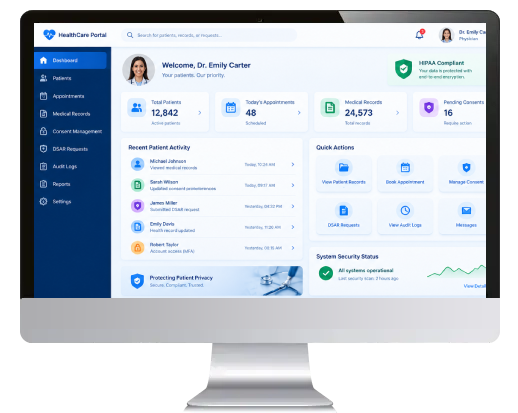
HIPAA-Compliant Patient Portal Modernization With RBAC and Audit Logging For a Medical Group

Learn how we helped a large medical group strengthen its patient portal security with granular access controls, end-to-end encryption, and comprehensive audit logging.

HIPAA Project Overview

Project Overview

A large medical group operating across multiple locations was facing a critical security crisis with their existing patient portal. The platform had been developed on outdated architecture with weak access controls, limited encryption, and no comprehensive audit logging. Two near-miss security incidents within a year—involving attempted unauthorized access to patient records—had exposed the system's vulnerabilities. With HIPAA penalties reaching up to $2 million per violation, the organization needed an immediate and complete security transformation.

Challenges

The existing patient portal had significant security gaps that exposed sensitive patient information and limited the medical group's ability to monitor and control access. The organization needed stronger role-based permissions, secure data flows, and complete visibility into patient data access.

  • line icon

    Role Confusion & Over-Permissioning

    The portal used a binary access model—users were either "logged in" or not. A receptionist, nurse, and physician all had identical access to patient records. 40% of staff had access to data they never needed for their jobs.

  • line icon

    Data Flow Blind Spots

    The portal exchanged data with 12 third-party systems. 5 of these integrations transmitted patient data over unencrypted channels (HTTP) and used static API keys rotated every two years. One integration used the same API key for 18 months.

  • line icon

    Audit Trail Gaps

    The portal only logged login events, not data access. When investigating a potential breach, the IT team could only confirm a staff member was logged in but had no way to determine which records were viewed or modified.

Solution Delivered

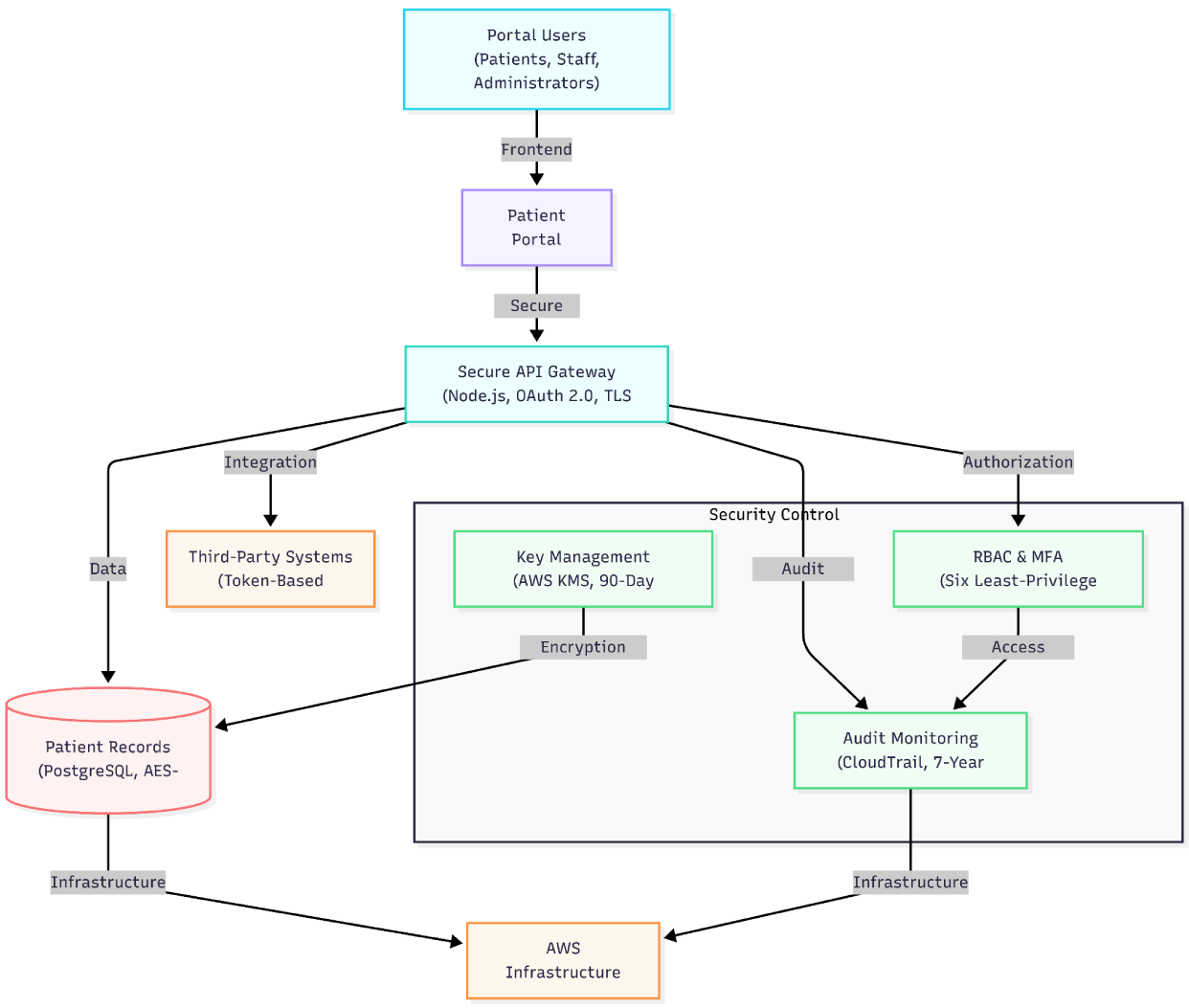
We transformed the medical group's patient portal security architecture around three core security pillars: least-privilege access, strong encryption, and comprehensive auditability.

Role-Based Access Control with Least Privilege

We implemented a granular RBAC model with six distinct roles. Each role receives only the permissions necessary for job functions. Any attempt to access restricted data triggers an alert. Temporary elevated access expires automatically.

Encryption in Motion and at Rest

We upgraded all data flows to TLS 1.3 encryption. For data at rest, we implemented AES-256 encryption with centralized key management using AWS KMS. All existing data was re-encrypted. The key rotation policy was set to 90 days.

Comprehensive Audit and Monitoring

We built a tamper-proof audit logging system tracking every access to patient data with user ID, timestamp, record accessed, action, and source IP. Logs are stored immutably for 7 years. Real-time alerting detects suspicious activities, reducing investigation time from days to minutes.

Real Numbers. Real Security Impact

Security Incidents

Zero security incidents since implementation.

Encrypted Data Flows

100% of data flows are now encrypted, up from 85%.

Provider Access

Staff access restricted to job-relevant data for all 200+ providers.

HIPAA Security Audit

Passed HIPAA security audit with zero findings within 2 months.

Investigation Time

Investigation time reduced by 90% with real-time audit logs.

Technology Stack

Frontend:

React.js

Backend:

Node.js with RBAC implementation

Database:

PostgreSQL with AES-256 encryption

Key Management:

AWS KMS

Audit Logging:

CloudTrail

Infrastructure:

AWS (EC2, RDS, S3)

Compliance:

HIPAA, HITECH

HIPAA tech stack
×

Conclusion

The HIPAA-Compliant Patient Portal project demonstrates how a security-first approach to patient data management can mitigate risk and build patient trust. By implementing granular RBAC, end-to-end encryption, and comprehensive audit logging, we helped the medical group achieve full HIPAA compliance, eliminate security vulnerabilities, and create a secure foundation for future digital health initiatives.

Beware of Scams

Don't Get Lost in a Crowd by Clicking X

Your App is Just a Click Away!

Fret Not! We have Something to Offer.