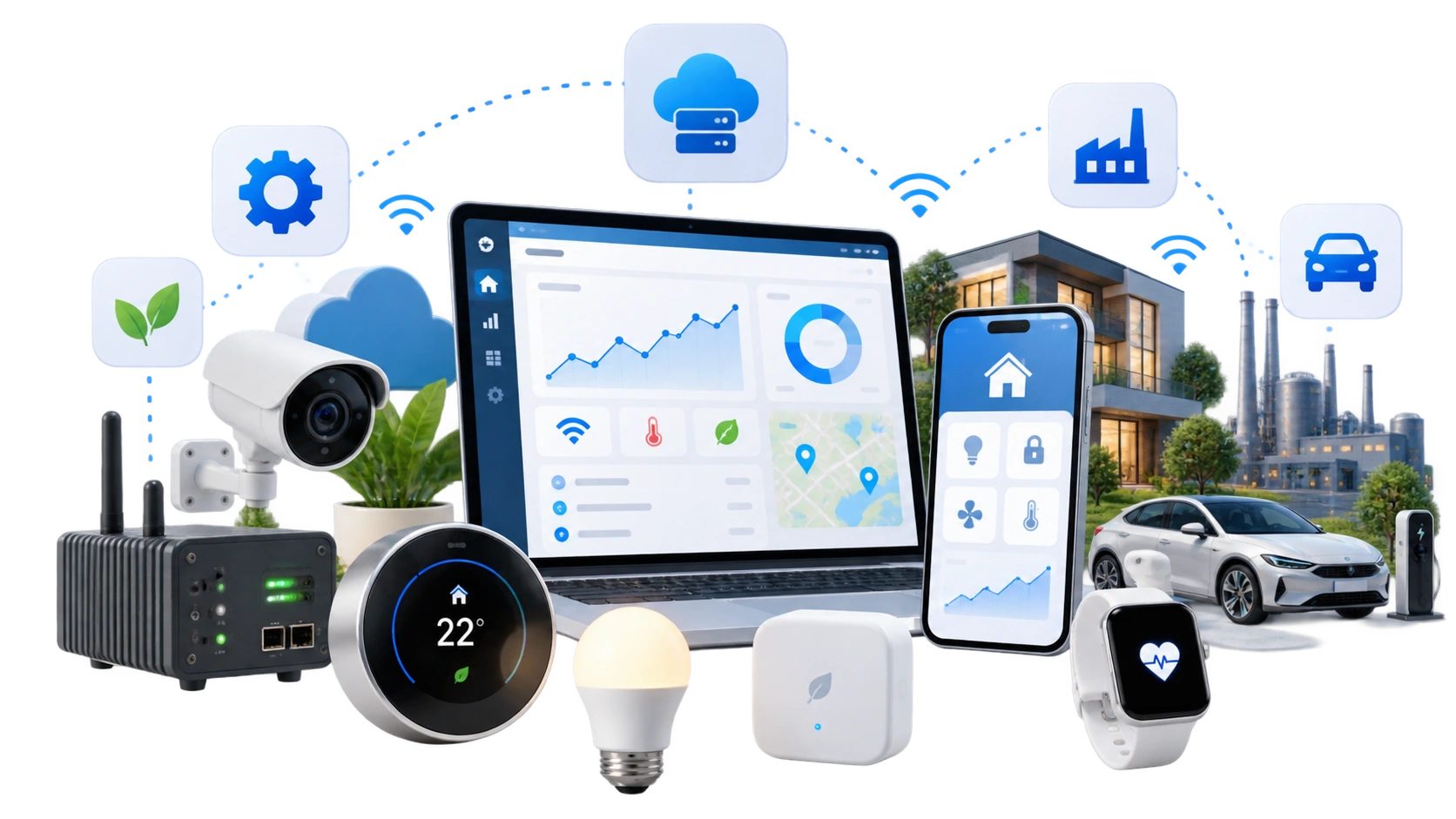
At Suffescom, we build IoT solutions that connect devices, data, and business workflows through intelligent digital platforms. Our IoT application development services help businesses monitor connected assets, access real-time insights, automate processes, and manage IoT ecosystems across devices and locations.
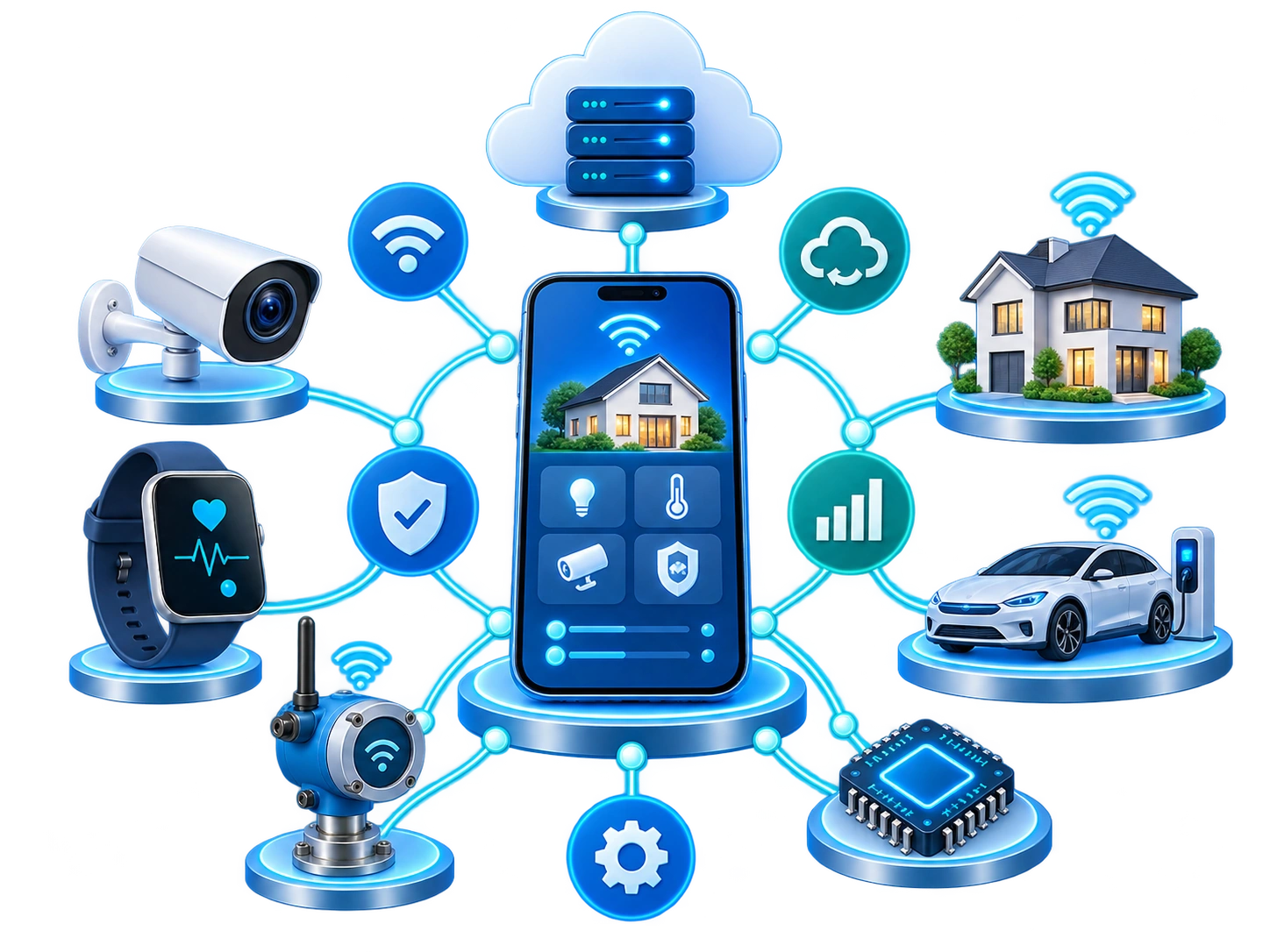
With 13+ years of application development experience, Suffescom helps businesses turn connected devices into reliable digital operations. We build IoT applications that support real-time monitoring, data processing and workflow automation in various industries.
Our expertise spans the complete IoT application lifecycle. From connected device integration to cloud-based dashboards, we create scalable platforms built for continuous data flow and dependable performance.
Our IoT application development services cover the complete journey from planning to ongoing support. We enable businesses to develop connected applications that make monitoring, analyzing, and operating device data more convenient.
We assist companies that are considering connected-device programs and planning their IoT technology trajectory. Our consultants evaluate use cases, connectivity needs, data flows, integration needs, and security concerns to provide a realistic basis for implementation.
We develop mobile interfaces that give field teams and business users access to connected-device information wherever operations take place. Native and cross-platform development approaches can support monitoring and remote workflows.
Artificial intelligence can add predictive and analytical capabilities to connected applications by working with device-generated data. AIoT development can support use cases such as anomaly detection, predictive analysis, intelligent alerts, and data-driven automation.
We develop Industrial IoT applications (IIoT) that connect industrial equipment and enterprise platforms to improve visibility and asset management. Our IIoT services support various industrial environments where instant equipment data and automated workflows are important.
Wearable interfaces can extend connected experiences to smartwatches and other supported devices where quick access to information matters. Our IoT app development scope can include sensor data presentation and API-based communication with existing solutions.
Connected applications often need to exchange information with existing business systems rather than operate independently. Our integration and implementation services connect IoT applications with APIs, databases, ERP platforms, CRM systems, cloud services, and supported device environments.
Raw telemetry is better understood when presented in a structured way, such as through a dashboard and analytics, by the operational teams. We incorporate data analytics capabilities that help users monitor trends, compare performance, identify irregularities, and understand connected-device activity.
We develop Internet of Medical Things (IoMT) applications that connect supported medical devices, healthcare systems, and user applications. Our IoMT app services help healthcare organizations monitor data and integrate medical information with existing digital health systems.
Predictive maintenance capabilities enable businesses to shift away from reactive equipment maintenance and towards data-driven maintenance planning. IoT-based software can analyze sensor readings, historical performance, and operational events to identify patterns that may indicate developing equipment issues.
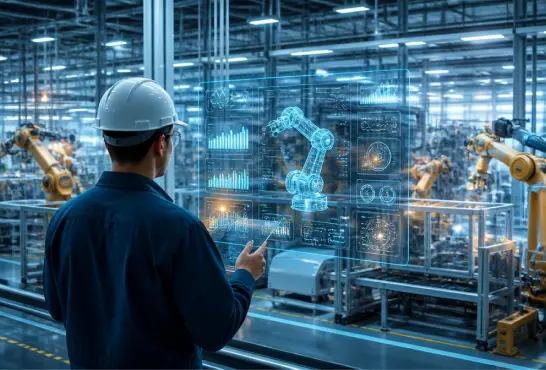
A manufacturing company needed better visibility into equipment performance across its production floor. Operational teams relied on manual checks and had limited visibility into machine status between inspections. The business wanted a centralized application for monitoring equipment data and identifying operational issues earlier.
Suffescom developed an IoT application with a centralized monitoring dashboard for connected equipment. Instant telemetry was organized into machine-level views with configurable alerts and all performance indicators. The application also provided historical data to aid teams in reviewing equipment behavior and other trends.
faster identification of equipment issues
improvement in operational visibility
reduction in manual monitoring activities
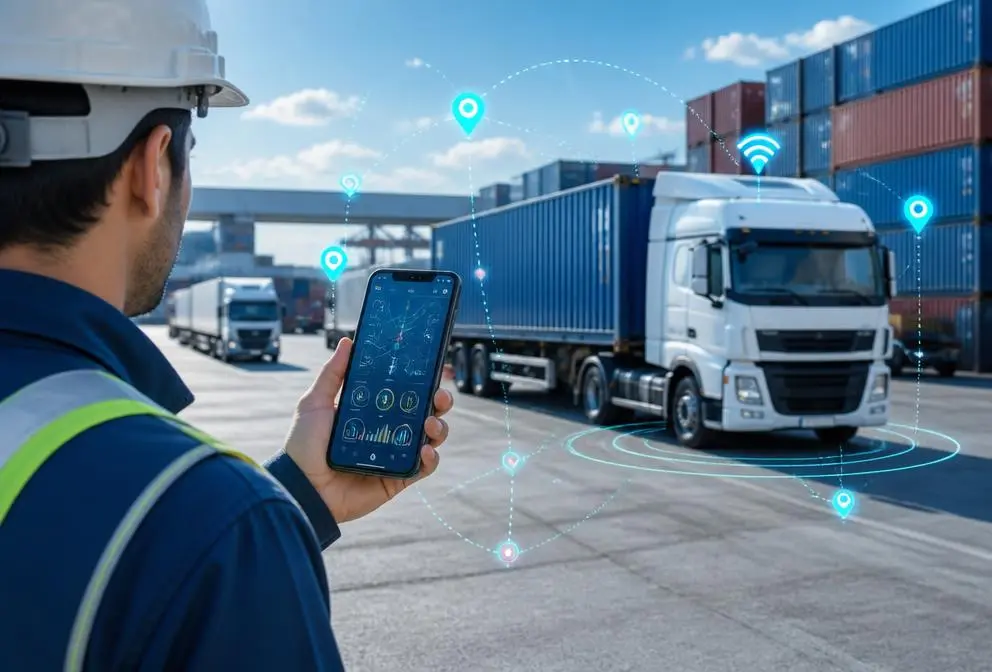
A logistics company wanted field and operations teams to monitor connected assets without depending on desktop systems. Asset status and operational events were difficult to access while teams were working away from the control center. The company needed a mobile-first interface for faster access to IoT data.
Our IoT app development company created a mobile application that presented asset status and relevant telemetry through a unified interface. API integrations connected the application with the existing IoT backend and enabled authorized users to access current information from their mobile devices.
faster access to asset information
improvement in field team response time
reduction in manual status checks
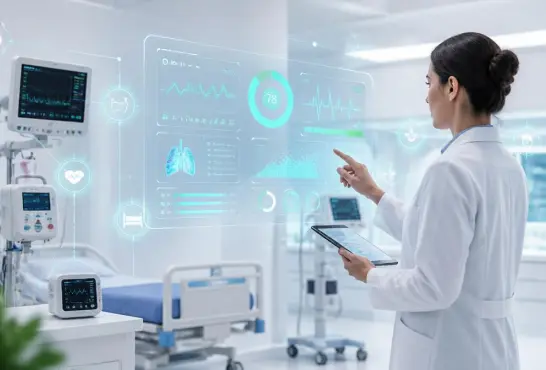
A healthcare provider required a better way to interpret data from devices that connect to a monitoring system to provide better insights. Staff could have access to a lot of device information but lacked centralized visualization as well as timely notification. The goal was to gain greater operational visibility without introducing unnecessary manual tasks.
Our IoT app development company created an analytics platform to provide an integrated view of device information on role-specific dashboards. Authorized teams were able to keep track of connected equipment and find readings that were abnormal and needed attention using data visualization, threshold-based alerts, and historical reporting.
quicker access to insights of connected devices.
improvement in monitoring efficiency
reduction in manual data review
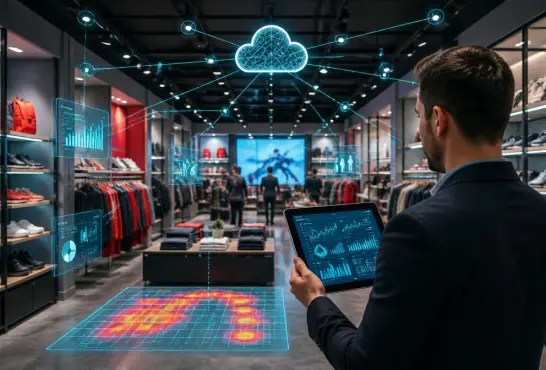
A retail company with several stores required a view of connected systems across multiple locations. Operational conditions data were spread out, which made it hard to compare the operational conditions and find issues across stores.
We incorporated the IoT application with a cloud based data environment and linked the necessary APIs. Location-level visibility was facilitated by centralized dashboards, and reliable cloud infrastructure was used to process constant telemetry and analyze historical data.
improvement in centralized monitoring
faster access to operational data
reduction in manual reporting work
We provide IoT development services for various industries that depend on connected assets and intelligent monitoring.
Our IoT app development company develops solutions that include all the important features businesses need to monitor operations and respond to events instantly.
At Suffescom, we use established technologies to build connected applications that can handle real-time data and changing operational requirements. The technology stack is selected according to the devices involved and the application architecture.
Artificial Intelligence can analyze data from connected devices and identify patterns that may need attention. Our IoT app development company incorporates AI for anomaly detection and intelligent alerts.
Machine learning works with historical sensor data to identify recurring patterns and predict potential outcomes. It can support predictive maintenance and equipment performance analysis within connected environments.
Generative AI can make large volumes of IoT data easier for teams to understand. We develop IoT app development solutions integrated with Gen AI to generate summaries and provide natural-language access.
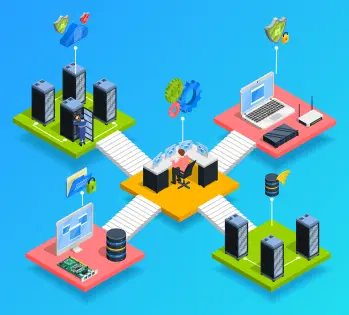
Edge computing moves selected processing closer to the device or local network. This can reduce latency and data transfer requirements for applications that need faster responses.

Connected devices can generate large volumes of telemetry over time. Big data technologies help process this information for trend analysis and performance monitoring across IoT environments.
Computer vision allows connected applications to work with image and video data. It can support visual inspection and equipment monitoring where cameras form part of the IoT environment.
A digital twin creates a virtual representation of a physical asset or environment. Live IoT data can update this representation and help teams understand asset performance over time.
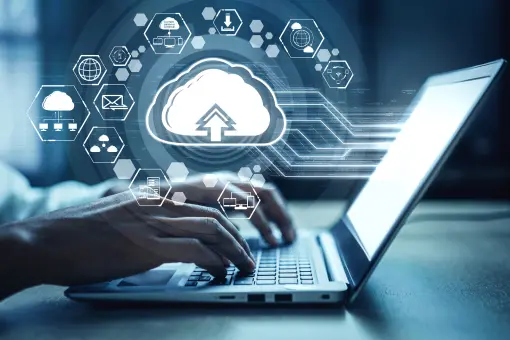
Cloud platforms provide scalable infrastructure for IoT applications and connected data. Our IoT app development solutions integrate with AWS, Azure or Google Cloud based on application requirements.
Our IoT development company considers relevant security and industry standards when developing applications. The applicable requirements depend on the use case, data handled, device environment, and deployment market.










As a trusted IoT application development company, we follow a structured process based on your unique business requirements.
We start by knowing your business goals and the connected environment involved. Our IoT app development company defines requirements and identifies device connectivity needs before establishing the technical direction.
The next stage focuses on defining the application architecture and development roadmap. We finalize the technology stack and map out integrations along with milestones for the IoT application development.
Next, our designers create the IoT application interface around the needs of its intended users. A prototype helps validate navigation and key workflows before full-scale app development begins.
Development covers the required application layers including frontend interfaces and backend services. Device data handling and APIs are implemented according to the approved architecture by our IoT application developers.
The application is integrated with compatible devices and required third-party systems. Functional and performance testing helps verify data flow and application behavior across connected environments.
Once development and testing are complete, we deploy the solution to the selected environment. Our IoT application development services company performs configuration and final checks before production use.
At Suffescom, our IoT development services include post-launch support to help keep the solution secure and operational as requirements change. It includes updates and improvements based on business needs.
The cost of IoT application development depends on the number of connected devices and the complexity of the application. Data processing requirements and third-party integrations also influence the overall development investment.





Smart connected applications must handle continuous device communication without compromising performance or security. Our IoT application development solutions focus on the technical issues that can impact connected applications as device fleets and data volumes grow.
Sensors can generate telemetry every few seconds. Processing every data point through the cloud can increase infrastructure load and slow down application response.
Our IoT application development company uses event-driven processing and data filtering to handle high-frequency telemetry. Edge computing can process time-sensitive data closer to the device.
IoT environments rarely rely on a single communication protocol and devices may use MQTT or CoAP while enterprise systems depend on REST APIs.
Our IoT app development services include integration layers that normalize incoming device data. Protocol adapters and APIs allow the application to communicate with different connected environments..
Every connected device can become an entry point into the IoT environment. Weak credentials or unsecured APIs can expose telemetry and operational data.
We implement device authentication and encrypted communication across the application stack. IAM and RBAC controls help limit access to authorized users and services.
An IoT solution may start with hundreds of devices and later support thousands or more. Architecture that is not designed for this growth can create bottlenecks.
We build scalable backend architecture around expected device volume and telemetry frequency. Cloud infrastructure can be configured with load balancing and horizontal scaling where required.
Applications used for equipment monitoring or asset tracking need current device information. Delayed telemetry can make alerts and operational decisions less effective.
We optimize data transmission and processing paths based on latency requirements. WebSockets and edge processing can support faster updates where real-time visibility is critical.
Connected applications may handle personal data or operate within regulated industries. Compliance requirements can affect data storage and access as well as security controls.
Our Internet of Things application development services account for applicable standards and data protection requirements during architecture planning. Privacy controls and access policies are incorporated into the application rather than added after deployment.
Monitor connected assets from a centralized interface. Teams can track device status and review live telemetry without relying on manual checks.
Find equipment issues before they lead to major downtime with IoT application development. Predictive analytics and condition monitoring can help decrease unnecessary maintenance and improve asset utilization.
Trigger workflows based on device events and predefined conditions. IoT solutions can automate alerts and repetitive operational tasks with less manual intervention.
Track how equipment and connected assets are being used. Historical data helps teams identify underutilized resources and improve operational planning.
Safeguard connected environments with device authentication and role-based access. Integrate encryption and secure APIs to help safeguard data moving in the IoT ecosystem.
Turn constant telemetry into dashboards and insights with IoT application development solutions. Business teams can use historical trends and data to make better decisions.


Suffescom helped us move away from manual equipment checks. The monitoring dashboard gave our team a much clearer view of machine performance and made it easier to spot issues earlier. It has made our daily monitoring work much more manageable.

Our field teams needed access to asset information while they were away from the control center. The mobile application made that much easier. They can now check asset status and receive important updates directly from their phones.

We had a lot of device data but getting useful information from it was not always easy. The IoT analytics platform brought everything into a much clearer view. The alerts have also helped our teams pay attention to readings that actually need action.

Managing connected systems across multiple stores was becoming difficult with data spread across different places. Suffescom helped us bring that information into a centralized platform. We now have a better view of store operations and can access historical data when we need it.

IoT projects require more than application development. The software must communicate reliably with connected devices while handling telemetry and integrations as the workload grows. Suffescom brings expertise to each layer of the application.
With 13+ years of experience, our teams understand how to build applications for demanding business environments. This experience supports IoT projects from architecture planning through deployment.
Our IoT application development company plans the solution around its device ecosystem and data flow. The architecture can include cloud infrastructure or edge processing based on the project's technical requirements.
Our IoT application developers work with technologies used across connected applications. Their expertise includes MQTT and REST APIs along with WebSockets and cloud platforms.
Security is considered throughout the IoT application development lifecycle. Authentication controls protect user access, and encryption helps secure data transmission.
Connected applications often need to work with existing business software. We integrate IoT platforms with ERP and CRM systems through APIs and middleware.
We consider applicable security and privacy requirements during architecture and development. Depending on the industry and use case, the application can be aligned with standards.


















• SUFFESCOM SOLUTIONS
Build Smarter. Scale Faster. Grow More.
Have a Vision? Let’s Turn It Into a Digital Reality.
Get a quick response from our best experts in under 10 minutes.
Suffescom easily understood our main goal and delivered the best digital solution. Their team was very cooperative, and it was a very good experience working with them. I would highly recommend them.

Working with Suffescom was a really great experience. Their developers demonstrated technical knowledge and delivered our mobile app solution with all required functionalities on time.

Suffescom helped us build a logistics software solution that completely improved our fleet operations. Their professionalism and transparency are what make them a reliable technology partner.

Share Your Requirements. Our Experts Will Shape the Solution.
• SUFFESCOM SOLUTIONS
Build Smarter. Scale Faster. Grow More.
Have a Vision? Let’s Turn It Into a Digital Reality.
Get a quick response from our best experts in under 10 minutes.
Suffescom easily understood our main goal and delivered the best digital solution. Their team was very cooperative, and it was a very good experience working with them. I would highly recommend them.
Working with Suffescom was a really great experience. Their developers demonstrated technical knowledge and delivered our mobile app solution with all required functionalities on time.
Suffescom helped us build a logistics software solution that completely improved our fleet operations. Their professionalism and transparency are what make them a reliable technology partner.
Share Your Requirements. Our Experts Will Shape the Solution.
• SUFFESCOM SOLUTIONS
Build Smarter. Scale Faster. Grow More.
Have a Vision? Let’s Turn It Into a Digital Reality.
Get a quick response from our best experts in under 10 minutes.
Suffescom easily understood our main goal and delivered the best digital solution. Their team was very cooperative, and it was a very good experience working with them. I would highly recommend them.
Working with Suffescom was a really great experience. Their developers demonstrated technical knowledge and delivered our mobile app solution with all required functionalities on time.
Suffescom helped us build a logistics software solution that completely improved our fleet operations. Their professionalism and transparency are what make them a reliable technology partner.
Share Your Requirements. Our Experts Will Shape the Solution.
Fret Not! We have Something to Offer.