Built an RPA-Powered Insurance Verification System to Cut Claim Denials by 60%

Learn how we helped a multi-specialty clinic network automate insurance eligibility checks and prior authorization workflows using RPA bots, reducing prior authorization turnaround from 5 days to 4 hours and cutting claim denials by 60%.

IoT Smart Bed Monitoring

Project Overview

A multi-specialty clinic network with 45+ providers across 12 locations was struggling with high claim denial rates and slow prior authorization approvals. Staff manually logged into multiple payer portals to verify insurance eligibility, submit prior authorization requests, and track approvals. This consumed 30+ hours per week, delayed patient care, and resulted in a 22% claim denial rate due to eligibility errors.

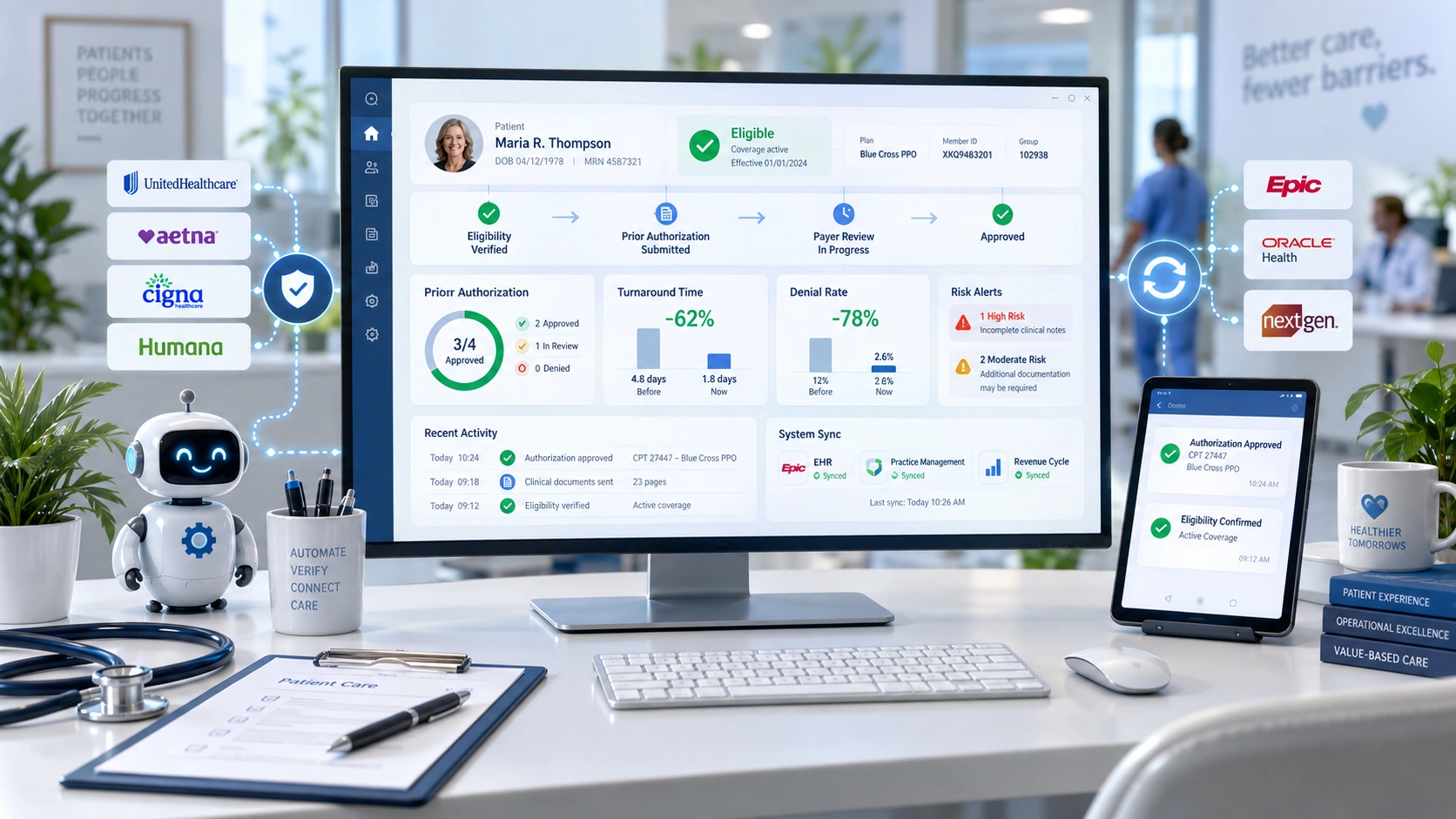
We built an RPA-powered insurance verification and prior authorization automation platform from scratch. The solution uses software bots to log into payer portals, verify eligibility, submit prior authorization requests, and track approvals—all without manual intervention. The platform integrates with the clinic's EHR and practice management system, updating patient records and revenue cycle workflows in real-time.

Challenges

  • Continuous Data Creates Alarm Fatigue

    Manual Payer Portal Navigation

    Staff logged into multiple payer portals daily to verify eligibility and submit prior authorizations. Each payer had different interfaces, login requirements, and workflows. This consumed 30+ hours per week and was error-prone.

  • Nurses Need Mobile Alerts, Not Station Alerts

    Eligibility Errors Caused Claim Denials

    Without real-time eligibility verification, claims were submitted with outdated or incorrect insurance information. The clinic's claim denial rate was 22%, with 60% of denials due to eligibility issues.

  • Early Warning Detection Requires ML Models

    Prior Authorization Delays Impacted Patient Care

    Prior authorization turnaround averaged 5 days, delaying surgeries, procedures, and specialist referrals.

  • line icon

    No Visibility into Authorization Status

    Staff had no centralized view of pending authorizations. Tracking required logging into multiple payer portals, and status updates were missed.

Solution Delivered

Resilient RPA Bots for Payer Portals

Built software bots that log into payer portals, verify eligibility, and submit prior authorization requests. Bots use dynamic element detection and self-healing logic to adapt to portal changes without manual intervention.

Event-Driven Eligibility Verification

Implemented triggers that automatically verify eligibility when an appointment is scheduled, when a patient checks in, and when a claim is submitted. Results are updated in the EHR in real-time.

Prior Authorization Decision Engine

Built a decision engine that applies payer-specific rules and clinical guidelines to determine if authorization is needed, what documentation to submit, and how to respond to payer queries.

Denial Prediction Model

Built a machine learning model that identifies claims at risk of denial based on historical patterns, eligibility gaps, and documentation completeness.

Authorization Status Dashboard

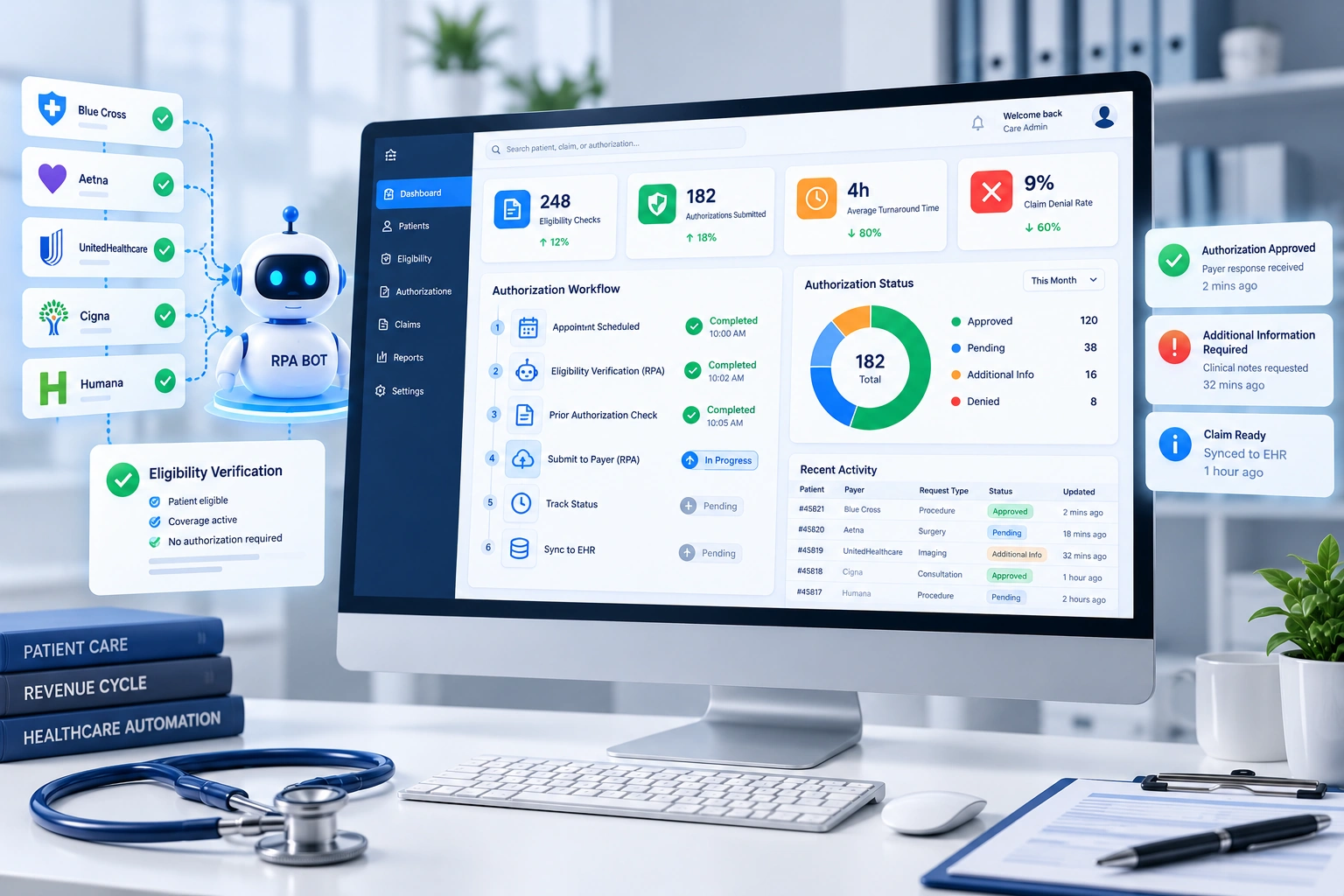
Built a centralized dashboard showing the status of all pending authorizations across payers with real-time updates and alerts.

How the Platform Works

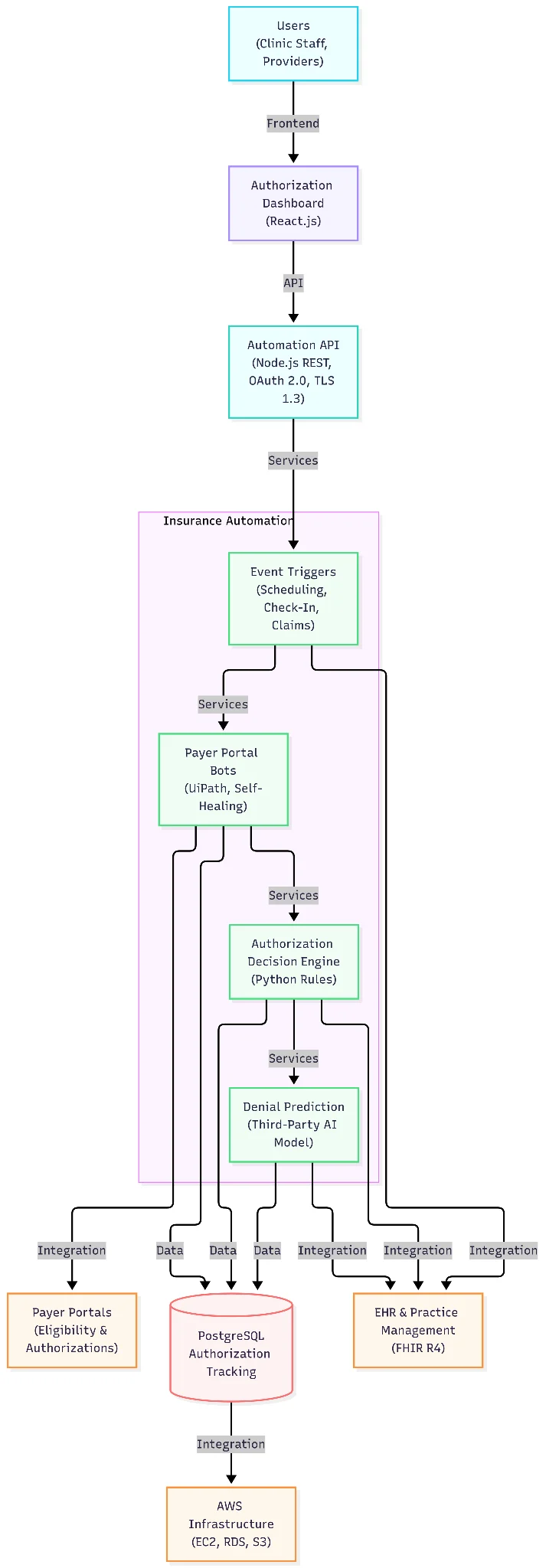
When an appointment is scheduled, the platform triggers an eligibility verification bot that logs into the payer portal and validates coverage. If prior authorization is required, the decision engine determines the documentation needed and submits the request via RPA bots. The platform monitors authorization status and alerts staff to approvals, denials, or requests for additional information. Before claim submission, the denial prediction model flags at-risk claims for review. All data is synced to the EHR and revenue cycle system in real-time.

How the Platform Works

Platform Capabilities

01

Resilient RPA Bots

Dynamic element detection and self-healing logic for payer portal changes.

02

Event-Driven Eligibility Verification

Automatic verification at scheduling, check-in, and claim submission.

03

Prior Authorization Decision Engine

Payer-specific rules and clinical guidelines for automated workflow.

04

Denial Prediction Model

ML-based risk scoring for proactive claim review.

05

Authorization Status Dashboard

Real-time visibility into pending authorizations across payers.

Measurable Operational Impact

Prior authorization turnaround reduced from 5 days to 4 hours.

Claim denial rate reduced from 22% to 9% (60% reduction).

95%

30+ hours per week of manual insurance verification eliminated.

95%

of eligibility verifications completed automatically without human intervention.

45+

providers supported across 12 locations.

Technology Stack

  • RPA Platform: UiPath for bot development and orchestration
  • Decision Engine: Python with payer-specific rule sets
  • ML Models: Third-party ai model for denial prediction
  • Frontend: React.js for authorization dashboard
  • Backend: Node.js with RESTful APIs
  • EHR Integration: FHIR R4 APIs
  • Database: PostgreSQL for authorization tracking
  • Infrastructure: AWS (EC2, RDS, S3)
  • Security: OAuth 2.0, TLS 1.3, AES-256 encryption
  • Compliance: HIPAA, GDPR
Technology
×

What This Project Proves

Insurance verification and prior authorization automation can transform revenue cycle management by reducing manual effort, accelerating approvals, and preventing claim denials. By building resilient RPA bots, event-driven verification triggers, and a denial prediction model, we helped the clinic network reduce prior authorization turnaround from 5 days to 4 hours and cut claim denials by 60%. The solution achieved full HIPAA compliance while creating a scalable foundation for revenue cycle automation.

Beware of Scams

Don't Get Lost in a Crowd by Clicking X

Your App is Just a Click Away!

Fret Not! We have Something to Offer.