WELLNESS PLATFORM logo

Wellness App Development and Designing for Employee

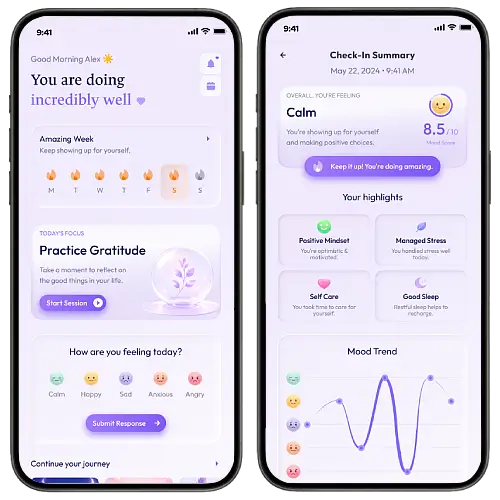
A product company, part of the Virgin Group corporation, approached us to develop and support a large online wellness platform and Android apps enabling corporations to encourage employees to lead healthier, more enjoyable lives. The platform needed to serve diverse workforces across multiple industries with personalized wellbeing programs.

$100K+

Client investment over
1+ year

B2B SaaS

Per‑employee subscription
model

Platform Type

B2B SaaS · Multi-tenant

Architecture

Node.js microservices

Stack

Node.js · PostgreSQL · Redis · AWS

Launch Status

Production-ready

About the Client

A Virgin Group Company Building for the Modern Workforce

The client was a product company under the Virgin Group corporation, seeking to develop and support a large online wellness platform for corporations to encourage employees to lead healthier, more enjoyable lives — serving diverse workforces across multiple industries with personalized wellbeing programs.

The platform was envisioned as a full-featured employee wellness system combining health management programs, wearable device integration, and activity tracking. Each corporate client carried distinct operational needs — from branding to program configuration to compliance — demanding a flexible, multi-tenant architecture rather than a one-size-fits-all build.

Features

Personalized Wellness Plans

Health & Activity Tracking

Mental Wellness Support

Virtual Coaching & Consultations

Primary Users

  • Individuals Wellness Seekers
  • Fitness Coaches & Trainers
  • Nutritionists & Dietitians
  • Corporate Wellness Teams

The Challenge

Every Piece of the Platform Had to Earn Employee Trust and Scale Across Industries

  • line icon

    Multi-tenant architecture

    Each corporate client needed isolated data, custom programs, and per-company branding — requiring robust tenant isolation rather than a shared, one-size-fits-all setup.

  • line icon

    Wearable integration

    Fitbit, Apple Watch, and Garmin each shipped different APIs, data formats, and sync frequencies, requiring a unified abstraction layer to normalize everything into one schema.

  • line icon

    Data privacy & compliance

    Handling PHI meant meeting HIPAA, GDPR, and CCPA requirements simultaneously — employees needed real confidence that their sensitive health data stayed protected.

  • line icon

    Engagement & adoption

    Wellness platforms fail without engagement, and 60% of users had no prior wellness engagement — the product had to earn daily habits, not just sign-ups.

The Solution

Deliberate Technical Decisions — Matching Technologies to Specific Problems

WEARABLE INTEGRATION

A Unified Device Abstraction Layer

  • OAuth2 with refresh tokens for Fitbit, Apple Watch, and Garmin.
  • Background sync workers on configurable 1–6 hour intervals.
  • Sub-500ms sync across 10,000+ connected devices.

PERSONALIZATION

A Rule-Based Recommendation Engine

  • Health risk assessment to flag employees needing intervention.
  • Readiness-to-change staging across 5 stages of content delivery.
  • 100% of users receive personalized program recommendations.

SECURITY & COMPLIANCE

Privacy Built In, Not Bolted On

  • Column-level PHI encryption with a master key in AWS KMS.
  • Employers receive only anonymized, aggregated data.
  • Automated 90-day PHI retention purge with full audit log.

ARCHITECTURE

Platform Architecture

The wellness platform was designed as a multi-tenant, microservices-based system serving both a web admin dashboard and a React Native Android app. Rather than building a single monolith, each domain — tenants, users, health assessments, programs, wearables, and notifications — runs as its own Node.js service behind a shared API gateway.

The architecture focuses on tenant isolation, wearable data normalization, and operational visibility, ensuring every corporate client gets isolated data and custom branding while the platform scales smoothly across 18 countries.

wellness platform Architecture

Database Architecture

PostgreSQL + Redis — Built for Isolation and Speed

PostgreSQL was selected for ACID compliance and a schema-per-tenant model, giving every corporate client isolated data alongside JSONB columns for flexible program configuration. Redis sits in front of it as a caching layer, cutting PostgreSQL read load by 60% for high-traffic endpoints like tenant config and the program catalog.

  • Schema-per-tenant isolation
  • Column-level PHI encryption (pgcrypto)
  • B-tree indexes on tenant_id and user_id
  • JSONB for variable tenant configuration
  • Redis config cache with 5-minute TTL

Performance Benchmarks

Health assessment (p95) 120ms
Dashboard load (p95) 85ms
Wearable sync (p95) 450ms
Recommendation engine (p95) 95ms
API uptime 99.95%
Concurrent Redis sessions 10,000+

KEY OUTCOMES & BUSINESS VALUE

From Architecture to Adoption — Built to Scale Across Industries

  • 12+

    Enterprise clients

    Across 100+ agencies onboarded onto the platform.

  • 10%

    Average monthly active users

    Sustained engagement measured across every onboarded agency.

  • 60%

    Previously unengaged

    Share of users with no prior wellness engagement before joining.

  • 2x

    Engagement lift

    Hybrid users averaged 19 check-ins/month vs 8–9 for single-channel.

  • Revenue model

    B2B SaaS billed per employee, with client investment exceeding $100,000 over the first year alone. Revenue comes from base subscriptions plus premium add-ons, giving the platform a scalable path as each corporate client grows its headcount.

  • Scale achieved

    The platform has processed 1 billion check-ins across 40,000 clients and 5 million employees, backed by a team that grew from 3 to 12 engineers over a 9-year partnership — proof the architecture holds up well beyond its original scope.

Conclusion

Production-Ready Wellness Platform: Lessons Learned

  • Multi-tenant architecture is non-negotiable

    Multi-tenant architecture is non-negotiable

    Each corporate client needs isolated data, custom programs, and different thresholds — built into tenant-context middleware from day one, not bolted on afterward.

  • Wearable integration needs unified abstraction

    Wearable integration needs unified abstraction

    Fitbit, Apple Watch, and Garmin each ship different APIs and formats — a single normalized schema with OAuth2 refresh tokens keeps sync reliable across devices.

  • Privacy must be built in, not added

    Privacy must be built in, not added

    PHI requires column-level encryption and consent tracking from the start. Employers only ever see anonymized aggregates, and retention is purged automatically after 90 days.

Ready to Build a Smarter Wellness Platform?

Discover how AI-driven personalization can transform nutrition, fitness, and wellness experiences for your users.

Start the conversation
x

Beware of Scams

Don't Get Lost in a Crowd by Clicking X

Your App is Just a Click Away!

Fret Not! We have Something to Offer.