A telemedicine platform serving 500,000+ patients annually was facing inconsistent diagnostic accuracy and unnecessary specialist referrals. Providers had limited time to analyze symptoms and patient history without in-person examinations.
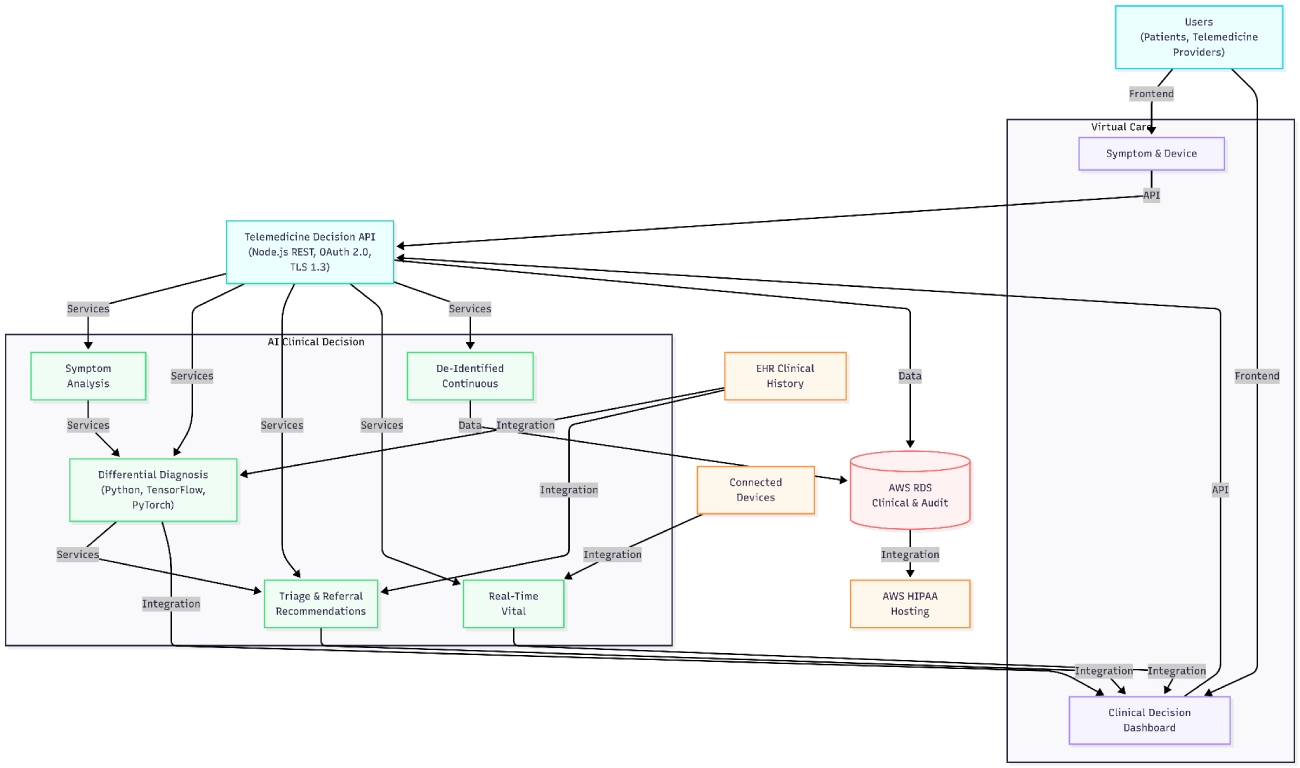
We integrated an AI-powered clinical decision support system into the platform. The solution combines NLP for symptom analysis, ML models trained on clinical datasets, and real-time device data to generate ranked differential diagnoses, recommend triage levels, and surface actionable insights—all within the provider's existing workflow.
Providers lacked physical examination cues, increasing the risk of missed conditions. The platform needed AI to analyze patient-reported symptoms and history to surface potential diagnoses.
Without standardized decision support, triage and referral decisions varied between providers. The platform needed AI-driven triage recommendations based on evidence-based protocols.
Patients generated large volumes of device data, but providers had no efficient way to interpret it during consultations. The AI needed to analyze vitals in real-time and surface actionable alerts.
Providers had limited time to review patient history and make complex decisions. The AI needed to surface relevant insights instantly without adding cognitive load.
We integrated an AI engine that analyzes symptoms, medical history, and device data using NLP and ML models to generate ranked differential diagnoses with confidence scores.
The system applies evidence-based protocols to recommend urgency levels (Emergent, Urgent, Routine) and specialist referrals based on clinical guidelines.
We integrated the AI engine with connected devices to interpret vitals (heart rate, blood pressure, glucose, oxygen) in real-time. Abnormal readings trigger alerts with suggested clinical actions.
AI recommendations are embedded directly in the consultation interface. Providers can accept, modify, or dismiss recommendations—all actions are logged for audit.
Models are continuously trained on de-identified outcomes to improve accuracy and adapt to new clinical guidelines.
During a virtual consultation, the AI engine analyzes patient-reported symptoms, medical history, and real-time device data. It generates a ranked list of differential diagnoses, recommends triage levels and specialist referrals, and flags abnormal vitals with suggested actions. The provider reviews recommendations, makes clinical decisions, and documents the encounter. All AI outputs and provider actions are logged for audit and continuous learning.
Ranked conditions with confidence scores.
Evidence-based urgency and specialist recommendations.
Alerts for abnormal vitals with suggested actions.
AI recommendations embedded in consultation interface.
Models trained on de-identified outcomes.
AI-powered clinical decision support can transform telemedicine software by improving diagnostic accuracy and reducing unnecessary referrals. By integrating an AI engine that analyzes symptoms, device data, and patient history in real-time, we helped the platform improve diagnostic accuracy by 25% and reduce consultation time by 40%. The solution achieved full HIPAA compliance while creating a scalable foundation for AI-driven virtual care.
• SUFFESCOM SOLUTIONS
Build Smarter. Scale Faster. Grow More.
Have a Vision? Let’s Turn It Into a Digital Reality.
Get a quick response from our best experts in under 10 minutes.
Share Your Requirements. Our Experts Will Shape the Solution.
• SUFFESCOM SOLUTIONS
Build Smarter. Scale Faster. Grow More.
Have a Vision? Let’s Turn It Into a Digital Reality.
Get a quick response from our best experts in under 10 minutes.
Share Your Requirements. Our Experts Will Shape the Solution.
Fret Not! We have Something to Offer.