For a Rehabilitation Center, Suffescom Built an IoT Platform for Sleep Monitoring and Recovery Tracking

Intro: Learn how we helped a rehabilitation center build an IoT-powered sleep monitoring and recovery tracking platform that uses wearable sensors to analyze sleep patterns, monitor recovery progress, and generate personalized care plans for patients recovering from surgery and chronic conditions.

IoT Smart Bed Monitoring

Project Overview

A rehabilitation center specializing in post-surgical recovery and chronic pain management was struggling to assess patient recovery outside clinical hours. Sleep quality—a critical indicator of recovery—was self-reported by patients, making it unreliable and subjective. Therapists had no objective data to adjust treatment plans, and patients often plateaued without knowing why.

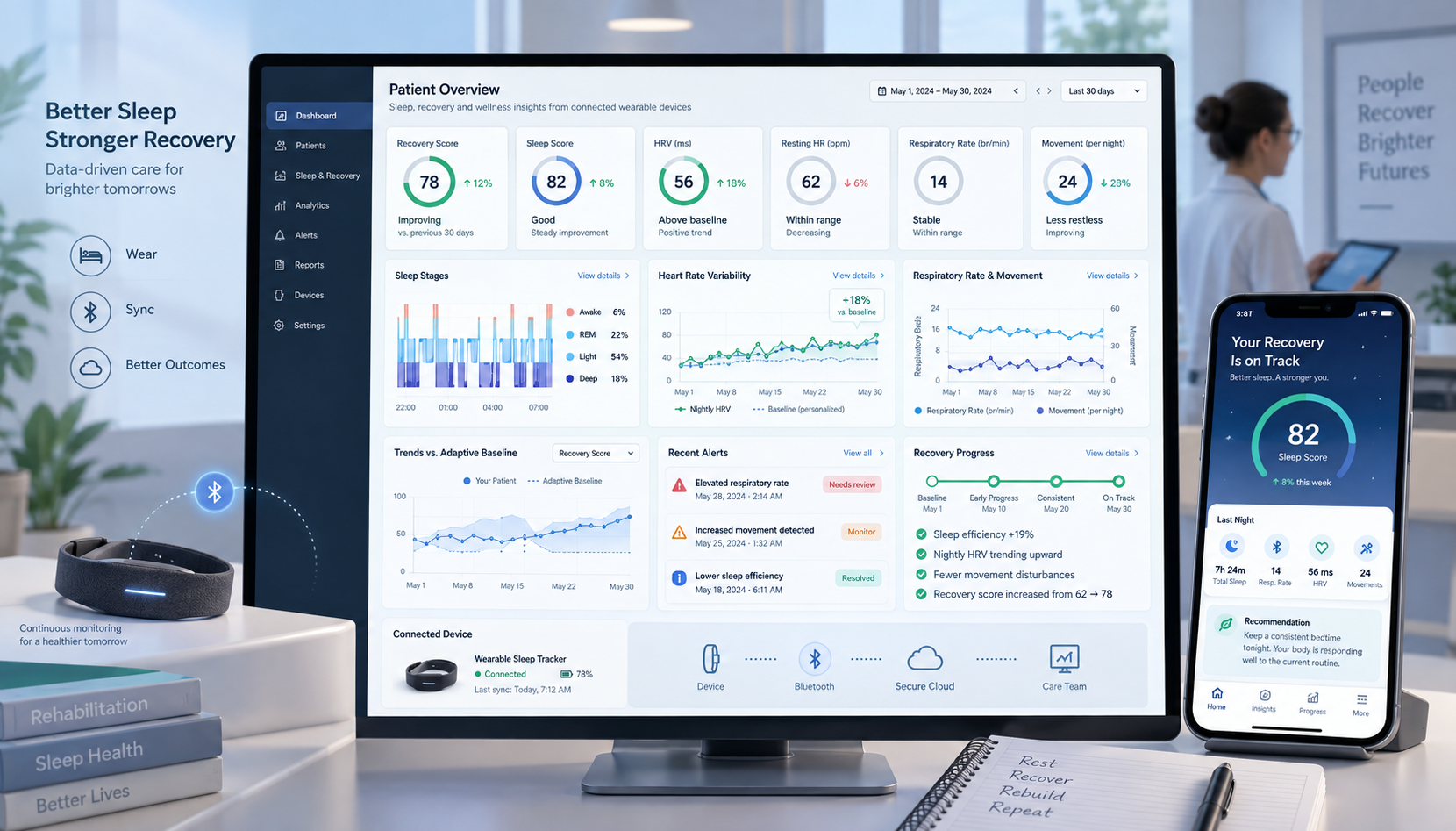
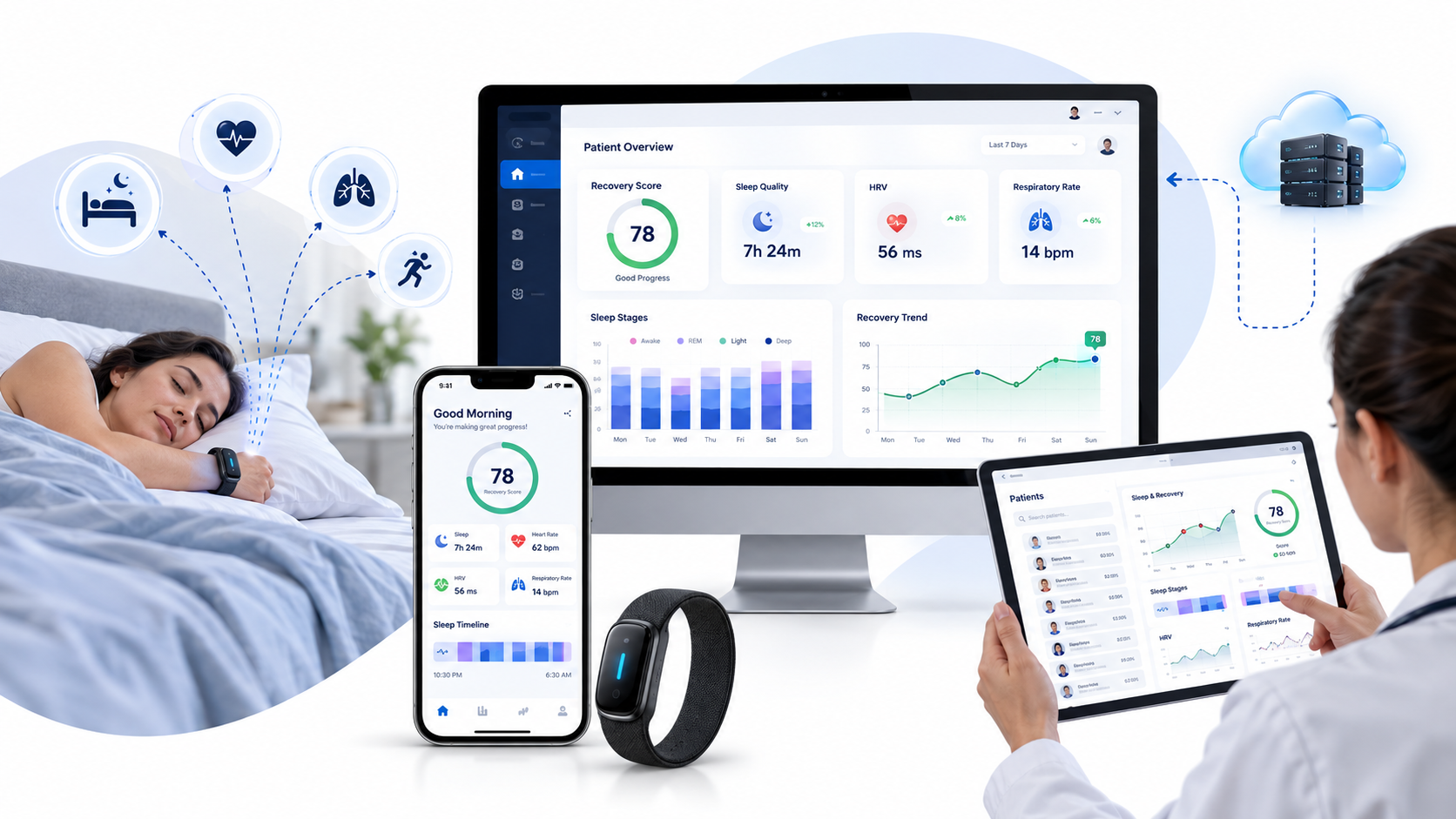
We built a sleep monitoring and recovery tracking platform from scratch. The platform integrates wearable IoT sensors that continuously capture sleep stages, heart rate variability (HRV), movement, and respiratory rate. Data is analyzed to generate recovery scores, detect anomalies, and recommend personalized interventions. Therapists access a dashboard showing sleep trends and recovery progress; patients receive a mobile app with actionable insights.
What Made This Project Different

Sleep Data Is Noisy—We Built Signal Processing for It

Wearable sleep data is notoriously noisy. Movement artifacts, poor sensor contact, and individual variability create false readings. We implemented signal processing algorithms that filter noise and validate data quality before analysis, ensuring clinical-grade accuracy.

Recovery Isn't Linear—We Built Adaptive Baselines

Recovery trajectories vary by patient, surgery type, and condition. We built adaptive baselines that learn each patient's normal patterns and flag deviations. A patient recovering from knee surgery has different sleep architecture than one recovering from cardiac events.

Therapists Needed Actionable Insights, Not Raw Data

Streaming raw sleep data to therapists would create information overload. We built a recovery scoring engine that translates sleep metrics into a single, interpretable score with drill-down capabilities. Therapists see trends, not spreadsheets.

Patients Needed Motivation, Not Just Monitoring

Adherence to sleep monitoring drops without feedback. We built a patient-facing mobile app with personalized insights, progress visualization, and gentle nudges—turning monitoring into a motivating experience.

What Made This Project Different

Challenges

  • Continuous Data Creates Alarm Fatigue

    Sleep Data Quality & Validation

    Wearable sensors produce noisy data. The platform needed signal processing to filter artifacts, validate sensor contact, and ensure clinical-grade accuracy before analysis.

  • Nurses Need Mobile Alerts, Not Station Alerts

    Personalized Recovery Baselines

    Recovery trajectories vary by patient. The platform needed adaptive baselines that learn individual patterns and flag deviations from normal recovery.

  • Early Warning Detection Requires ML Models

    Therapist Workflow Integration

    Therapists needed actionable insights, not raw data. The platform needed a recovery scoring engine that translates complex sleep metrics into interpretable scores.

  • line icon

    Patient Engagement & Adherence

    Patients disengage from monitoring without feedback. The platform needed a mobile app with personalized insights, progress tracking, and motivational nudges.

Solution Delivered

Signal Processing & Data Validation Layer

We implemented signal processing algorithms that filter movement artifacts, validate sensor contact, and score data quality. Only high-quality data is passed to the analytics engine.

Adaptive Recovery Baselines

We built ML models that learn each patient's normal sleep patterns and recovery trajectory. The system flags deviations (e.g., reduced deep sleep, increased HRV) that may indicate recovery issues.

Recovery Scoring Engine

We developed a scoring engine that translates sleep stages, HRV, movement, and respiratory rate into a single recovery score (0-100) with drill-down into contributing factors. Therapists see trends, not raw data.

Therapist Dashboard

We built a React.js dashboard showing patient recovery scores, sleep trends, and alerts for anomalies. Therapists can adjust care plans based on objective data.

How the Platform Works

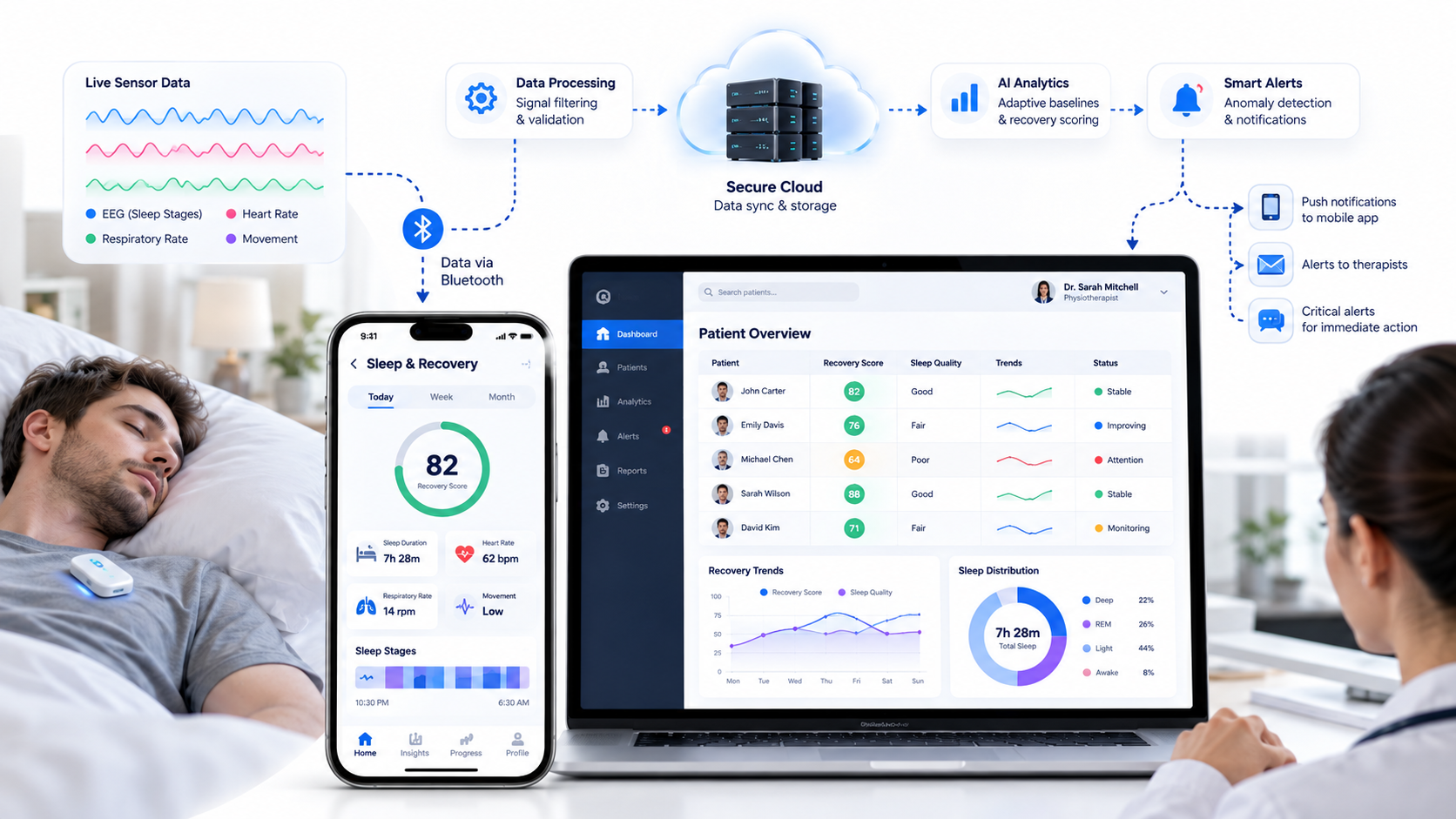
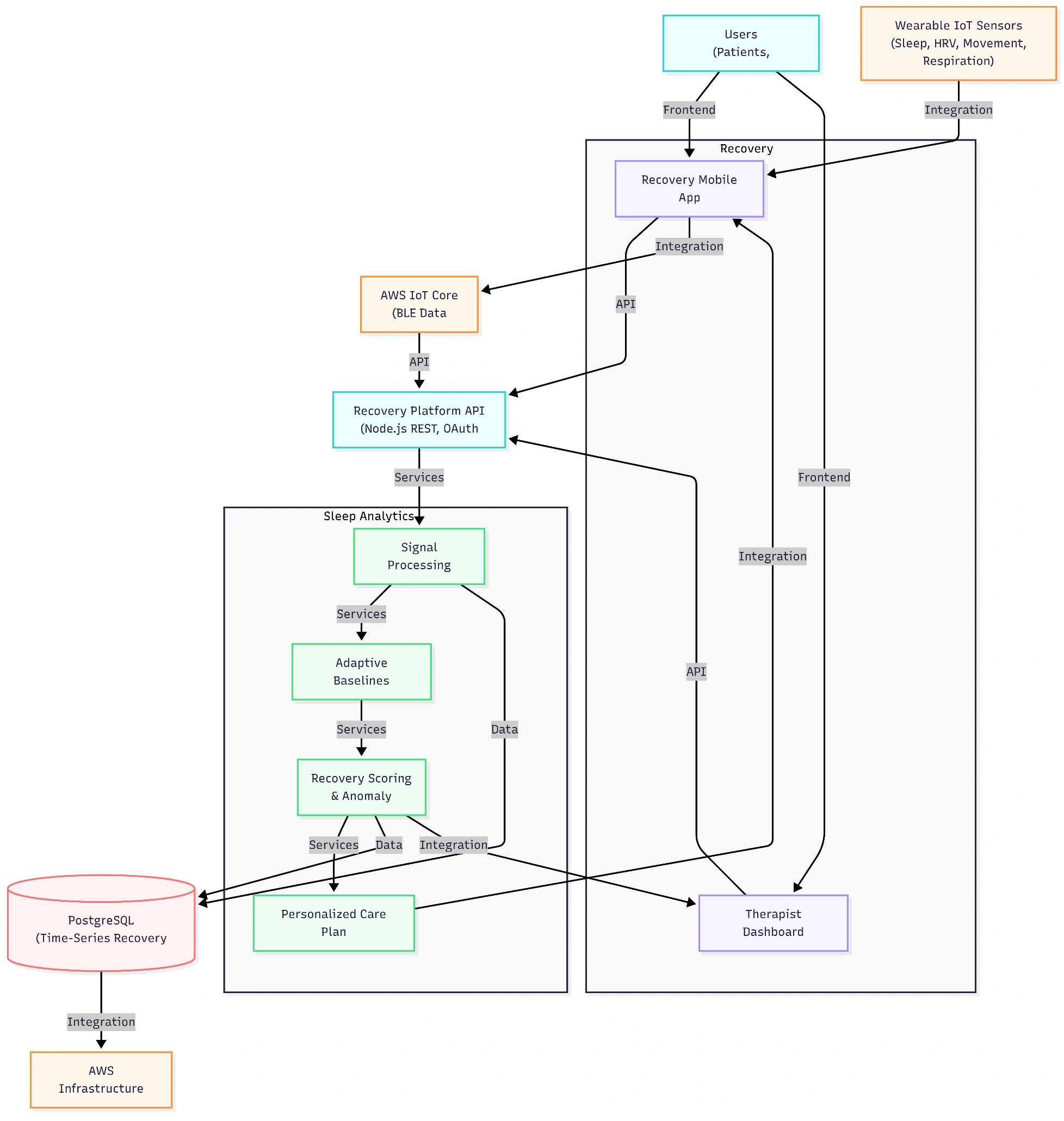
Patients wear IoT sensors during sleep. The sensors capture sleep stages, HRV, movement, and respiratory rate. Data is transmitted via Bluetooth to the patient's mobile app, then synced to the cloud. The signal processing layer validates data quality. The analytics engine compares data against adaptive baselines and generates a recovery score. Therapists view scores and trends on their dashboard; patients see personalized insights and recommendations. Alerts are triggered for anomalies requiring clinical attention.

How the Platform Works

Platform Capabilities

01

Wearable IoT Sensor Integration

Continuous capture of sleep stages, HRV, movement, and respiratory rate

02

Signal Processing & Validation

Filters noise and validates data quality before analysis.

03

Adaptive Recovery Baselines

Learns individual patterns and flags deviations.

04

Recovery Scoring Engine

Translates sleep metrics into interpretable recovery scores.

05

Patient Mobile App

Personalized insights, progress visualization, and motivational nudges.

06

Therapist Dashboard

Real-time recovery scores, trends, and anomaly alerts.

Measurable Clinical Impact

40%

improvement in recovery plan adherence through objective data and personalized insights.

35%

reduction in therapist time spent on subjective assessments.

30%

faster identification of recovery plateaus through adaptive baselines.

25%

increase in patient engagement with sleep monitoring..

50+

patients monitored daily across rehabilitation programs.

Technology Stack

  • Wearable Sensors: Bluetooth Low Energy (BLE) for data transmission
  • ML Models: TensorFlow for adaptive baselines and anomaly detection
  • Frontend: React.js (therapist dashboard), React Native (patient app)
  • Backend: Node.js with RESTful APIs
  • Database: PostgreSQL with time-series optimization
  • Infrastructure: AWS (EC2, RDS, S3, IoT Core)
  • Security: OAuth 2.0, TLS 1.3, AES-256 encryption
  • Compliance: HIPAA, GDPR
Technology
×

What This Project Proves

Sleep monitoring and recovery tracking can transform rehabilitation by providing objective data for personalized care. By building an IoT-integrated platform that addresses noisy data, adaptive baselines, therapist workflows, and patient engagement, we helped the rehabilitation center improve recovery plan adherence by 40% and reduce therapist assessment time by 35%. The solution created a scalable foundation for data-driven rehabilitation.

Beware of Scams

Don't Get Lost in a Crowd by Clicking X

Your App is Just a Click Away!

Fret Not! We have Something to Offer.