IoT Smart Bed Monitoring System Developed by Suffescom to Reduce Nursing Response Time by 60%

Intro: Learn how we helped a U.S.-based hospital network build an IoT-powered smart bed .monitoring system that continuously captures patient vital signs, detects critical events, and reduces nursing response time by 60%.

IoT Smart Bed Monitoring

Project Overview

A U.S.-based hospital network with 500+ beds was relying on manual vital sign checks every 4 hours, leaving dangerous gaps in patient monitoring. Post-surgical and step-down patients were most at risk of undetected deterioration.

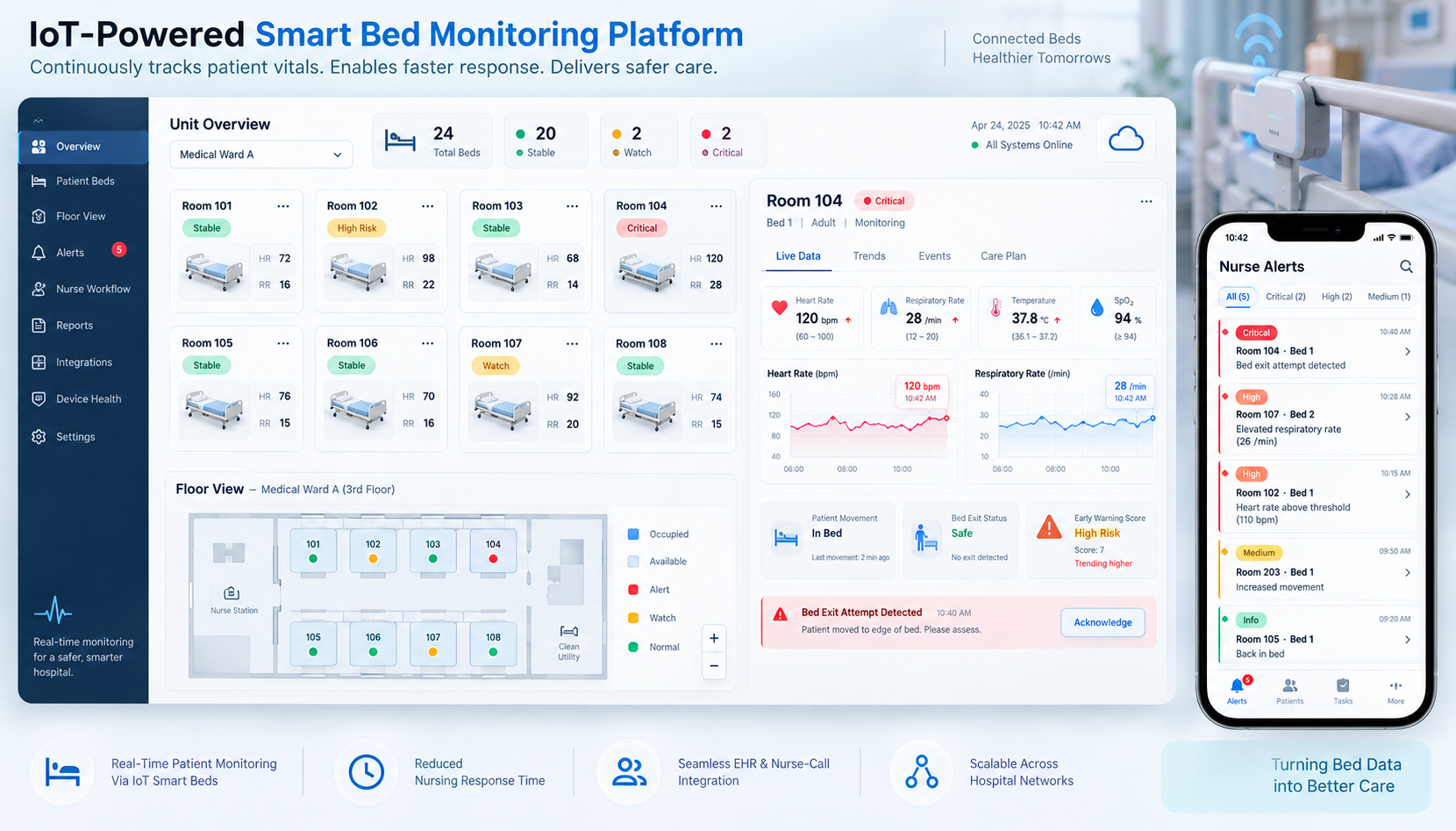
We built a smart bed and vital signs monitoring system from scratch. IoT-enabled beds with embedded sensors continuously capture heart rate, respiratory rate, movement, and bed exit status. Data streams to a central dashboard where ML algorithms detect early warning signs. Nurses receive prioritized alerts on mobile devices, enabling rapid response without adding workload.
What Made This Project Different

Bed Sensors Are Unobtrusive—No Wearables Required

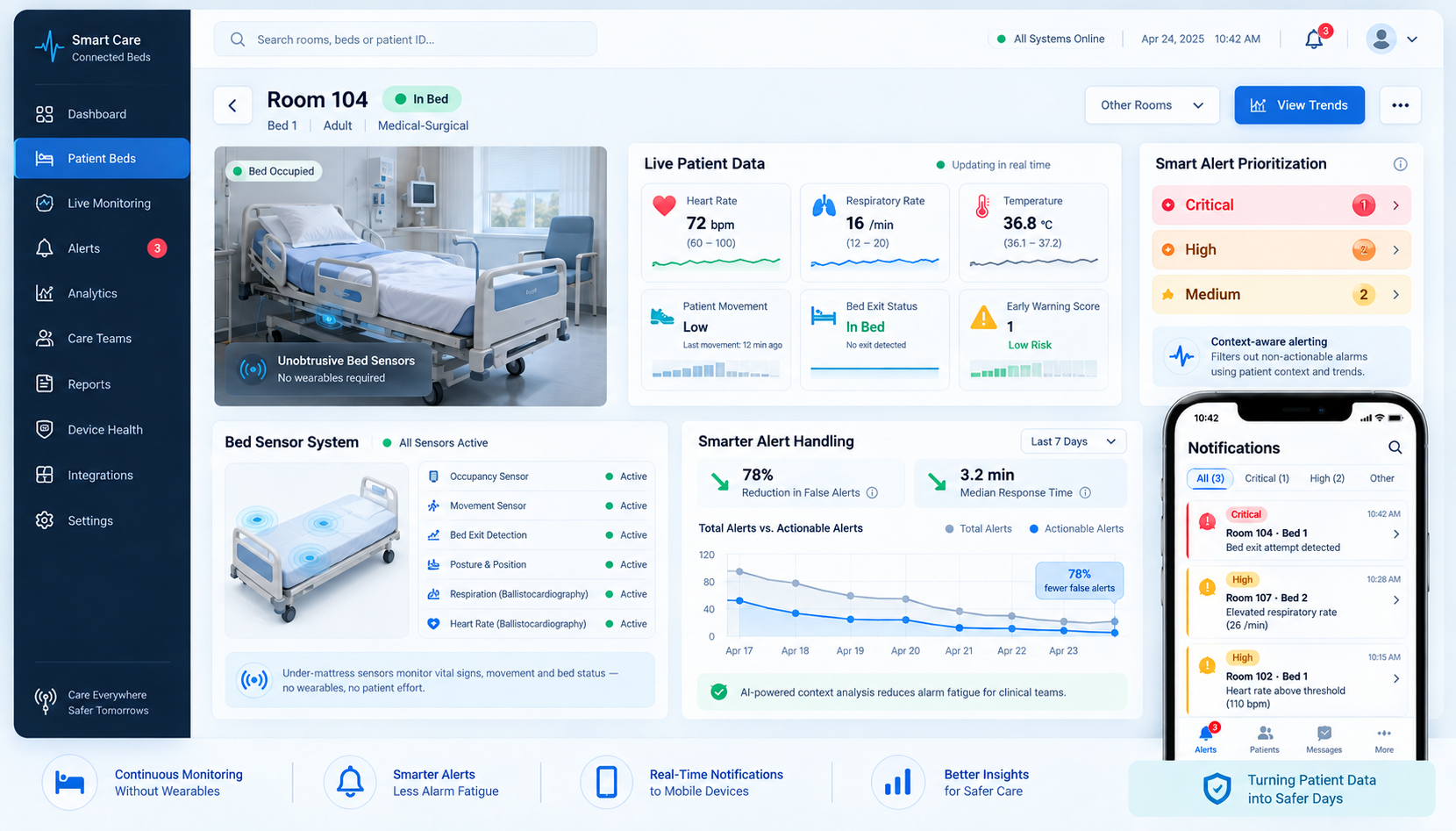
Unlike wearable monitors that require patient compliance, smart bed sensors capture data passively. Patients don't need to wear anything, improving comfort and adherence. The bed becomes the monitoring device.

Continuous Monitoring Requires Smart Alerts—Not Alarm Fatigue

Streaming continuous data creates alert overload. We built a context-aware alerting engine that prioritizes notifications based on clinical urgency (Critical, High, Medium) and suppresses non-actionable alerts.

Nurses Needed Alerts on Their Devices—Not at the Central Station

Nurses don't sit at central stations. We built a mobile alerting system that pushes prioritized alerts to nurses' smartphones, enabling immediate response.

What Made This Project Different

Challenges

  • Continuous Data Creates Alarm Fatigue

    Continuous Data Creates Alarm Fatigue

    Streaming continuous vital signs creates hundreds of alerts daily. The platform needed context-aware prioritization to suppress non-actionable alerts and surface only clinically significant events.

  • Nurses Need Mobile Alerts, Not Station Alerts

    Nurses Need Mobile Alerts, Not Station Alerts

    Nurses are mobile. The platform needed to push prioritized alerts to nurses' smartphones, not just central monitoring stations.

  • Early Warning Detection Requires ML Models

    Early Warning Detection Requires ML Models

    Deterioration signs are subtle. The platform needed ML models that detect early warning patterns from continuous data streams.

  • line icon

    Integration with Existing EHR & Nurse Call Systems

    The platform needed to integrate with existing EHRs and nurse call systems without disrupting workflows.

Solution Delivered

IoT-Enabled Smart Bed Sensors

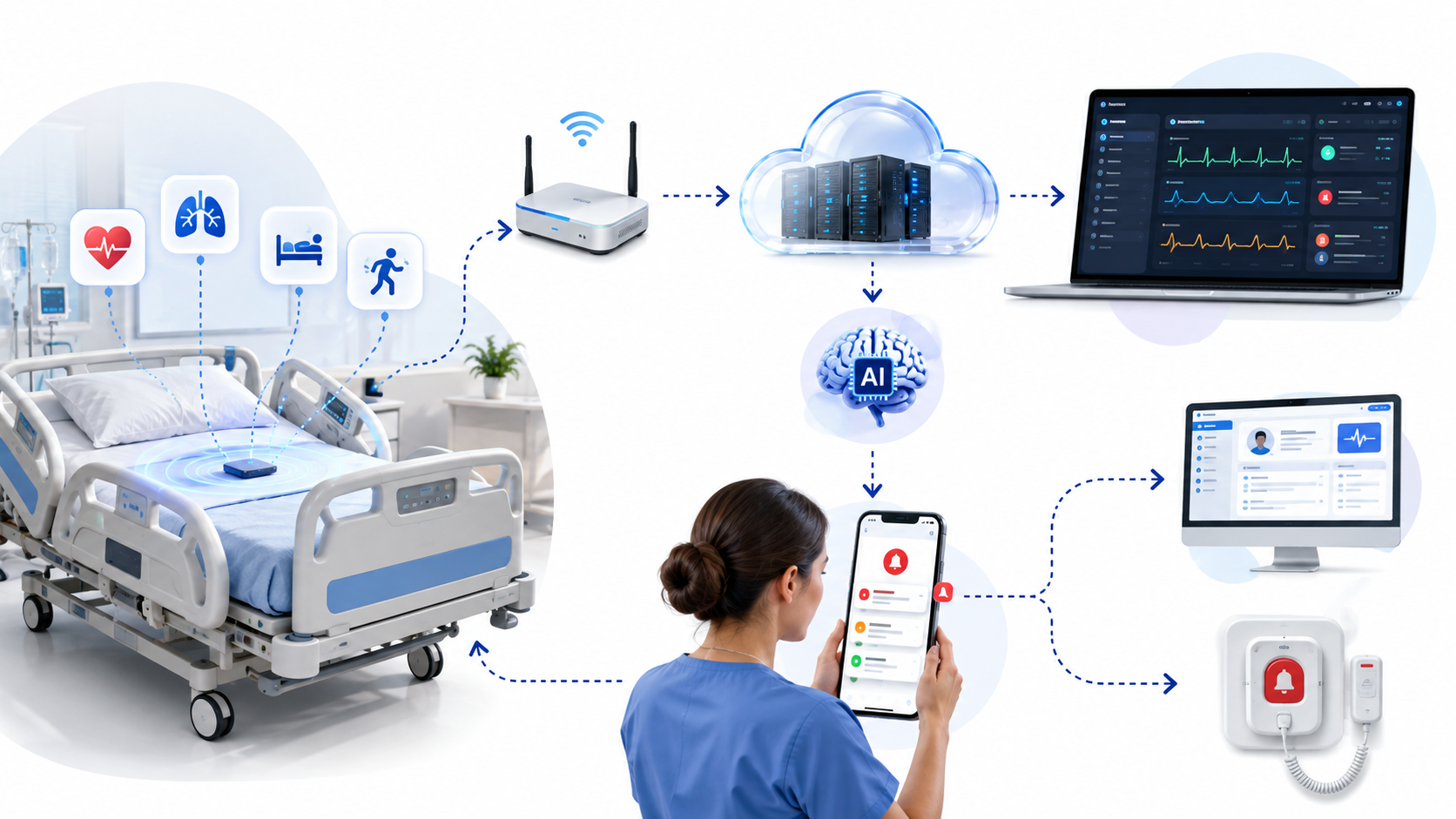
We integrated bed sensors that capture heart rate, respiratory rate, movement, and bed exit status. Data is streamed via Bluetooth Low Energy to a gateway, then to the cloud.

Context-Aware Alert Prioritization

We built an alerting engine that evaluates each alert against clinical urgency and suppresses non-actionable notifications. Critical alerts are pushed to nurses' smartphones; lower-priority alerts are logged for review.

ML-Based Early Warning Detection

We developed ML models trained on historical patient data to detect early warning signs of deterioration. The models flag subtle changes in vital signs before they become critical.

Nurse Mobile App

We built a React Native app that pushes prioritized alerts to nurses' smartphones with patient context (room number, vital signs, alert reason).

EHR & Nurse Call Integration

We integrated the platform with existing EHRs via FHIR APIs and nurse call systems via HL7. Alerts are logged in the patient's chart automatically.

Role-Based Access Control Implemented

Role-based access control was configured for administrators, managers, and end users. Access control was possible at application, business information, reporting, and administration levels depending upon user responsibilities.

Developed Operational Dashboards

Custom dashboards provided visibility into sales, inventory, production, financial indicators, and operational activity. Teams could access relevant business information through a centralized interface.

Secured ERP Integrations

The solution incorporated authenticated API access, role-based authorization, encrypted data transmission, input validation, secure credential management, and audit logging to protect information exchanged between connected systems.

How the Platform Works

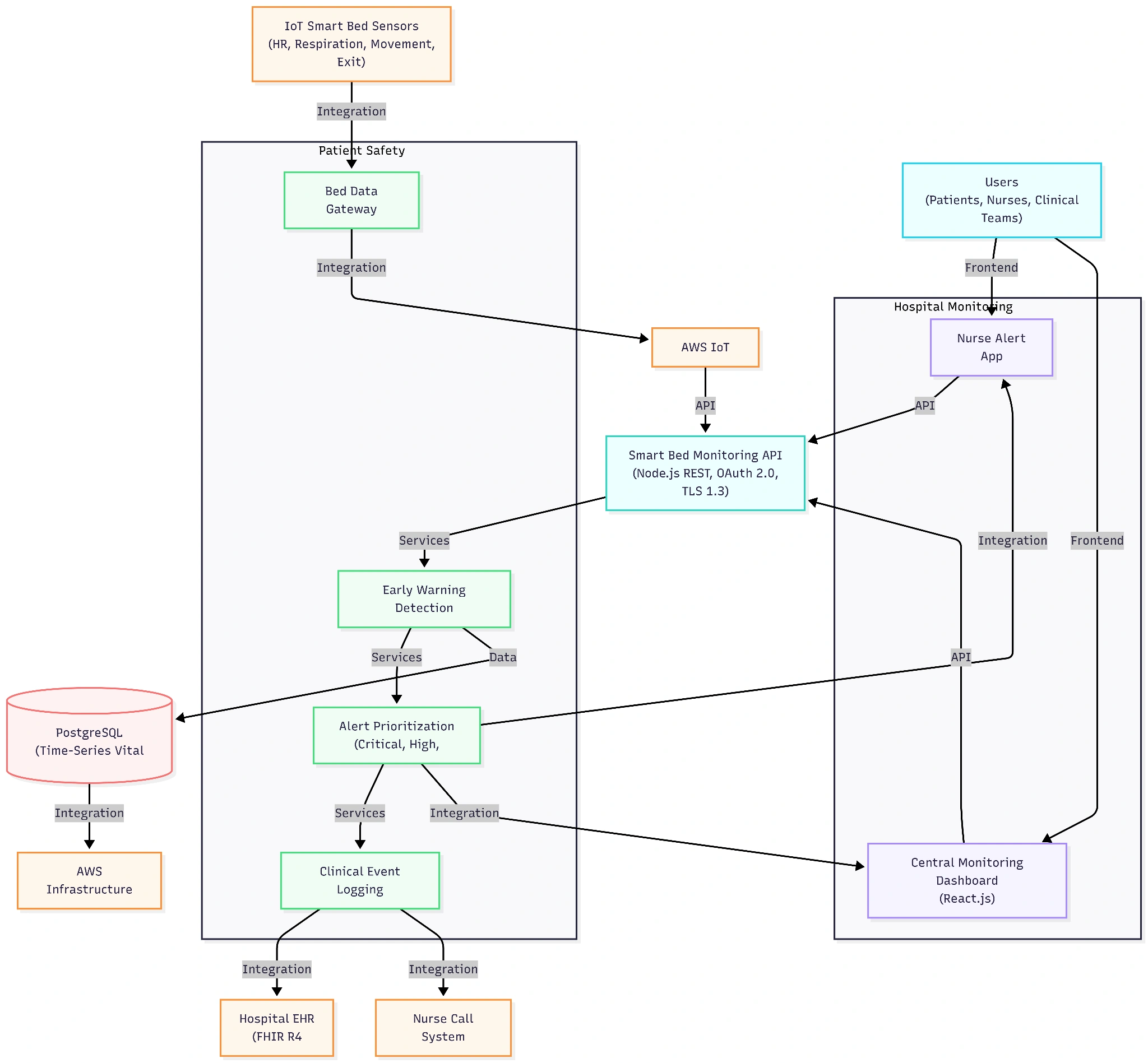
Smart bed sensors continuously capture heart rate, respiratory rate, movement, and bed exit status. Data is transmitted via Bluetooth to a gateway, then to the cloud. The ML engine analyzes data against patient baselines and detects early warning signs. Alerts are prioritized and pushed to nurses' smartphones. Nurses respond, and all actions are logged in the EHR. The platform also integrates with nurse call systems for escalation.

How the Platform Works

Platform Capabilities

01

IoT-Enabled Smart Bed Sensors

Continuous capture of heart rate, respiratory rate, movement, and bed exit.

02

Context-Aware Alert Prioritization

Suppresses non-actionable alerts; surfaces clinically significant events.

03

ML-Based Early Warning Detection

Detects subtle deterioration signs before they become critical.

04

Nurse Mobile App

Prioritized alerts with patient context pushed to smartphones.

05

EHR & Nurse Call Integration

Alerts logged in patient charts; integration with existing workflows.

Measurable Clinical Impact

60%

reduction in nursing response time to critical events.

45%

reduction in false alerts through context-aware prioritization.

30%

reduction in ICU transfers through early detection of deterioration.

25%

improvement in nurse satisfaction (self-reported) due to reduced alarm fatigue.

500+

beds monitored across multiple facilities.

Technology Stack

  • Smart Bed Sensors: Bluetooth Low Energy (BLE) for data transmission
  • ML Models: TensorFlow for early warning detection and anomaly detection
  • Frontend: React.js (central dashboard), React Native (nurse mobile app)
  • Backend:Node.js with RESTful APIs
  • EHR Integration: FHIR R4 APIs
  • Nurse Call Integration: HL7
  • Database: PostgreSQL with time-series optimization
  • Infrastructure: AWS (EC2, RDS, S3, IoT Core)
  • Security: OAuth 2.0, TLS 1.3, AES-256 encryption
  • Compliance: HIPAA, GDPR
Technology
×

What This Project Proves

Smart bed monitoring can transform hospital patient safety by providing continuous, unobtrusive monitoring without adding nursing workload. By addressing alarm fatigue, mobile alerting, early warning detection, and EHR integration, we helped the hospital network reduce nursing response time by 60% and ICU transfers by 30%. The IoT-powered solution created a scalable foundation for continuous patient monitoring across the enterprise.

Beware of Scams

Don't Get Lost in a Crowd by Clicking X

Your App is Just a Click Away!

Fret Not! We have Something to Offer.