A diagnostic center chain with 25+ collection centers, 4 imaging centers, and 2 central laboratories was struggling with fragmented workflows across its Laboratory Information System (LIS), Radiology Information System (RIS), PACS, and EHR. Orders were manually registered, results were manually routed, and critical findings were often delayed. Report turnaround time averaged 48 hours, and critical results sometimes took 6+ hours to reach physicians.
We built an RPA-powered laboratory and diagnostic workflow automation platform from scratch. The solution integrates with LIS, RIS, PACS, and EHR systems to automate order registration, result routing, and critical alert notifications. RPA bots handle data entry, system-to-system communication, and exception handling. The platform ensures that critical results reach physicians within 5 minutes and reduces report turnaround time by 40%.
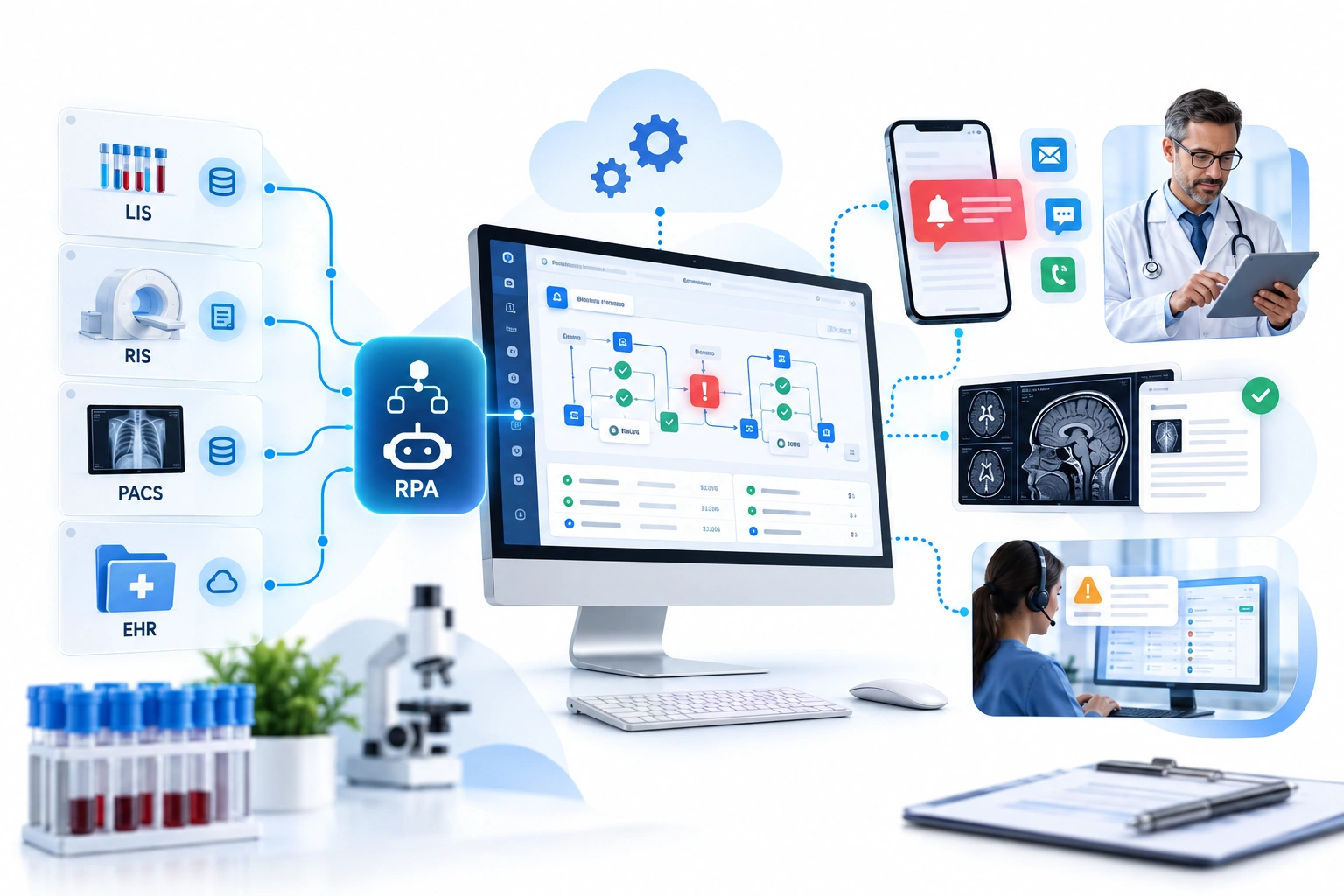
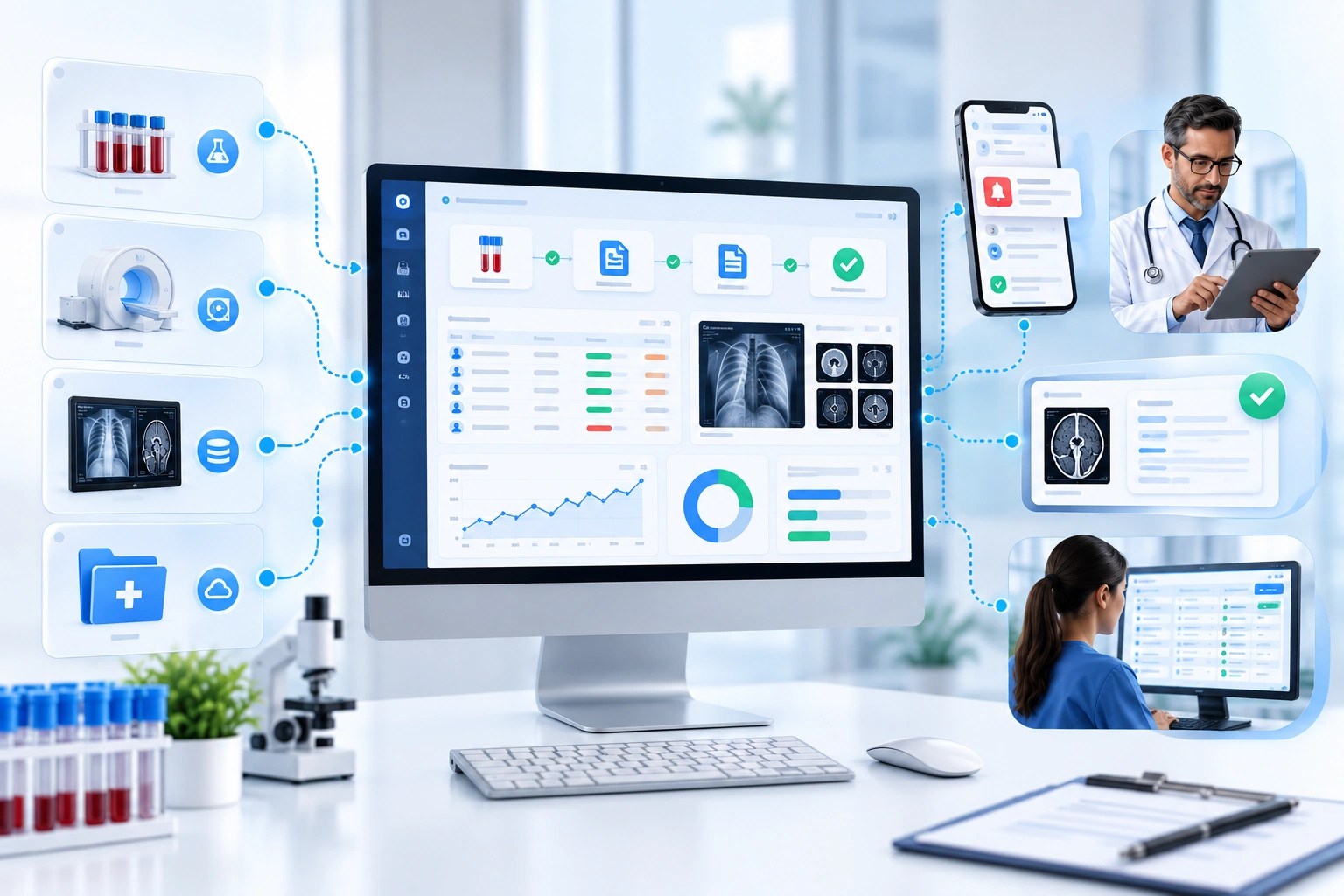
LIS, RIS, PACS, and EHR systems don't talk to each other natively. We built an orchestration layer that uses RPA bots to bridge these systems, enabling automated data flow without replacing existing infrastructure.
Standard result routing delivers reports to inboxes where they may sit unread. We built a real-time alert routing engine that identifies critical results and pushes them to physicians via secure messaging, SMS, and EHR alerts within 5 minutes.
PACS systems use DICOM standards for imaging data. We built DICOM-aware RPA bots that can query PACS, retrieve imaging reports, and route them to the appropriate systems without manual intervention.
Not all cases can be automated. We built escalation workflows that route exceptions to human operators with full context, ensuring no case falls through the cracks.
Orders from referring physicians were manually entered into LIS and RIS. This created data entry errors, delayed order processing, and increased staff workload.
Results were manually routed between LIS, RIS, PACS, and EHR. This created delays, version control issues, and risk of results being sent to the wrong physician.
Critical findings (e.g., abnormal imaging, dangerous lab values) were not prioritized. Alerts were sent to generic inboxes, and physicians sometimes received critical results hours after completion.
Staff had no centralized view of order status across LIS, RIS, and PACS. Tracking required logging into multiple systems, and bottlenecks were difficult to identify.
Built an orchestration layer that uses RPA bots to bridge LIS, RIS, PACS, and EHR systems. Bots automate data entry, system-to-system communication, and result routing without replacing existing infrastructure.
Built a real-time alert routing engine that identifies critical results and pushes them to physicians via secure messaging, SMS, and EHR alerts within 5 minutes. Alerts include patient context, result summary, and recommended actions.
Built DICOM-aware RPA bots that query PACS, retrieve imaging reports, and route them to the appropriate systems. Bots handle DICOM metadata extraction and report association.
Built escalation workflows that route exceptions to human operators with full context. Escalations include order details, system error logs, and recommended next steps.
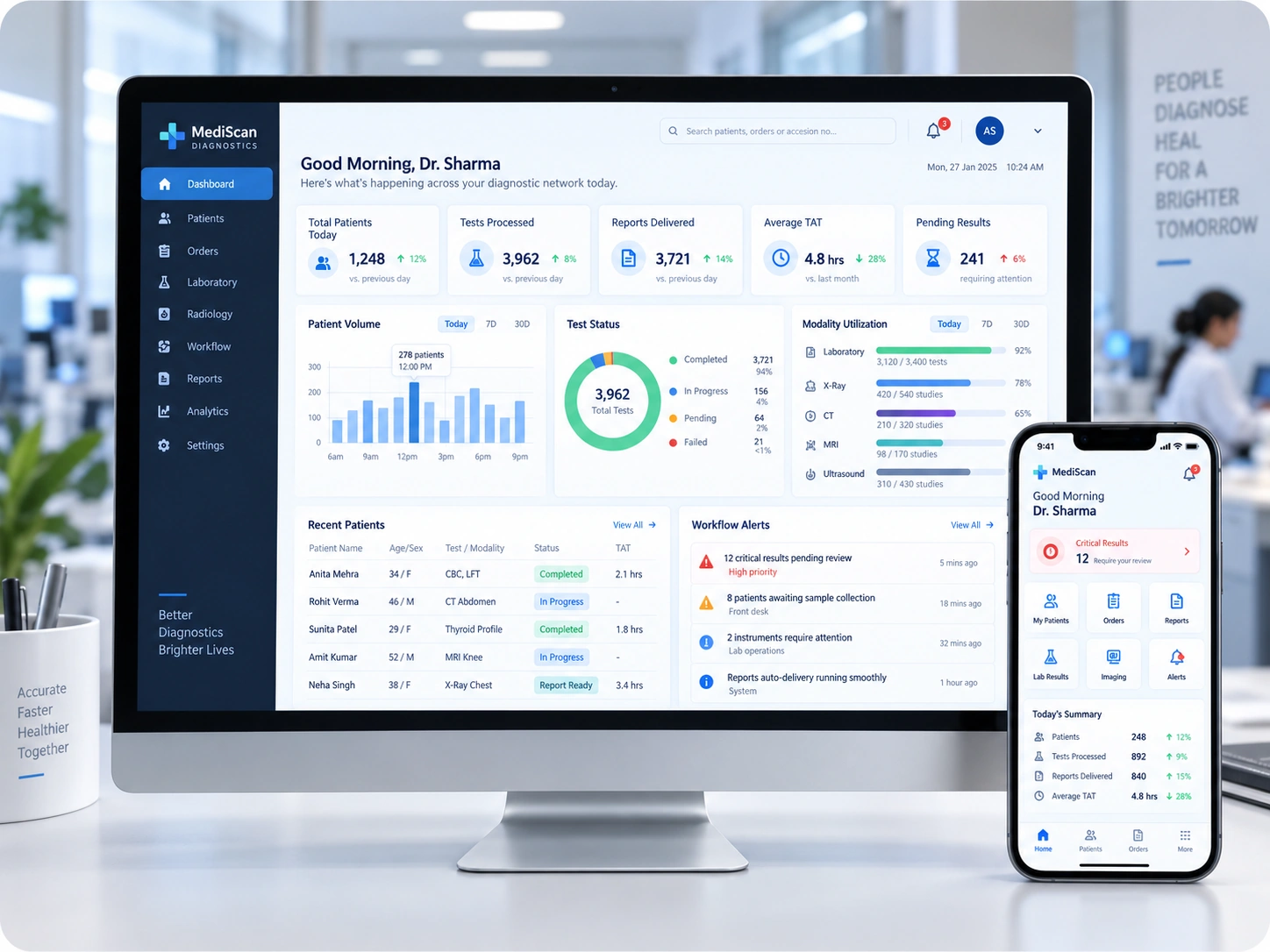
Built a centralized dashboard showing order status across LIS, RIS, and PACS. Staff can track orders, identify bottlenecks, and monitor turnaround times.
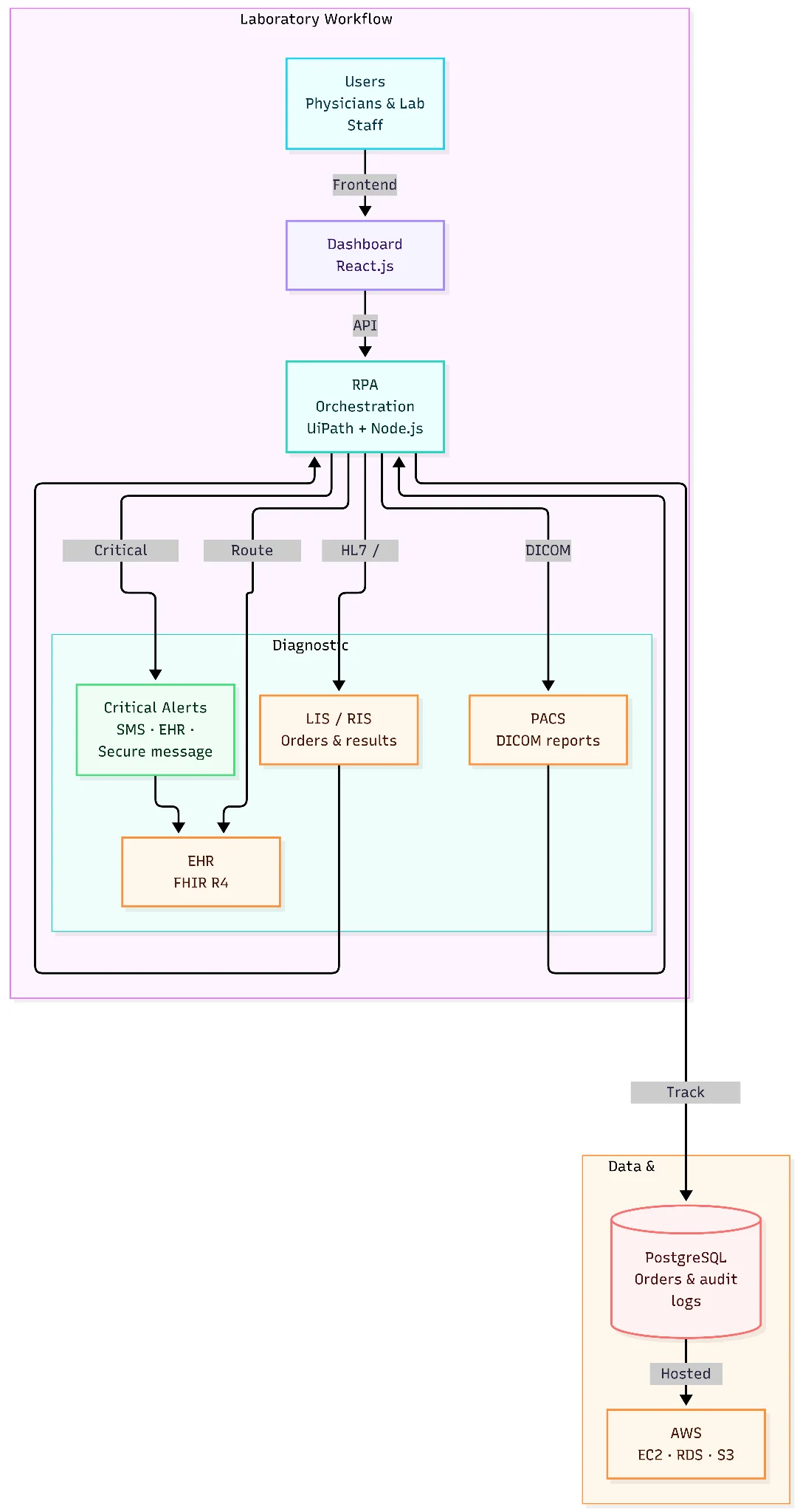
When a referring physician places an order, RPA bots automatically register it in LIS and RIS. The orchestration layer routes the order to the appropriate collection or imaging center. Once results are available, bots retrieve them from LIS, RIS, or PACS and route them to the EHR. The critical alert engine identifies critical results and pushes them to physicians within 5 minutes via secure messaging, SMS, and EHR alerts. Exceptions are escalated to human operators with full context. All data is synced to the EHR in real-time.
RPA bots bridging LIS, RIS, PACS, and EHR systems.
Alerts pushed to physicians within 5 minutes.
PACS querying, report retrieval, and DICOM metadata extraction.
Human-in-the-loop exception handling with full context.
Centralized visibility into order status and turnaround times.
Laboratory and diagnostic workflow automation can transform diagnostic operations by eliminating manual data entry, accelerating result routing, and ensuring critical findings reach physicians immediately. By building a unified orchestration layer, DICOM-aware RPA bots, and real-time critical alert routing, we helped the diagnostic center chain reduce report turnaround time by 40% and deliver critical results within 5 minutes. The solution achieved full HIPAA compliance while creating a scalable foundation for diagnostic workflow automation.
• SUFFESCOM SOLUTIONS
Build Smarter. Scale Faster. Grow More.
Have a Vision? Let’s Turn It Into a Digital Reality.
Get a quick response from our best experts in under 10 minutes.
Share Your Requirements. Our Experts Will Shape the Solution.
• SUFFESCOM SOLUTIONS
Build Smarter. Scale Faster. Grow More.
Have a Vision? Let’s Turn It Into a Digital Reality.
Get a quick response from our best experts in under 10 minutes.
Share Your Requirements. Our Experts Will Shape the Solution.
Fret Not! We have Something to Offer.