Digital Healthcare Platform Integration

Phreesia is a renowned digital health technology platform that provides healthcare facilities with tools to manage patient intake, registration, payments, and communication. It serves more than 4,700 healthcare providers and is responsible for 1 out of every 6 U.S. patient visits as well as over 1 billion patient interactions. Phreesia's AI-powered workflows help healthcare facilities increase their income, see more patients, avoid front desk mayhem, and provide excellent patient experience, resulting in 73% average increase in time-of-service collections during six months and 87% call volume reduction.

What We Provided

We provided Phreesia integration services which consisted of creating secure integrations with the use of REST APIs. This included connecting Electronic Health Records (EHRs) and digital payment gateways to synchronize patient information. The solution included role-based access control and audit logging to ensure data security and compliance with all regulations.

Our Integration Strategy

Being a service-based IT company, we did not develop the Phreesia platform from scratch. We added new functionalities to it via system integration. We utilized REST API services provided by Phreesia to create secure integrations between Phreesia and other healthcare systems.

The Challenge

Integrating the Phreesia platform with external healthcare systems required addressing several critical challenges:

  • line icon

    EHR System Integration Complexity

    Each healthcare organization had a different type of EHR system with different formats and APIs. Needed integration by building secure REST API integrations to facilitate patient data synchronization between Phreesia and EHR systems.

  • line icon

    Payment Gateway Connection

    It was inefficient to process payments manually. Needed integration with digital payment gateways to facilitate payment process and automate it.

  • line icon

    Patient Data Synchronization

    Patient data existed in different systems in silos resulting in errors. Needed to synchronize real-time data using API orchestration.

  • line icon

    HIPAA Data Security & Compliance

    All data exchange related to healthcare is required to be HIPAA compliant. Needed role-based access control and auditing for all data exchanges.

  • line icon

    Workflow Automation

    Front desk processes like check-in, registration, payment were manual and inefficient. Needed integration which would automate these processes without any data inconsistency.

  • line icon

    Real-Time Data Exchange

    Inconsistencies and outdated data in systems lead to errors. Needed real-time synchronization using REST APIs..


Our Solutions

Our Solutions

Integration with EHR Systems

We created safe REST API connections between Phreesia and other EHR systems. Provided real-time data synchronization, including demographics, insurance details, and clinical data. Automation of data transfer decreases human work and mistakes.

Integration with Digital Payment Gateway

Linked Phreesia with digital payment gateways to automate the process of payments. Time-of-service collection is now possible with an average 73% increase within six months.

Synchronization of Patient Data

Implemented real-time data synchronization between Phreesia and other systems. Automated demographic and insurance verifications. Collected 3 times more patient-reported data before appointment. Reduced front-desk chaos with an 87% decrease in call volume.

Role-Based Access Control

Implemented fine-grained Role-Based Access Control (RBAC) for all integrated systems. Users get access to data relevant to their role only. Security and compliance for patient data are increased.

Audit Logging

Detailed audit logging for all API requests and data access. Recorded user activities, data changes, and system access. Provides compliance monitoring and security investigations.

REST API Orchestration with Security

Utilized Phreesia REST APIs with OAuth2 and encryption. TLS 1.3 for all REST API communications. Provided 99.95% uptime.

Architecture

Frontend (Phreesia Platform & Custom WordPress CMS):

Patient intake and management digital interface. Features – patient registration & check-in, patient eligibility checks, payment processing, communication tools, physician dashboard, patient portal.

Integration Layer (Custom REST APIs)

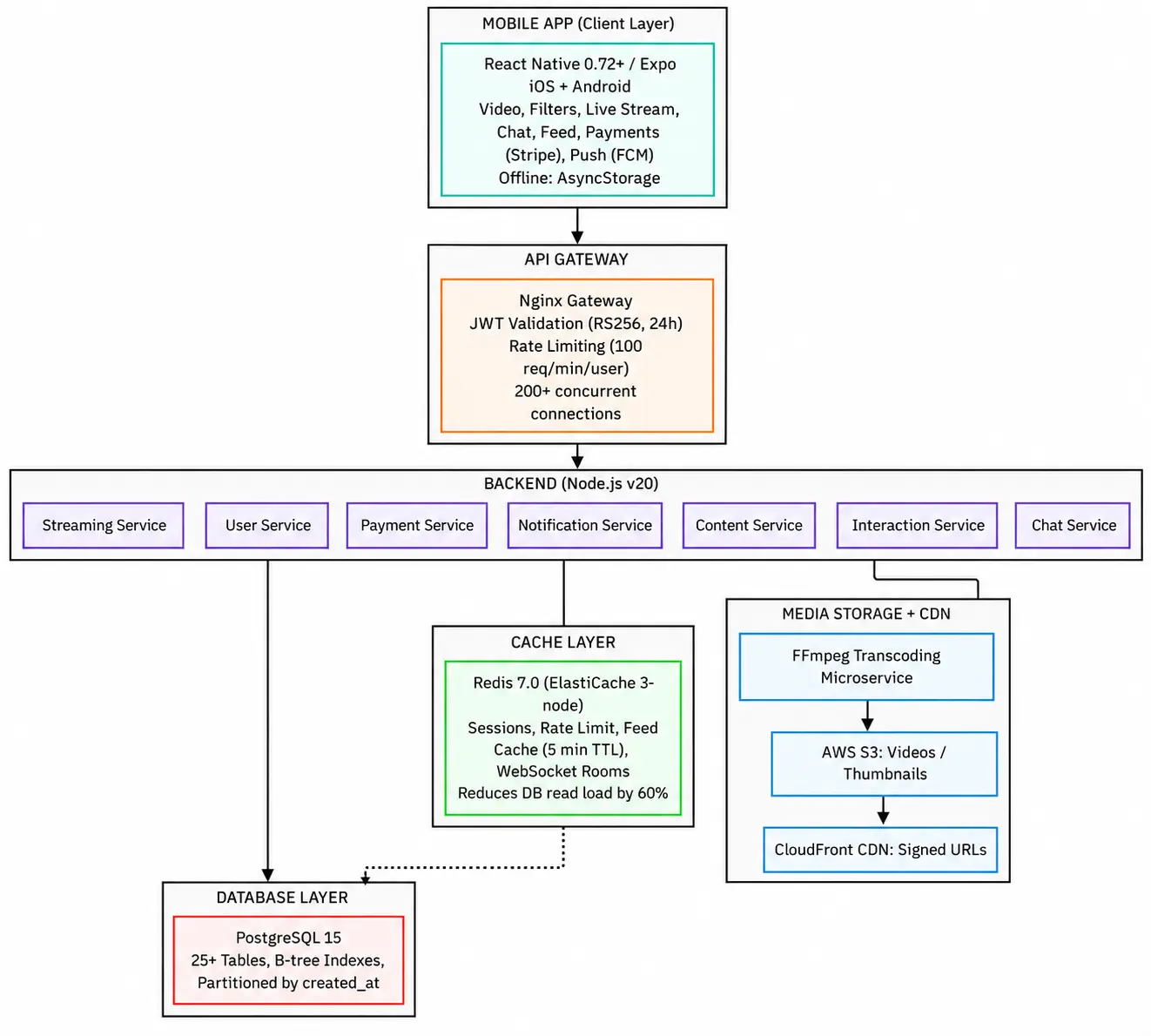
Secure API orchestration services. Services – EHR systems integration (patient information synchronization), digital payment gateway integration, authorization and authentication services, audit logging, data synchronization service, notifications service. API requests throughput – 6,200+ req/min.

External Systems

EHR systems (patient demographics, clinical data), digital payment gateways (payment processing), patient communication platforms, reporting/analytics tools.

Technical Environment

Nginx web server with custom WordPress CMS. Cloud-hosted with auto-scaling capabilities. Secure data storage with encryption support. 99.95% uptime. RTO 15-min with Terraform, RPO less than 5-min.

Social Application & Platform Development Service Architecture
×

Key Technical Solutions

Security and Compliance

  • Authentication

    OAuth2/JWT and SSO. Role-based access control - patients, clinicians, administrators, billing. MFA for admin role. Rate limiting (100 requests per minute per user).

  • Privacy

    HIPAA compliance. Data minimization - storage of only necessary medical data. Right to erasure procedure. Transparent consent for data processing.

  • Encryption

    At rest - RDS (AES-256 encryption managed by AWS KMS), S3 (SSE-S3). In transit - TLS 1.3 for APIs. Automated encrypted backups.

  • API security

    Monthly rotation of API keys through AWS Secrets Manager. CORS policy. JSON schema validation, parameterization (SQLi protection), input sanitization (XSS protection). AWS WAF to protect from DDoS.

  • Audit Controls

    Immutable AWS CloudTrail logs (7 years retention period). Config monitors compliance requirements. Security Hub to collect findings. Full audit logging of all API calls and data accesses.

  • Compliance

    HIPAA compliance for all data processing procedures. Role-based access control to ensure least privilege principle. 1 out of every 6 U.S. patient visits covered

Load Testing and Validation

Methodology

Unit tests (Jest, 85% coverage) for each commit; integration tests (Postman, 200+ cases) daily; load testing (k6/Artillery) on staging infrastructure weekly. Deployment will be blocked in case of performance regression (p95) of >10%.

Scenarios

Registration → EHR data synchronization → Eligibility → Payments → Audit logging. Mix of users: 50% of check-ins, 30% of EHR sync, 15% of payments, and 5% of administration.

Test Environment:

4,700+ healthcare organizations, 1B+ patient interactions, 1 in 6 of all U.S. patient visits.

Performance Benchmarks (p95):

  • Patient registration: 180ms (target 200ms)
  • EHR data sync: 280ms (target 300ms)
  • Payment processing: 350ms (target 500ms)
  • Audit logging: 95ms (target 100ms)
  • API throughput: 6,200 req/min (target 5,000 req/min)
  • Uptime: 99.95%

Scalability

PostgreSQL — 200 connections (pool: 20/node × 10 nodes). Redis — session management (80% hit rate). Auto Scaling — 10-node limit at 70% CPU.

DR

RTO — 15 minutes (Terraform). RPO — 5 minutes (RDS Multi-AZ). Monthly DR testing.

Outcomes and Business Value

Key Metrics

  • Healthcare organizations: 4,700+
  • Patient interactions: 1B+
  • U.S. patient visits: 1 in 6 supported
  • Time-of-service collections: 73% average increase
  • Patient-reported data: 3x more captured
  • Uptime: 99.95%

Technical Outcomes

  • EHR system integration via REST APIs
  • Digital payment gateway integration
  • Real-time patient data synchronization
  • Role-based access control
  • Comprehensive audit logging
  • 99.95% uptime

Business Impact

  • Increased revenue through automated payments
  • Reduced front-desk chaos with 87% call volume reduction
  • 3x more patient data captured before visits
  • Enhanced patient experience with faster check-in
  • Improved staff efficiency

Market Differentiation

  • 4,700+ healthcare organizations
  • 1B+ patient interactions
  • AI-enabled workflows
  • Role-based access control and audit logging
Conclusion

Key Learnings from Integrating Phreesia

01

EHR Integration Enables Seamless Data Exchange

Patient data exists in silos across systems. Secure REST API integrations enable real-time synchronization.

Result

3x more patient data captured, reduced manual entry.

02

Digital Payment Integration Increases Revenue

Manual payment processing is inefficient. Connected payment gateways automate time-of-service collections.

Result

73% average increase in collections within 6 months.

03

Patient Data Synchronization Reduces Chaos

Inconsistent data causes errors and delays. Real-time sync with automated verification.

Result

87% reduction in call volume, reduced front-desk chaos.

04

Role-Based Access Control Ensures Compliance

Healthcare data requires strict access controls. Granular RBAC ensures least privilege.

Result

HIPAA compliance, zero unauthorized access.

05

Audit Logging Provides Visibility

Compliance requires tracking all data access. Comprehensive audit logging for all API calls.

Result

HFull compliance visibility, security investigations.

06

Secure API Orchestration Builds Trust

Healthcare integrations require security. OAuth2 authentication, TLS 1.3 encryption.

Result

1 in 6 U.S. patient visits supported, 99.95% uptime.

Phreesia's digital healthcare platform integration proves that secure REST API orchestration can transform patient intake and payment workflows. EHR integration, digital payment connectivity, and role-based access control drive efficiency while maintaining HIPAA compliance.

Beware of Scams

Don't Get Lost in a Crowd by Clicking X

Your App is Just a Click Away!

Fret Not! We have Something to Offer.