Discover How We Helped a Chronic Care Provider Reduce Care Coordination Time by 60% With a Remote Patient Monitoring Platform

Learn how we helped a U.S.-based chronic care provider build a remote patient monitoring platform from the ground up, enabling real-time health data synchronization from connected medical devices to clinical workflows for patients with hypertension, diabetes, and heart failure.

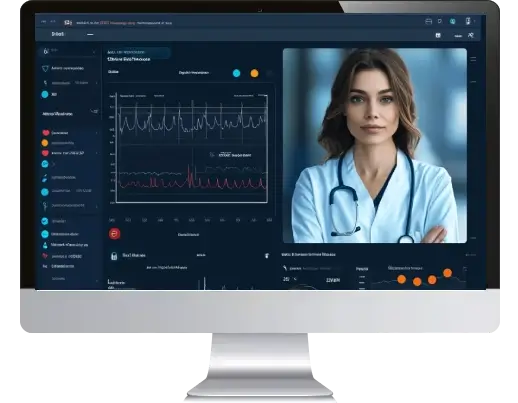
Remote Patient Monitoring (Rpm) Platform Architecture
×

Project Overview

A U.S.-based chronic care provider managing 12,000+ patients across hypertension, diabetes, and heart failure programs was relying on manual processes—paper logs, phone calls, and delayed EHR entries—to track patient health between visits. This reactive approach led to preventable hospitalizations and poor visibility into patient status.

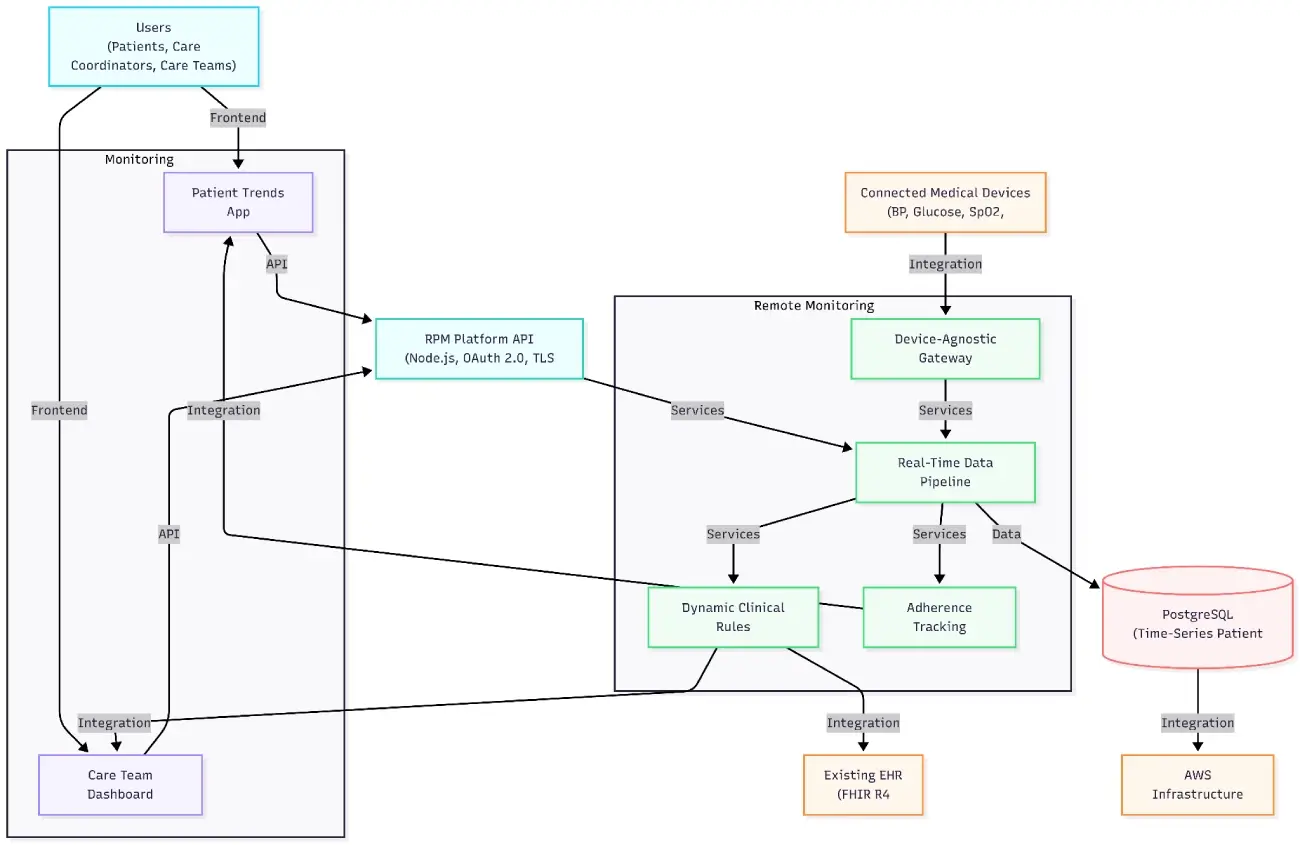
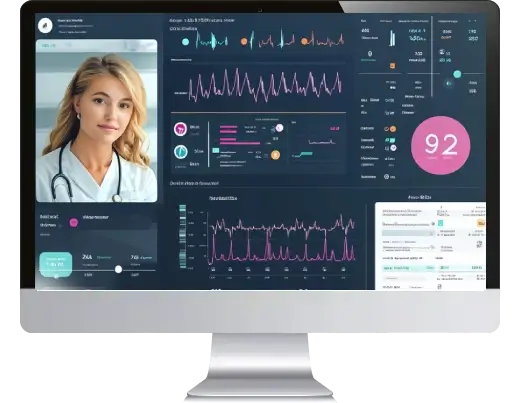
We built a remote patient monitoring platform from scratch that connects blood pressure monitors, glucose meters, pulse oximeters, and weight scales to clinical workflows. The platform captures real-time biometric data, applies personalized clinical rules, generates prioritized alerts, and synchronizes summarized data to the EHR via FHIR APIs. Care teams get a real-time dashboard; patients see their own trends through a mobile app.
How the Platform Works

The platform captures biometric data from connected devices as soon as a reading is taken. Data is validated, normalized, and evaluated against the patient's personalized clinical rules. If a threshold is breached, an alert is generated and prioritized. Summarized data is pushed to the patient's EHR via FHIR APIs. Patients see their trends through a mobile app, and care coordinators see a real-time dashboard of all monitored patients.

Remote Patient Monitoring (Rpm) Platform

Challenges

  • line icon

    Static Clinical Rules Failed Complex Patients

    The provider used fixed thresholds (e.g., alert if BP >140/90) that did not adapt to changing patient conditions. A recovering heart failure patient needed tighter monitoring than a stable one, causing missed events or false alerts.

  • line icon

    Device Variety Created Data Chaos

    Patients used devices from 8+ manufacturers, each with different data formats and connectivity protocols. The provider needed a single, normalized data stream without building custom integrations for each device.

  • line icon

    Alert Fatigue Among Care Coordinators

    Simple threshold-based alerts generated hundreds of notifications daily, most clinically insignificant. Care coordinators began ignoring alerts, defeating the RPM program's purpose.

  • line icon

    Patient Adherence Was Invisible

    The provider had no visibility into whether patients were using their devices. A patient could stop readings for a week without the care team knowing until a crisis occurred.

Solution Delivered

Remote Patient Monitoring (Rpm) Platform
  • Dynamic Clinical Rules Engine

    We built a rules engine allowing care teams to define personalized thresholds for each patient based on condition, medications, and history. Rules support multi-condition logic (e.g., alert if weight increases 3 lbs AND BP drops below 100/60 within 24 hours).

  • Device-Agnostic Integration Layer

    We implemented middleware that normalizes data from all connected devices into a unified schema. Adding a new device manufacturer requires a configuration file, not custom code.

  • Context-Aware Alert Prioritization

    We developed an alert system that ranks notifications by clinical urgency (Critical, High, Medium, Low) and routes them to the appropriate care team member. This reduced alert volume by 70%.

  • Adherence Tracking & Re-Engagement Workflows

    The platform tracks device usage and triggers automated outreach when adherence drops. If a patient misses readings for 3 consecutive days, a check-in workflow is initiated.

Key Capabilities of Delivered Solution

01

Dynamic Clinical Rules

Patient-specific thresholds that adapt to changing clinical status.

02

Device-Agnostic Integration

Unified data from 8+ manufacturers with minimal onboarding effort.

03

Context-Aware Alerts

Intelligent prioritization reduces alert fatigue while ensuring critical events are escalated.

04

Adherence Monitoring

Automated tracking and re-engagement workflows for patient disengagement.

05

FHIR-Based EHR Sync

Real-time data synchronization with the provider's existing EHR.

Real Numbers. Real Clinical Impact

40%

reduction in heart failure hospitalizations within 6 months.

70%

reduction in false alerts through context-aware prioritization.

35%

increase in patient adherence to monitoring protocols.

60%

reduction in care coordinator time spent on manual data entry and triage.

12,000+

patients enrolled and actively monitored.

Technology Stack

  • Frontend

    Frontend

    React.js (provider dashboard), React Native (patient app)

  • Backend

    Backend

    Node.js with custom protocol adapters

  • Data Pipelines

    Data Pipelines

    Apache Kafka for real-time ingestion.

  • Rules Engine

    Rules Engine

    Node.js with configurable clinical rules.

  • EHR Integration

    EHR Integration

    FHIR R4 APIs.

  • Database

    Database

    PostgreSQL with time-series optimization.

  • Infrastructure

    Infrastructure

    AWS (EC2, RDS, S3).

  • Security

    Security

    OAuth 2.0, TLS 1.3, AES-256 encryption.

  • Compliance

    Compliance

    HIPAA, GDPR.

What Made This Project Different

  • Personalized Clinical Thresholds That Evolve

    Personalized Clinical Thresholds That Evolve

    Static alert rules fail complex patients. We built a rules engine where care teams define patient-specific thresholds that adapt as clinical status changes.

  • Eight Device Manufacturers, One Data Stream

    Eight Device Manufacturers, One Data Stream

    Patients used devices from 8+ manufacturers with different protocols. We built a device-agnostic layer that normalizes all data into a single schema. Adding new devices requires a configuration file, not custom code.

  • Alert Fatigue Was Killing Adoption

    Alert Fatigue Was Killing Adoption

    Simple threshold alerts generated hundreds of daily notifications. We built context-aware prioritization that ranks alerts by urgency and reduced volume by 70%.

  • Invisible Patient Disengagement

    Invisible Patient Disengagement

    The provider had no way to know if patients stopped using devices. We added adherence tracking that triggers automated outreach after 3 missed days.

Conclusion

The Remote Patient Monitoring Platform project demonstrates how a purpose-built, device-agnostic solution can transform chronic care management. By addressing dynamic clinical rules, device fragmentation, alert fatigue, and adherence monitoring, we helped the provider achieve a 40% reduction in hospitalizations and a 35% increase in patient adherence. The platform's flexible architecture and FHIR-based EHR integration created a scalable foundation for expanding the RPM program to new patient populations and conditions, while supporting the provider's broader telemedicine software capabilities.

Beware of Scams

Don't Get Lost in a Crowd by Clicking X

Your App is Just a Click Away!

Fret Not! We have Something to Offer.