-
● Publicly listed on BSE • ISO 27001 & SOC 2 Type II compliant



● Publicly listed on BSE • ISO 27001 & SOC 2 Type II compliant

Suffescom Solutions is a website migration agency backed by 13+ years of web development experience. Our in-house team of developers, database engineers, and SEO experts will manage all the stages of your website transfer to ensure that your ranking positions, data, and integrations remain safe on the new platform.
We have completed projects for NBC, Universal, and Comcast and are listed on Clutch, G2, and GoodFirms. All migrations go through a documented process starting with assessment and URL mapping through testing and post-launch monitoring, and all data is kept safe under an NDA.
As an experienced website migration company, Suffescom manages each layer from pre-migration audit through post-launch monitoring, helping preserve the data, functionality, and search signals your business depends on.


Our website migration SEO consultant services begin with the analysis of your URLs, organic traffic, metadata, internal linking, canonicalization, sitemaps, and indexing. The URL mapping to destination URLs, definition of 301 redirects, and testing of redirects prior to the launch to avoid crawling and ranking problems.

The content is migrated based on the content structure of the target platform and not just exported and imported. Pages, media assets, custom fields, taxonomies, templates, products, and content relations are mapped and validated for WordPress, Shopify, Drupal, Webflow, and more platforms.

Structured data is then sent back to the website’s integrated systems like databases, CRM, ERP, analytics tools, payment gateways, forms, marketing platforms, and APIs. Data validation and integrations are performed against the system to make sure there is no data loss and no integration problems after going live.

We move your website across hosting environments, servers, or cloud infrastructure while accounting for DNS, SSL, CDN, environments, backups, deployment configuration, and application dependencies. Staging and production environments are aligned before cutover to reduce infrastructure-related disruption.

A platform move is often the right point to address outdated templates, navigation, components, and content presentation. We introduce design and UX changes within the migration plan while keeping structural changes controlled, following website migration best practices to separate migration effects from redesign changes.

We validate the migrated environment to ensure everything functions correctly before it goes live. Testing includes content accuracy, formats, user flows, redirects, integration, analytics, responsiveness, accessibility, performance, crawling, and key business processes in staging and pre-production environments.

We coordinate the final migration around a documented cutover plan covering content sync, deployment, DNS changes, redirects, tracking, smoke tests, and rollback procedures. Instead of using an unverified switch, our website migration consultant will coordinate with teams during the move at launch time.

The migration process is not completed once the new website is launched. The website migration consultants at our company continue monitoring the organic traffic, indexation, crawl errors, redirect issues, integrations, website performance, and other important aspects after the launch of the website.
Our portfolio includes examples from projects for various platforms,
including the ones that go beyond moving the content and changing the underlying technology.

Business Requirement: A B2B manufacturing company based in the US needed to migrate from Magento to Shopify while preserving a very large product database, customer information, order information, pricing policies, and existing SEO structure.
Solution: The product, variant, customer, order, content, and media migration was done on Shopify, along with mapping of the legacy URLs and redirects and other relevant integrations. The new store was validated in staging before a controlled production cutover.
Outcomes:
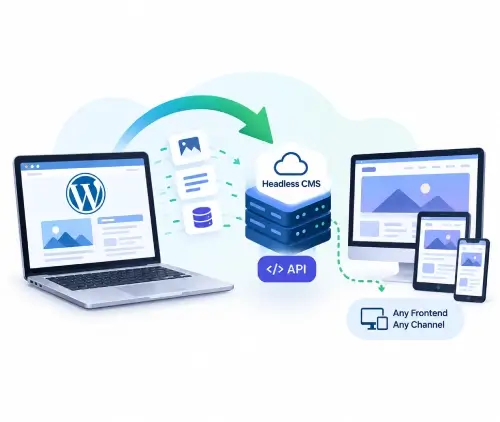
Business Requirement: A UK-based media & publishing business required transferring a content-heavy WordPress site to a headless CMS in order to deliver their content on multiple websites. The transfer needed to retain thousands of articles, media, categories, interlinks, and current SEO visibility.
Solution: The process entailed mapping the WordPress content structure to the new one, transferring articles and media, reengineering content delivery via APIs, retaining URL structure, and validating the publishing process and frontend rendering before launch.
Outcomes:
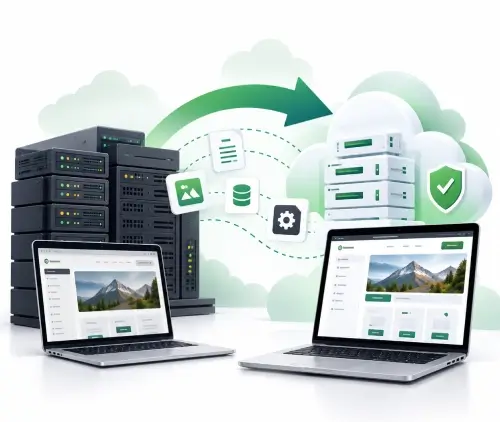
Business Requirement: An Australian energy company was required to migrate their site from regular hosting to the cloud to enhance infrastructure management and handle increased traffic. This migration consisted of application modules, databases, DNS, CDN, SSL, and deployment environments.
Solution: The cloud infrastructure was set up, the applications and databases were migrated, CDN, DNS, SSL, monitoring, and deployment pipelines were completed, and phased testing was completed before the final production cutover.
Outcomes:
Every migration has different dependencies, data structures, and SEO considerations. As an experienced website migration company, Suffescom handles platform, infrastructure, domain, and structural migrations based on what is changing and what needs to remain intact.

Make the switch from WordPress, Drupal, Joomla, Webflow, or other CMS platforms without compromising the structure of your content and its associated functionality. The website migration services that we offer include content modelling, templating, custom fields, media, taxonomies, URLs, integrations, and platform dependencies.

A migration process requires more than just moving product pages alone. Our e-commerce website migration service entails the migration of catalog items, variants, customers, orders, reviews, promotions, payment processes, inventory relationships, and integration with third-party services on platforms like Magento, WooCommerce, Shopify, and BigCommerce.

Our SaaS website migration services cover product-led journeys that run parallel to the website itself, ensuring a seamless transition and enhanced user experience. We account for demo requests, signup flows, pricing pages, content hubs, data analytics, CRM, authentication touchpoints, and the URL structures that support conversion.

Switching domains or integrating brands involves proper management of URLs, redirects, DNS, canonicals, internal links, and indexing of web pages to ensure a smooth transition and maintain visibility. The website migration SEO consultants will plan the transition from the current domain to the new domain without considering the switch as a single event.

Changes to URLs, including directory, subdomain, or architecture updates, impact site navigation and how search engines crawl and index pages. The website migration experts we offer services to take care of the URL mapping, 301 redirects, and internal linking, as well as validation of the canonical and XML sitemaps before they go live.

The migration of your website to HTTPS means something to both browsers and search engines when it comes to accessing your site. We will set up SSL/TLS encryption, HTTPS redirects, URL canonicals, and internal URLs while addressing content issues to ensure all HTTP URLs resolve to HTTPS without disrupting traffic or functionality.

Website redesign and migration are two processes that are done together, but adding multiple changes makes it harder to diagnose issues related to the migration process. We apply website migration best practices by separating structural, content, design, and technical changes wherever practical and testing the new experience before launch.

When the combination of several websites or domains happens, it becomes necessary to identify the pages, URLs, content, and other factors to be carried forward. Website migration services take care of content mapping, redirects, duplicate content problems, continued analytics, and post-launch monitoring across the consolidated environment.

Transition your website to a new hosting provider, server, cloud environment, or infrastructure setup while ensuring that availability and performance remain uninterrupted throughout the process. Our website migration services cover server configuration, databases, files, DNS, SSL, caching, integrations, and environment validation before and after the transition.
Migration requirements vary by region, industry, and the type of data your website handles. We account for applicable privacy and data protection requirements during migration.
ISO/IEC 27001 ISO/IEC 27701 SOC 2 PCI DSS NIST CSF OWASP
CCPA / CPRA HIPAA GLBA COPPA
UK GDPR Data Protection Act 2018 PECR Cyber Essentials
Privacy Act 1988 Australian Privacy Principles NDB Scheme Essential Eight
GDPR NIS2 ePrivacy requirements
GDPR Malta Data Protection Act NIS2, where applicable
GDPR Cyprus Data Protection Law NIS2, where applicable
PDPL NCA Essential Cybersecurity Controls NCA Cloud Cybersecurity Controls
Security risks increase when websites, databases, credentials, and connected systems move between environments. Suffescom applies controlled security practices throughout the migration to protect data, access, infrastructure, and business continuity.

We assess the existing environment, access controls, vulnerabilities, dependencies, and migration risks before transferring data or changing infrastructure.

We use protected transfer methods to safeguard databases, files, credentials, and other sensitive information during migration and synchronization.

We control access to migration environments and securely manage administrator accounts, credentials, and other configuration details.

We maintain verified backups and defined recovery procedures so critical data and systems are restored if any unexpected issue occurs during migration.
We compare migrated data with the source environment to identify missing, corrupted, duplicated, or incorrectly transferred records during launch.

We review APIs, webhooks, authentication mechanisms, and third-party connections to ensure integrations remain properly configured throughout the migration.

We validate SSL/TLS, DNS, servers, hosting, CDN, firewall, and related infrastructure configurations before the new environment goes live.

We monitor the migrated environment for security issues, configuration changes, access anomalies, and other potential risks before and after launch.
Website migration lets you enhance how your website interacts with other systems and processes. An expert website migration agency transforms outdated systems into a modern, automated environment, unlocking significant benefits for your business:

Upgrade old CMS platforms, frameworks, hosting, databases, and infrastructural elements with more appropriate ones for current products and needs. The migration evolves into a managed journey toward modern architecture, ensuring it serves as a foundational upgrade rather than merely adding another layer to existing legacy technology.

A new platform will allow for better interconnection of CRM, ERP, PIM, analytics, marketing, payment, customer service, and other business systems via APIs and the latest approaches to integration. Improving interoperability will help reduce isolated data and ensure better consistency of information flow within the organization.

In the migration journey, there will be many opportunities where some processes may be automated by means of APIs, workflows, webhooks, event-driven, and artificial intelligence methods. Tasks such as content updates, data synchronization, lead routing, reporting, and operational handoffs require less manual intervention.

A new platform ensures fast interactions, intuitive navigation, responsive design, personalization, better search, and efficient customer journeys. Enhancements to user experience are realized concurrently with the migration process, all while avoiding the creation of a duplicate version of the new platform.

Content architecture, structured data, content management, and content synchronization might assist in simplifying the creation, modification, reuse, and distribution of the content. This approach is particularly helpful for organizations with numerous content items, many websites, different products, or regional experiences.

Proper integration, automation, data centralization, and administrative efficiency help avoid duplicating the efforts of marketing, sales, operational, and IT departments. A good website migration engagement with a migration company must positively impact not only hosting but also the operations of the platform as well.

A modernized platform gives development and business teams more room to introduce new features, integrations, content experiences, and digital services without working around every limitation of the previous environment. This fosters increased agility, allowing organizations to adapt as business requirements evolve over time.

Modern architectural designs will provide easy access to structured content, APIs, customer data, search systems, and business processes using AI development solutions Migration will thus lay out the technical infrastructure for intelligent search, recommendations, content suggestions, conversation capabilities, and workflow automation.
Architecture, APIs, structured content, and reusable services will enable easy distribution of the experience across multiple channels, including websites, mobile applications, portals, marketplaces, and others. The website is now an element of the connected digital ecosystem rather than a standalone platform.
The long-term benefits of migrating the website lie in the myriad of opportunities that this new environment presents. Modern infrastructure, architecture, integration, automation, and flexible content modeling enable you to cope with changes in technologies, expectations, and the changing market demands.
A successful migration process relies on events before, during, and after the platform migration. The scope of our website migration services includes a comprehensive assessment, mapping, preparation, migration, validation, cut-over, and post-launch monitoring.
The current website, CMS, hosting, database, integrations, URLs, tracking, SEO, and other critical business processes will be assessed to discover interdependencies, technical risks, and migration requirements. This assessment gives our website migration consultant a clear view of the current environment before any changes begin.
A successful website migration plan covers target architecture, scope, data mapping, URL strategy, integration needs, environments, responsibilities, timeline, testing criteria, and rollback. In the end, the website migration checklist will ensure consistency between technical, SEO, content, and business needs aligned throughout the project.
Content types, databases, media, products, data, custom fields, URLs, metadata, internal links, and other assets are mapped between the source and destination environments. Structural differences and missing dependencies are identified before migration, following website migration best practices for data and content continuity.
Prepared new CMS, hosting infrastructure, databases, APIs, integrations, staging environment, analytics, CDN, SSL, and deployment configurations according to the migration architecture. Specific platform needs are catered to regardless of whether the migration process involves CMS, e-commerce platforms, cloud systems, or SaaS websites.
Migration of data and content takes place through the chosen migration process, whereas APIs, third-party services, authentication methods, payment, CRM, ERP systems, analytics, and other types of integrations are configured and connected. Validation will be done to ensure that migrations and connections function as intended.
Testing and validation processes have been conducted to assess functionality, technology, SEO, performance, security, responsiveness, accessibility, and integration. Validation of content, redirects, forms, tracking, user journey, and critical workflows will take place against the source environment prior to granting production access.
The website migration SEO consultant strategy ensures the following before launch: redirections, canonicalization, metadata, robots.txt instructions, XML sitemap, schema markup, internal links, and crawling paths. The website migration checklist will be evaluated to ensure that all necessary SEO and technology requirements are met.
The final data synchronization, deployment, DNS changes, redirect activation, tracking configuration, and production checks are coordinated through a controlled launch window. A defined rollback procedure provides a recovery path if critical issues arise during the transition process, ensuring a revert to a stable state if necessary.
Checks are done at the new site for crawling, indexing, redirects, organic search traffic, performance, analytics, integrations, conversion, and customer journey. The website migration specialist resolves any technical and SEO-related issues in the site's new environment, ensuring optimal performance and search engine visibility.
Information about technical settings, the migration process, documentation, and operational aspects will be transferred to the corresponding team. The findings from the post-migration analysis play a crucial role in enhancing the site’s performance while also improving the user experience (UX) and ensuring optimal platform optimization.
The cost of website migration will depend on the kind of platform to be migrated, volume of data, integration, infrastructure, SEO needs, and the complexity of the destination environment.
Modern website migration services rely on more than transferring files between platforms. Cloud infrastructure, APIs, data engineering, automation, and observability help migration teams handle complex environments while improving how the new platform operates after launch.
AWS, Microsoft Azure, and Google Cloud support flexible hosting, storage, databases, networking, CDN configuration, and deployment environments for complex website migrations. Cloud-based environments also support phased cutovers and easier infrastructure management, making it easier for teams to oversee their systems.
REST APIs, GraphQL, webhooks, and middleware enable integration of the destination platform with the CRM, ERP, PIM, payment gateways, analytics, marketing platforms, and other business systems. Such integration becomes vital if the company performing a website migration aims to preserve interdependent processes on both platforms.
ETL process flows, databases, transformation scripts, and validation procedures assist in extracting, transforming, mapping, and loading the structured data when there is a difference between the source and destination data model. These approaches help with huge datasets, e-commerce catalogues, customers' data, and complex databases.
Docker containers, Kubernetes, the CI/CD pipeline, and the automation of the deployment process make sure that the same environment is maintained without any differences in configuration between staging and production. Automation facilitates repeatable deployment and controlled release in case of complicated migrations.
CMS headless architecture, API first, and composable design separate the content and business logic from the presentation layer. This could be useful for the SaaS website migration, e-commerce platforms, and multi-channel delivery, where content and functionality need to reach multiple digital experiences.
CDNs, edge caching, server-side optimization, database caching, and modern delivery architectures improve response times and content delivery after migration. Performance engineering plays a crucial role in identifying and addressing infrastructure bottlenecks that become apparent during the transition process.
Application monitoring, infrastructure metrics, logs, error tracking, uptime monitoring, and analytics provide visibility into the migrated environment. A website migration expert uses these signals to identify performance, availability, integration, and post-launch issues early, ensuring a smoother transition and enhanced user experience.
Integrating AI helps with content classification, data mapping, duplicate-content detection, metadata analysis, content quality checks, and migration validation where appropriate. These advanced capabilities significantly minimize the need for manual effort, all while ensuring that human review remains an integral part of the migration workflows.
Migrations have to be carefully planned and executed, taking into account aspects that are easily overlooked. Here’s what clients say about working with Suffescom on complex website migration projects.


Really smooth migration. We were worried about the product and customer data, but the transition went better than expected.

Our WordPress setup had become difficult to manage, and moving years of content was a concern. The team took the time to map everything properly and kept us updated throughout the project. We had a much clearer content setup after the migration.

We had more infrastructure dependencies than we initially realized. DNS, databases, CDN, SSL, deployment environments, and monitoring; it all had to line up for the cutover.

Website migration involves coordinating systems and teams to ensure seamless transitions without disrupting operations. Suffescom provides a holistic migration solution that combines enterprise web development, infrastructure, data, integrations, and SEO.
Our developers have experience in web development, databases, APIs, cloud infrastructure, integration, performance optimization, and SEO. That gives us an opportunity to consider technical dependencies during the migration process.
We create websites for various CMS platforms, e-commerce, SaaS, custom web solutions, and complex business systems. Our migration strategies are tailored to the unique architecture, database design, integration, and platform features.
We plan URL structure, redirects, metadata, canonicalization, internal links, XML sitemaps, and indexation alongside technical changes. This ensures that crucial search signals are preserved throughout the site transition to its new environment.
Source and destination environments are assessed to map content, databases, media, customer records, integrations, and data. Validation steps help identify missing, duplicated, or incorrectly mapped information before it affects the website.
Defined migration stages, synchronization procedures, validation checks, deployment steps, and rollback plans provide greater control during launch. Technical teams follow a documented cutover process instead of relying on last-minute changes.
Migration support continues after launch through monitoring of traffic, indexing, redirects, performance, integrations, analytics, and critical user journeys. Issues identified in the new environment are investigated and resolved without disrupting operations.
Our work across web development, digital transformation, and technology solutions has earned recognition from industry platforms and award organizations.

Business Awards 2025
Recognized for app excellence in Mobile Technology

Appfutura
Top App Development Company

GoodFirms
Top AI Development Company

Clutch
Top 100 Companies 2025

ITFirms
World’s Top Mobile App Development Companies 2025

Clutch
Top Developers in India 2025

Global 100 - 2026
Best Information Technology & Services Firm of the Year - US
We use established technologies where they fit the existing environment and introduce newer components where they provide a clear technical advantage.
































Website migration is the process of moving a website to a new platform, hosting environment, domain, architecture, or infrastructure while managing its content, data, functionality, and technical dependencies. A website migration company typically handles planning, implementation, testing, and post-launch validation.
The website migration timeline depends on the website size, platform, data volume, integrations, SEO requirements, and level of structural change. Simple projects may take a few weeks, while complex e-commerce, SaaS, and enterprise migrations take several months.
Website migration cost depends on the source and destination platforms, data volume, number of URLs, integrations, infrastructure requirements, and overall complexity. A project-specific estimate is provided after assessing the existing environment.
Yes, but combining a redesign with migration introduces more variables into the launch. A website migration consultant helps separate structural, content, design, and platform changes where practical so issues are identified and tested more effectively.
A migration does not automatically cause ranking loss, but incorrect redirects, URL changes, indexing problems, content differences, and technical errors affect organic visibility. Our website migration SEO consultant approach includes URL mapping, redirects, technical SEO validation, and post-launch monitoring to reduce these risks.
301 redirects are generally needed when existing URLs change, and equivalent destination URLs exist. They guide users and search engines from old URLs to their new locations and help preserve relevant search signals.
A temporary change in organic traffic occurs while search engines recrawl and process the new environment. Significant or prolonged drops should be investigated for issues involving redirects, indexation, content, canonicalization, crawlability, or other technical changes.
Existing URLs are often retained where the destination platform supports them. When URL structures must change, our website migration services include detailed URL mapping and redirect planning to connect important old pages with their corresponding new destinations.
Yes. An e-commerce website migration service includes products, variants, categories, customers, orders, reviews, inventory data, media, and connected payment or business systems, depending on the source and destination platforms.
Data protection includes verified backups, controlled access, secure transfer methods, staging environments, credential management, data validation, and rollback procedures. The controls are adapted to the type of data and systems involved.
Yes. A migration covers databases, APIs, CRM, ERP, PIM, payment gateways, analytics, marketing platforms, webhooks, and other connected systems. Source and destination data structures are mapped before transfer to account for platform differences.
Yes. SaaS website migration includes content, pricing pages, signup and demo journeys, analytics, CRM connections, authentication touchpoints, and other systems connected to the website. The scope depends on how the website interacts with the broader SaaS environment.
Not necessarily. Staging environments, pre-launch testing, data synchronization, and controlled cutover procedures reduce or avoid downtime. Any required maintenance window depends on the architecture and migration method.
Post-launch monitoring helps identify issues with redirects, indexing, performance, integrations, analytics, forms, and critical user journeys. Our website migration experts investigate the underlying cause and use the documented remediation or rollback approach where appropriate.
The new environment is checked for critical functionality, redirects, tracking, indexing controls, integrations, performance, and user journeys. Monitoring then continues to identify issues that may only become visible after real users and search engines interact with the new website.
Yes. Our website migration agency support continues beyond launch with technical monitoring, SEO validation, performance optimization, integration troubleshooting, platform maintenance, and further improvements as the new environment settles.
• SUFFESCOM SOLUTIONS
Build Smarter. Scale Faster. Grow More.
Have a Vision? Let’s Turn It Into a Digital Reality.
Get a quick response from our best experts in under 10 minutes.
Suffescom easily understood our main goal and delivered the best digital solution. Their team was very cooperative, and it was a very good experience working with them. I would highly recommend them.

Working with Suffescom was a really great experience. Their developers demonstrated technical knowledge and delivered our mobile app solution with all required functionalities on time.
Suffescom helped us build a logistics software solution that completely improved our fleet operations. Their professionalism and transparency are what make them a reliable technology partner.

Share Your Requirements. Our Experts Will Shape the Solution.
• SUFFESCOM SOLUTIONS
Build Smarter. Scale Faster. Grow More.
Have a Vision? Let’s Turn It Into a Digital Reality.
Get a quick response from our best experts in under 10 minutes.
Suffescom easily understood our main goal and delivered the best digital solution. Their team was very cooperative, and it was a very good experience working with them. I would highly recommend them.
Working with Suffescom was a really great experience. Their developers demonstrated technical knowledge and delivered our mobile app solution with all required functionalities on time.
Suffescom helped us build a logistics software solution that completely improved our fleet operations. Their professionalism and transparency are what make them a reliable technology partner.
Share Your Requirements. Our Experts Will Shape the Solution.
• SUFFESCOM SOLUTIONS
Build Smarter. Scale Faster. Grow More.
Have a Vision? Let’s Turn It Into a Digital Reality.
Get a quick response from our best experts in under 10 minutes.
Suffescom easily understood our main goal and delivered the best digital solution. Their team was very cooperative, and it was a very good experience working with them. I would highly recommend them.
Working with Suffescom was a really great experience. Their developers demonstrated technical knowledge and delivered our mobile app solution with all required functionalities on time.
Suffescom helped us build a logistics software solution that completely improved our fleet operations. Their professionalism and transparency are what make them a reliable technology partner.
Share Your Requirements. Our Experts Will Shape the Solution.
Fret Not! We have Something to Offer.