+971-8000321216




Key takeaways:
- Higher revenue per user than spot: futures generate trading fees, funding fees, and liquidation fees from the same position, not a single one-time trade fee.stry.
- Institutional volume depends on it: hedge funds and proprietary trading firms allocate the bulk of their crypto exposure to derivatives, not spot.
- CEX is the faster default: centralized architecture gets to market faster and keeps liquidity easier to control; decentralized suits audiences that specifically want non-custodial settlement.
- Liquidity, not features, is the most common failure point: thin liquidity at launch is the top reason new derivatives platforms fail to retain their first cohort of traders..
- White label is the right default for most new entrants: full custom build is justified only by a specific, named requirement white label cannot meet.
- AI is now baseline, not a differentiator: risk engines and predictive analytics are an expected feature set for professional traders evaluating a new platform.
Want similar results? → Get a Free Quote
Crypto derivatives now drive the majority of active trading volume on the world's largest exchanges, with futures making up the largest share. Futures exchanges generate higher revenue per user than spot exchanges: leverage multiplies notional volume, and funding fees on perpetual contracts generate income on every open position, every few hours, regardless of market direction. A spot exchange earns a fee once per trade. A futures exchange earns trading, funding, and liquidation fees from the same position across its entire lifecycle.
Institutional traders reinforce this further. Hedge funds and proprietary trading firms route the bulk of their crypto volume through derivatives, not spot, since derivatives are the only instrument that lets them hedge, short, and use leverage efficiently. That is why exchanges with existing spot liquidity are adding derivatives now, and why new entrants are increasingly launching futures-first rather than spot-first.
What Is Crypto Futures Exchange?
A crypto futures exchange is a platform where traders enter contracts to buy or sell a cryptocurrency at a set price on a future date, or, in the case of perpetual contracts, with no expiration date at all. Unlike spot trading, where you buy the asset itself, futures let you speculate on price direction, go long or short, and use leverage to control a position larger than your deposited capital.
Before scoping a build, one decision shapes everything downstream: centralized (CEX) or decentralized (DEX). A centralized exchange holds custody, controls the matching engine directly, and gets to market faster with easier liquidity control. A decentralized protocol settles trades through smart contracts, keeps custody with the user, and suits businesses whose audience specifically values trustless, non-custodial execution. Most new entrants start centralized, since it is faster to launch and easier to keep liquidity tight, then evaluate decentralized or hybrid expansion once volume is proven.
Why Businesses Are Investing in Crypto Futures Exchanges
Market size: the crypto derivatives market has grown to represent the largest share of total crypto trading volume globally.
Institutional adoption: hedge funds, proprietary trading firms, and asset managers increasingly route crypto exposure through regulated or semi-regulated futures products rather than direct spot holdings, since futures support hedging and capital efficiency that spot cannot.
Revenue opportunity: futures platforms support multiple simultaneous, compounding revenue streams (detailed below), unlike spot exchanges, which rely almost entirely on trading fees.
Trading volume: individual exchanges report monthly futures volume in the trillions of dollars.
AI adoption: AI-driven risk engines, predictive analytics, and trading signal tools are moving from a competitive differentiator to a baseline expectation among professional traders evaluating new platforms, a shift covered in detail in the AI Features section below.
How Does a Crypto Futures Exchange Work?
Matching Engine: the core system that pairs buy and sell orders in real time, processing thousands of orders per second with sub-millisecond latency across market, limit, stop, and conditional order types.
Margin: the collateral a trader deposits to open a leveraged position. Cross-margin shares collateral across all open positions; isolated margin caps risk to a single position's dedicated collateral.
Leverage: the multiplier that lets a trader control a position larger than their deposited margin, for example 10x leverage on a $1,000 deposit controls a $10,000 position. Leverage magnifies both gains and losses equally.
Liquidation: the automatic closing of a position when its margin ratio falls below a required threshold, protecting the exchange and other traders from the position's losses exceeding its deposited collateral.
Funding Rate: a periodic payment exchanged between long and short position holders on perpetual contracts, anchoring the contract's price to the underlying spot market since perpetuals have no expiration date to force convergence.
Settlement: the process that closes out a contract, either through cash settlement (paying the price difference) or physical settlement (delivering the underlying asset), depending on the contract type.
Insurance Fund: a reserve pool funded by liquidation fees that absorbs losses when a liquidated position closes at a worse price than its bankruptcy price, preventing that shortfall from being socialized across profitable traders through auto-deleveraging.
Futures vs. Spot Trading
| Futures Trading | Spot Trading | |
| Ownership | No ownership of the underlying asset | Direct ownership of the asset |
| Leverage | Available, often 2x to 125x | Not available (except margin-enabled spot) |
| Direction | Can go long or short | Long only |
| Settlement | Cash or physical, on expiry or continuous for perpetuals | Immediate, on trade execution |
| Revenue for exchange | Trading fees, funding fees, liquidation fees | Trading fees only |
Best for: spot trading suits exchanges targeting first-time crypto buyers and long-term holders. Futures trading suits exchanges targeting active traders, hedgers, and institutional volume, and generates meaningfully higher revenue per user.
Futures vs. Options
| Futures | Options | |
| Obligation | Binding, both parties must transact at settlement | Right, not obligation, to transact |
| Upfront cost | Margin deposit | Premium payment |
| Risk profile | Unlimited on both sides | Limited to premium paid, for the buyer |
| Strategy complexity | Directional, linear | Supports multi-leg strategies (spreads, straddles, condors) |
| Trader profile | Directional and hedging traders | Volatility traders and sophisticated hedgers |
Best for: futures suit platforms prioritizing simpler mechanics and higher trading volume from directional traders. Options suit platforms targeting sophisticated traders willing to pay a premium for defined-risk, multi-leg strategies. Most mature exchanges eventually support both rather than choosing one.
Perpetual Futures vs. Traditional Futures
| Perpetual Futures | Traditional (Dated) Futures | |
| Expiration | None | Fixed expiration date |
| Price anchor | Funding rate mechanism | Convergence to spot at expiry |
| Rollover needed | No | Yes, positions must be closed or rolled |
| Trader preference | Retail and active traders | Institutional hedgers with defined time horizons |
| Complexity to build | Requires ongoing funding rate engine | Requires expiry and settlement scheduling logic |
Best for: perpetual futures should be the default for platforms targeting retail and active trader volume, since they are what the majority of current derivatives volume runs on. Traditional dated futures remain important for institutional clients hedging against a specific date, and should be added as a secondary offering rather than the primary product.
Launch Your Crypto Futures & Options Trading Platform
We help startups, fintech companies, and digital asset businesses build scalable derivatives trading platforms with advanced futures and options capabilities.
Our Development Services
Suffescom provides end-to-end cryptocurrency derivatives trading platform development services from architecture design and matching engine development through to regulatory licensing support and post-launch optimization.
Custom Crypto Options Trading Exchange Development
Fully bespoke crypto options trading software for businesses with unique trading mechanics, novel asset types, or proprietary UX requirements. Includes custom contract structures, proprietary analytics modules, custom Greeks implementations, and tailored risk management frameworks built to your exact specification.
Crypto Futures Exchange Development
Our crypto futures exchange development service includes perpetual and fixed-term contract support, configurable funding rate mechanisms, cross-margin and isolated margin modes, an advanced liquidation engine with insurance fund logic, and configurable leverage limits. The platform accommodates retail traders and institutional participants simultaneously through tiered account and margin structures.
White Label Cryptocurrency Options Trading Platform
Fully branded, production-ready crypto options platform with significantly reduced development time and cost — including trading engine, wallet infrastructure, KYC/AML, and admin dashboard configurable to your brand and market requirements.
Institutional Derivatives Infrastructure
Purpose-built for hedge funds, proprietary trading firms, and institutional investment managers. Includes high-throughput REST and WebSocket API access, FIX Protocol connectivity, co-location support, advanced portfolio margin, and direct market access.
Key Features of Our Crypto Options Trading Software
Our crypto options trading software is purpose-built for professional derivatives markets, incorporating every technical and UX feature that sophisticated traders and institutional clients require
Advanced Options Strategy Builder
Visual, drag-and-drop multi-leg strategy constructor supporting spreads, straddles, strangles, covered calls, iron condors, and custom payoff profiles with live P&L preview before order submission.
AI-Driven Risk Analytics
Real-time risk insights, Greeks calculations, and market analytics supporting smarter, faster trading decisions for advanced users.
Institutional-Grade Matching Engine
Sub-millisecond order matching processing thousands of trades per second with high execution accuracy under peak load.
Automated Margin & Liquidation Engine
Continuous real-time margin monitoring with configurable warning thresholds, partial and full position liquidation, and insurance fund routing to prevent socialized losses.
Liquidity Aggregation System
Multi-source liquidity via FIX Protocol and WebSocket APIs connecting market makers, institutional liquidity providers, and cross-exchange aggregators for deep order books from launch.
Multi-Asset Wallet Infrastructure
Secure multi-currency wallet system supporting BTC, ETH, SOL, BNB, USDT, USDC, and all major derivatives settlement currencies with hardware security module integration.
Cross-Margin & Isolated Margin Modes
Traders choose between cross-margin (shared collateral across positions) and isolated margin (per-position collateral cap), giving full control over risk exposure.
Perpetual Funding Rate Engine
Configurable funding rate calculation mechanism anchoring perpetual contract prices to spot index, with transparent real-time display of funding rates and cumulative payment history.
Admin Console & Risk Dashboard
Centralized operator interface for user management, contract configuration, fee structure management, compliance reporting, real-time system health, and manual intervention tools.
Types of Crypto Options Platforms We Build
Options trading platforms are not one-size-fits-all. The optimal architecture depends on the settlement model, target trader profile, regulatory jurisdiction, and whether the platform operates with centralized custody or on-chain smart contract execution. We build all five primary platform types:
| Type of Crypto Options Platform | Description | Key Features |
| European-Style Crypto Options | Options that can only be exercised on the expiration date. | Simple execution, lower complexity, commonly used for standardized contracts. |
| American-Style Crypto Options | Options that can be exercised at any time before expiration. | Greater flexibility supports dynamic trading strategies and is ideal for active traders. |
| Cash-Settled Crypto Options | Options settled in cryptocurrency or fiat without delivery of the underlying asset. | Simplifies settlements, reduces operational risk, widely used in exchanges. |
| Physically Settled Crypto Options | Options that require delivery of the underlying cryptocurrency upon exercise. | Direct asset transfer supports actual holdings, which is suitable for institutional traders. |
| Decentralized Crypto Options Platforms | Options platforms are built on blockchain with smart contracts and no central authority | Trustless execution, automated settlement, transparency, and full user control. |
Build a High-Performance Crypto Derivatives Exchange
Advanced trading engines, institutional liquidity integration, and multi-layer security — scoped to your exact requirements.
Three Paths to Launch a Crypto Options or Futures Exchange
Path 1: Build a Crypto Options Exchange from Scratch
Design and launch a complete derivatives exchange with custom architecture, a proprietary matching engine, smart contract settlement, and a full derivatives module suite. This path gives maximum product differentiation and long-term competitive control.
Timeline: 5–9 months depending on scope
Investment: $140,000–$240,000+
Best for: Businesses that need proprietary architecture, novel contract types, or specific regulatory structures that white-label solutions cannot accommodate
Path 2: Integrate Options Trading Into an Existing Exchange
Integrate options trading capabilities into a live exchange without rebuilding the core platform. Our team connects the new derivatives modules to your existing user accounts, wallet infrastructure, and trading interface minimizing downtime and user disruption.
Timeline: 2–4 months
Best for: Existing spot exchanges expanding into derivatives to increase trader retention and revenue per user
Path 3: White-Label Deployment
Launch a fully configured, white-labeled derivatives platform under your brand using Suffescom's pre-built, battle-tested modules. Dramatically reduces development cost and time-to-market versus a custom build. Includes all core modules: matching engine, wallet infrastructure, options module, KYC/AML, and admin dashboard.
Timeline: 8–12 weeks
Investment: Significantly lower than custom — contact for white-label pricing
Best for: Entrepreneurs and fintech companies that need market presence quickly and plan to differentiate on distribution, partnerships, and user experience rather than core infrastructure
Options Trading Strategies Natively Supported
Traders who use multi-leg strategies generate significantly higher volumes and deeper liquidity than single-leg traders. Strategy support is a commercial priority, not just a feature checkbox.
| Strategy | How It Works |
| Long Call | Buy a call option at a target strike price, paying a premium for the right to purchase the asset. |
| Long Put | Buy a put option, gaining the right to sell the asset at a predetermined price. |
| Straddle | Simultaneously buy a call and put at the same strike price and expiration. |
| Strangle | Buy a call and put at different strike prices with the same expiration. |
| Vertical Spread (Bull/Bear) | Combine two calls or two puts at different strike prices to cap both profit and loss. |
| Covered Call | Hold a crypto asset and sell call options against it. |
| Iron Condor | Sell an OTM call spread and OTM put spread simultaneously. |
| Calendar Spread | Buy and sell options at the same strike but different expirations. |
Perpetual Options: Continuous Trading Without Settlement Pressure
Perpetual options provide traders with exceptional flexibility by removing settlement restrictions, allowing them to capitalize on market trends without the pressure of expiration. These contracts combine the precision of options trading with the continuous trading opportunities typically seen in futures markets.
Through crypto perpetual exchange platform development services, exchanges can integrate perpetual options capabilities that enhance trader participation, support advanced trading strategies, and position the platform as a sophisticated derivatives marketplace.
Key characteristics of perpetual options that differentiate them from standard contracts:
- No expiration date — positions remain open until the trader chooses to close them.
- Funding mechanism — periodic payments between holders and writers anchor pricing to the spot market, similar to perpetual futures funding rates.
- Continuous delta hedging — market makers can continuously rebalance hedges without the disruption of expiry-driven position rolls.
- Ideal for long-duration strategies — covered calls, protective puts, and yield generation strategies can be maintained without constant renewal.
Add Perpetual Options to Your Exchange
We integrate perpetual options infrastructure that expands your derivatives offering and attracts high-value traders to your platform.
Technology Stack for Crypto Futures & Options Platform Development
| Technology Layer | Tech Stack / Tools | Role in the Trading Platform |
| Frontend | React.js, Angular, Vue.js, Next.js | Builds responsive trading dashboards, charts, order books, and real-time market interfaces. |
| Backend | Node.js, Python, Java, Golang | Handles trading logic, order processing, user authentication, and platform APIs. |
| High-Performance Matching Engine | C++, Rust, Golang | Executes buy and sell orders with ultra-low latency for high-frequency crypto derivatives trading. |
| Blockchain Integration | Ethereum, BNB Chain, Solana, Polygon | Enables smart contracts, token settlements, and decentralized asset interactions. |
| Smart Contract | Solidity, Rust | Powers automated derivatives contracts, settlement mechanisms, and tokenized trading instruments. |
| Database Management | PostgreSQL, MongoDB, Redis | Stores trading data, user accounts, transaction history, and market analytics. |
| Cloud Infrastructure | AWS, Google Cloud, Microsoft Azure | Provides scalable infrastructure for high-volume crypto trading platforms. |
| Market Data & Charting | TradingView APIs, WebSockets | Delivers real-time price feeds, technical indicators, and advanced charting tools. |
| Security Framework | SSL Encryption, Multi-Signature Wallets, Hardware Security Modules | Protects transactions, user funds, and sensitive trading data. |
| Liquidity & Exchange Integration | FIX Protocol, REST APIs, WebSocket APIs | Connects liquidity providers, market makers, and external exchanges. |
| Payment & Wallet Infrastructure | MetaMask, WalletConnect, Coinbase Wallet APIs | Enables crypto deposits, withdrawals, and wallet connectivity. |
| Monitoring & DevOps | Docker, Kubernetes, Prometheus, Grafana | Ensures continuous deployment, system monitoring, and platform reliability. |
Security and Compliance of Crypto Futures Trading Exchange
Ensuring robust security and strict compliance is essential for a trustworthy crypto futures exchange. These measures protect user funds, maintain platform integrity, and build trader confidence.
Security Measures
- Data Encryption: Safeguards personal and financial information across the platform.
- Two-Factor Authentication (2FA): Adds an extra layer of protection to user accounts.
- Cold Wallet Storage: Keeps most funds offline to prevent theft.
- Regular Security Audits: Identify and address system vulnerabilities proactively.
- Anti-DDoS Protection: Prevents attacks that could disrupt trading services.
- Real-Time Monitoring: Detects unusual activity and potential threats in real time.
Compliance Measures
- KYC Verification: Confirms the identity of all users for secure onboarding.
- AML Procedures: Prevents illicit activities, including money laundering.
- Regulatory Licensing: Platforms can operate under licenses in regions like the USA, Singapore, Japan, and the EU.
- Reporting Systems: Ensures adherence to taxation and financial regulations.
Six Revenue Streams for Derivatives Platforms
Crypto derivatives platforms support multiple simultaneous revenue streams, a significant advantage over spot exchanges. We help clients architect and configure revenue models that maximize income across all trading activity:
| Revenue Model | How It Works | What Drives the Revenue |
| Trading Fees (Maker/Taker) | Percentage fee charged on each trade typically lower for makers, higher for takers | Scales directly with trading volume, the primary revenue driver on active platforms |
| Funding Fees (Perpetual Contracts) | Periodic payments exchanged between long and short positions to anchor price to spot | Generates continuous income independent of market direction |
| Withdrawal Fees | Flat or percentage fee on crypto withdrawals | Low per-transaction but high cumulative volume on active exchanges |
| Token Listing Fees | One-time fee charged to projects to list new derivatives contracts | High-margin revenue; grows with platform reputation and market reach |
| Premium Services | Tiered subscriptions for reduced fees, advanced analytics, and priority API access | Recurring subscription revenue; improves high-value user retention |
| Institutional API Access | Monetized API access for hedge funds, trading firms, and algorithmic bots | High-value, low-churn revenue segment; institutional clients generate disproportionate volume |
Five-Stage Development Process
We follow a structured five-stage development process with defined deliverables and client approval checkpoints at each stage. This gives clients full visibility and control throughout the engagement and eliminates scope creep.
Step 1: Market Research & Product Planning
We study market trends, competitor platforms, and customer requirements to plan the platform's essential features. This shapes the entire architecture and prevents expensive pivots during development.
Step 2: Trading Engine Architecture Design
Our experienced engineers design a fast, efficient, and scalable trading engine that meets all the requirements of low-latency order matching, options, and risk management. This stage produces the technical specification and system design documentation.
Step 3: Liquidity Provider Integration
We identify and scope integrations with liquidity providers and market makers suited to your target asset pairs and trading volume expectations. Tight bid/ask spreads from launch are critical to early user retention, this is not a post-launch consideration.
Step 4: Platform Development & Testing
Our platform is designed with robust architecture, ensuring seamless, glitch-free, and secure trading. The platform undergoes load testing at projected peak volumes, and smart contracts are submitted for independent security audit before deployment.
Step 5: Deployment, Launch & Post-Launch Support
After final validation, the platform is deployed on cloud or on-premise infrastructure and launched for traders, with continuous monitoring. Post-launch support includes performance optimization, feature development, liquidity partnership introductions, and regulatory guidance as the platform grows.
Crypto Futures & Options Platform Development Cost
The total investment in a crypto futures and options trading platform varies based on the complexity of the trading engine, the number of contract types supported, security and compliance requirements, and the level of liquidity integration required. The table below breaks down cost by component:
| Cost Component | Description | Estimated Range |
| Infrastructure & Liquidity Requirements | Cost of building servers, cloud hosting, databases, trading engines, and integrating liquidity providers for smooth market operations. | $20,000 – $50,000+ |
| Security & Compliance | Expenses for encryption, 2FA, cold storage, anti-DDoS measures, KYC/AML integration, and regulatory licensing in multiple regions. | $30,000 – $50,000+ |
| Platform Development & Testing | Includes backend and frontend development, smart contract integration, API development, strategy builders, and rigorous QA/testing. | $30,000 – $60,000+ |
| Trading Engine & Features | Cost for high-performance matching engines, options/futures modules, risk management systems, and analytics tools. | $60,000 – $80,000+ |
| Estimated Development Timeline | Total time for research, design, development, testing, and deployment. | 4 – 9 months (depending on complexity) |
Total Estimated Investment: $140,000 – $240,000+ (full custom build).
Development timelines range from 4–9 months depending on scope. White-label deployments with standard modules can be delivered in 8–12 weeks. Fully custom builds with institutional infrastructure and multi-jurisdiction compliance typically require 6–9 months. Security audits, liquidity provider onboarding, and regulatory licensing run in parallel to avoid extending the overall timeline.
Start Building Your Crypto Derivatives Platform Today
Partner with our team to build a secure, scalable futures and options exchange tailored to your exact business requirements.
Industries We Serve
We enable diverse financial and digital asset businesses to integrate futures and options trading capabilities, helping them expand market offerings, attract professional traders, and strengthen their derivatives trading ecosystem.
| Industry | How They Use the Platform |
| Cryptocurrency Exchanges | Expand existing spot platforms into futures and options to increase trader retention and revenue |
| Fintech Trading Platforms | Add sophisticated derivatives capabilities to compete with full-service crypto exchanges |
| Institutional Investment Firms | Access custom execution infrastructure with institutional-grade API access and portfolio margin |
| Crypto Brokerage Firms | Offer clients a full-service derivatives trading experience under a proprietary brand |
| Proprietary & Quant Trading Firms | Deploy custom algorithmic strategies via high-throughput API and co-location infrastructure |
| Web3 Financial Platforms | Integrate DeFi-native perpetuals and options to expand their financial product offering |
| Hedge Funds & Asset Managers | Access structured derivatives instruments for portfolio hedging and yield generation strategies |
| Blockchain Investment Platforms | Launch tokenized derivatives products on-chain with verifiable settlement logic |
Why Choose Suffescom as Your Crypto Options Trading Platform Development Company?
As a trusted cryptocurrency options trading platform development company, we help exchanges and fintech businesses build secure derivatives platforms that support advanced trading and scalable growth.
Expertise in Crypto Derivatives
We build platforms that support futures, options contracts, and other derivative instruments for modern crypto trading markets.
High-Performance Trading Engine
Our low-latency matching engines ensure fast order execution and stable performance even during high trading volumes.
Customizable Platform Development
We develop flexible solutions with configurable trading pairs, contract types, margin systems, and user dashboards.
Advanced Security Framework
Our platforms include encryption, cold wallet storage, multi-signature access, and risk management systems to protect user funds.
Liquidity Integration
We connect platforms with liquidity providers and market makers to maintain deep order books and smooth trade execution.
Compliance-Ready Architecture
Our solutions support KYC, AML monitoring, and reporting systems to help exchanges meet regulatory requirements.
Real Platform, Real Results
Soor Exchange
See how Suffescom built a secure, scalable blockchain trading platform for Soorx — addressing AML compliance, Shari'ah standards, liquidity challenges, and multi-chain architecture from the ground up.
View Case Study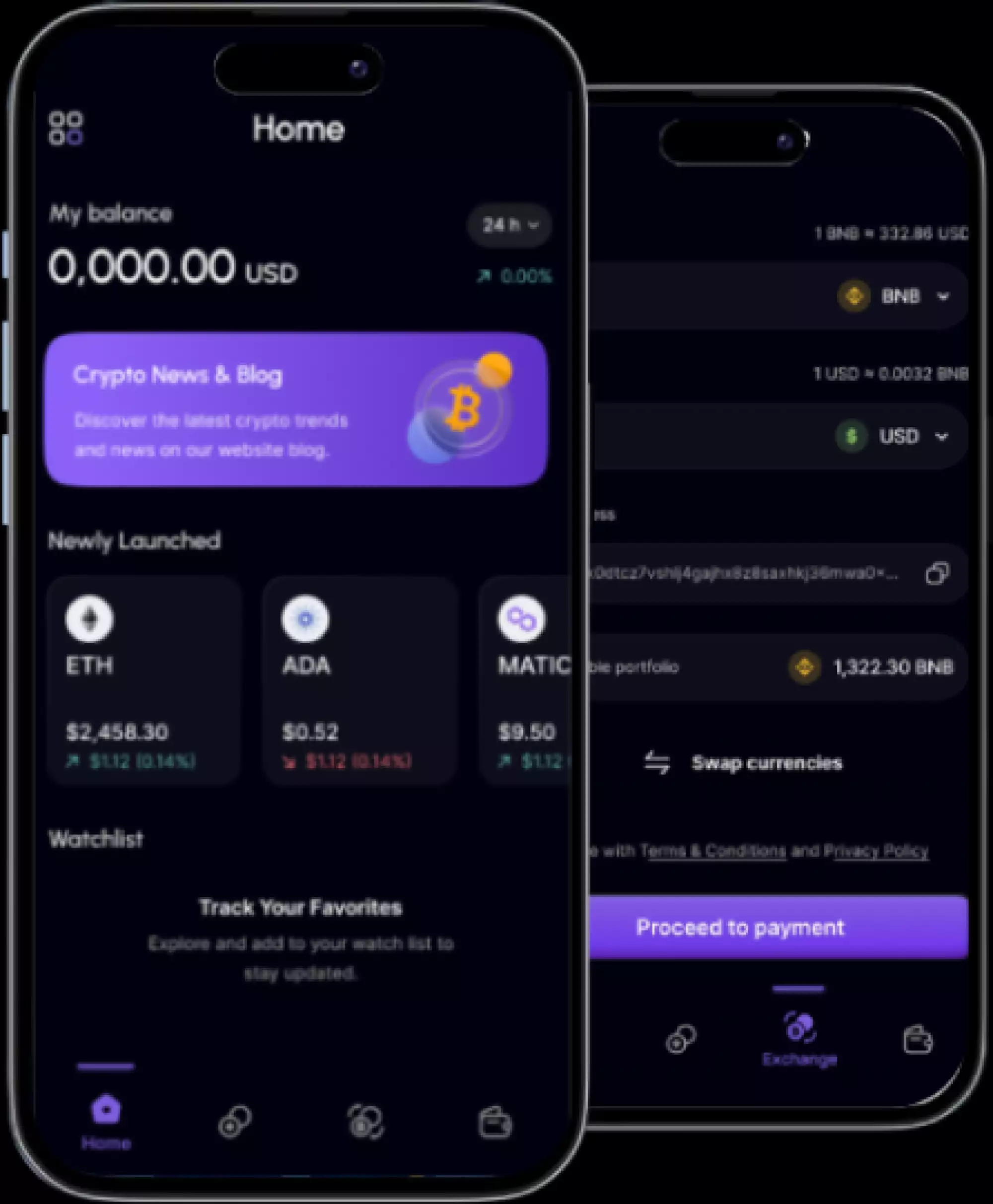
FAQs
1. What is a cryptocurrency futures and options trading platform?
A cryptocurrency futures and options trading platform allows traders to speculate on the future price of digital assets using derivative contracts. These platforms provide tools for hedging risk, leveraging positions, and executing advanced trading strategies.
2. How does a crypto options trading exchange work?
A crypto options exchange allows traders to buy or sell options contracts that give them the right, but not the obligation, to buy or sell an asset at a predetermined price before a specific date.
3. What are the key features of a crypto futures and options trading platform?
Key features include a high-performance matching engine, support for derivative contracts, margin management, liquidity integration, risk-control systems, and advanced analytics tools.
4. How long does it take to develop a crypto options trading exchange?
The development timeline typically ranges from 4 to 9 months, depending on customization requirements, security integrations, and liquidity connections.
5. What is the cost of developing a crypto options trading platform?
The cost depends on factors such as trading engine complexity, security infrastructure, compliance modules, liquidity integrations, and platform customization.
6. Can the platform support both futures and options trading?
Yes, a well-designed derivatives exchange can support multiple trading instruments, including futures contracts, perpetual futures, and crypto options.
7. Is liquidity integration necessary for a crypto derivatives exchange?
Yes, integrating liquidity providers and market makers ensures stable order books, tighter spreads, and smoother trade execution.
8. What security measures are required for a crypto options trading platform?
Common security measures include cold wallet storage, two-factor authentication, encryption protocols, anti-DDoS protection, and real-time risk monitoring.