+971-8000321216



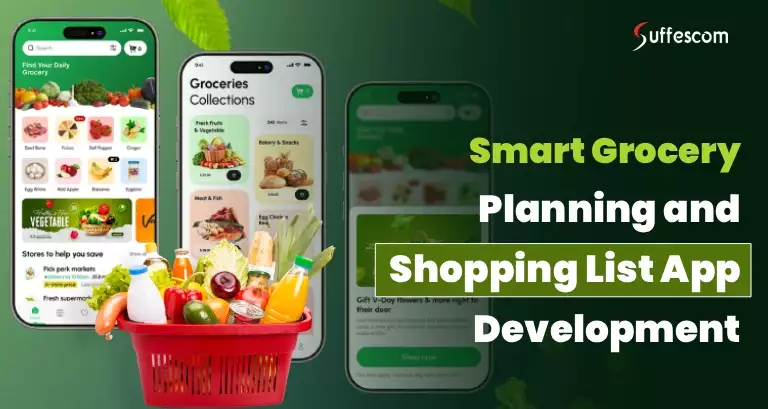
Smart grocery planning has become a daily need for busy consumers and data-driven retail businesses alike. With the rise of mobile-first lifestyles, users now expect simple, intelligent, as well as app-based shopping list solutions rather than paper notes or basic checklist apps. Platforms like Listonic have set a strong benchmark by combining ease of use, smart suggestions, along with seamless sharing features. This helps users plan better and shop faster.
This success has inspired entrepreneurs, SaaS startups & retail-focused businesses to launch their own smart grocery list platforms under a unique brand identity. Our Listonic clone development solutions allow businesses to enter the productivity and grocery-tech market with a proven concept & user-loved features.
By joining hands with Suffescom, a trusted clone app development company, businesses can launch a scalable Listonic-like app designed to support growing user bases, integrations, and future enhancements.
Launch Your Own Smart Shopping List App Like Listonic Today!
Build a fully branded, feature-rich shopping list app with proven Listonic-style functionality at Suffescom.
What is a Listonic Clone?
Our Listonic clone solution is a replica of the Listonic app. We create shopping apps like Listonic for businesses that want to offer smart, digital grocery planning experiences under their own brand. As a leading grocery app development service provider, we allow enterprises to launch a customizable, scalable shopping list platform that helps users plan purchases, collaborate on lists & make smarter buying decisions before checkout.
The app we built replicates the core functionality and workflow of Listonic that offers:
- Category-based sorting
- Smart grocery & shopping lists
- Intelligent item suggestions
- Shared & collaborative lists
- Budget estimation & price tracking
- Cross-device sync (mobile & web)
For entrepreneurs, app developers, retail businesses, as well as SaaS providers, our Listonic clone development solutions help reduce the cost, time, and technical complexity of building a smart shopping list platform from scratch.
A Quick Disclaimer: Listonic is referenced solely for conceptual & functional inspiration. Our solution is independently designed and developed using our own architecture, codebase, UI/UX strategies, as well as development methodologies. All trademarks, brand names, and assets remain the property of their respective owners.
Inside Our Listonic Clone: How Collaborative Lists Boost Engagement
A Listonic clone functions as a business-ready shopping list platform that enables enterprises to offer smart, digital purchase-planning experiences under their own brand. Explore the core working model of our Listonic, like shopping app development solutions:
1. User-centric list creation
Our platform allows end users to create and manage shopping lists via a simple mobile or web interface. It supports real-time updates, category-based organization, along with collaborative list sharing, ensuring ease of use & high adoption.
2. Intelligent recommendations
Our Listonic clone development solutions are trained on user behavior analytics that analyze past list data to suggest frequently purchased items. This intelligence helps businesses influence buying decisions while improving user convenience.
3. Data & insights layer
All user interactions generate valuable intent data. Businesses can leverage this data to understand demand patterns, optimize promotions & make informed inventory or marketing decisions.
4. Customization & branding
We build grocery shopping list creation apps like Listonic that are fully customizable. These facilities allow businesses to apply their branding, integrate with existing systems, along with tailor features to specific use cases or markets.
5. Collaboration & synchronization
Lists are synchronized across devices as well as users in real time. This makes sure consistent data availability while enabling shared use across households, teams, or enterprise environments.
6. Scalability & monetization
Built on a scalable architecture, our Listonic, like shopping app development services, support growth while enabling monetization through subscriptions, partnerships, advertising, or enterprise licensing models.
From Planning to Profit: Why Listonic Clones Are in High Demand
The demand for Listonic clone development is growing as businesses increasingly focus on owning the pre-purchase stage of the customer journey. The following are the main reasons:
1. Growing focus on customer retention: Retailers as well as digital platforms are moving beyond one-time transactions toward long-term engagement. Smart shopping list apps encourage repeat usage, daily interaction, along with brand stickiness. This makes them powerful retention tools.
2. Shift toward intent-driven commerce: Businesses now recognize that shopping intent data, such as what users plan to buy, is highly valuable. And our Listonic clone solutions capture this intent early, enabling companies to influence purchasing decisions before checkout.
3. Faster go-to-market for startups: Entrepreneurs & startups prefer ready-to-deploy solutions over building from scratch. We create grocery shopping apps like Listonic that significantly reduce development time & costs, minimize technical risk, and deliver a proven user experience.
4. Expansion of white-label & SaaS models: Enterprises & SaaS providers are leveraging our solutions as white-label products. This allows them to serve multiple clients with a single scalable platform.
5. Demand from retail & FMCG brands: Retailers & consumer goods brands are investing in data-driven planning tools to improve demand forecasting, targeted promotions, as well as inventory optimization. These capabilities are directly supported by a Listonic-style platform.
6. Rising integration with digital commerce ecosystems: Our Listonic clone development services easily integrate with POS systems, delivery platforms, loyalty programs, as well as analytics tools. This makes them valuable components of modern retail ecosystems.
Strategic Advantages of Building a Listonic-Style Shopping App
Our experts create family shopping apps like Listonic that help businesses scale fast and build a revenue-ready digital product. Look how our solutions benefit businesses, as well as end-users:
| Aspects | How Our Listonic Clone Benefits Businesses | How Our Listonic Clone Benefits the End-User |
| Centralized Admin Dashboard |
|
|
| Analytics & Reports |
|
|
| AI-Powered Smart Engine |
|
|
| Flexible Monetization Models |
|
|
| AI-Based Personalization |
|
|
| Scalable Backend Architecture |
|
|
| Cloud-Based Data Management |
|
|
| White-Label Branding |
|
|
| AI-Driven User Behavior Predictio |
|
|
| Easy Third-Party Integrations |
|
|
| High ROI & Cost Efficiency |
|
|
Next-Level Grocery Shopping: Core Functionalities Built for Business Impact
These are the foundational features every Listonic-style app must have:
1. User-Friendly list creation: Listonic, like shopping app development solutions come with a simple, intuitive interface for creating, editing, as well as organizing shopping lists. This allows users to easily add items to their shopping list.
2. Cross-device synchronization: Lists sync in real time across multiple devices, so your shopping list stays up to date whether you edit or delete items in the tab or on your mobile phone.
3. Collaborative lists: The platform lets users share lists with family, friends, or teams, which drives engagement. This enables every family member to add on items in the list without bothering anyone.
4. Basic analytics: Businesses can track user engagement, along with list activity. This includes tracking how often users create lists, add items, share lists & stay active. As a result, businesses understand engagement levels and improve features accordingly.
5. Category-based sorting: There is no need to sort items under each category, as our Listonic clone development services enable automatic sorting by categories for faster shopping.
6. Dark & Light Modes: The platform's customizable modes let users shop day & night without affecting their comfort.
Create a Shopping App Like Listonic & Lead the eCommerce Market!
We help businesses launch their own Listonic-like app, engineered as a business-grade product to streamline the shopping experiences & revenue generation process.
Unlock Smart Grocery Insights: The Advanced Engine Powering Our Listonic Clone Solutions
Designed to provide businesses with a fully-featured, scalable, & revenue-ready shopping list platform, our multiplatform-accessible shopping list platform development, like Listonic, goes beyond basic functionality to deliver an exceptional experience. The following advanced features make our solutions stand out in the market:
1. Enterprise-grade admin dashboard
A powerful admin dashboard provides granular control over users, lists, categories, pricing models, feature toggles, along with system configurations. As a result, businesses can manage the entire platform from a single interface without relying on technical dependencies.
2. API-first & integration-ready framework
Built with an API-first approach to support seamless integration with eCommerce platforms, grocery databases, CRM tools, analytics engines, as well as third-party AI services.
3. AI-based list intelligence engine
Our Listonic, like a shopping app development platform, integrates an AI layer that processes list-creation patterns, item frequency & usage trends. This engine continuously learns and refines system logic, making the product smarter over time without manual rule-setting.
4. Security & compliance-ready design
We implement secure authentication, encrypted data handling, and audit logs to protect user data from any unauthorized access. Also, adhere to required compliance standards, including GDPR, ADA & WCAG, HIPPA and so on, make the app suitable for global deployment.
5. Role-based access management
Supports multiple admin roles such as super admin, operations manager, content manager, as well as analyst. This makes sure secure internal operations & structured access across teams.
6. Advanced data & event tracking layer
Every critical action (such as list creation, item addition, collaboration events & feature usage) is tracked at the system level. This enables deep operational visibility, along with future expansion of AI or analytics.
7. Modular feature architecture
Our solutions are based on independent modules that allow businesses to enable, disable, or customize components such as collaboration, reminders, AI suggestions, or integrations based on market needs or monetization strategy.
8. Multi-tenant ready infrastructure
The Listonic clone development solution supports multi-tenant deployment, allowing businesses to run multiple apps, brands, or regional versions from a single backend. Ideal for agencies, enterprises & SaaS models.
9. Configurable collaboration logic
The platform permits businesses to define how collaborative lists work, permissions, edit rights, sync rules & sharing limits, directly from the backend, without redeployment.
10. Future-Ready AI Expansion Support
The architecture is designed to easily support future AI capabilities in eCommerce, such as predictive behavior models, recommendation engines, as well as automation workflows, without requiring core system restructuring.
11. Cloud-Native & Scalable Backend
Designed on a cloud-native architecture with auto-scaling, load balancing, plus fault tolerance. The system is ready for rapid growth without performance degradation.
12. Gamification & engagement:
We are developing an app for smart grocery shopping that consists of points, badges, along with achievement tracking to increase user engagement & retention.
Revenue Engines Behind a Listonic-Style Shopping App
Explore how the Listonic clone app helps businesses generate revenue:
1. Freemium Subscription Model
The app comes with free access to core features; however, businesses launch paid plans to unlock the advanced features such as smart suggestions, collaboration limits, or advanced reminders on a monthly & annually basis. This model drives mass adoption first, then converts power users into paying customers or in-app purchases.
2. Sponsored Product Placement
Businesses drive revenue by charging other brands to promote their products on shopping lists or in product suggestions. Since users are already planning purchases, this captures high-intent advertising demand. Sponsored listings and brand partnerships are the primary revenue source.
3. Contextual In-App Advertising
Ads are shown based on list items, categories, or user behavior. This not only improves ad relevance but also increases click-through rates. Earn profits via CPC/CPM advertising.
4. Affiliate & Referral Revenue
This is another way to earn income. Our Listonic clone development platform redirects users to partner grocery or eCommerce platforms. By doing so, businesses earn commissions (Affiliate commissions) on completed purchases.
5. Retail & Grocery Partnerships
Retailers integrate their catalogs with the app. This creates a direct channel between consumer intent along with store inventory. This helps earn partnership fees or revenue-sharing.
6. White-Label Licensing (SaaS)
The platform is licensed to retailers, startups, or enterprises under their own brand. This helps to manage multiple clients from one backend. SaaS licensing or per-client fees are the primary sources of revenue.
7. API & Integration Monetization
Third-party platforms pay to access APIs for list data, integrations, or automation. It is ideal for enterprise ecosystems. Businesses can drive profit via API usage.
From Startup Launches to Enterprise Scale: We Offer Resilient Listonic Clone Development Solutions
We offer a wide range of development solutions to build an app like Listonic for you:
1. White-Label App Development Solutions
Full branding control for enterprises & startups, we deliver white-label app solutions that businesses can rebrand, customize, and launch as their own, accelerating market entry while maintaining full control.
2. Fully Customized Solutions
Our experts design & develop fully customized applications aligned with your business goals, user journeys, as well as scalability needs. This makes sure long-term product growth for modern digital businesses worldwide.
3. Clone Development App Solutions
We build clone app solutions inspired by proven platforms, helping businesses replicate core functionality, customize workflows, as well as enter competitive markets faster with reduced risk.
4. No-Code or Low-Code Solutions
We build no-code or low-code solutions that enable businesses to launch faster, reduce development costs, and iterate quickly, without a heavy engineering dependency, for startups & enterprises worldwide.
5. MVP App Development Solutions
Our MVP app development solutions validate ideas quickly, test market demand & attract early users or investors. This allows businesses to refine products before efficiently scaling them into full-featured applications worldwide.
6. AI Integration Solutions
We integrate AI solutions into applications to automate processes, analyze user behavior, enhance personalization, and unlock data-driven decision-making, helping businesses build smarter, more competitive digital products for modern enterprises globally.
Future-Ready Technologies: The Backbone of Robust Listonic Clone Development Services
We utilize advanced technologies to build grocery shopping list creation app like Listonic:
| Technology Layer | Technologies Used | Purpose |
| Mobile App Development | Swift (iOS), Kotlin (Android), Flutter / React Native | High Performance |
| Web Admin Dashboard | React.js, Angular, Vue.js | Admin Control |
| Backend Framework | Node.js, NestJS, Spring Boot | Business Logic |
| API Architecture | REST APIs, GraphQL | Secure Communication |
| Database (Structured) | PostgreSQL, MySQL | Data Storage |
| Database (NoSQL) | MongoDB, Firebase Firestore | Real-Time Sync |
| AI & Machine Learning | TensorFlow, PyTorch, OpenAI APIs | AI Intelligence |
| Search & Indexing | Elasticsearch | Smart Search |
| Real-Time Sync | WebSockets, Firebase Realtime DB | Instant Updates |
| Cloud Infrastructure | AWS, Google Cloud, Microsoft Azure | Global Scalability |
| Containerization | Docker, Kubernetes | Microservices Scaling |
| Authentication & Security | OAuth 2.0, JWT, Biometric APIs | Secure Authentication |
| Push Notifications | Firebase Cloud Messaging, Apple Push Service | Push Notifications |
| Analytics & Monitoring | Google Analytics, Mixpanel, Grafana | Usage Analytics |
| Payment & Subscription | Stripe, Razorpay, PayPal | Subscription Management |
| CI/CD Automation | GitHub Actions, GitLab CI, Jenkins | Continuous Deployment |
| Data Security & Compliance | AES Encryption, GDPR-Ready Frameworks | Data Protection |
| Third-Party Integrations | Grocery APIs, eCommerce APIs, Voice Assistants | Expands ecosystem connectivity |
A Roadmap to Build a Grocery Shopping List Creation App Like Listonic
Look at how our experts turn your idea into a scalable app:
Requirement Analysis & Business Planning
- Identify your target audience (retailers, grocery chains, startups, or SaaS partners) and define the core business goal, including revenue models, user engagement, AI features, along with collaboration capabilities.
- After that, our experts document technical requirements, such as multi-platform support, AI suggestions, dashboard controls & integrations.
Competitor & Market Research
- We analyze existing apps like Listonic and your customizable suggestions to identify feature gaps, B2B monetization opportunities, and UX improvements.
- Also, map regional or industry-specific needs to differentiate your app.
Technical Architecture & Tech Stack Selection
- Ensure the architecture is scalable, secure, and AI-ready for enterprise use; thus, choose an advanced technology stack to build a robust, authentic & compliant clone solution.
- From front-end UI/UX design to backend database, we utilize a comprehensive technology stack.
UI/UX Design
- Design intuitive mobile interfaces for list creation, smart suggestions, collaboration, along with an admin dashboard for monitoring, analytics & feature management.
- Optimize for cross-platform consistency and minimal friction in usage.
MVP Development
- Develop the core features first, including list creation, AI suggestions, real-time sync & notifications.
- Ensure multi-tenant support for multiple brands or regions from a single backend, prioritizing speed, scalability, and reliability.
Advanced Feature Integration
- Now, add AI-powered predictive suggestions & analytics by implementing a subscription & monetization engine for B2B clients.
- Also, integrate third-party APIs (grocery, eCommerce, payment gateways) and comply with relevant standards.
Testing & Quality Assurance
- After completion, we perform functional, performance & security testing to validate the app's dashboard analytics, AI accuracy, as well as real-time sync.
- Gather B2B client feedback for improvements before launch.
Deployment & Launch
- Deploy apps on iOS, Android, and a web dashboard.
- Launch marketing campaigns targeting retailers, grocery chains & other partners.
Monitoring & Scaling
- Track KPIs, including engagement, list activity, churn, along with revenue.
- Scale infrastructure to support more users, regions & expanded features.
- Continuously improve AI suggestions, dashboard features, as well as integrations.
Continuous Updates & Future Enhancements
- Add AI-driven automation for reminders, personalized suggestions, along with predictive analytics.
- Introduce new modules for ads, affiliate products, or premium tiers.
- Keep the system secure, compliant, plus ready for enterprise growth.
Listonic Clone Development Cost Breakdown: Invest Smartly
The table below provides a breakdown of Listonic-like shopping app development costs, so you can invest smartly. These expenses may fluctuate as per your development needs:
| Type | Cost |
| Basic MVP | $10,000 |
| Mid-Level Business Solution | $10,000 to $20,000 |
| Enterprise-Grade Remitly Clone | $20,000 to $30,000+ |
Cost to Build a Grocery Shopping List Creation App Like Listonic
The following table helps you get an estimation idea of Listonic clone development solutions:
| Cost Component | Estimated Cost Range ($) | Purpose |
| Business Analysis & Planning | $1,000 to $2,000 | Requirements gathering & technical roadmap |
| UI/UX Design (Mobile + Dashboard) | $2,000 to $4,000 | App interface design & customization |
| Mobile App Development | $7,000 to $12,000 | iOS & Android app development, and real-time sync |
| Backend Development | $6,000 to $15,000 | APIs, business logic, data handling, multi-tenant architecture |
| Admin Dashboard Development | $3,000 to $6,000 | User management & monetization management |
| AI & Smart Features | $2,000 to $9,000 | AI suggestions, behavior analysis, along with predictive intelligence |
| Database & Cloud Infrastructure | $1,000 to $4,000 | Cloud setup, databases, scalability, storage, and backups |
| Third-Party Integrations | $1,000 to $3,000 | Payment gateways, grocery APIs, along with analytics tools |
| Security & Compliance | $1,000 to $3,000 | Authentication, encryption & GDPR-ready structure |
| Testing & Quality Assurance | $1,000 to $2,000 | Functional, performance, along with security testing |
| Deployment & App Store Launch | $5,000 to $15,000 | App submission, cloud deployment & production setup |
| Maintenance & Support (Annual) | $2,000 to $5,000 | Updates, bug fixes, monitoring, and performance optimization |
Hire Dedicated Developers to Develop an App Like Listonic!
We have well-experienced and skilled developers who will turn your shopping list idea into a fully functional, scalable Listonic-like app.
Why Choose Suffescom for Listonic Clone Development?
As the leading app development company, we come with the vision to turn everyday shopping list ideas into intelligent and revenue-driven digital products for businesses worldwide:
1. Custom-Built, Not Just a Clone
We don't deliver cookie-cutter clones. Our Listonic-style solutions are fully customizable, allowing you to add smart features such as AI suggestions, brand integrations & analytics dashboards. This makes our results stand apart from day one.
2. Proven Expertise in Utility & Consumer Apps
Suffescom brings deep experience in building scalable utility-driven mobile applications. Our experts understand how users behave, what keeps them engaged & how to turn daily usage into long-term value.
3. Monetization-First Development Approach
From the planning stage itself, we design your app with revenue generation in mind. It ensures your platform is built to monetize efficiently as it scales.
4. End-to-End Development & Support
We offer a complete development lifecycle from UI/UX design to post-launch support. This allows businesses to work with a single trusted partner rather than managing several vendors.
5. Scalable & Secure Architecture
Our developers build on robust, future-ready architectures that support rapid user growth, multi-region expansion, as well as high data security. This makes sure smooth performance even as your user base & feature set expand.
6. Faster Time-to-Market with Agile Delivery
With a refined development process & agile execution, our experts help businesses launch faster without compromising quality. This gives you a competitive edge in capturing market share early.
FAQs
1. Can the Listonic clone be fully customized for our business model?
Absolutely! The app can be fully customized, including features, integrations, workflows, as well as monetization strategies to align with your specific business objectives.
2. Who should invest in a Listonic-style app?
Our Listonic, like shopping app development solutions, are ideal for businesses looking to increase user engagement and collect shopping insights, including:
- Retailers
- Grocery chains
- eCommerce platforms
- Startups
- SaaS businesses
3. What is the estimated cost to build a Listonic clone app?
There are several factors, such as features, technology stack, design complexity & scalability needs, etc., that can affect the cost of Listonic clone. The development cost to create grocery shopping apps like Listonic may lie between $10,000 to $30,000+.
4. Can the app integrate with eCommerce and grocery platforms?
Of course! The app can be integrated with eCommerce systems, POS software, grocery catalogs, delivery partners, payment gateways, as well as loyalty programs to boost commercial value.
5. How long does it take to develop a Listonic clone app?
Generally, Listonic clone app development timelines take 8 to 19 weeks for completion. However, this time may vary depending on the complexity, platform coverage (iOS, Android, web), along with third-party integrations.
6. Is the solution scalable for large user bases?
Absolutely! The app is built on a cloud-native, microservices architecture. This ensures high performance, scalability, along with reliability as your user base grows.
7. Do you provide post-launch support and maintenance?
Yes! We offer ongoing maintenance, feature upgrades, performance optimization, security updates & technical support to ensure long-term product success.
Conclusion: Turn Everyday Grocery Planning into a Strategic Digital Asset!
A Listonic-style shopping list app is no longer just a consumer convenience: it’s a strategic entry point into intent-driven commerce. With Suffescom's Listonic clone development solutions, you don't just launch an app; you deploy a scalable, monetization-ready platform engineered for long-term growth.
If your goal is to move faster, reduce product risk & create a high-retention digital product that fits seamlessly into modern retail along with eCommerce ecosystems, a Listonic-like app is the smart investment.
Partner with Suffescom to turn a simple shopping list into a powerful business engine, designed to scale, monetize, as well as lead in the productivity and grocery-tech market.
Keep in Touch with Us!