+971-8000321216



How to Start a Hitchhiking Business in the Local Region?
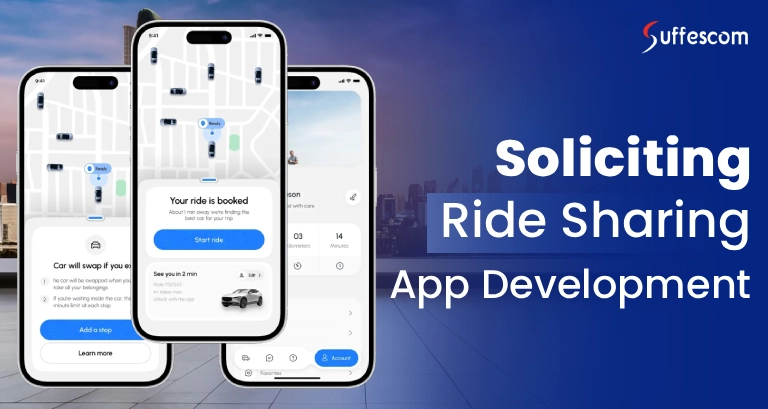
With the global ride-hailing market expected to reach US$229.98 billion by 2030 (CAGR 5.08%), Hitchhiking is evolving into a structured, scalable model. Businesses developing a hitchhiking app for a local region must integrate Agentic AI, machine learning models, and geospatial analytics to match riders with drivers, optimize routes, and maintain compliance with intercity regulations.
With the right development process, businesses can design a hitchhiking app at low cost that is scalable and efficient, transforming ad-hoc rides into reliable mobility solutions.
Why City-to-City Ride Sharing Hitchhiking App Development Is Emerging as a Scalable Mobility Business Model
City-to-city ride sharing hitchhiking app development enables regulated rides with built-in KYC, vehicle verification, and insurance modules, powered by AI-driven matching and predictive models to optimize trip allocation. Technology has shifted casual hitchhiking to platform-driven mobility networks. Leverage microservices and reusable UI components to design a hitchhiking app at low cost to scale intercity operations efficiently.
These technical frameworks make app development for safe hitchhiking with like-minded people feasible, allowing businesses to expand with measurable operational control.
- Shift from informal local hitchhiking to platform-driven mobility networks
- Role of digital trust systems and verified user ecosystems
- Platform-first approach for launching regulated hitchhiking operations
- App-led infrastructure defines scalability in city-to-city ride-sharing hitchhiking app development
Engineering Trust, Compliance, and Licensing Constraints Directly Into Hitchhiking App Development
Regulatory compliance and trust systems for a city-to-city ride-sharing and hitchhiking app are embedded directly into the platform's architecture. Transport regulations are translated into backend constraints, ensuring rides adhere to local laws without manual oversight. Geo-fencing algorithms and jurisdiction-based ride enhancement restrict trips to approved operational areas, while audit-ready data pipelines store verification logs, ride history, and compliance records for transport authorities.
Machine learning models can flag suspicious behavior or unusual route patterns and support the enforcement of safety protocols. Agentic AI optimizes ride assignments based on verified credentials, risk scoring, and regulatory compliance.
Implementation of these systems comes with low cost, scalability, and security. This technical approach enables building apps for a hitchhiking strategy to support intercity expansion, operational control, and a safe ride experience for users.
- Translating transport regulations into backend constraints
- KYC, vehicle verification, and insurance logic as system modules
- Geo-fencing rules and jurisdiction-based ride enablement
- Audit-ready data pipelines for transport authorities
Architect a Production-Grade Mobility Platform
Initiate hitchhiking app development with an enterprise-ready architecture that embeds AI orchestration, compliance controls, and scalability from day one.
User-Based Features Architecture That Are a Must For Hitchhiking Business Setup in Local Region
A successful city-to-city hitchhiking app requires robust infrastructure and a unique set of features for each user type. Features integration focuses on usability, security, and operational efficiency to ensure a smooth ride and trust between users. AI integration, real-time monitoring, and predictive analytics are a must-have for safety and scalability of the platform.
Admin Panel
- Real-time ride monitoring dashboard: Track all ongoing rides and driver availability in real time to optimize fleet management.
- User verification and risk scoring engines: Automatically validate riders and drivers while assessing potential risks for safer rides.
- Dynamic pricing and commission rule engines: Adjust fares and commissions dynamically based on demand, route, and time.
- AI-driven fraud detection and anomaly monitoring: Detect suspicious activity or unusual patterns to prevent fraudulent behavior.
Rider Panel
- City-to-city ride discovery with ML-based matching: Suggest the best available rides using intelligent matching algorithms.
- Trust indicators powered by behavioral scoring models: Display safety scores and ratings to help riders choose verified drivers.
- Route optimization and pickup prediction systems: Recommend the fastest and safest pickup routes for convenience.
- Secure in-app communication protocols: Enable safe messaging and calling between riders and drivers without sharing personal info.
Driver Panel
- Ride acceptance algorithms with load balancing: Efficiently distribute ride requests among drivers to maximize availability.
- Earnings analytics and incentive modeling: Track earnings, performance, and bonuses through a clear, actionable dashboard.
- Smart route suggestions using predictive traffic models: Help drivers avoid traffic and save travel time.
- Identity validation and safety compliance workflows: Ensure drivers meet safety standards and have verified credentials before accepting rides.
Technology Stack That Enables High-Performance Hitchhiking App Development at Scale
The use of advanced technologies for app development provides robust infrastructure and the possibility of feature or market expansion with high profit potential. The latest programming languages, frameworks, and development tools enable high-performing platforms to expand locally and globally.
Layer | Technology | Technical Purpose |
Frontend | React Native / Flutter | Enables cross-platform performance with low-latency UI, supporting real-time ride tracking and dynamic route updates. |
Backend | Node.js / Django / Spring Boot with Microservices | Provides scalable, modular backend architecture for managing ride requests, KYC modules, vehicle verification, and agentic AI-based matching algorithms. |
AI/ML | Python, TensorFlow, PyTorch | Powers machine learning models for dynamic rider-driver matching, predictive route optimization, behavioral trust scoring, and anomaly detection in rides. |
Database | PostgreSQL, MongoDB with Geospatial Indexing | Stores geolocation data, ride histories, and verification logs; supports real-time queries and spatial analytics for optimized city-to-city route mapping. |
Maps & Navigation | Google Maps API, Mapbox, OpenStreetMap | Facilitates route optimization, pickup prediction, and intercity navigation, integrating with AI models for travel time prediction and safe hitchhiking. |
Cloud & DevOps | AWS, GCP, Kubernetes, CI/CD Pipelines | Ensures high availability, horizontal scaling, and automated deployment for large-scale intercity hitchhiking operations while maintaining compliance and security standards. |
Cost Engineering and Pricing Structure to Build an App for Hitchhiking Platforms
A clear and transparent cost breakdown of the hitchhike app development solution helps businesses to set a budget that doesn't exceed in the future. Components that affect the cost are AI integration, compliance, AI-powered features, and ongoing maintenance, depending on the requirements. To efficiently design a hitchhiking app at a low cost, businesses should break down the development stages' costs for robust functionality and analyze whether the development costs are justified for city-to-city operations.
Development Stage | Estimated Cost (USD) | Technical Focus |
Requirements & Proposals | Mostly Free | Gathering functional specifications, regulatory compliance checks, and AI-based ride matching logic. |
UI/UX Design | $1,500 – $3,000 | Designing intuitive interfaces, low-latency flows, and reusable components for safe intercity rides. |
Features Implementation & Development | $4,500 – $9,000 | Integrating ride-matching algorithms, KYC modules, AI-driven fraud detection, dynamic pricing, and agentic AI modules. |
Testing Stage | $1,500 – $3,000 | Conducting real-time scenario testing, load balancing, and security validation for the app. |
Deployment Stage | $3,000 – $6,000 | CI/CD pipelines, containerized deployment, cloud integration, and geospatial indexing for scalable operations. |
Post-Launch Maintenance | $3,000 – $6,000 | Ongoing bug fixes, AI model updates, feature upgrades, and performance optimization to support long-term platform growth. |
Hitchhiking App Development Process That Converts Local Operations Into Scalable Software
After identifying must-have features for all users, the next step is to begin conceptualising and developing the actual app. The development process for ride-sharing apps blends industry knowledge with the latest technology to create an innovative, reliable, and scalable app that meets business needs.
- Strategic Planning & Market Research: The first step in developing ride-sharing apps is to research market demand, define personas, and understand competitors' business models and feature prioritization to ensure the end product is scalable and reliable.
- UI/UX & Wireframe Engineering: The next phase is to create a prototype to analyze a basic version of the app, including low-latency flows and human-AI interaction paths, with a clean, intuitive user interface.
- Modular Architecture Build: This step involves breaking the application into smaller, manageable components to achieve an interactive software design. It defines the application architecture for a specific functionality that can be developed, deployed, and scaled independently.
- Comprehensive QA & Testing: Once the development process is complete, experts test the app's performance to verify real-time scenario coverage, security checks, and integration tests, ensuring it is scalable with a broad user base.
- Deployment & DevOps Pipelines: The successful testing stage ensures the app is ready for deployment. It is then deployed to the Google Play Store and the Apple App Store to ensure compatibility across all devices.
- Post-Launch Optimization: Continuous performance monitoring of the app to fix bugs and enhance features; constant updates with iterative upgrades ensuring the app aligns with market trends and can be scaled for future business updates.
Case Study: Ride-Sharing & Taxi Apps Built for Scalable City-to-City Mobility
These projects demonstrate Suffescom’s ability to deliver scalable, secure, and tailored ride-sharing platforms that handle core mobility needs like tracking, communication, payments, and analytics with enterprise readiness.
Real-World Mobility Projects
- PEI Taxi: Custom taxi booking app with real-time tracking, seamless driver-passenger communication, and smooth ride management, boosting fleet efficiency and user engagement.
- Taxidi: A user-centric ride-hailing solution with GPS tracking, multilingual support, and dynamic fare logic, enabling efficient operations for both tourists and locals.
- Pro Ride: Feature-rich taxi platform integrating live tracking, secure in-app payments, and admin analytics, helping streamline operations and expand market reach.
- Picap (White Label): Ready-to-launch mobility solution with automated dispatch, integrated payments, and real-time tracking, suited for rapid market entry and custom branding.
Designing AI-Powered Features for App Development for Safe Hitchhiking With Like-Minded People
Hitchhiking app architecture increasingly relies on AI-first decision layers rather than static rule-based systems. Hitchhiking app development is moving beyond basic ride aggregation to intelligence-driven, adaptive platforms.
It supports scalable deployment, controlled risk exposure, and sustainable differentiation in city-to-city ride-sharing hitchhiking app development.
AI-powered components define the outline for how modern hitchhiking app development companies approach app development, while keeping scalability and cost efficiency in focus when teams design apps at a low cost.
Agentic AI for autonomous ride matching decisions
Agentic AI enables autonomous decision-making by combining perception, reasoning, and action within a single system. Agentic models evaluate ride requests in real time using multivariate inputs such as route overlap, historical rider behavior, cancellation patterns, and trust scores. The model continuously learns by accepting and rejecting matches.
Behavioral similarity models using machine learning clustering
Machine learning techniques such as DBSCAN or hierarchical clustering build behavioral similarity. Users' vectors are constructed from factors like travel frequency, communication style, pickup flexibility, punctuality, and feedback. Hitchhiking app development clusters allow the system to group like-minded individuals and improve trust.
NLP-based chat moderation and intent detection
NLP (natural language processing) models serve as a real-time safety layer for the app's communication channel. Models detect anomalies such as coercive language, off-platform payments, or policy violations. Sentiment analysis, AI chatbots, and named entity recognition contextualize conversations, enabling automated escalation or temporary ride suspension.
Predictive trust scoring using historical ride data
Predictive models trained on historical ride outcomes, ratings, disputes, and behavioral drift generate probabilistic trust scores that evolve after every interaction. The scores directly influence agentic ride-matching decisions, creating closed feedback loops among trust, behavior, and system recommendations.
Monetization Models for Ride Sharing Hitchhiking App Development
Businesses generate recurring, profit-generating revenue through monetization models such as commissions, subscriptions, partnerships, AI-powered pricing, and data-driven route-demand monetization. Revenue for ride-sharing apps is efficiently driven by machine learning, pricing engines, and demand signals, integrated with safety measures to generate revenue.
Commissions
Commission rates are adjusted using driver reliability scores, route demand density, and historical ride success enables fairness and preserving platform liquidity. The core model charges a percentage fee on each completed ride fare, deducted from the driver's earnings.
Subscription Models
Users benefit from monthly or weekly subscriptions that offer features such as discounted fares and priority booking. It also enables drivers to reduce the commission rates. Subscription models also reduce commissions, offer higher match priority, and provide advanced route visibility with predictable revenue streams and real-time matching pipelines.
Partnerships
Another revenue stream is through partnerships with insurance companies, fuel stations, or event organizers to earn referral commissions or sponsorship revenue. This model is most effective when route density and demand predictability are modeled within the system.
AI-Powered Surge Pricing Models
Dynamic pricing engines rely on time-series forecasting rather than demand multipliers. As demand increases during peak hours or bad weather, drivers can charge more, earning more revenue and receiving higher commissions for businesses.
Data-Driven Route Demand Monetization
Demand forecasting models identify underutilized corridors, peak travel windows, and recurring city-to-city flows. These insights can be monetized through premium route placement, and a recurring revenue is generated through demand forecasting intelligence.
Suffescom-Driven UX Engineering to Design Hitchhiking App Solutions at Low Cost
Suffescom methodology reflects how a hitchhiking app development company applies engineering-led UX to design hitchhiking app solutions at low cost. Early UX decisions directly influence backend complexity, AI integration effort, and long-term scalability.
Flow Optimization
Interaction flows are modeled as state machines to minimize edge cases across booking, matching, and cancellations. Reduced state variance directly lowers API branching and test surface area.
Dependency Mapping
Features are prioritized by a system dependency graph that binds UI events, AI models, and backend services.
Reusable UI
UI components are engineered as reusable components that align with design tokens and share a common set of logic, reducing rework across passenger, driver, and admin interfaces in the Hitchhike app.
Early UX
Early UX decisions prevent schema redesigns and avoid retraining machine learning models before development begins.
Mobility Architecture
App architecture UX patterns account for real-time location updates, route recalculations, and latency tolerance. It supports app development under variable network conditions.
AI Readiness
Agentic AI and behavioral models are structured data sources for UX events, ensuring data-pipeline maturity.
Compliance Experience
App development for safe hitchhiking with like-minded people requires UX flows that support consent management, audit trails, and safety escalation across regions.
Scalability Focus
Focus on scalability, ensure component-driven UX and modular interaction logic that support feature expansion to avoid redesign cycles, as AI complexity and route density increase.
App Like Hitchhiking Solutions at Low Cost
Solution Type | Cost Range | Technical Scope |
White Label Solution | $5,000 - $10,000 | Prebuilt UX flows and backend services with configurable branding and limited AI customization for rapid market entry. |
$8,000 - $15,000 | Core ride matching, trust scoring, and communication flows engineered with extensible AI and data pipelines. | |
Starts at $5,000 | Logic abstraction using visual workflows and third-party services, suitable for validating design hitchhiking app assumptions. | |
SaaS Product Development | $10,000 - $20,000 | Multi-tenant architecture with subscription logic, analytics, and AI-ready UX instrumentation. |
Fully Custom Development | $5,000 - $30,000 | Tailored UX, agentic AI integration, and scalable backend designed to build an app for hitchhiking at enterprise grade. |
In-House vs Outsourced Hitchhiking App Development
Businesses can see the direct impact of choosing between internal teams and external delivery models. This decision influences how efficiently agentic AI, trust models, and real-time mobility systems are operationalized.
Team Structure
In-house teams offer tighter domain alignment but often face longer ramp-ups for AI, mapping, and real-time systems. External specialist firms have pre-aligned mobility stacks with production-grade patterns for app development.
Governance
The internal development team simplifies policy enforcement but increases the frequency of security audits and compliance workflows. Outsourced governance frameworks cover data isolation, access controls, and AI model accountability.
IP Control
Direct ownership over algorithms and datasets is ensured by in-house management, whereas external management requires clear IP clauses to protect model architectures, training data, and feature evolution roadmaps.
SLA Coverage
External companies formalize SLAs, support windows, and escalation paths aligned to system performance metrics. Internal teams depend on staff continuity for uptime and incident response.
Upgrade Pathways
In-house roadmaps stall with AI frameworks or cloud services that evolve rapidly. External teams maintain forward compatibility with newer ML libraries, routing libraries, and engines.
Benchmarks
In-house team benchmarks are set by limited production exposure, and external references use case-based benchmarks across multiple deployments to accelerate stability across platforms.
Tech Maturity
Outsourced teams operate at a higher baseline maturity due to continuous exposure to mobility and AI architectures. On the other hand, in-house build depth over time, with expected lag in emerging patterns like Agentic AI.
Technical Challenges in Hitchhiking App Development and How Architecture Mitigates Them
For platforms like Hitchhiking, architectural decisions determine whether development challenges remain manageable or become systemic risks for businesses.
Trust Enforcement
Safety and trust factors rely on a layered architecture that combines real-time rule engines with machine-learning-driven models. Robust architecture allows trust scores, incident flags, and behavioral anomalies to propagate instantly across matching and communication services.
Matching Latency
Chances of high latency in intercity matching due to distance, route variance and fluctuating supply. With Agentic AI decision layers, it reduces round-trip delays while preserving match accuracy.
Fraud Detection
Decentralized mobility systems are vulnerable to fraud or abuse. Graph-based ML models and anomaly AI TRISM detection services continuously identify suspicious patterns before financial or safety issues arise.
Data Privacy
Cross-border operations require strict separation of personal, behavioral, and location data. Region-aware storage, encryption at rest, and policy-driven data access layers ensure compliance without fragmenting the core matching architecture.
What Makes Suffescom A Reliable Partner for Hitchhike App Development
Suffescom surface-level delivery and engineering applied to mobility, AI, and scalable systems design outline how they technically fulfill the demand for developing an app like Hitchhike for businesses.
1) Expert Team
We have a team of experts, including React Native and Next.js developers, cross-functional engineers, project managers, and designers, to build a robust, responsive backend, AI, and UX system for the app.
2) Expertise
Proven expertise in developing apps like Hitchhike with Agentic AI orchestration, real-time matching systems, and safety-first data flows.
3) Full Ownership of App
We provide full ownership of code, trained models, and system artifacts to businesses, ensuring they retain long-term control over algorithms, datasets, and feature enhancements.
4) Advanced Technology Stack
Apps are built with advanced tech stacks, and compatibility with evolving ML frameworks and mapping engines is maintained by design.
5) Cost-effective solutions
Our app development solutions, MVP, white label, no-code, and more are cost-effective and fits budget of businesses.
Future-Ready Trends Redefining City-to-City Ride Sharing Hitchhiking App Development
Future trends are evolving from reactive matching systems to predictive mobility networks, reflecting how architecture, AI, and data intelligence are reshaping ride-sharing hitchhiking app development.
Agent Orchestration
Rise in demand of autonomous agent-based systems to manage ride discovery, negotiation, and confirmation without synchronous user input. These AI agents help with trust scores, route viability, and demand forecasts in real time.
Federated Learning
Approach of privacy-first AI models trained on user devices reduces centralized data exposure while maintaining model accuracy across intercity networks.
Blockchain Identity
Decentralized identity layers keep trustworthy information safe and unchangeable. Smart contracts automatically verify people's identities while keeping their personal details private.
Mobility Graphs
Machine learning forecasts enable proactive capacity and intelligent route activation before demand spikes. Predictive mobility graphs model intercity as dynamic networks of demand, supply, and temporal patterns.
De-Risk Market Entry Through a Data-Driven Hitchhiking App Development
Deploy an MVP, white label, or no-code-engineered solution for agentic AI, trust scoring, and monetization logic to accelerate market entry.
Conclusion
Inter-city hitchhiking has evolved from a conceptual mobility idea to a software-defined business model. Using agentive AI, trust systems built on machine learning, and regulatory architecture, hitchhiking app development facilitates scalable and regulated operations. A technically viable hitchhiking platform turns local ride-sharing into a data-driven mobility solution for sustainable growth and management.
FAQs
What is the cost of hitchhiking app development at Suffescom?
Cost typically ranges from $5,000 to $30,000 depending on scope, architecture depth, AI integration, and compliance requirements. Pricing aligns with MVP, white label, SaaS, or fully custom development models.
What is the development timeline for a hitchhiking app?
A basic MVP can be delivered within weeks, while fully custom platforms with AI-driven matching and compliance layers may take 3–4 months, depending on feature complexity.
What business monetization model does a hitchhiking app follow?
Revenue models include commissions, subscriptions, partnerships, AI-powered surge pricing, and data-driven route-demand monetization embedded in the platform architecture.
How does a hitchhiking app ensure user safety?
Safety is enforced through KYC modules, vehicle verification, predictive trust scoring, NLP-based chat moderation, and real-time fraud detection using machine learning models.
Is city-to-city hitchhiking legally scalable?
Scalability depends on embedding transport regulations into backend constraints, geo-fencing rules, and audit-ready data pipelines that adapt to jurisdiction-specific laws.
What technologies are critical for hitchhiking app development?
Microservices-based backends, geospatial databases, agentic AI orchestration, machine learning pipelines, and cloud-native DevOps infrastructure form the technical foundation.
Can a hitchhiking app be built at low cost without losing scalability?
Yes, modular architecture, reusable UI components, and early UX-to-backend alignment allow teams to design hitchhiking apps at low cost while preserving scalability.
How is AI used in ride matching for hitchhiking apps?
AI models evaluate route overlap, behavioral similarity, trust scores, and demand signals to autonomously assign rides with minimal latency and higher safety assurance.
Recent Posts





Categories
- Top Companies (9)
- Mobile Game Development (11)
- Suffescom News (1)
- Whitelabel Apps (1)
- Real Estate App Development (5)
- Artificial Intelligence (28)
- AI Integration (5)
- API Integration Service (1)
- Delivery Apps Development (4)
- Taxi App Development (8)
- NFT Marketplace Development Cost (1)
- Whitelabel Legal App Development (1)
- Smart Contract Services (2)
- Software Development (23)
- IOT Software Solutions (2)
- 3D Game Development (3)
- AI Development Services (41)
- ERP Software Development (1)
- VR App Development Cost (1)
- Web3 (11)
- Mobile App Development (103)
- Metaverse (12)
- Marketplace (2)
- Food (1)
- Transportation (7)
- Tech Updates (2)
- Social (11)
- Real Estate (3)
- NFT (9)
- Liquor (1)
- Launchpads (6)
- Hire A Developer (1)
- Grocery (5)
- Development (2)
- eCommerce (10)
- Education (3)
- Entertainment (1)
- Finance (7)
- Food Industry (13)
- Healthcare (10)
- Crypto Exchange (10)
- Crypto (26)
- Clone (8)
- Business Advice (6)
- Announcement (2)
- Blockchain (70)
Got an Idea?
Let's Make it Real.