+971-8000321216



Key takeaways:
- Develop veterinary engagement communication platform at an affordable cost ranging $8,000 to $25,000.
- We create a veterinary engagement communication platform with features like cloud-based infrastructure, EHR/EMR systems, AI-driven diagnostics, and real-time communication tools.
- Develop a communication platform for veterinary practice and generate revenue through monetization models such as subscriptions, commissions, in-app purchases, and advertising.
- With 14 years of experience, Suffescom delivers a scalable, secure, and market-ready veterinary communication development solution.
The telemedicine industry is expanding rapidly and is driven by technological advances. Veterinary telemedicine platform development improves the efficiency of pet care and streamlines operations. According to research, the global veterinary telehealth market is expected to reach USD 921.4 million by 2030, growing at a 20.3% CAGR. The need for remote veterinary care solutions has created business opportunities for enterprises, startups, and pet healthcare providers.
What is a Veterinary Telemedicine Platform?
It is a digital solution designed for pet owners and veterinary professionals to connect with medical experts remotely for consultations, diagnostics, and follow-ups via video and chat. Leveraging technologies such as cloud computing, communication channels, AI, and HIPAA data privacy regulations is making personalized veterinary care platform development a growing trend in the coming years.
A telemedicine app platform offers asynchronous or synchronous care models. Unlike traditional veterinary care, which is limited to in-person visits, veterinary telemedicine platform development enables remote consultations, improving operational efficiency and accessibility.
Why Your Business Needs to Shift from Traditional to Veterinary Telemedicine Platform
Traditional clinics often struggle to scale their operations and meet rising customer expectations. On the other hand, veterinary practices on telemedicine platforms deliver faster care, manage finances, and meet pet owners' expectations without additional operational costs.
A veterinary telemedicine platform development solution enables practices, pet care, and enterprise providers to advance their service delivery through digital workflows, real-time communication, and perform on data-driven care models.
Businesses moving to the telemedicine ecosystem are making a strategic shift, as it can directly impact operational efficiency and long-term business growth.
1) Improved Operational Process
Rather than relying on fragmented manual processes, a veterinary engagement communication platform solution streamlines clinical and administrative workflows. Functions such as appointment scheduling, consultation management, medical records, and follow-ups are managed through a centralised system. With the integration of technologies such as cloud-based infrastructure, EHR/EMR systems, and automated scheduling, veterinary practices are performed efficiently, reducing human error.
2) Quick Assistance to Pets
A veterinary engagement platform development solution enables real-time video and chat consultations, as well as asynchronous reviews. Being time-sensitive is one of the most significant advantages of a telemedicine platform for businesses. It allows veterinarians to assess pet condition quickly and provide immediate guidance, especially in emergencies. For healthcare providers and businesses, this approach enhances customer responsiveness and builds trust between pet owners and medical professionals.
3) Expanded Services
Telemedicine platforms allow businesses to move beyond location-dependent services. It allows them to connect with customers remotely and unlock new digital offerings, such as virtual wellness programs, e-pharmacy, and subscription-based care plans. It also unlocks additional revenue streams.
4) High Engagement Rate
A personalized veterinary care platform development solution enables ongoing interaction between pet owners and professionals via notifications, chat/video calls, and follow-up reminders with health reports. For business, this generates high engagement as pet owners remain actively involved in their pet care app development journey. With the increasing user base, the ROI also increases.
Growing Potential of the Telemedicine Platform in Veterinary Practice
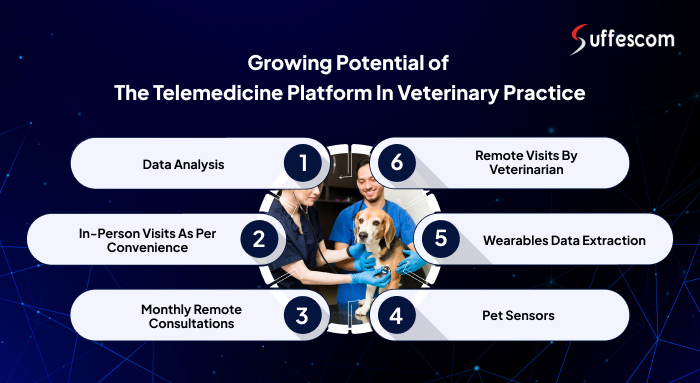
As the pet care industry evolves, technology continues to play an important role in redefining the scope and capabilities of veterinary services. These practices can streamline operations, improve pet care, and scale service offerings. Here’s how emerging technologies are fueling the growth.
Data Analysis
Data-driven insights enable veterinarians to track health trends, identify patterns, and monitor treatment success rates. Telemedicine platforms generate large volumes of data, and analysing it is critical to modern veterinary practice. Data analysis tools enable healthcare providers and business owners to extract actionable insights and deliver more accurate diagnoses and personalized care plans.
In-person Visits as Per Convenience
The hybrid model of telemedicine platforms combines remote and in-person consultations, offering a balanced approach. This gives pet owners the flexibility to access care without long wait times. This hybrid model also improves case management by optimising scheduling and workflows.
Monthly Remote Consultations
Monthly remote consultations improve veterinarians' ability to detect health issues before they become critical. Thus, this practice enables businesses to attract pet owners and generate revenue through subscription models, while increasing customer satisfaction by offering convenient, cost-effective care.
Remote Visits by Veterinarian
Veterinarians can evaluate pets based on video and diagnostic images. For a business, offering remote vet visits adds value for clients seeking flexibility and quick access while streamlining clinic operations. It also allows them to expand their services beyond location-focused clinics and reduce in-clinic disruptions.
Wearables Data Extraction
Devices such as GPS trackers, collars, tags, fitness trackers, and monitors can continuously help businesses to collect real-time data on pets’ vital signs. For veterinary practices, this data extraction increases the likelihood of personalized care, reducing the need for in-clinic visits. Wearable device integration also generates a high revenue.
Pet Sensors
Integrating pet sensors with telemedicine platforms enables veterinarians to more accurately identify potential health risks and develop a health plan based on sensor data. It’s a win-win for both businesses and pet owners: the constant flow of data improves service quality and increases profit margins.
USPs We Integrate for Successful Veterinary Telemedicine Platform Development
Our USPs in building a successful veterinary telemedicine platform differentiate your platform from competitors. Below are the core features or USPs we integrate to ensure we provide a future-proof veterinary platform for your business.
1) Cloud-Based Platform
Cloud computing enables users to access the system from anywhere, and it also enables secure data storage and real-time access to medical records with seamless updates to the platform. However, cloud infrastructure supports veterinary practices to expand their service offerings without any infrastructure limitations.
2) Reimbursement Policies
One of the common challenges in telemedicine is the reimbursement process. Integration of reimbursement policies maximises the financial feasibility of offering remote consultations. Businesses can also streamline the claim process, improve cash flow, and manage insurance paperwork.
3) EHR/EMR Integrations
EHR/EMR integrations help veterinarians access a pet’s complete medical history in real time, making it easier to provide accurate diagnoses. Further, it also helps maintain regulatory compliance by ensuring medical data is securely stored and is easily retrievable when needed.
4) Generative AI Model
AI-driven generative models help veterinarians diagnose conditions based on symptoms. This model also analyzes a vast amount of data. This model also analyzes a vast amount of data. Over time, the platform learns from new data, making the AI system more efficient and effective, delivering accurate insights. For businesses, reducing staff workload and improving accuracy in veterinary practices are significant advantages.
Get Started with Your Own Veterinary Telemedicine Platform
Unlock the potential of remote veterinary care and improve operational efficiency.
Advanced Features We Integrate in Veterinary Engagement Platform Development
We are transforming how businesses operate in the growing pet care industry. We integrate must-have features into personalized veterinary care platform development for pet owners, veterinarians, and administrators.
Pet Owner Panel
1) Profile Management
Pet owners can easily manage their pet's profile. Easy uploading of photos, including medical history and relevant information, ensures the vet has all the information needed for treatment.
2) Appointment Scheduling
A seamless booking process for the pet owners to manage their schedule for virtual or remote consultations.
3) Video Calls
They can easily reach out to veterinarians via video calls, ensuring prompt treatment for their pets, especially during emergencies.
4) Instant messaging
Owners can connect via messaging for follow-ups or text-based consultation. It provides a convenient way for pet owners to care for their pets and build trust with veterinarians.
5) Photo Sharing
They can share images of their pet to gain a clear, accurate understanding of health issues. It also helps vets to provide more effective consultation.
Veterinarians Panel
1) Managing Documents
Vets are provided with a centralized platform to store and easily access medical documents related to medical history and treatment.
2) E-commerce Integration
Vets can also choose to collaborate with other businesses or vendors to integrate an e-commerce feature. They can display pet care products or medications for sale. It also builds a passive revenue stream.
3) Vet Dashboard
Veterinarians can oversee appointments, pet data, and other necessary documents and information to manage. It also streamlines the workflow of the platform.
4) Reports & Analytics
They can access reports and analytics related to pets' medical conditions and appointments. It maintains transparency and helps vets to make an informed decision.
5) E-Prescriptions
They can easily send e-prescriptions to the pet owners after the consultation. It saves time and effort, and is a sustainable option.
Admin Panel
1) Central Dashboard
Admins have a central dashboard to manage work within the platform. Also, they can have an overall overview of the appointments, medications, billing, and treatments of the pets.
2) Pet & Pet Owner Management
This feature allows admins to view the activity of the pet and the pet owner. Admins ensure that there is no barrier between the vets and pet owners, ensuring a seamless healthcare process.
3) Payment & Billing Management
They can manage the billing, payments, and insurance claims process. It's their duty to manage pending or incomplete payments and ensure financial stability.
4) On-Demand Report Generation
They gain access to on-demand reports to ensure vets and pet owners are on the same page regarding the pet's care. Reports and analytics also highlight emerging trends and features required to make the platform more scalable.
5) Health Regulatory Compliance
Admins also have the control to ensure that veterinary practices follow health regulatory requirements. We ensure to provide a veterinary telemedicine platform development that matches HIPAA standards.
Technology Stack for Veterinary Engagement Platform Development
We use advanced technologies to build a veterinary engagement platform to ensure it is scalable and reliable in nature. To provide a seamless experience to both businesses and pet owners, we integrate from data storage to third-party integrations. Below is the technology stack we use for telemedicine platforms.
| Technology Component | Description |
| Frontend Framework | React.js / Angular / Vue.js |
| Backend Framework | Node.js, Django, and Ruby on Rails |
| Cloud Infrastructure | AWS, Microsoft Azure, and Google Cloud |
| Database Management | PostgreSQL, MongoDB, and MySQL |
| Real-time Communication | WebRTC or Twilio |
| Artificial Intelligence | TensorFlow, PyTorch, and OpenAI models |
| IoT Integrations | Integration with IoT devices (e.g., pet collars, health sensors) using protocols like MQTT or HTTP APIs to capture real-time health metrics for pets. |
| EHR/EMR Integration | Integration with EHR/ EMR systems (e.g., OpenEMR, DrChrono) to provide seamless access to pet health records, medical histories, and prescriptions. |
| Payment Gateway | IStripe, PayPal, or Square |
| Data Security & Compliance | Encryption (AES-256), SSL/TLS protocols, and compliance with HIPAA (U.S.) or GDPR (Europe) |
Create a Veterinary Engagement Communication Platform at An Affordable Pricing
At Suffescom, develop a veterinary engagement communication platform within an affordable budget of $8,000 to $ 25,000. However, the pricing for the development process varies based on features, technology, and security compliance. Below are the cost components for building a veterinary platform development.
| Cost Component | Description |
| Platform Design | This includes creating a simple, intuitive, and visually appealing interface that enhances user engagement. Price varies based on complexity and customizations. |
| Frontend Development | The development of the user-facing side of the platform using frameworks like React.js or Vue.js. Pricing depends on the number of screens, interactivity, and custom design features. |
| Backend Development | The development of server-side infrastructure using technologies like Node.js or Django to manage database interactions, user data, and API integrations. |
| Cloud Hosting & Infrastructure | Costs for setting up cloud hosting on platforms like AWS or Google Cloud, ensuring scalable, secure, and reliable access to the platform. |
| Real-time Communication Features | Integrating video conferencing tools (e.g., WebRTC, Twilio) for live consultations, messaging features, and secure data transmission. |
| AI and Machine Learning Integration | Integrating AI models for predictive analysis, symptom checking, and automated diagnostics. |
| Integration with IoT Devices | Costs for integrating wearable pet health trackers and other IoT devices. The integration complexity and the number of devices supported will influence pricing. |
| EHR/EMR Integration | Integrating existing EHR/EMR systems (like OpenEMR) to allow seamless management of pet health records. This integration is critical for streamlining workflow and enabling informed decision-making. |
| Security & Compliance | Implementing security measures such as data encryption, SSL/TLS, and regulatory compliance (e.g., HIPAA, GDPR) to protect sensitive health data. |
| Payment Gateway Integration | Setting up payment processing systems (e.g., Stripe, PayPal) to handle transactions for consultations, subscriptions, and purchases. |
| Post-Launch Support & Maintenance | This includes ongoing support and maintenance for bug fixes, platform updates, and feature enhancements post-launch. |
Top Providers of Veterinary Engagement Communication Platform Development
Covetrus (Avimark, Impromed): This provider offers a comprehensive suite of practice management tools through Avimark and Impromed. The tools are designed to streamline workflows, manage appointments, track patient history, and support inventory management. Covetrus provides veterinary professionals with an easy way to run their practices efficiently.
ezyVet: A cloud-based veterinary practice management software known for its automation capabilities. ezyVet simplifies functions and provides a centralized platform for clinic operations, appointment scheduling, and invoice handling. It improves communication and collaboration between teams, improving efficiency.
Digitail: It is an all-in-one platform that integrates everything that is required for modern veterinary practices. Digital focuses on providing a seamless and user-friendly experience from appointment scheduling to medical records for both veterinary staff and pet owners.
Instinct: This digital platform helps veterinarians manage patient records. It focuses on integrating EMR with treatment sheets. Integration of medical records saves time, reduces the chances of human errors, and provides quality care for pets.
Steps We Follow to Build Personalized Veterinary Care Platform Development
We integrate essential capabilities such as secure video/chat communication, cloud-based record-keeping, and EHR/EMR system integration into the development process. We develop a communication platform for veterinary practices in 8 steps, ensuring both accuracy and effectiveness within the platform.
Step 1: Market Research
We start with market research to understand the competitors, their strengths and weaknesses, and customer expectations. It helps us identify a unique value we can incorporate into the platfrom to address existing market gaps.
Step 2: Define Features
We refine the functionalities of the platfrom. Integrating user-friendly features that align with business needs improves platform performance.
Step 3: Choose Business Model
Next, we choose the business model to ensure the profitability factor of the platfrom for your business. A few of the models are in-app listing, subscriptions, and commissions.
Step 4: UI/UX Design
This phase creates a well-designed and clear user interface to increase user retention. We provide an intuitive, pleasing, and feature-rich, easy-to-navigate design.
Step 5: Core Development Process
Once the design is created, we start developing the platform. In this step, we built the platfrom with core features integration, security compliance, and secured data standards.
Step 6: Testing stage
After the development process is complete, our experts test the platfrom and verify its functionality. An MVP, a simplified version of the platfrom, is released in the market to gather user feedback and make necessary adjustments needed for better performance.
Step 7: Deployment Stage
We build a comprehensive plan to launch or deploy the platfrom in the market. We help create product buzz, attract the target audience, analyse user behaviour, and implement continuous improvement and updates.
Step 8: Post-Launch Support
After the deployment stage, our team is connected with businesses for any further requiremnets, such as bug fixes, service expansions, or feature integrations, aligned with market trends or to improve platform performance.
Develop Communication Platform for Veterinary Practice with our AI-powered & IoT Features
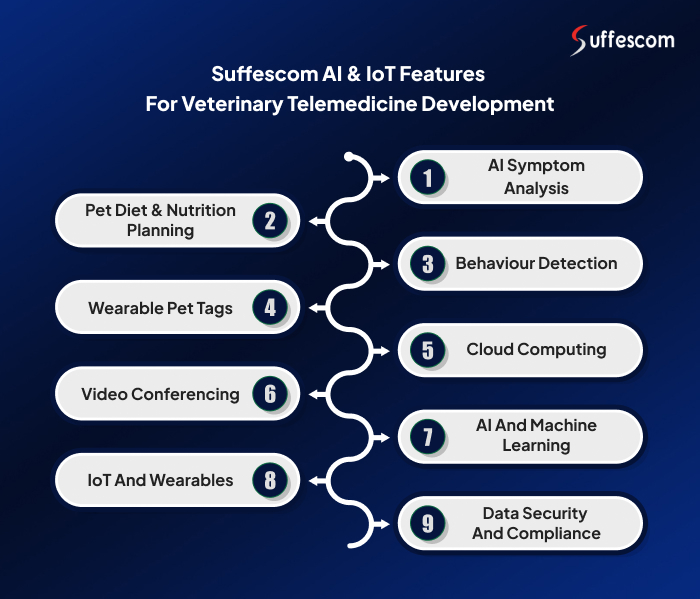
Our AI-powered features are integrated into the platform to ensure you get a scalable product that meets future market trends. The integration of AI features helps optimize operational processes, reduce costs and errors, and generate more revenue.
AI Symptom Analysis
An AI pet health monitoring system quickly analyzes a pet’s condition based on reported symptoms. With our AI-powered symptoms analysis, AI can suggest possible diagnoses and treatment options that enable quick decision-making. This tool improves the overall care provided by veterinary professionals through real-time insights.
Pet Diet & Nutrition Planning
An AI-driven diet and nutrition system generates optimal feeding plans and tracks dietary progress. Veterinary professionals can offer a personalized diet based on the pet’s breed, age, weight, and health condition. It prevents the common nutrition issues and ensures every pet receives a tailored approach.
Behaviour Detection
Our AI-based detectors can monitor and analyze the pet’s behavior to detect any potential health or emotional concerns. The system helps veterinarians to detect abnormal behavior patterns that signal stress, illness, or other issues. This integration system helps to address behavioral changes promptly.
Wearable Pet Tags
These tags track pets’ location and physical activity and provide a real-time metrics report. Wearables integration with the platform improves communication with pet owners and offers immediate alerts for unusual activity. Thus, it improves user satisfaction and increases retention rates.
Cloud Computing
The backbone of veterinary engagement platform development is cloud infrastructure integration. It enables veterinarians and pet owners to access medical records, consultations, and other services without delay. We ensure you get a scalable environment for platform expansion and support real-time data updates.
Video Conferencing
Integration of video conferencing is important for synchronous consultations. It enables face-to-face interaction between veterinarians and pet owners without requiring an in-person visit.
AI and Machine Learning
AI-driven diagnostics assist veterinarians in making faster and informed decisions. AI models are employed for triaging cases, predictive health analytics, and personalized treatment plans.
IoT and Wearables
IoT devices such as pet collars, activity trackers, and health-monitoring sensors enable continuous data collection. The data can be transmitted to the platform, enabling real-time monitoring and diagnosis of potential health issues.
Data Security and Compliance
It’s important to create a veterinary engagement communication platform that complies with data privacy regulations. This is why we ensure we integrate the necessary secure channels to keep data encrypted and stored securely. This feature builds trust between pet owners and service providers.
Monetization Models of Veterinary Engagement Communication Platform Development
Businesses can achieve a strong revenue ratio by selecting monetization models that best align with their business goals. Below are the models that can deliver a strong ROI and help you enter the growing market.
1) Subscriptions: Charging users a fixed monthly or annual subscription fee can generate recurring revenue. This is an ideal approach for businesses seeking steady income while providing access to features such as appointment scheduling, patient management, and telemedicine services. Businesses can scale by offering tiered plans for various types of veterinary practices.
2) Commissions: Another revenue model is commission-based, in which a percentage of the fee is charged for transactions made on the platform. If a pet owner books a consultation, a fee may be charged for that transaction. This monetization model is most effective as the platform grows and transaction volume increases.
3) In-app Payments: Integration of payment gateways enables businesses to streamline transaction processes and enhance user experience. This model enables seamless revenue flow and allows users to pay with ease via cards or digital wallets.
4) White Label Solutions: Businesses looking to enter the tech space of veterinary platforms can take advantage of a white label solution. By licensing the platform, which doesn’t require building from scratch, businesses can increase their brand’s reach and revenue potential.
5) Sponsored Listings: This model benefits both the platform and advertisers, as it provides businesses with a way to gain more visibility and drive traffic to their services. Advertisers can feature veterinary services, pet products, or related content, while your business can earn revenue through advertising placements.
6) In-app Advertising: Another monetization model of veterinary telemedicine platform development solution is third-party integrations. This could include ads for products, medications, and pet insurance. Businesses can keep the platform content relevant to users while providing ad space for revenue. This model is flexible, adapts to audience preferences, and improves engagement.
Develop a Communication Platform for Veterinary Practice with Suffescom
At Suffescom, we are committed to develop veterinary engagement communication platform that is aligned with your business goals.
- Expert Team: We have a dedicated team of React Native, Next.js developers, UI/UX designers, and managers specializing in veterinary telemedicine platform development. The team understands the real-world challenges and ensures the product meets compliance needs. Their experience reduces development risks and speeds time-to-market.
- Advanced Technology Stack: Our high-performance and secure technology stack includes cloud-native architecture, communication development, and secure video consultation frameworks. Businesses can easily expand their services and features without having to rework. The tech stack is built to handle the user base and ensure scalability.
- Recognized for Best Work: Suffescom has won over 30 industry awards and holds a 4.5 rating on Clutch. This recognition reflects the dedication and hard work we invested as a team in your business. We highly value the quality of our work and also deliver reliable outcomes.
- Years of Experinece: We have 14 years of experience building complex digital platforms with an easy-to-use interface and delivering scalable platforms with high-revenue-generating features. We have served clients across healthcare, telemedicine, and on-demand solutions. Our products are compliant, scalable, and market-ready, favoring long-term industry exposure.
Book a Free Consultation with Our Experts
Discuss your unique business needs and get a personalized veterinary care platfrom development solution.
Conclusion
To meet market demand, businesses need to develop veterinary engagement platforms aligned with modern clinic practices and business goals. The solutions built at Suffescom deliver strong performance and are scalable, which are necessary to stay ahead of competitors. With the technology-led platform, pet owners and veterinarians can connect remotely, share medical records, and strengthen the platform. A future-ready platform supports growth and improves client engagement.
FAQs
1) How do online vet platforms integrate with veterinary clinics?
Online vet platforms are seamlessly integrated with veterinary clinics by connecting to their existing systems. The existing practice of software like patient records, appointment scheduling, and billing systems can be managed to ensure smooth flow. The integration process also helps clinics to have easy access to real-time data that is critical for veterinary telemedicine platform development. Vet clinics can offer remote consultations, communicate transparently, and manage vast records with no errors.
2) What is the required timeline to create a veterinary telemedicine platform development?
To create a veterinary telemedicine platform MVP typically takes a few weeks to complete. However, a fully developed platform might take around 3 to 4 months, including advanced feature integration, a user-friendly interface, security compliance, and testing.
3) How much does it cost for a Veterinary engagement communication platform Development?
Suffescom is one of the best companies to work with if you’re looking for a veterinary platform development service. We have a team of experienced developers, designers, and managers to support your business goals. Also, our services range between $8,000 to $ 25,000, offering a budget-friendly pricing structure for your business.
4) What security regulations are necessary for veterinary platform development?
HIPAA is an essential part of data protection regulations. Our veterinary development services comply with the security regulations to ensure secure communication and reduce the chances of data breaches. We also implement multi-factor authentication and conduct regular security audits to enhance platform performance and ensure regulatory compliance.
5) What are the key future trends of the pet care industry in 2026?
In 2026, the pet care industry is poised for rapid growth driven by digital transformation. The focus on telemedicine and AI-powered solutions is bringing a positive shift towards holistic pet care. Below are the future trends you should follow to enter the blooming industry of pet care and stay relevant in the market while generating a good ROI.
- Growth in Digital Transformation
- Evolving Veterinary Engagement Platforms
- Wearable Pet Technology
- Shift Toward Holistic Pet Care
- Increased Demand for Virtual Consultations