Key Takeaways:
- Healthcare UI/UX design reduces clinician workload and supports faster decisions.
- Patient portal access rises to 87% with provider encouragement.
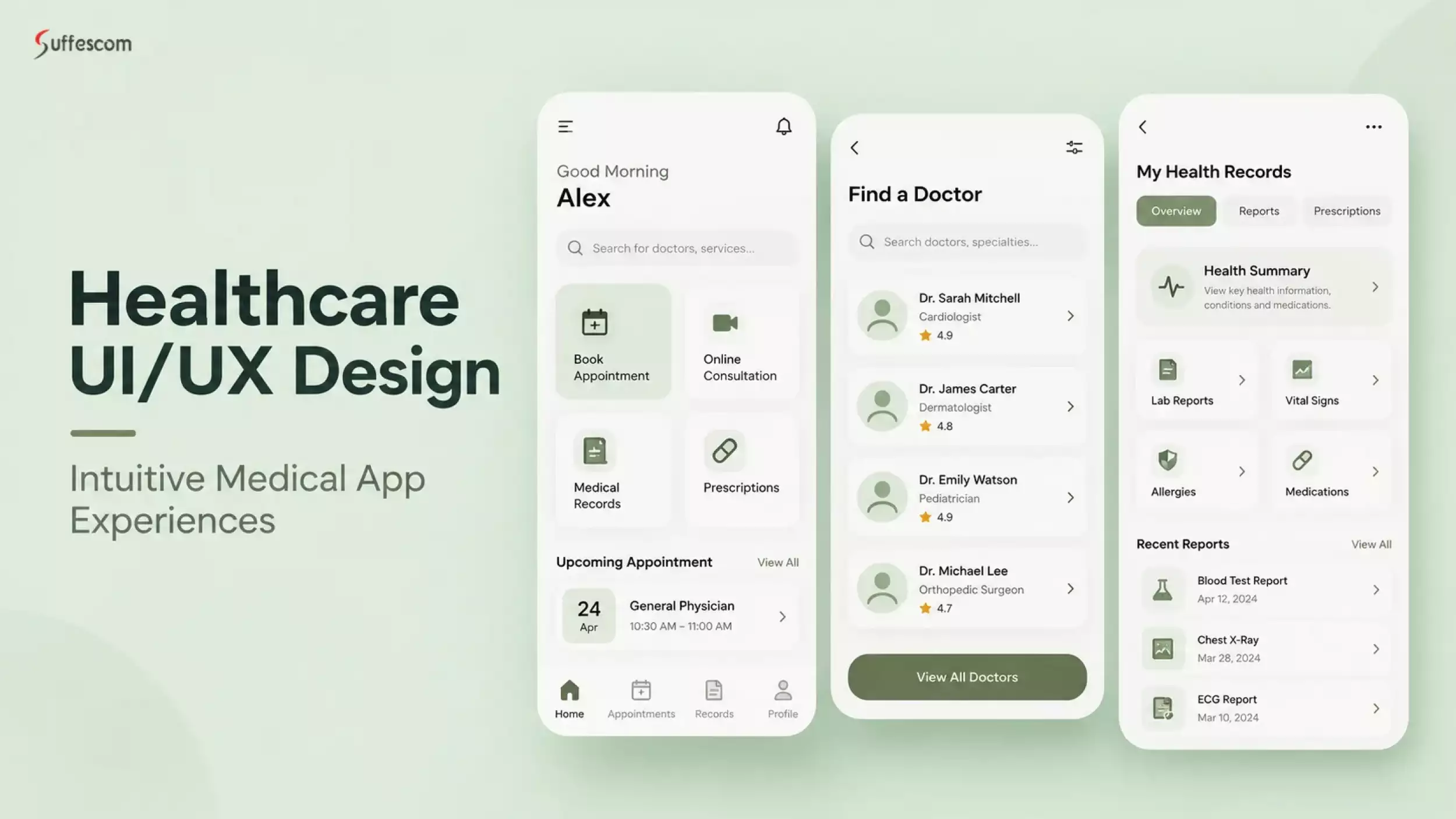
- Patient-centered interfaces simplify appointments, prescriptions, and medical records.
- HIPAA, GDPR, and FDA requirements shape healthcare interface design.
- Clear alerts and readable data help prevent usability errors.
- Real-user testing validates clinical workflows and identifies design gaps.
- UI/UX modernization improves navigation and streamlines healthcare workflows.
Healthcare UI/UX design services specialize in creating digital interfaces for the medical sector. They improve usability across EHR systems, patient portals, telemedicine apps, and medical device software. In 2024, 87% of patients encouraged by their healthcare provider accessed their patient portal, compared with 57% of those who were not encouraged.
Medical software must meet strict regulatory requirements while supporting users under stress and preventing critical errors.
Specialized healthcare design creates safer patient experiences, eases clinician workloads, and protects sensitive health data under HIPAA requirements.
Error Prevention Through Patient-Centric UI/UX Design
Poor UI UX design in healthcare can lead to critical medical errors. Healthcare UI/UX designers focus heavily on mitigating these risks by prioritizing three main pillars:
| Clinical Efficiency | Reduces cognitive overload for doctors & nurses |
| Patient Accessibility | Simplifies care navigation for diverse age groups |
| Data Safety | Prevents misinterpretation of critical health metrics |
Reducing Cognitive Overload
- Reduce EHR alert fatigue
- Highlight critical patient data
- Prioritize allergies and vital signs
- Minimize secondary information
- Simplify clinical dashboards
Designing for Extreme Stress
- Use calming color palettes
- Choose large, readable fonts
- Simplify navigation paths
- Reduce cognitive load
- Design for stressed patients
Strict Compliance Integration
- Align design with HIPAA requirements
- Support GDPR data privacy
- Follow applicable FDA guidelines
- Collaborate with legal and compliance teams
Tailored Healthcare UI/UX Services for Optimizing Medical Workflows
Healthcare UI/UX agencies provide tailored services designed to meet medical workflows:
Clinical Workflow Mapping
- Observe clinical staff in hospitals
- Study software use under pressure
- Identify workflow challenges
- Understand real-world clinical needs
Accessible Patient Portals
- Simplify appointment booking
- Improve prescription management
- Ensure accessible lab results
- Support elderly and visually impaired users
- Protect sensitive patient data
Telemedicine Flows
- Enable one-click video consultations
- Ensure reliable doctor-patient connections
- Simplify access for all users
- Minimize technical barriers
Medical Data Visualization
- Simplify complex medical data
- Visualize lab results and genomic data
- Create readable glucose monitoring charts
- Highlight actionable health insights
WCAG 2.1 Accessibility Audits
- Follow WCAG accessibility standards
- Support users with visual impairments
- Improve motor accessibility
- Simplify interfaces for cognitive disabilities
Comparing Clinical vs. Patient Interfaces
Healthcare design services typically divide their strategies based on whether the end-user is a medical professional or a patient:
| Feature | Clinical Interfaces (EHRs, ICU monitors) | Patient Interfaces (Wellness Apps, Portals) |
| Primary User Goal |
|
|
| Design Language |
|
|
| Navigation Model |
|
|
| Core UI Metric | Time-to-task completion (seconds saved per chart) | Engagement rate and long-term treatment adherence |
Critical Best Practices Applied by Healthcare UI UX Agencies
When crafting or auditing healthcare UI UX design of medical platforms, designers deploy specific psychological and technical design patterns:
3-Second Rule for Vitals
A clinician must be able to glance at a patient dashboard and instantly determine if the patient is stable or deteriorating.
Color-Coded Severity Scales
- Red for life-threatening alerts
- Amber for warnings
- Reserve colors for critical information
- Avoid decorative alert colors
Failsafe Confirmation Steps
Designing double-confirmation popups for high-risk actions, such as changing a medication dosage or sharing sensitive diagnostic data.
Clinical Tools vs. Consumer Health Apps UI UX Designing
Clinical tools are engineered for healthcare providers to use at the point of care, while consumer-facing health apps are designed for patients to manage their own wellness. These two categories require a specialized UI/UX design approach.
| Feature | Clinical Tools | Consumer Health Apps |
| Primary Users |
|
|
| Core Value |
|
|
| Regulations | Strict (HIPAA, HITECH, FDA Clearance for diagnostic software) | Varies |
| EHR Integration | High (Deeply embedded into Epic Systems, Cerner, or Athenahealth) | Low to Moderate |
When to Invest in UI UX Modernization of Healthcare Platform
Modernize a healthcare platform's UI/UX when measurable clinical inefficiencies, safety risks, or technical debt outpace the platform's utility.
Surging Incident Reports
- Rising near-miss incidents
- Frequent documentation errors
- Confusing clinical workflows
- Mismatched patient records
- Hidden data fields
Severe Alert Fatigue
- Frequent dismissal of critical alerts
- Excessive low-priority warnings
- Repeated alert overrides
- Rising alert fatigue
High Time-to-Task Metrics
- Excessive clicks for routine tasks
- Disconnected navigation tabs
- Slow lab ordering workflows
- Complex patient charting
- Difficult medication reconciliation
Onboarding Bottlenecks
- Lengthy staff training
- Complex system onboarding
- High IT support dependency
- Rising operational costs
Excessive Use of Unapproved Tools
- Reliance on external workarounds
- Patient notes in separate editors
- Use of personal messaging apps
- Dependence on paper cheat sheets
Low CSAT & Burnout
- Declining clinician satisfaction scores
- Software-related daily stress
- Increasing administrative fatigue
New Regulatory Mandates
- Enforce accessibility standards
- Simplify interoperable patient data
- Reduce alert fatigue
- Improve patient data access
Expanding to Mobile Devices
- Enable tablet-based hospital rounds
- Support on-call physicians
- Adapt desktop workflows for mobile
- Ensure responsive clinical interfaces
Things to Consider Before Hiring a UI UX Design Agency for Healthcare
Concise checklist of the most critical factors to consider before hiring a Healthcare UI/UX design services provider:
Compliance & Security Knowledge
- HIPAA & GDPR readiness
- Accessibility standards (WCAG 2.1/2.2)
Experience with Complex Clinical Workflows
- Doctor vs. Patient UX
- Medical terminology literacy
User Psychology & Accessibility
- Calm and error-proof UI UX design
- Ability to turn complex medical data into a clean and readable flow
EHR/EMR Integration Understanding
- Ensures designs work with existing medical databases.
- Experience integrating with Epic, Cerner, and custom EHR systems.
Evidence of Real User Testing
- Validate designs through usability testing.
- Test workflows with real clinicians and patients.
Why Suffescom is a Great Fit for Healthcare UI UX Design Services
Suffescom is a prestigious UI UX service provider recognized by DesignRush and Clutch. A 65% increase in user registrations and a 40% increase in overall user satisfaction, along with positive feedback, demonstrate our understanding and capability in UI/UX design and consultation for complex healthcare apps and platforms.
- ISO Certified.
- Awarded UI/UX projects: ClickSpice, Trap House, Transform FitAI.
- Top-tier healthcare UI UX expert team.
- Concrete case studies (1, 2, 3, 4, 5, 6 high-stakes healthcare platforms) showcase niche expertise.
- SOC 2 Type II Certification.
- Deep understanding of healthcare professional and patients' requirements.
- Local and national compliance-focused UI UX design and consulting approach.
- UI/UX consulting, design, development, and modernization, all under one roof.
- Challenges assumptions and guides in best decision-making.
- Top medical softwares integration expertise (including EMR/EHR).
Partner with a Proven Healthcare Design Leader
Is Your Healthcare Platform Suffering from Alert Fatigue or Inefficiency?
FAQs
How do UI/UX designers ensure HIPAA compliance?
Designers protect patient data by limiting access based on staff roles. Automatic logouts and hidden sensitive details add another layer of security. Secure approval steps help prevent unauthorized sharing of medical records.
How to design for FDA medical device UI guidelines?
Strict adherence to human factors UI/UX design is mandatory for FDA-regulated software. Test every workflow to ensure users can operate the software correctly and safely before the FDA approves it for clinical use.
How do GDPR impact healthcare UX design globally?
GDPR demands privacy by design. Patients should be able to control how their health data is used. The interface must explain privacy rules in simple language and make it easy to download or delete medical records.
What is alert fatigue, and how does good UX fix it?
Alert fatigue occurs when doctors receive too many unnecessary alerts and start ignoring important warnings. UX designers use colors to show how serious an alert is. They also reduce unnecessary pop-ups so doctors can focus on urgent warnings.
Is it important to hire a UI UX consultant for healthcare apps and platform design?
Yes, consulting a user experience expert along with designer helps you make better business decisions and saves alot. UX experts suggest the best design flows and eliminates the chances of rework. Consultants evaluate user needs, refine clinical workflows, and recommend practical improvements through a structured UI/UX consulting approach.