Sportsbook Management Software Development Service

Manage multiple projects at the cost of one with sportsbook management system development. Create an innovative, self-sustaining platform with pre-configured revenue and operational transparency to enable scalable performance. Our approach is to understand business needs and customize a success roadmap for betting management software development to stay ahead of competitors.

  • 2X Revenue
  • Ominchannel Sportsbook
  • 2 Million+ bets per day
  • 60K+ live betting events
  • Expert Operators and WLA-certified members

Sportsbook Management Software Development Service

Suffescom Sportsbook Management System Development Partner

Built with modern architecture patterns, our custom sportsbook management system for the betting business offers turnkey or customizable solutions for web, mobile, and retail.

  • 13+ Years of Experience

    13+ Years of Experience

  • End-to-End Product Lifecycle

    End-to-End Product Lifecycle

  • Mobile-compatible cross platform

    Mobile-compatible cross platform

  • Advanced odds aggregation pricing technology

    Advanced odds aggregation pricing technology

Benefits of Robust Sportsbook Management Software Development for Betting Brands

Sportsbook management system benefits businesses by delivering measurable outcomes across operations, risk, and user experience. These platforms reduce manual overhead, scale efficiently, and support complex regulatory and commercial requirements.

  • Centralized Risk Control

    Centralized Risk Control

    One‑panel exposure and limit‑management across all sports and markets.

  • Faster Time‑to‑Market

    Faster Time‑to‑Market

    Pre‑built modules let new bookmakers launch faster with lower initial sportsbook management platform cost.

  • Multi‑Brand Flexibility

    Multi‑Brand Flexibility

    Support several brands under a single backend with brand‑specific rules and UIs.

  • Stronger Compliance

    Stronger Compliance

    Built‑in KYC, reporting, and audit tools reduce regulatory risk and operational effort.

  • Scalable Performance

    Scalable Performance

    Microservices‑style sportsbook backend management system handles live‑event peaks without downtime.

  • Better Player Insights

    Better Player Insights

    Integrated analytics and PAM tools improve retention, segmentation, and bonus‑design quality.

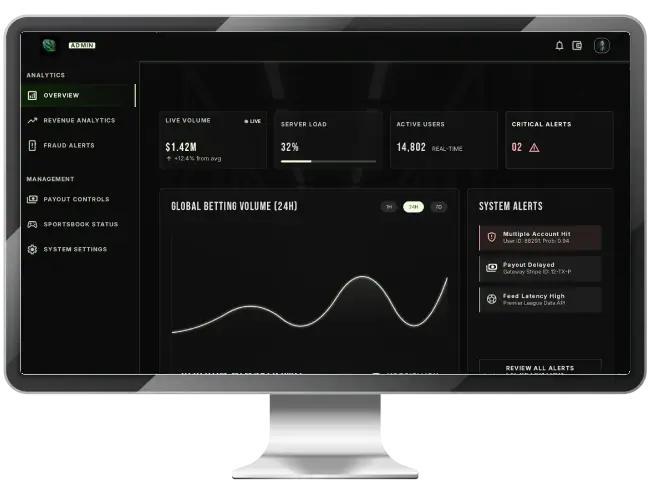
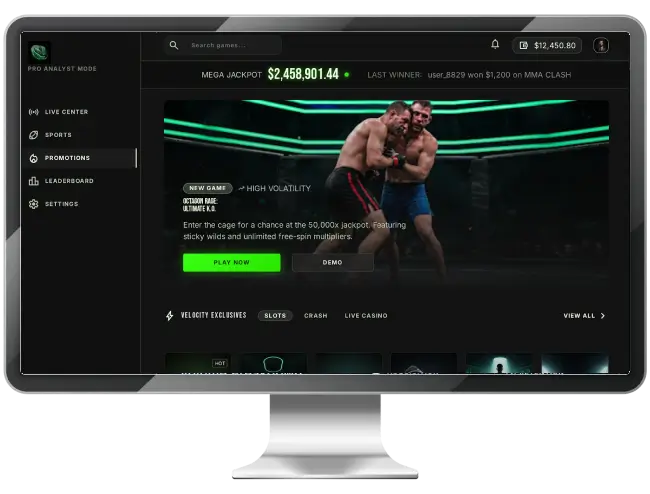
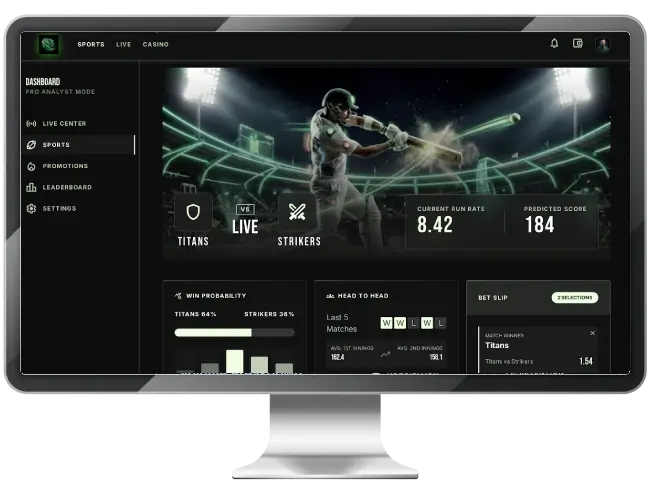
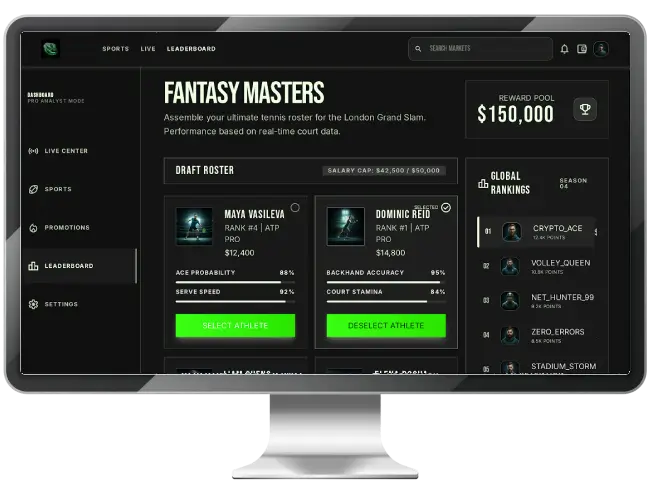
Demo Screens

Core Platform Features of Sportsbook Management Software Development

  • Betting Engine

    Betting Engine

    Processes bets, calculates odds, and settles outcomes in real time. It results in improved speed, accuracy, and scalability.

  • Risk Management

    Risk Management

    Risk management tools monitor exposure, limits, and suspicious patterns to prevent losses. Risk logic reduces liability and stable margins.

  • Security & Compliance Management

    Security & Compliance Management

    Fraud detection tools ensure encryption, access logs, and policy enforcement. It reduces fraud, data breaches, and regulatory penalties.

  • Player Account Management

    Player Account Management

    Centralized management system registers, verifies, and manages users across brands. It improves data consistency, speed, and KYC/AML workflows.

  • Content & Promotion Management

    Content & Promotion Management

    The CMS system manages, edits, and updates content to manage banners, offers, and sport-specific content in sports betting software development.

  • Payment Gateway Integration

    Payment Gateway Integration

    Connect the software with banks/payment providers. It enhances integration that speeds up deposits, withdrawals, and reconciliation.

  • Analytics, Reporting & Customizable Dashboards

    Analytics, Reporting & Customizable Dashboards

    Visual and customizable dashboards provide real-time stats, trends, inefficiencies, and growth.

  • Bonus & Promotions System

    Bonus & Promotions System

    Automated coded bonuses improve retention and monetization for free bets, boosts, and campaigns. IT requires minimal manual effort.

  • Live Match Tracking Widgets

    Live Match Tracking Widgets

    A live tracking system in software shows live scores, stats, and in-play events. It increases user engagement and keeps bettors engaged within the system.

  • Cashout Functionality

    Cashout Functionality

    It lets users close bets early, improves UX, reduces abandonment, and protects margins with the cashout function.

  • Bet Builder & Multi‑Bet Tools

    Bet Builder & Multi‑Bet Tools

    Users create custom bets from multiple events. The better logic in the system increases betting volume and average bet size.

  • Third‑Party API Integration

    Third‑Party API Integration

    Third-party API integrations, such as KYC, CRM, and other services, reduce latency, errors, and manual data handling.

  • Global Sports & Event Coverage

    Global Sports & Event Coverage

    Wide coverage fills the UI and data layer that feeds events, markets, and results for sports. The coverage provides more betting options and keeps users engaged.

  • Intuitive, User‑Friendly Interface

    Intuitive, User‑Friendly Interface

    Clean, fast, and intuitive UX design reduces friction, errors, and support tickets by boosting conversion.

  • Role‑Based Access Control

    Role‑Based Access Control

    Restricts actions based on user role. It provides clear access control that improves security, audit-trail quality, and internal workflow.

  • Multi‑Tier Affiliate & Agent Commission Plans

    Multi‑Tier Affiliate & Agent Commission Plans

    The commission calculation engine and automated plans improve accuracy, trust, and speed of partner settlements.

  • Responsible Gaming Controls

    Responsible Gaming Controls

    Tools like deposit limits, self-exclusion, and reality checks with well-coded controls reduce regulatory risk and support long-term user retention.

  • Multi‑Currency & Multi‑Language Support

    Multi‑Currency & Multi‑Language Support

    The sportsbook backend management system supports local money formats and languages. It improves global reach and reduces friction for cross-border users.

  • KYC & Identity Verification System

    KYC & Identity Verification System

    KYC process and identity-verification automated system checks documents, IDs, and fraud signals. It involves the integration of KYC to improve compliance, reduce fake accounts, and speed up onboarding.

  • Cross‑Platform Deployment

    Cross‑Platform Deployment

    Unified software architecture runs on all devices. Cross-platform software improves UX, maintenance, and feature rollout.

Secure, Compliant and High-end Sportsbook Backend Management System

A complex engine of a sportsbook backend management system ensures real-time performance, regulatory compliance, and security for high-frequency betting.

Compliance-ready architecture

Compliance-ready architecture

  • Design patterns are aligned with the major licensing jurisdictions.
  • Built-in self-exclusion, deposit limits, reality-checks, and session management tools.
Security and reliability

Security and reliability

  • Provides threat detection model, role-based access control, and an encrypted bet-pipeline.
  • High-end design, load testing, and failover strategies for live event peaks.
Performance-centric UX

Performance-centric UX

  • Intuitive navigation, bet-slip rendering, and information hierarchy aligned with UX best practices.
  • Use of WebSockets and CDN-caching for low-latency odds updates for static assets.

Case Studies and Engineering‑driven Success Stories

Full Breakdown of Components Affecting Sportsbook Management Platform Cost

The cost to build a sportsbook management system is shaped by various factors. It includes the number of modules, complexity level, compliance requirements, and scaling needs.

The sportsbook management software development cost ranges from $5,000 to $25,000. However, the cost dynamically changes depending on the requirements. Below is the breakdown of cost-driving components.

Component Cost affecting impact
Core betting engine & market logic 25–30%
User management & account system (PAM) 15–20%
Back‑end risk & security modules 15–20%
Reporting, analytics & dashboard tools 10–15%
Payment & KYC/CMS integration 10–15%
UI/UX, cross‑platform interfaces 10–15%
DevOps, hosting setup & compliance tuning 5–10%

Advanced Technology Stack for Sportsbook Admin Software Development

Businesses need a modern sportsbook backend management system built on a robust, scalable, and tech-driven foundation to handle live-event spikes, real-time data, and complex compliance workflows.

Choosing the right stack for sportsbook admin software development goals, such as low latency, multi-region compliance, and future platforms like AI-powered sports betting prediction software, ensures cost-effectiveness and scalability of the business.

Layer / Concern Recommended technology or pattern Role in sportsbook admin software development
Backend services Go (Golang) or Node.js for high‑concurrency logic Handles bets, events, and risk calculations in real time.
Event‑driven messaging Apache Kafka or RabbitMQ Streams odds, market updates, and user actions without blocking the core engine.
Primary database PostgreSQL Stores transactional data, user accounts, and audit logs with strong integrity.
Caching layer Redis Keeps live odds, running markets, and user‑session data fast and responsive.
Front‑end admin dashboard React or Angular Powers the sportsbook management UI for operations, trading, and reporting.
Cloud & DevOps AWS / Azure + Docker + Kubernetes Ensures scalable, monitored, and secure deployment of the backend management system.

Scalable & Future-Proof Betting Management Software Development Process

Businesses searching for "how to develop sportsbook management software", the search ends here. For a scalable and future-proof solution, we adopt a modular, cloud-native architecture to handle high-frequency data, AI-driven analytics, and regulatory compliance.

The custom sportsbook management system for the betting business requires a few weeks at Suffescom Solutions. The platform handles sudden traffic spikes and integrates easily with future technologies, such as AI and new payment methods.

  • Discovery & Compliance Blueprinting

    1

    Discovery & Compliance Blueprinting

    The first step in how to develop sportsbook management software includes market analysis, feature mapping, and estimating software development cost. This phase ensures robust backend support with local tax calculations, reporting formats, and KYC/AML protocols. It is necessary for businesses to decide on an online sports betting business revenue model that supports scalability and revenue generation.

  • Microservices Architecture Design

    2

    Microservices Architecture Design

    The next step is to design the architecture of a future-proof microservices-based sportsbook. It functions and scales by evolving independently. Every internal function is exposed through a clear API surface, making it easy to swap to third-party odds providers or rebuild platforms like AI-powered sports betting prediction software without any core modules. It also supports the development patterns of different betting apps, like arbitrage, pool, or sports betting app development.

  • Choosing a High‑Performance Tech Stack

    3

    Choosing a High‑Performance Tech Stack

    Once the architectural design is in place, the next step is to choose the advanced, modular tech stack that will support the project's goals. This selection process is crucial, as the right technologies ensure scalability, which is vital for handling increased workloads. A well-chosen tech stack defines the ability to process thousands of transactions smoothly during peak events, allowing the system to maintain optimal performance.

  • Security & Compliance Integration

    4

    Security & Compliance Integration

    Security and compliance are built into the Dev pipeline from the start. It reduces the risk of data breaches and regulatory penalties while keeping the platform available during high-traffic periods. Third-party API integrations via APIs perform identity checks and support the online betting business revenue models, protecting user credentials and financial records.

  • Agile Development & Testing

    5

    Agile Development & Testing

    Continuous integration and deployment with tested code enable frequent, low-risk updates to the betting engine, risk rules, and UI. Experts identify bottlenecks and scaling limitations to ensure the platform can handle real-world traffic. Regression and integration testing in agile development with CI/CD enable the platform to evolve continuously.

  • Future‑Proofing, Launch, and Post-Support

    6

    Future‑Proofing, Launch, and Post-Support

    ML Models are integrated into the risk layer to automatically identify sharp betters and prepare the software for deployment. With the post-launch support, the sportsbook management software is constantly evolving and opens the door to crypto‑betting and Web3‑style integrations in the future. Also, the cost of platforms like iGaming software development evolves to support the existing platform.

Start Your Sportsbook Development Journey With Our Experts

Book a free technical discovery call with our product and architecture team and receive a delivery roadmap tailored to market and business needs.

Use Cases of a Custom Sportsbook Management System for Betting Business

A custom sportsbook management system for betting businesses provides operators with full control over rules, risk, markets, and user experience. It reduces manual effort. A well-designed sportsbook admin software development adapts to multiple industries. Below are real use cases that boost efficiency, revenue, and compliance across diverse industries.

  • Licensed Online Sportsbooks

    Licensed Online Sportsbooks

    • Centralize risk, odds, and KYC workflows, reducing manual oversight and audit‑related overhead.
    • Trading and control tools let operators adjust limits and improve margin control and user trust.
  • Casino & Hybrid iGaming Operators

    Casino & Hybrid iGaming Operators

    • Under the sports and casino betting platform, it enables simplifying player-account management and bonus tracking.
    • Shared KYC, payments, and reporting layers cut operational duplication and speed up compliance‑reporting cycles.
  • Retail / On‑Premise Betting Outlets

    Retail / On‑Premise Betting Outlets

    • Help push market templates, restrictions, and odds updates in real time.
    • Central dashboards show live turnover, ticket volume, and suspicious bets without needing custom local systems.
  • Fantasy & Skill‑Based Gaming Platforms

    Fantasy & Skill‑Based Gaming Platforms

    • Fantasy‑sport operators backbone for daily fantasy contests and head‑to‑head challenges.
    • Custom‑pricing models and automated settlement make it easy to run contest‑specific “markets” alongside traditional sports betting.
  • Esports‑Focused Betting Brands

    Esports‑Focused Betting Brands

    • Esports‑only operators handle volatile event schedules, low‑liquidity markets, and non‑traditional matchup types.
    • Microservices‑style sportsbook admin software development lets plug in esports‑specific odds feeds and trader tools without rebuilding the core platform.
  • Financial‑Inspired Betting & Prediction Markets

    Financial‑Inspired Betting & Prediction Markets

    • Fintech‑style prediction platforms, rules‑driven engine for event‑outcome markets (politics, crypto, etc.).
    • Advanced risk‑models and analytics modules balance liquidity, volatility, and regulatory‑style reporting requirements.
  • Regional or Country‑Specific Bookmakers

    Regional or Country‑Specific Bookmakers

    • Single‑jurisdiction operators benefit from local tax rules, payout profiles, and preferred sports.
    • Helps reduce the effort required to adapt to new or changing regulations.

Client Testimonials Showcasing Impact of Our Solutions

Build a Scalable, Future‑Proof Sportsbook Platform in a Few Weeks

From concept to live operation, Suffescom strategic approach is to build a ballpark architecture diagram and scalable platform in less time-to-market.

FAQs

  • How much does it cost to build a sportsbook management system?

    The cost to build a sportsbook management system typically starts from $5,000 and can go up to around $25,000, depending on features, compliance, and integrations. At Suffescom, we build these platforms within that range based on your market, tech stack, and risk‑management requirements.

    How much does a white label sportsbook cost?

    A white label sportsbook usually costs between $8,000 and $15,000, depending on brand customization, integrations, and licensing‑ready features. Suffescom, one of the top pool betting software development companies, also offers white label sportsbook solutions that significantly reduce time‑to‑market.

    How to develop sportsbook management software?

    To develop sportsbook management software, start with market and compliance research, then define core modules like the betting engine, risk, PAM, and reporting. Next, pick a scalable tech stack (microservices, APIs, real‑time messaging) and build in security, KYC, and analytics from the beginning. Finally, use an agile, CI/CD‑driven process to iterate, test at scale, and launch a live bookmaker platform with minimal downtime.

  • What are the key features of sportsbook management software?

    The key features of the sportsbook management system include the following:

    • Real‑time betting engine
    • Live‑odds management
    • Risk‑control dashboards
    • Multi‑brand support from a single back‑office
    • PAM, KYC, payment integrations
    • Analytics dashboards
    • Management tools like cash‑out, bet‑builder, and live‑tracking widgets

    Is a custom sportsbook management system better than a white label one?

    A custom sportsbook management system for betting business gives full control over rules, branding, and technical decisions, which is useful for long‑term scaling and unique market needs. White label systems are faster and cheaper to launch, but can limit how much you can tweak odds logic, risk models, and UX.

    What is the difference between sportsbook management software and betting apps?

    Sportsbook management software handles the backend: odds, risk, accounts, payments, and admin tools used by operators and traders. Betting apps are front‑end experiences (mobile, web, retail screens) that consume this backend through APIs.

x

Beware of Scams

Don't Get Lost in a Crowd by Clicking X

Your App is Just a Click Away!

Fret Not! We have Something to Offer.