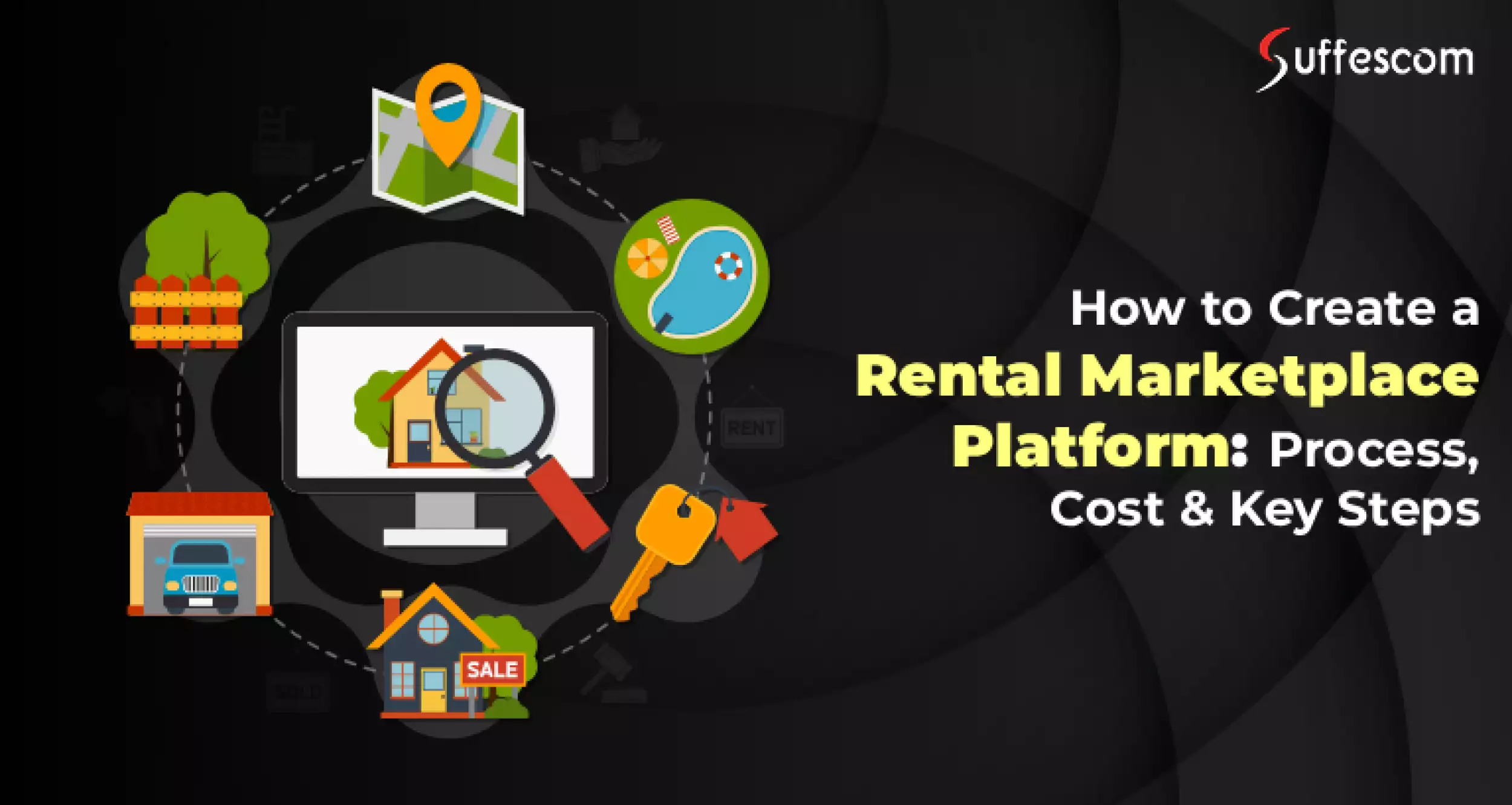
More people now prefer renting instead of buying, and this shift has increased the demand for well designed rental platforms. A rental marketplace removes the usual hassles of renting by bringing owners and renters together on one easy to use platform. Modern rental marketplace development provides secure payments, smart search options, transparent processes, and reliable booking features. It helps both sides save time and feel confident in every transaction.
Whether you wish to create a rental marketplace for houses, cars, tools, or even regular stuff, the proper development technique will make your platform both seamless and reliable. By integrating the right features and going through the proper execution process, you can come up with a rental platform where people can quickly locate what they are seeking and experience a smooth and hassle free renting process.
How Does a Rental Marketplace Function for a Seamless Renting Experience?
Rental platform connects the owners with renters. It allows the owners to create engaging listings. They can add the pictures, price and showcase the information about their asset. The users can explore these listings based on their needs and preferences. They can select a price or location to find the relevant listings. Modern rental apps utilize artificial intelligence to analyze user data. These apps provide tailored suggestions and real-time updates to engage the users.
Let’s find out how a rental marketplace works:
1. Creating Listings for Items
The owners can create listings of the items they want to rent out. They add pictures and describe the items, telling about the price and other details. AI creates engaging listings that help to attract the target audience.
2. Exploring Listings
The users can look for an item with search and filter options. They can explore listings based on the price, location and availability. These apps provide personalized advice as per the user's preferences.
3. Making Bookings
The user can go through the listings and make instant bookings. The app streamlines the booking process. It sends messages to keep the users informed in real-time.
4. Communication with Messaging Features
The in-app chats allow the renters to interact with the owners. They can discuss the rent agreement and the delivery of the item. AI chatbots can answer the user queries 24*7 and provide accurate information.
5. Tools for Managing Deliveries
The app has advanced tools that enables users to manage deliveries. The item reaches the renter’s place as per the conditions of agreement. It is returned to the owner after the rental period is complete.
6. Collecting User Feedback
The users can share their feedback telling about their renting experience. This helps in improving the reliability of the platform. The ratings on the app can win the trust of users. This helps them to make informed decisions.
7. Making Secure Payments
The users can make payment through credit cards, digital wallets or cash. The rental app keeps the user’s information secure while they make a payment. AI apps can warn users about any misuse of information.
What are the Popular Categories of Rental Marketplaces?
Everyone is turning their heads towards the rental marketplace platform. A multi vendor marketplace software can be a convenient solution for users. It fixes the pain points that come with traditional renting. Rental marketplaces enable the renting of various items.
These are the types of rental marketplaces that are catching attention among the crowd:
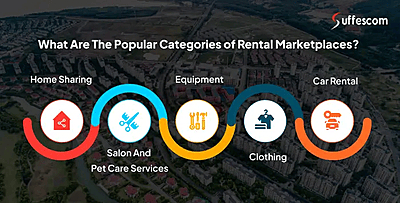
1. Home Sharing
One of the example that can be set for your to ear a lot of money via on line renting home business by starting airbnb business model. Online rental marketplace facilitate the users to find a residential property on rent for short terms. These platforms allow the listing of office and storage spaces.
2. Salon Rental
A rental marketplace enables professionals to find a salon for rent. It provides them the flexibility to manage salons.
3. Furniture & Home Decor Rentals
People prefer renting furniture over buying new ones, this is the new trend among the users. The items available under this category could be sofas, beds, decorations, and office furniture. It is a very good option for travelers, students, or those doing remote work.
4. Gadget & Electronics Rentals
The renting of laptops, projectors, game consoles, cameras, and high-end electronics for short lengths of time is trending in people. This practice allows users to stay in touch with the latest devices without incurring high additional costs.
5. Event & Party Supplies
Renting of event supplies continues to be a trend and from sound systems to photo booths and decor items, rentals are still a necessity. Booking is available for every requirement such as weddings, birthdays, and corporate events.
6. Sports & Fitness Gear Rentals
Users are permitted to borrow bicycles, treadmill, weights, sports kits, and adventurous gear. Before purchasing, the category is booming because people would rather try the gear first.
7. Car Rental
The number of users in the global car rental market will reach 776.96 million by 2030. You can build a car rental app for big gains. These apps can meet the needs of users looking for affordable rental cars. They can search on the app based on price or vehicle type. The app allows users to make secure payments and booking.
8. RVs, Bikes & Travel Vehicles
Tourists can get RVs, scooters, motorbikes, and tour vehicles on rent. Such platforms are highly frequented in areas with a lot of tourism and cities with dense commuter traffic.
9. Short-Term Workspaces & Meeting Rooms
Renting of temporary office spaces, conference rooms, or coworking spots is the new thing among many small businesses. The booking is so easy that you can do it for hours, days, or weeks.
10. Baby & Kids Products
Parents can rent baby items like strollers, cribs, toys, and travel accessories. They save money this way because kids outgrow these items so fast and an ideal rental marketplace for it saves money.
11. Medical Equipment Rentals
People have the option of renting wheelchairs, oxygen machines, patient beds, or other medical equipment for short term home care. This category of rentals is very important for hospitals, clinics, and families.
12. Clothing
The users can get clothes on rent for the required time period. The platforms allow them to find clothes for rent to wear on occasions or events. They are a flexible and affordable option for the users.
13. Luxury Items & Designer Rentals
Websites provide users with the opportunity to rent luxury watches, handbags, jewelry, and fashion accessories. Thus, high-end fashion is no longer a dream because it can be obtained at a lower price.
14. Equipment
Anyone can search for equipment for construction purposes. Building a custom construction equipment rental app where users can look for the tools for a repair job at home. The rental sites also allow users to get equipment for business use. Camping gear is another common item that is rented.
Best Regions to Target for High Demand Equipment Rentals
These regions have a high demand for construction and machinery rentals. It makes them ideal for scaling your platform.
1. Heavy Equipment Rental Companies in Oman
Major infrastructure and oil sector projects are the reasons for strong rental needs in Oman. Your rental platform can easily attract contractors searching for ready equipment.
2. Heavy Equipment Rental Companies in Dubai
We are well aware of the fact that the construction boom in Dubai has made the demand for heavy lifts, cranes, and machines very high. So being ranked here will help you become visible to those who are actively looking for rentals.
3. Heavy Equipment Rental Companies in Qatar
Qatar's ever-growing trade keeps the market always open for short-term rentals. You can thus be the one to provide companies with the desired fast and flexible rental solutions.
4. Heavy Equipment Rental Companies in Saudi Arabia
The Saudi Arabian government through its Vision 2030 initiative has created a construction activity which has been the main factor for the demand. This has also awakened the need for reliable and affordable machines rental platforms.
5. Heavy Equipment Rental Companies in Kuwait
Industrial and oil related projects in Kuwait rely on rented equipment. Your platform will reach businesses that would instead prefer to rent than to buy.
Choose a Suitable Business Model for a Rental Marketplace Development
Before starting your journey of rental marketplace development, you first need to be very clear about the business model. It is the first thing that tells how your platform will work and how your users will interact with the rental ecosystem.
1. Peer-to-Peer (P2P) Rental Platform
It is a perfect model for platforms like Airbnb, or Turo, where the owners list their items or properties and renters book them directly without any middle layer. It is an excellent choice if you need a rental marketplace with the ability to scale up really fast when more and more users sign in.
2. Aggregator Model
Here, your platform consolidates verified listings from the rental companies. This model thus works quite well for heavy equipment rental companies in Oman, Dubai, Qatar, Saudi Arabia, and Kuwait, where the demand is high. You simply act as the central hub that connects renters with trustworthy partners.
3. Hybrid Rental Model
A hybrid setup combines P2P users with verified business listings. It gives your platform flexibility to serve both individual owners and rental companies. This would work perfectly when one is targeting a wider audience without restricting oneself to one category.
4. Subscription Access Model
Here, owners or companies pay monthly or yearly fees to unlock premium tools and visibility. This is ideal for rental marketplace software designed for high-volume hosts. This model generates predictable recurring revenue for your business.
5. Rental Agency Model
You manage and rent out your own assets or properties via the platform. This model works for short-term rental management companies or local equipment rentals.
It gives you full control of quality, pricing, and user experience.
Drive More Bookings with Core Features of a Modern Rental Marketplace
In order to develop a modern, smooth, and reliable rental website/app, some core user friendly features are required for your platform. These will help renters, owners, and admins have a seamless experience.
User Features
1. User Friendly Onboarding Process
Users can very easily register themselves with their email, phone, or social media. A smooth onboarding flow will surely create a positive first impression.
2. Smart Search + Advanced Filters
Search tools enable users to quickly locate items with filters for pricing, location, and whether something is available. This keeps their browsing experience simple and intuitive.
3. High-Quality Image Gallery
Clear images help renters understand exactly what they are booking. It builds trust and reduces confusion later.
4. Booking Calendar
A built-in calendar allows renters to check availability in seconds. This reduces back-and-forth communication.
5. Transparent Pricing
Users should see the total cost upfront with no surprises. Transparency breeds trust and increases conversions.
6. Secure Payment Options
Multiple payment modes make checkout easy for all, while secure gateways keep user data protected.
7. Reviews & Ratings
Ratings will help renters in making better choices and keep owners accountable. It is one of the strongest features in building trust.
8. Favorites Saved
Users can bookmark items they like and will be easy for them to revisit at any time. This boosts user experience, allowing more repeat bookings.
Owner/Host Features
1. Easy Listing Setup
Owners will be able to easily upload their photos, add descriptions, and set prices in minutes. Easy listing tools will encourage more inventory on your platform.
2. Availability Management
They can mark items as available or booked. This keeps their listings accurate, avoiding double-booking.
3. Real Time Booking Notifications
Instant notifications to owners for new bookings or cancellations. This allows owners to respond more quickly and stay better organized.
4. Chat & Enquiry Management
Integrated chat allows owners to easily communicate with renters. It enhances communication and accelerates bookings.
5. Payout Settings
Owners have the flexibility of choice regarding how and when payments are received. They also have transparency.
6. Earnings Dashboard
A simple and clear dashboard allows host to monitor revenue, performance, and booking history. It helps them make better business decisions.
Admin Features
1. User & Host Management
Admins can approve, block, or edit user profiles. This way, the platform is kept safe and reliable.
2. Category & Listing Control
Admins manage the categories to keep the platform clean and organized; they can edit, delete, or approve listings anytime.
3. Commission Settings
Admins set commissions based on the category or location. This allows flexible monetization.
4. Payment History
A detail log helps trace every transaction clearly. It ensures financial transparency.
5. Moderation Tools
Admins can remove inappropriate content or suspicious activity. This protects credibility on the platform.
6. Reports & Analytics
Analytics track bookings, revenue, and trends. These insights drive future enhancements.
Launch Your Feature-Rich Rental Platform With Us
Get a scalable, modern rental marketplace tailored to your category whether it’s homes, vehicles, equipment, or any niche you want to dominate.
How to Keep Your Rental Marketplace Software Safe and Legally Compliant
1. ID Verification + KYC
This verifies user identities and keeps scammers at bay, thus creating a safer renting environment for all.
2. Tenancy Agreements Using E-Sign
Digital contracts make the booking process clear and transparent. Both parties have proof of terms.
3. GDPR/CCPA Compliance
These laws or compliances protect user data and privacy. If you follow them, it will improve the credibility of your platform.
4. Secure Payment Handling
Utilize secure, verified gateways and encryption for safe transactions, reducing the likelihood of fraud.
5. Refund Policy
A clear refund policy instills confidence in renters. It avoids confusion in cancellations.
6. Insurance & Damage Protection
Insurance serves as an added protection for expensive items. It protects the owners and renters alike.
7. Clear Cancellation Rules
Clear cancellation terms avoid disputes because both parties know precisely what to expect.
Overcome Common Rental Marketplace Hurdles with These Solutions
Each rental platform has its challenges at the outset. Following are some of them and how you can solve them with ease:
1. Trust Issues → Add Identity Verification + Reviews
People don't use a site if it doesn't have credibility. A solid verification and review system are what create confidence in an instant.
2. Confusing Pricing → Allow Dynamic & Transparent Pricing
Unclear pricing irritates users. Transparent fees and AI-driven pricing make renting easier.
3. Slow Communication → Add In-App Chat + Automated Replies
Delays can result in the loss of bookings. Quick chats and automated messages enhance user experience.
4. Poor Listing Quality → Add AI-Based Photo Enhancement
Low-quality images reduce bookings. AI tools improve images and help owners create professional listings.
5. Fraud Risks → Use AI Fraud Detection
Identity thefts and fictitious accounts are common. AI monitors suspicious activities and blocks threats early.
Build Your Rental Marketplace With Expert Support
Our experienced team handles everything from design to deployment, so you can launch smoothly and stay ahead in the competitive rental market.
Make Your Rental Marketplace Profitable with These Revenue Streams
Your platform can generate high revenue in several flexible ways. Choose the strategies that fit best your business goals.
1. Commission on Every Booking
You get a certain percentage or fixed fee per rental transaction. This works quite well for P2P and hybrid models.
2. Subscription Plans for Owners
Premium features are paid for monthly or yearly by owners, creating a stable, recurring income stream for your platform.
3. Listing Fees
Users pay to boost or feature their listings; it is an easy way to increase visibility on the platform.
4. Service Fees to Tenants
A small convenience fee is added to the overall checkout amount. This works well for high-volume rental apps.
5. In-App Add-ons
It provides extra services, which renters can pay for, like insurance or extended rental time. This will increase user convenience and profit margins.
6. White-Label Licensing
If you are using white label technology, you can license it to other rental startups. This adds an extra revenue stream to your list with little effort.
The Complete Roadmap to Develop a Peer-to-Peer Rental Platform

A rental platform can provide great rewards for your business. But how to create an app that attracts users and brings revenue? A rental marketplace development company can help you to create an app that stands out. Their expert team can assist you from the planning till app launch.
Let’s go through these stages that can help you to develop a successful platform:
1. Create a Plan and Do Research
Be clear about the type of platform that you want to create. It can be a car, equipment or vacation rental platform. Understand the problems that users face while searching items for rent. Learn about the leading rental apps that users are loving. Find out the unique rental services that can make your business shine. Make a plan and be clear about your business requirements. Decide how you will earn revenue from the platform.
2. Decide the Features
Prepare a list of features that you want in the app. The platform can allow users to create accounts. They should be able to explore listings quickly through filters. It should help in managing bookings and communication through chat. The app should be integrated with secure payment options. Third-party API integration services can ensure a smooth exchange of information.
3. Choose Technologies for Development
Select advanced technologies for developing the app. The choice of technology can depend on your budget. This can be programming languages like Swift and Kotlin. Large Language Models are utilized that use algorithms for the analysis of data. Cloud technologies ensure that the app performs well when the users increases. Blockchain technologies ensure security in transactions.
4. Build a Minimum Viable Product
MVP app development can help save time and money. The developers can build a minimum viable product with essential features. Advanced features can be added based on the user’s needs. It is much simpler to make improvements in a basic app.
5. Make Improvements in App
The development team keep a watch on the app performance. They fix the issues in its functioning. The users provide feedback about the areas that need to be improved. The testing stage helps to ensure a secure and high-performing app.
6. Launch and Marketing
The online rental platform is ready to enter the market. The app is launched for Android and iOS users. Engaging descriptions are made for the app that is available for download on app stores. You can attract users and increase reach by promoting the app on social media.
Thinking to build an online platform for rental properties?
Strengthen Your Rental Business with Our Experts
Transform the Renting Experience with Real-Time Insights.
Key Trends in Online Rental Marketplaces to Watch Out for
The user’s rental needs have changed a lot in the present time. New technologies are being utilized for creating a user-friendly rental solution. Want to know what’s next on the cards?
Let’s see how will be the future of an online rental marketplace:
1. Artificial Intelligence
Artificial Intelligence will be utilized to engage users. AI apps can ensure faster bookings and set prices in the listings. The prices are fixed based on the market conditions. The platform can handle the tasks of managing a rental property. It can provide personalized suggestions to enhance the user experience.
2. Virtual Reality
The users will be able to look at the rental properties with virtual tours. They can walk through the property from anywhere. It enables users to make the right decision for renting. This feature can help the property to grab attention. It can provide convenience to users and increase your revenue.
3. Internet of Things (IoT)
Smart home devices allow users to have control over their rental property. They can see who moves into their property. Integrating an app with IoT technologies can provide flexibility and security. It can ensure efficient use of energy and lower the costs.
4. Focus on Eco-Friendly Rentals
People will prefer to choose properties that don’t harm the environment. They will look for rental homes that are environment friendly. Rental software will help to lower the environmental impact. It can motivate the users to make way for a bright future.
Standout with AI-Powered Rental Marketplace Development
AI makes rental platforms smarter, faster, and more personalized. Addition of such tools will provide an edge to your app over competitors.
1. AI Based Recommendations
AI based suggestions create a faster and more relevant browsing experience by making recommendations based on user behavior and past searches.
2. Dynamic Pricing Tools
AI automatically adjusts the prices according to demand and season. This helps owners increase earnings.
3. Chatbot Instant Support
AI chatbots provide answers 24/7. This assures users immediate help with no delays.
4. Fraud & Identity Verification AI
AI detects suspicious accounts and fake documents in an instant. It keeps your platform protected from misuse.
5. Predictive Availability Engine
AI predicts items that will become available soon. This helps renters to plan better and book earlier.
6. Smart Delivery Scheduling
AI suggests the best time of delivery according to the availability and traffic. That makes logistics more smooth and efficient.
How Much Does it Cost to Build a Rental Platform?
Want to create a unique rental platform with advanced features? Be clear about your business goals and how much you can spend. These factors can affect the cost of rental marketplace development:
1. Approach Used for Development
You can customize your app or get a pre-built solution. The cost of building a customized app can be higher. A white label vacation rental app doesn’t need to be built from scratch. Building a white label rental platform can be a cost-effective option. Creating a low-code or no-code platform can also help you save money.
Estimated Cost Based on Development Approach
White Label Rental Platform- $5,000- $10,000
Customized Rental Platform- $10,000-$20,000
2. Technology Stack
It takes less cost to build an app using basic technologies. This can be Flutter, React Native and Java. AI and blockchain technologies can increase the costs.
Estimated Cost Based on Technology Stack
Basic Technologies like Flutter and Java: $5,000- $10,000
Advanced Technologies like AI and Blockchain: $10,000-$20,000
3. Type of Platform
The cost will depend on the type of rental platform to build. Building a single-vendor platform requires lower spending. But the cost to develop a multi-vendor marketplace platform is higher. This is because of the need for more resources and skills.
Estimated Cost Based on the Type of Platform
Single-vendor marketplace platform- $5,000- $10,000
Multi-vendor marketplace platform-$10,000- $20,000
4. Integrations
The app needs to be integrated with payment gateways. It might have location tracking features. The user should be able to share their experiences on social media. The cost can depend on the service with which you are integrating the platform.
Estimated Cost Based on Integrations
Less Integrations: $5,000- $10,000
More Integrations: $10,000-$20,000
Taking control of your budget is not a difficult job. You can create a pocket-friendly app with careful planning.
Create a New-Age Rental Platform to Boost Revenue
Let your business reach new heights with our all-in-one support.
Trust Suffescom Solutions for Profitable Rental Business Ideas
Are you thinking of creating a rental marketplace? Building a rental platform allows you to solve the problems of users. It can be a better option than traditional methods of renting. Rental platforms are a great way to earn revenue. Hire a leading rental marketplace development company, like Suffescom Solutions.
We utilize innovative technologies to create a rental marketplace platform for your business. Our team builds a platform that keeps the users informed in real-time. Create a platform that provides a personalized user experience. Customize the app or get white label solutions based on your requirements. Get a quicker launch and save big on the development costs. Reach out to us to know more!
FAQs:
1. What are the key stages involved in building a successful rental marketplace?
There are different stages for building a rental platform. It goes from planning till launch stage. A multi-vendor marketplace builder can build a successful rental marketplace through these stages:
- Doing a detailed study of the market
- Deciding the business model
- Creating design
- Developing the platform
- Testing and launch
- Making improvements to app
2. How do the rental marketplaces make money?
Rental marketplaces make money in different ways. They can earn through subscriptions. The users need to pay for a subscription plan. These plans provide various benefits to users. The marketplaces can also earn through advertising of other businesses and listing fees.
3. How much does it cost to build a rental platform?
The cost of rental marketplace development can depend on the type of platform. It also depends on the requirements for a customized app. The cost can vary based on the features of platform.
4. What are the different types of rental properties that can be listed on my marketplace?
Residential properties can be listed for rent. These are single-family homes or apartments. Commercial properties are also available for rent. These include offices or storage spaces. These properties can be rented for a short or longer duration.
5. How can Suffescom help me in creating a profitable online rental marketplace?
Suffescom has the expertise to create a profitable rental marketplace. We understand your business requirements. Our team creates an app with advanced features for better user experience. They guide you for choosing a revenue model that brings higher revenue.
6. How long is the rental marketplace building process?
The duration of the process varies according to the kind of development you opt for. A white-label rental app takes about 2-4 weeks since most of the features are already present. A custom rental marketplace can last 3–6 months depending on the difficulty, design, and use of advanced technologies like AI.
7. Will I be able to scale up my rental marketplace to the whole world?
Of course, with the right setup, your rental platform can easily spread all over the globe. The multi-language support, multi-currency payments, and region based listings feature allow you to cater to users from different countries. You can augment your presence one step at a time by initially focusing on the areas with the highest demand.
8. What are the steps to get hosts and renters interested in my new platform?
Begin with very easy onboarding, low fees, and substantial rewards for first hosts. Use social media, local SEO, referral programs, and partnerships with rental businesses as your advertising methods. Building trust through reviews, verified profiles, and secure payments will also encourage more renters.
9. What are the methods for ensuring trust and safety in rental platforms?
Trust is generated by solid safety implementations like ID verification, KYC, and secure payment processing. Reviews, insurance options, and damage protection as well as clear rental agreements are all ways to help users feel more confident. The safer your platform is perceived to be, the faster it will grow.