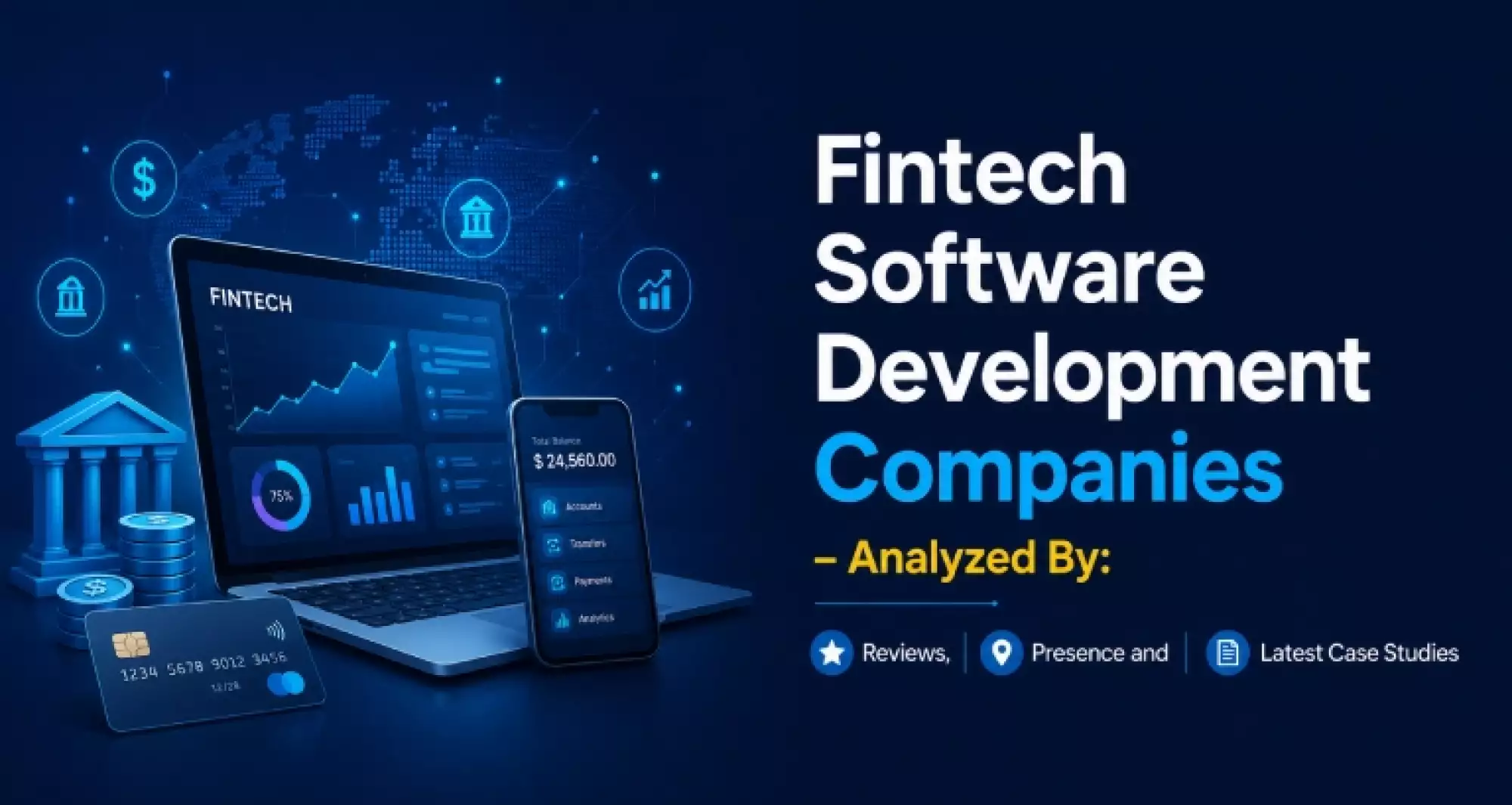
Top 12 Fintech Software Development Companies 2026
The fintech industry is continually expanding its boundaries as businesses invest in digital banking, AI-powered financi [...]

By Sunil Paul | Last Updated: October 28, 2026
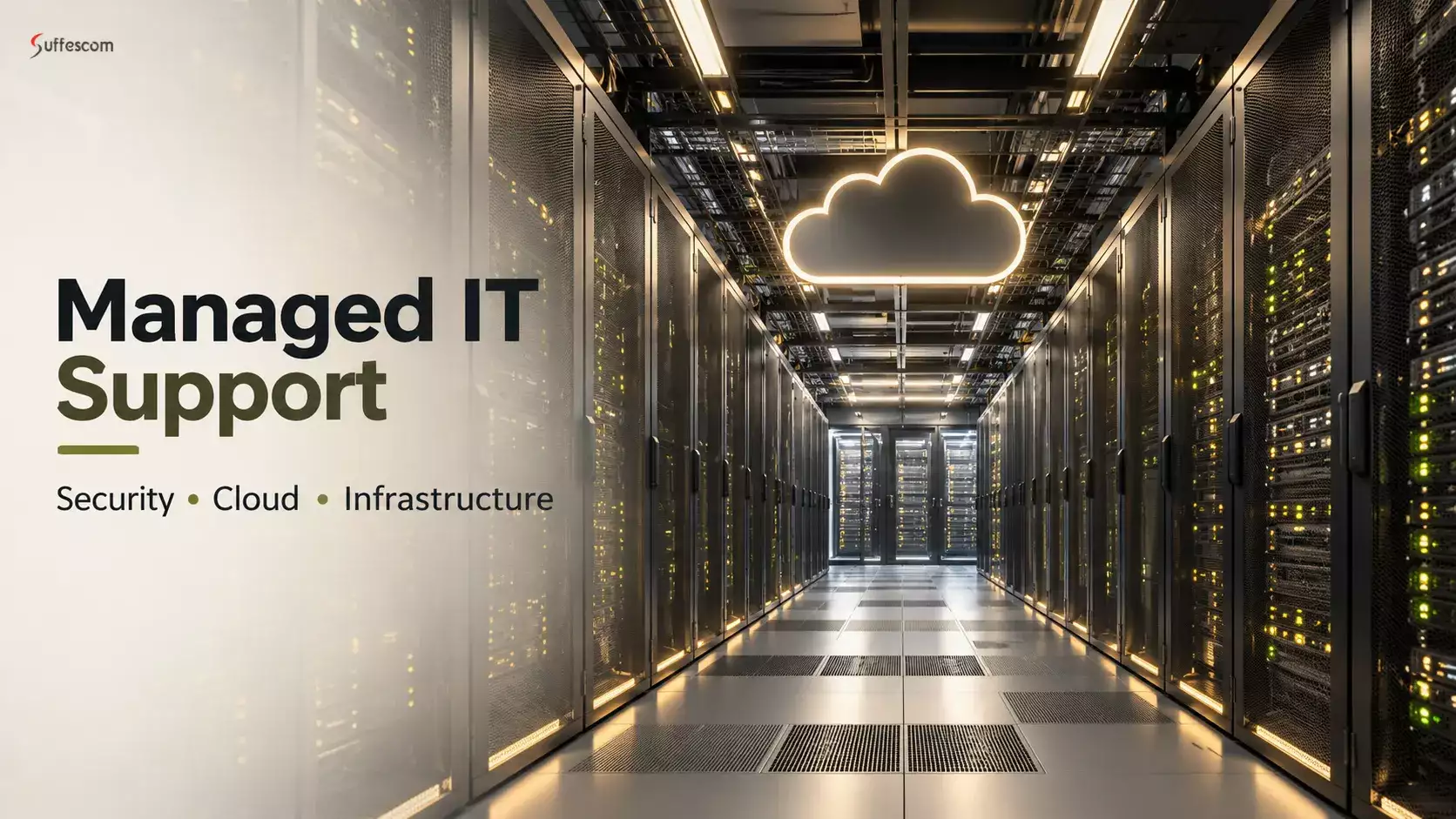
Managing a modern organization involves managing systems that evolve constantly. Cloud platforms change, remote employees access from outside the internal network, and any new software deployment adds one more potential entry point for an intruder. Managed IT services have become much more than a simple fix for broken PCs, becoming an approach that combines infrastructure management with security defense in cloud platforms, endpoints, and applications that an enterprise needs for its business operations on a daily basis.
The following comparison evaluates providers of managed IT services in New York that serve all over the globe in terms of security, comparing their actual security expertise, core service offering, and the kind of organizations that each of them is suitable for.
The use of cloud services, remote collaboration, and reliance on interconnected software apps have widened the footprint that many enterprises are exposed to, while there has been no proportional growth in internal security staff capable of monitoring their systems round the clock. This trend is aptly described by the NIST Cybersecurity Framework and its focus on five areas: identify, protect, detect, respond, and recover, a broader coverage than troubleshooting alone has ever offered before.
According to the IBM Cost of a Data Breach Report, data breaches in the United States currently average $9.48 million, which is the highest cost of any country reported in the 2024 research. Such an amount accounts for downtime, risk of lawsuits, customer losses, and recovery expenses involved, rather than the cost of fixing the problem once it is identified and controlled.
A provider that is designed to work in such a space must provide the following elements as part of a single discipline:
The terminology providers use to describe themselves often blurs a real operational difference that matters considerably once an actual incident occurs, rather than during a routine sales conversation where every provider tends to sound equally capable and equally prepared.
| Model | Primary Focus | Typical Strength | Where It Falls Short |
| Traditional MSP | Infrastructure uptime, patching, help desk | Fast resolution of routine technical issues | Limited proactive threat hunting or dedicated monitoring |
| MSSP | Threat detection, security operations center monitoring | Continuous defense against active attacks | Less depth in general infrastructure support |
| Hybrid Provider | Combined IT operations and security services | One vendor accountable for both domains | Needs clear contract language defining each responsibility |
Few companies fit cleanly into one category, and the label a provider chooses for its homepage says far less than its signed service agreement about what it actually monitors and how quickly an incident reaches someone authorized to act. Regardless of which model a provider follows, understanding how vulnerability testing is actually performed in practice helps clarify whether monitoring claims genuinely translate into real, ongoing, consistent security practice over time.
Four things differentiate a provider who is cybersecurity-capable from those merely providing regular services, and validating each of them beforehand ensures that assumptions remain reasonable instead of becoming expensive realities months down the line.
Every company in this list offers something different when it comes to managed IT and cybersecurity service offerings, from product development-oriented engineering services to security-first operations services to the regional-scale provision of infrastructure management services. The right fit depends entirely on which specific operational gap a business is actually trying to close.
Suffescom integrates application security, API security, secure code reviews, and DevSecOps into the process of product development from the start instead of integrating them into an already developed platform. The company holds SOC 2 certification, which is an independent recognition that internal control processes of Suffescom satisfy the criteria set by industry standards for protection of client data. Suffescom connects its security testing and remediation work within the same development cycle, giving product teams one accountable partner instead of juggling separate vendors for building software and securing it afterward.
Bit by Bit Computer Consultants offers combined IT managed services with the capability to develop its own software programs, a model that works especially well for those organizations where software applications are closely tied to the network infrastructure and actually require one responsible vendor, not two.
CyberDuo operates under a security-focused approach, with constant monitoring and incident response as its core service, rather than generic help desk assistance as the key service, and is designed for businesses operating under existing threats.
Integris provides companies dealing with several office locations or layered internal systems with a bundle that includes services related to Managed IT, Cybersecurity, as well as IT strategy development, for companies with a more complicated infrastructure.
At Corporate Technologies, cloud security and infrastructure management are regarded as two elements that cannot be separated from one another because both can be solved within a unified approach rather than being treated as two independent lines of service that seldom interact with one another.
TPx brings together networking, business communications, and cybersecurity into one single vendor agreement, decreasing the coordination burden of firms dealing with many related technology segments simultaneously, rather than struggling with different contract agreements and support numbers.
CompassMSP is a unique blend of IT management, security, and software development in an architecture that is designed for firms that require continuous support on the one hand and application development services on the other within the context of a single vendor.
Net At Work specializes in the managed delivery of IT services for business-critical applications, including ERP systems used by many medium-sized organizations as an integral part of their finance, stock, and operations activities.
Dataprise provides managed IT, cybersecurity, and cloud consulting on a scale that is appropriate for larger and mid-market companies dealing with more complicated technical environments involving various interrelated systems.
Charter Technology Solutions bases its solutions portfolio around the management of infrastructure through device management, network configuration, and access control within the entire scope of the organization's technology inventory and device inventory as a whole.
Computer Solutions East provides a wide range of services, including infrastructure services, cyber security, and cloud services that are particularly geared toward small and medium-sized businesses that have limited IT resource capabilities in-house.
Ntiva operates as an outsourced, complete IT department for the majority of its clients, where cybersecurity is embedded within a help-desk-based support service framework that is focused on technical requests made every day.
Provider websites across this entire category tend to look remarkably similar to one another; the signed contract is where the real, meaningful differences between providers actually surface once an incident occurs and someone needs to act.
| What to Check | Why It Matters |
| Response and resolution targets | Confirms coverage genuinely applies after hours, not only during standard daytime business hours |
| Backup restoration testing | Verifies that recovery actually works in practice rather than assuming an untested backup will function |
| Security reporting and log access | Provides the documented evidence a business needs for audits and ongoing compliance reviews |
| Included services vs. exclusions | Prevents costly gaps between assumed coverage and what the signed contract actually states |
| Third-party dependencies | Identifies which outside tools or vendors could meaningfully affect response time during an incident |
Price typically takes the form of user-based, device-based, or flat fee arrangements, with the specialty services related to security, such as continuous monitoring, penetration testing, and compliance reviews often charged as separate services, not as a single flat fee per month. Comparing providers solely based on the price-per-month figure without looking at what service scope actually underlies the cost is seriously misleading.
Companies that do not have many IT experts inside their organization should focus on the availability of a service desk and clearly defined terms of support for both routine tasks and system crashes, since a provider that can perform well in the first situation but fails badly in the latter offers a skewed kind of protection when it is needed most.
Businesses that actually face the risk of being hacked because of their highly sensitive information or industry regulations should focus more on continuous monitoring, quick incident response, and vulnerability remediation than just infrastructure maintenance services. Firms at the stage of transition into the cloud or application modernization should pay attention to secure development practices and identity controls since any new platforms offer attack vectors that were never covered by traditional IT support processes before.
Businesses working with regulated data or dealing with customers' sensitive information should analyze the provider's compliance and disaster recovery experience and request some evidence of its past performance rather than taking any promises given in the course of preliminary talks seriously.
The best managed IT partner is the one whose capabilities in black-and-white actually match the business's true risk posture, not always the one that offers the largest number of services and is the most famous within the entire New York area. The business dealing with standard service issues has to prioritize availability and response, while a company that bears true and quantifiable security risk has to prioritize monitoring depth and incident response much more than just infrastructure coverage.
For companies developing or upgrading their digital products, for which security must be baked into the product's development process from day one, reviewing Suffescom's engineering-led security approach is a reasonable and practical next step before finalizing any provider decision.
The coverage should go far beyond standard assistance and must also include continuous monitoring, systematic vulnerability management, and an incident response plan because these are the unique capabilities that generally require a separate contract or an extended service contract.
Managed IT companies that operate structured security operations center capabilities provide better monitoring as compared to those that consider security a second priority for their overall IT operations.
Comparisons should always be made based on unique capabilities, service level agreements, and genuine experience instead of marketing terms, which could vary widely in actual meaning across different managed IT providers.
Not all providers have the same level of availability, and there is a great deal of difference even among plans, with some offering monitoring as part of their baseline service and others selling it as an additional fee-based service.
A managed IT provider may be able to help with compliance in many ways, but delegating your IT work to a third party does not relieve you of the burden of regulatory compliance.
Senior Technical Content Writer & Research Analyst
Sunil Paul is a Senior Tech Content Writer at Suffescom with over 11+ years of experience in crafting high-impact, research-driven content for emerging technologies. He specializes in in-house technical content across AI-driven solutions. With deep domain expertise, he has consistently delivered content aligned with industries such as healthcare, real estate, education, fintech, retail, supply chain, media, and on-demand platforms His researches evolving tech trends in custom mobile and software development, with a focus on AI-powered capabilities, AI agent integration, APIs, and scalable architectures and helping enterprises, startups, and SMEs make informed technology decisions and accelerate digital growth.



Discover More Resources
• SUFFESCOM SOLUTIONS
Build Smarter. Scale Faster. Grow More.
Have a Vision? Let’s Turn It Into a Digital Reality.
Get a quick response from our best experts in under 10 minutes.
Suffescom easily understood our main goal and delivered the best digital solution. Their team was very cooperative, and it was a very good experience working with them. I would highly recommend them.

Working with Suffescom was a really great experience. Their developers demonstrated technical knowledge and delivered our mobile app solution with all required functionalities on time.

Suffescom helped us build a logistics software solution that completely improved our fleet operations. Their professionalism and transparency are what make them a reliable technology partner.

Share Your Requirements. Our Experts Will Shape the Solution.
• SUFFESCOM SOLUTIONS
Build Smarter. Scale Faster. Grow More.
Have a Vision? Let’s Turn It Into a Digital Reality.
Get a quick response from our best experts in under 10 minutes.
Suffescom easily understood our main goal and delivered the best digital solution. Their team was very cooperative, and it was a very good experience working with them. I would highly recommend them.
Working with Suffescom was a really great experience. Their developers demonstrated technical knowledge and delivered our mobile app solution with all required functionalities on time.
Suffescom helped us build a logistics software solution that completely improved our fleet operations. Their professionalism and transparency are what make them a reliable technology partner.
Share Your Requirements. Our Experts Will Shape the Solution.
Fret Not! We have Something to Offer.