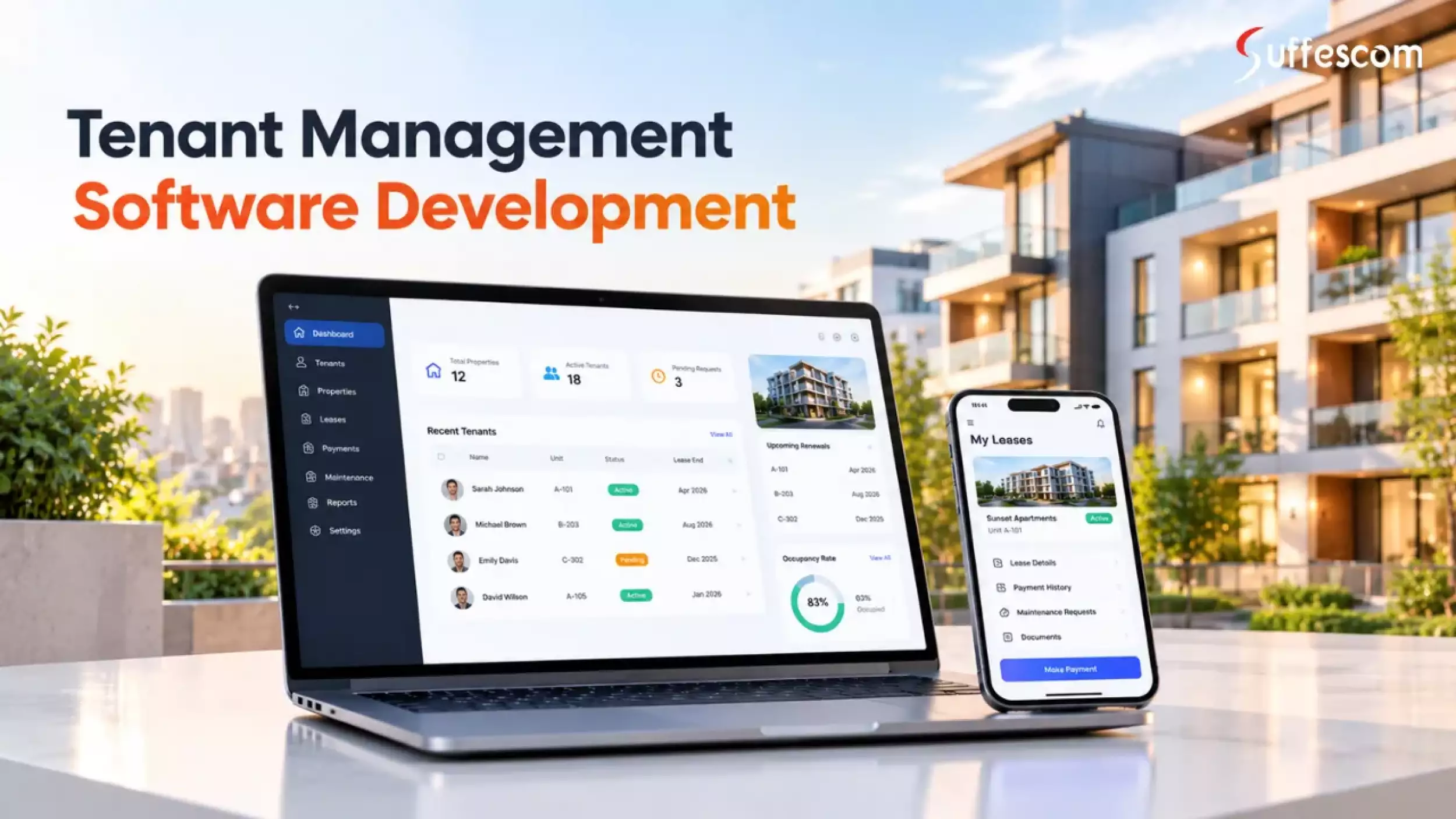
Managing rental properties involves more than collecting rent. Landlords and property managers must maintain tenant records, track lease agreements, coordinate maintenance requests, monitor payments, and communicate with tenants throughout the rental lifecycle. When these activities rely on spreadsheets, paper documents, and disconnected applications, administrative workloads can increase as property portfolios grow.
Tenant management software brings these activities into a centralized digital platform. It can help property owners organize rental operations, automate repetitive tasks, improve tenant communication, and gain clearer visibility into property performance. Businesses can choose tenant management software with customizable features to match their rental workflows, portfolio size, and tenant needs.
The demand for digital property operations is reflected in the broader software market. According to Grand View Research, the global property management software market was valued at $3.6 billion in 2025 and is projected to reach $5.9 billion by 2033.
This guide explains how tenant management software works, who needs it, which features to prioritize, how to select the technology architecture, where AI can add value, and what to consider when planning development costs and production deployment.
Who Needs Tenant Management Software?
Tenant management software is useful for businesses that need to coordinate rental agreements, payments, tenant communication, and property-related requests. The ideal feature set depends on the number of properties managed, the complexity of rental operations, and the responsibilities of each user.
Small Landlords and Independent Property Owners
Independent landlords often manage tenant information, rent due dates, lease renewals, and repair requests themselves. Handling these activities manually can become difficult when several properties have different payment schedules and tenancy agreements. For the search intent behind “For small landlord Build tenant management software,” a focused solution should start with essential records, reminders, and maintenance workflows rather than an oversized feature set.
Tenant management software for small landlords can centralize essential records and automate routine reminders without requiring a large administrative team. A focused solution may include tenant profiles, digital lease storage, payment tracking, maintenance requests, and a simple dashboard showing upcoming renewals and overdue rent. A phased build can also keep the initial budget manageable while leaving room for future growth.
Residential Property Management Companies
Residential property managers oversee multiple units, tenants, leases, and maintenance activities, often across several buildings or locations. They need a platform that provides consistent workflows and makes it easier to coordinate activities among property managers, tenants, and maintenance teams.
Useful capabilities include bulk tenant communications, rent tracking, lease renewal workflows, maintenance assignment, and property-level reports. Integrations with payment processors and accounting systems can also reduce duplicate data entry.
Commercial Property Owners and Managers
Commercial property operations may involve offices, retail units, business tenants, vendors, and more complex lease terms. Their software requirements can extend beyond basic rent tracking to include service requests, billing schedules, lease obligations, vendor management, and portfolio reporting.
A tailored platform can help property teams coordinate these activities and give managers a consolidated view of operational performance across commercial assets.
Real Estate Startups and Property Investment Firms
Real estate startups may develop tenant management software as part of a broader digital property platform or a subscription-based product. Property investment firms may need to connect rental operations with financial reporting and portfolio oversight. These needs can be addressed through tailored real estate software solutions that support their specific business models.
These businesses should consider multi-property support, configurable workflows, role-based permissions, APIs, and a scalable architecture from the outset. If the product will serve multiple independent customers, tenant and business account data must also be isolated appropriately.
Housing Associations and Multi-Property Operators
Housing associations and large property operators may manage large tenant populations, recurring service requests, lease documentation, and communications across multiple locations.
Their platforms may require centralized administration, granular access controls, audit trails, reporting, and integration with existing housing or finance systems. Accessibility and multilingual support may also be important depending on the tenant population.
Tenant Management Software Development Process
Developing tenant management software requires more than selecting a framework and building a dashboard. For property management software development, teams should translate business requirements into reliable workflows, secure data handling, tested integrations, and a platform that can evolve as operational needs change.
1. Define Business Requirements and Target Users
Start by identifying the business problem the software needs to solve. Determine whether the platform will serve individual landlords, residential property managers, commercial operators, or multiple customer organizations.
Document the key workflows, such as adding a property, onboarding a tenant, creating a lease, recording a payment, handling a repair request, and renewing an agreement. Identify who performs each action, which information they need, and where approvals are required.
At this stage, establish the expected number of properties and users, operating markets, existing software integrations, security requirements, and business objectives. These decisions help define the project's scope before development begins.
2. Select MVP Features and Development Priorities
A minimum viable product (MVP) should include the smallest practical feature set that allows the intended users to complete their core rental workflows.
For an initial tenant management platform, this might include:
- Property, unit, and tenant records.
- Lease and document management.
- Rent schedules and payment tracking.
- Tenant and landlord dashboards.
- Maintenance request submission and status updates.
- Basic notifications and operational reports.
Advanced analytics, AI assistants, IoT integrations, and complex financial automation can be added later if they address demonstrated user needs.
Prioritize features by their business value, implementation complexity, operational risk, and dependencies. For example, automated rent collection depends on reliable tenant accounts, payment integration, transaction records, and reconciliation logic.
3. Design Tenant and Landlord User Experiences
Design the tenant portal and landlord or admin dashboard around the tasks each user needs to complete.
Tenants should be able to find payment details, access relevant documents, submit maintenance requests, and receive updates without navigating complicated interfaces. Landlords and property managers need a more operational view of tenant records, upcoming lease expirations, outstanding payments, and open maintenance tasks.
Create user flows, wireframes, and interactive prototypes before implementing the complete interface. Validate them with representative users where possible, particularly if the platform serves people with different levels of technical experience.
4. Choose the Technology Stack and Architecture
Choose frontend, backend, database, cloud, authentication, and integration technologies according to the product's scope and expected growth.
A web-based platform may be sufficient for the first release, while a business serving tenants who primarily use smartphones may also need a mobile application or responsive portal.
The architecture should support secure access, reliable transaction processing, data backups, monitoring, and future integrations. For a multi-customer SaaS product, the design must also account for customer-level data isolation and configurable permissions.
5. Develop Core Modules and Integrations
Implement the software in logical modules, beginning with the core data model and rental workflows. Property records, tenant accounts, leases, payments, and maintenance requests should be connected through clear business rules rather than implemented as unrelated screens.
Integrate payment gateways, email or SMS providers, accounting tools, and e-signature services where required. Define how each integration handles failed requests, duplicate events, unavailable services, and data synchronization.
Use version control, code reviews, automated tests, and documented APIs throughout development to make the application easier to maintain.
6. Test Security, Payments, and Workflows
Testing should cover normal user journeys as well as failures and unusual conditions.
For example, verify that a payment failure does not incorrectly mark rent as paid, that repeated payment notifications do not create duplicate transactions, and that tenants cannot access another tenant's documents. Test lease renewal reminders, maintenance status changes, role permissions, and data validation.
Conduct functional, integration, security, performance, and usability testing before production deployment. The depth of testing should reflect the platform's complexity and the sensitivity of the data it handles.
7. Deploy, Monitor, and Maintain the Platform
Prepare the production environment, configure secure settings, migrate any required data, and establish backup and recovery procedures. A controlled rollout can help the team identify problems before expanding access to all users.
After launch, monitor application errors, response times, integration failures, payment processing, and user feedback. Plan regular dependency updates, security reviews, bug fixes, and feature improvements.
For a growing product, ongoing maintenance is part of the development lifecycle—not an optional task that ends after deployment.
A custom implementation may require software development services to plan, build, test, and maintain the platform around its specific workflows.
Key Features of Tenant Management Software
The right feature set should make common rental tasks easier for tenants and property teams while maintaining accurate records and clear accountability. The following modules form a practical starting point for many tenant management products.
Tenant Portal
A tenant portal gives residents and commercial tenants one place to manage rental activities. A property management software with tenant portal functionality should make key information easy to access while keeping each tenant's records private. Key features include:
- Viewing lease details, documents, and renewal dates.
- Checking rent due dates and payment history.
- Making rent payments through supported integrations.
- Submitting maintenance requests and tracking progress.
- Receiving notices and communicating with property managers.
Landlord & Admin Dashboard
The dashboard provides an overview of properties, tenants, leases, payments, and maintenance requests. It can highlight overdue rent, upcoming lease expirations, occupancy status, pending applications, and tasks requiring attention.
Automated Rent Collection
Automated rent collection simplifies payment administration through recurring payment options, payment links, due-date reminders, digital receipts, and overdue balance tracking. Integration with payment providers helps track successful, pending, and failed transactions while maintaining accurate payment records.
Lease and Document Management
This feature centralizes lease agreements and related documents for easy access and tracking. It can include digital storage, renewal reminders, document version history, configurable lease details, and e-signature integrations, with appropriate access controls for sensitive information.
Tenant Screening and Verification
Tenant screening helps property managers review applications consistently. Depending on local laws and available services, features may include application forms, identity verification, consent-based background checks, and rental references. Screening decisions should follow applicable privacy, housing, and anti-discrimination requirements.
Maintenance Request Management
Maintenance management helps tenants report issues and property teams coordinate repairs. Core features include:
- Maintenance requests with photo attachments.
- Issue categorization and priority settings.
- Work-order assignment and vendor scheduling.
- Status updates and tenant notifications.
- Maintenance cost and resolution-time reports.
Tenant Communication and Notifications
A communication module keeps tenants informed about rent payments, lease renewals, inspections, maintenance, and property announcements. Email, SMS, push notifications, and in-app messaging can deliver timely updates based on defined events and user preferences.
Property, Unit, and Occupancy Management
This feature organizes properties, rental units, tenants, and lease periods in one system. Occupancy reports help landlords track vacant and occupied units, upcoming availability, lease transitions, and tenant changes across single or multiple properties.
Financial Reports and Analytics
Financial reporting helps landlords monitor rental performance without manually combining records. Common reports cover rent collected, outstanding balances, occupancy, maintenance expenses, lease expirations, and transaction history. Consistent calculations help distinguish scheduled rent, received payments, and outstanding balances.
User Roles and Access Permissions
Role-based access control assigns permissions according to each user's responsibilities. Tenants can access their own rental information, while landlords, property managers, and administrators receive appropriate access to operational data. Backend authorization and audit logs help protect sensitive information and maintain accountability.
Advanced Technologies Powering Modern Property Management
Technology choices should solve identifiable business problems rather than add unnecessary complexity.
Cloud Computing
Cloud infrastructure enables remote access, centralized data storage, backups, and scalable resources. Businesses can use cloud modernization approaches to improve system flexibility and maintainability as their property portfolios grow.
Data Analytics
Data analytics helps property managers identify rent collection patterns, monitor maintenance costs, and track occupancy trends. Data analytics solutions can turn operational records into reports that support better property management decisions.
Internet of Things (IoT)
IoT sensors can detect water leaks, monitor energy consumption, and report equipment issues, helping property teams respond to potential problems earlier. These applications also align with broader IoT-based smart city solutions for connected buildings and infrastructure.
Machine Learning
Machine learning can classify maintenance requests, identify unusual payment patterns, and forecast maintenance needs using historical data. Integrating AI capabilities can help automate selected workflows, provided predictions are validated, and important decisions retain appropriate human oversight.
Blockchain
Blockchain may support document verification, auditable records, and property tokenization in specific use cases. Blockchain-based real estate software can address these specialized requirements, although conventional databases are generally more practical for routine tenant records and rental transactions.
Technology Architecture for Tenant Management Software
The technology architecture defines how the tenant management platform's user interfaces, business logic, databases, integrations, and infrastructure work together. A well-planned architecture should support the required workflows while protecting tenant data and allowing the product to evolve.
Frontend: Tenant Portal and Admin Dashboard
The frontend provides the interfaces through which tenants, landlords, property managers, and administrators interact with the application.
A responsive web interface may be sufficient for an initial release. A separate mobile application can be introduced if the target audience needs frequent mobile access or device-specific functionality.
The frontend should communicate with the backend through authenticated APIs. It should display information according to the user's permissions, but the backend must independently validate every sensitive request.
Backend Services and API Layer
The backend implements the platform's business rules and coordinates operations such as lease management, payment tracking, maintenance requests, and notifications.
A modular backend can separate these responsibilities logically without requiring every module to run as a separate microservice. For many early-stage products, a well-structured application is easier to develop and maintain than an unnecessarily complex distributed system.
The API layer connects the frontend with backend functionality and approved third-party services. It should validate incoming data, enforce authorization, handle errors consistently, and record relevant audit events.
Database Design and Tenant Data Isolation
The database stores the information that powers the platform, including properties, units, users, tenant profiles, leases, payment records, and maintenance requests.
A relational database is often a suitable choice because these records have defined relationships and require consistent transactions. The final selection should account for the application's data model, reporting needs, performance requirements, and team expertise.
For multi-customer SaaS products, tenant isolation is a fundamental architecture requirement. The system must prevent one customer or rental tenant from accessing another party's records without authorization. Depending on the deployment model, isolation may use shared tables with enforced customer identifiers, separate schemas, or separate databases.
Cloud Infrastructure and File Storage
The infrastructure layer hosts the application, database, document storage, background jobs, and monitoring systems.
A production environment may include:
- Application hosting and managed database services.
- Secure object storage for lease documents and attachments.
- Background processing for reminders and scheduled workflows.
- Backup and disaster recovery configurations.
- Centralized logs, monitoring, and alerts.
- Separate development, testing, staging, and production environments.
The system should be designed around expected demand and recovery requirements. Businesses do not necessarily need a complex multi-region deployment at launch, but they should understand the consequences of downtime and data loss.
Payment, Accounting, and Communication Integrations
Third-party integrations allow the software to exchange information with external services instead of rebuilding established capabilities.
Payment gateways can process supported transactions, accounting systems can receive financial records, email and SMS providers can deliver notifications, and e-signature platforms can support digital agreement workflows.
Each integration needs defined responsibilities and failure-handling rules. For example, a delayed payment confirmation should not automatically be treated as a failed payment, and a repeated webhook event should not create duplicate financial entries.
Authentication, Monitoring, and Backup Systems
Authentication establishes user identity, while authorization determines which actions the user can perform. Depending on the platform, these controls may include multifactor authentication, secure session handling, role-based permissions, and administrative audit logs.
Monitoring should cover application availability, response times, failed jobs, integration errors, and unusual access patterns. Backups should be protected and recovery procedures tested periodically.
The architecture should also support controlled software releases, dependency updates, vulnerability management, and incident response. These capabilities help make the platform maintainable after launch.
How AI Is Transforming the Tenant Management Business
AI helps property managers handle routine queries, process documents, identify operational patterns, and prioritize tasks. AI driven tenant management software development should focus on useful, measurable tasks and account for data quality, workflow integration, privacy, and human oversight.
AI-Powered Tenant Support and Query Handling
AI assistants can answer common questions about rent due dates, lease procedures, maintenance requests, and portal navigation. They should authenticate users before accessing account-specific information and escalate sensitive issues or disputes to authorized staff. The broader AI in real estate use cases also include document processing and operational insights.
Intelligent Lease Document Extraction
AI can extract rental amounts, lease dates, renewal clauses, and payment schedules from digital or scanned documents. This reduces manual data entry, but extracted details should be reviewed before updating contractual records or triggering financial actions.
Predictive Maintenance and Issue Prioritization
AI can categorize maintenance requests, identify recurring equipment problems, and suggest priorities based on historical records or IoT sensor data. Predictions should support staff decisions, with urgent safety issues handled through defined escalation procedures.
Rental Payment Pattern Analysis
Machine learning can identify unusual payment patterns, recurring delays, and changes in outstanding balances. These insights help property managers investigate potential issues, while confirmed payment records remain the source of truth for financial transactions.
Workflow Automation and Operational Insights
AI can categorize tenant messages, summarize maintenance histories, extract relevant lease clauses, and draft routine communications. Combined with rule-based workflow automation, these capabilities can streamline reminders, task assignments, and status updates while keeping sensitive actions subject to approval.
AI Limitations, Human Oversight, and Responsible Deployment
AI outputs can be inaccurate, so important decisions require validation and appropriate human review. Development teams should establish access controls, performance monitoring, fallback procedures, and safeguards for personal data. Starting with measurable tasks, such as document extraction or maintenance request classification, helps evaluate value before expanding automation.
Real-World Use Cases and Examples of Tenant Management Software
Tenant management software can support different rental business models, from an individual landlord managing a handful of units to a commercial operator coordinating leases, vendors, billing, and maintenance across a portfolio. The workflows and architecture should reflect the actual operating environment.
Digitizing Rent Collection for Small Landlords
A landlord managing several rental units may use spreadsheets to track rent due dates, maintain separate lease files, and follow up manually on late payments.
A dedicated platform can centralize tenant records, store lease documents, display payment status, and send scheduled reminders. A payment integration can support online transactions, while a dashboard provides visibility into received payments and outstanding balances.
For a small landlord, the initial product can remain focused on essential tasks. Advanced reporting, AI assistants, and complex portfolio features can be introduced when they offer sufficient value.
Managing Tenants Across Multiple Residential Properties
A residential property manager overseeing several buildings needs to coordinate tenant onboarding, lease renewals, payment tracking, maintenance, and communications across locations.
A centralized system can associate tenants with properties and units, organize lease histories, and provide a common maintenance workflow. Property-level dashboards can help local teams manage daily tasks, while portfolio reports provide management with a broader view.
For example, the system could identify leases approaching expiration across multiple buildings and generate a review list for property managers. Actual renewal decisions would remain subject to the relevant agreements and business policies.
Automating Maintenance for Commercial Buildings
Commercial properties may require coordinated maintenance involving tenants, building managers, contractors, and vendors. A relevant commercial property management system case study provides an example of this type of project context. A tenant management platform can connect requests with work orders, assign responsibilities, record costs, and track completion.
A building manager could receive a tenant's report about an equipment issue, assign a technician, and update the request as work progresses. The tenant would receive status notifications without needing to contact multiple staff members.
Where compatible IoT devices are installed, sensor alerts can also initiate an inspection workflow. Device events should be validated and routed according to the property's operational procedures.
Centralizing Lease Administration for Property Managers
Businesses managing many rental agreements may struggle with renewal dates, document versions, and lease-specific obligations when information is spread across folders and separate systems.
A centralized lease module can store agreements, track important dates, manage renewal workflows, and provide controlled access to documents. AI-assisted extraction may help populate lease fields, while authorized staff verify the information before it becomes part of the official record.
This approach can make lease information easier to retrieve and support more consistent administration.
How Much Does Tenant Management Software Development Cost?
The cost of tenant management software development typically ranges from $15,000 to $150,000+, depending on feature complexity, integrations, security requirements, and the development team's location. An MVP with essential rental workflows costs less than a scalable platform with AI, advanced analytics, and multi-property support. For additional budgeting context, compare the scope and cost factors covered in this guide to property management software development costs.
| Software type | Estimated cost | Typical features |
| Basic MVP | $15,000–$30,000 | Tenant portal, property listings, lease tracking, basic rent records |
| Mid-level platform | $30,000–$70,000 | Automated rent collection, maintenance workflows, notifications, reporting, integrations |
| Advanced platform | $70,000–$150,000+ | Multi-property management, advanced analytics, AI features, complex integrations, enhanced security |
Key Factors Affecting Development Cost
Features and complexity: Automated payments, tenant screening, and AI capabilities increase development effort.
Integrations: Payment gateways, accounting systems, and e-signature services add integration and testing costs.
Security and compliance: Data protection, access controls, audit logs, and regulatory requirements affect implementation.
Platform choice: Web-only software generally costs less initially than a platform with separate iOS and Android applications.
Maintenance: Hosting, monitoring, updates, and ongoing support add to the total cost of ownership.
How to Make Affordable Tenant Management Software 2026
Start with an MVP that covers essential workflows, such as tenant records, lease tracking, rent management, and maintenance requests. Prioritize features based on user needs rather than building every capability at launch.
Use established cloud services, reusable components, and payment integrations to reduce initial development effort. A modular architecture also makes it easier to add features without rebuilding the entire platform.
Automate repetitive tasks, such as rent reminders and maintenance notifications, using rule-based workflows before investing in advanced AI capabilities. Plan for hosting, security updates, testing, and ongoing maintenance from the beginning to avoid unexpected expenses.
Finally, introduce advanced analytics, AI-powered assistance, and additional integrations in phases as the business grows. This approach helps control upfront costs while keeping the software flexible enough to support future requirements.
Process for Scaling the Vibe Coded Tenant Management Platform
Scaling a vibe-coded to production-ready tenant management platform requires validating the generated code, strengthening security, and ensuring the system can handle real-world rental workflows.
Audit AI-Generated Code and Existing Dependencies
Review the codebase for outdated packages, exposed credentials, insecure configurations, duplicated logic, missing validations, and untested integrations. Use code analysis and dependency scanning to identify vulnerabilities and fix high-risk issues before handling real tenant data.
Refactor the Codebase and Establish Coding Standards
Organize the application into modules for properties, tenants, leases, payments, maintenance, and notifications. Establish coding standards, API contracts, database migration practices, and version control to make future updates easier to maintain and test.
Strengthen Authentication, Authorization, and Tenant Isolation
Implement secure authentication, role-based permissions, and backend authorization checks. Ensure tenants cannot access other users’ records and enforce customer-level data isolation across APIs, databases, file storage, and reports.
Build Reliable Payment and Maintenance Workflows
Define clear workflows for payment confirmations, failed transactions, retries, and duplicate events. For maintenance requests, establish status tracking, assignment rules, escalation procedures, and completion criteria. Test these workflows under realistic failure conditions.
Set Up Automated Testing and CI/CD Pipelines
Use unit, integration, and end-to-end tests to validate core workflows, permissions, lease renewals, and payment failures. Continuous integration and continuous delivery (CI/CD) pipelines can automate code checks, testing, and controlled releases.
Configure Cloud Infrastructure, Monitoring, and Backups
Separate development, staging, and production environments. Configure secure document storage, database backups, application monitoring, error alerts, and tested recovery procedures. Choose infrastructure based on expected usage and business continuity requirements.
Conduct Load Testing and Production Readiness Reviews
Test the platform under expected and peak workloads, including concurrent users, database queries, background jobs, and third-party integrations. Before launch, review security, data migration, support procedures, incident response, and rollback plans. A limited pilot can help uncover issues before wider deployment.
Production-readiness checklist
Use this checklist to track essential tasks before launch.
- Code review and dependency vulnerability scanning
- Tenant data isolation and backend authorization tests
- Payment failure handling and transaction reconciliation
- Automated unit, integration, and end-to-end tests
- CI/CD pipeline and controlled release process
- Protected backups and tested data recovery
- Monitoring, alerting, and incident response procedures
- Privacy, compliance, and production security review
Completing this checklist does not independently certify that the platform is secure or compliant.
A structured engineering process helps turn an AI-generated prototype into a maintainable, scalable product without losing the speed of early development.
Why Choose Suffescom as Your Tenant Management Software Development Partner?
Developing tenant management software requires more than building an application. It involves designing reliable rental workflows, protecting sensitive tenant data, integrating payment systems, and creating a platform that can scale with property portfolios.
Suffescom provides real estate software development services for businesses building custom digital products. For tenant management platforms, the development scope can include:
- Custom Software Development: Build tenant portals, landlord dashboards, lease management, rent collection, and maintenance workflows around business requirements.
- AI Integration: Introduce AI-powered document processing, tenant support, and maintenance request classification where these capabilities provide measurable value.
- Cloud Infrastructure: Design scalable hosting, secure document storage, backups, and monitoring to support growing property portfolios.
- Third-Party Integrations: Connect payment gateways, accounting tools, notification services, and e-signature platforms based on project requirements.
- Ongoing Optimization: Improve performance, strengthen security, and introduce new features as user needs and operational demands evolve.
The right development approach starts with clearly defined requirements, measurable project goals, and a realistic roadmap. Businesses should evaluate potential partners based on relevant project experience, technical capabilities, transparent delivery processes, and verifiable case studies before making a decision
Frequently Asked Questions
What Is Tenant Management Software?
Tenant management software is an application that helps landlords and property managers organize tenant information, lease agreements, rental payments, maintenance requests, and tenant communication. It can operate as a standalone tool or as part of a broader property management system.
How Do You Build Tenant Management Software From Scratch?
Start by defining your target users and core workflows, then prioritize MVP features, design the user experience, choose the technology stack, develop the core modules, integrate external services, and test the platform. Complete security and production-readiness reviews before deployment, then maintain and improve the software based on operational feedback.
What Features Should Tenant Management Software Include?
Essential features typically include tenant profiles, property and unit records, lease management, rent tracking, a tenant portal, landlord and admin dashboards, maintenance request management, notifications, and reporting. Payment integrations, screening workflows, AI assistance, and advanced analytics can be added according to business requirements.
How Much Does Tenant Management Software Development Cost?
The cost depends on feature complexity, web and mobile requirements, third-party integrations, security needs, architecture, and ongoing support. A focused MVP generally requires less development effort than an enterprise platform with multi-customer support and advanced automation. A reliable estimate should be based on a defined scope and separate development costs from recurring operational expenses.
How Long Does It Take to Develop Tenant Management Software?
The timeline depends on the number of features, design requirements, integration complexity, data migration, testing scope, and team capacity. A focused MVP can be delivered sooner than a platform requiring multiple applications, extensive financial integrations, and enterprise-grade controls. A project schedule should include discovery, development, testing, deployment, and contingency time.
Can Small Landlords Use Custom Tenant Management Software?
Yes. Small landlords can use custom software to centralize tenant records, store leases, track rent payments, send reminders, and coordinate maintenance. A focused MVP can help avoid unnecessary complexity while leaving room for future features as the property portfolio grows.
Can AI Automate Rent Collection and Maintenance Management?
AI can assist with payment-pattern analysis, maintenance request classification, tenant query handling, and workflow recommendations. Actual payment processing and financial records should rely on verified payment-provider events and explicit business rules. Maintenance prioritization and other consequential decisions should have appropriate safeguards and human oversight.
How Do You Scale a Vibe-Coded Tenant Management Platform?
Scaling requires reviewing AI-generated code, refactoring the architecture, strengthening authentication and tenant data isolation, and validating payment and maintenance workflows. Implement automated testing and CI/CD pipelines, configure reliable cloud infrastructure, and establish monitoring and backup procedures.