+971-8000321216



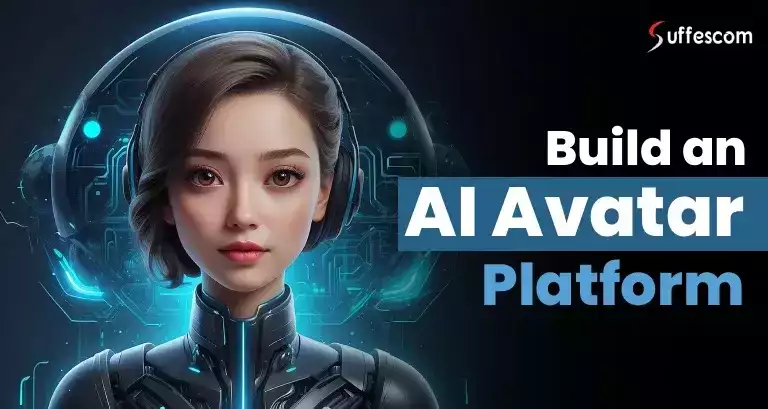
Artificial intelligence is one of the biggest profit engines for startups and innovators worldwide. In 2025-26, AI adoption in business operations has skyrocketed, with 78% of global companies using or exploring AI technologies to build revenue-generating platforms or adapting to AI-based solutions. One such highly promising and fast-growing space is AI avatar tools, digital characters powered by artificial intelligence that can interact with customers, answer questions, and represent a business's brand online.
Small and local businesses are rapidly jumping on the AI avatar trend to engage customers more effectively. Around 47% of small businesses in the US reported using at least one AI tool for daily operations in 2023, primarily for customer service chatbots, showing a surge in demand for ready-to-use solutions.
These adoption trends highlight a huge opportunity for innovators, as businesses want AI avatars, but many lack the technical knowledge to create or customize them. By building a platform that lets SMBs quickly create and deploy AI avatars, you can tap into this growing market and generate recurring revenue. If you are interested in building something like this, we can help you understand how to approach it the right way. Let's get started!
Start building AI avatar tools that local businesses will pay for!
What is An AI Avatar Platform and How Does It Work?
An AI avatar platform is a full-stack software system that enables users, typically businesses, to create, customize, and deploy digital humans that can speak, present, interact, or generate video content automatically.
It is not just a "face generator" or simple video tool. At scale, it is a multi-layered architecture that combines the following into a single monetizable product:
- AI Models
- Media processing infrastructure
- Real-time rendering systems
- SaaS-based user management
To build it, it's very important to understand how it works and look at it from a systems perspective:
Avatar Engine
The avatar engine is responsible for generating and managing the visual identity of the digital human. Depending on the platform's scope, this may include:
- 2D talking avatars generated from images
- Custom-designed animated characters
- Metaverse Avatar Development
- Photorealistic digital twins
- 3D avatars built using engines like those from Epic Games (MetaHuman ecosystem)
This layer handles facial structure, gestures, expressions, pose control, and customization options like branding elements. It stores avatar configurations so users can reuse and modify them at any time. For business users, this is where brand identity meets automation.
AI Voice Layer (Text-to-Speech & Voice Cloning)
The AI voice layer converts written scripts into natural-sounding speech. This includes:
- Neural text-to-speech engines
- Voice cloning for personalized brand voices
- Multilingual voice generation
- Emotion and tone modulation
This layer must synchronize perfectly with the avatar's mouth movements and expressions. In advanced systems, voice models may run on GPU-accelerated infrastructure using hardware optimized by companies like NVIDIA to reduce latency and maintain audio quality at scale.
For businesses, this enables consistent brand communication across marketing videos, onboarding tutorials, training content, and customer support.
LLM Brain (Conversational Intelligence)
The LLM layer gives the avatar intelligence. Through integrations with providers like OpenAI or custom-hosted models, the avatar can:
- Personalize responses
- Generate scripts automatically
- Answer customer queries
- Maintain contextual conversations
- Provide product recommendations
- AI Agent Development for specific business operations, like preparing tutorials or guiding customers
This transforms the avatar from just a video presenter into an interactive digital assistant, and for local businesses, this means:
- Automated sales reps
- Onboarding agents
- FAQ assistants
- Multilingual support avatars
Rendering & Media Processing Engine
Once the script and voice are ready, the rendering engine synchronizes:
- Facial movements
- Final video composition
- Background scenes
- Lip-sync alignment
- Lighting and animation
This engine may operate in two modes:
- Pre-rendered video generation (batch processing)
- Real-time streaming via WebRTC
High-quality avatar platforms rely on GPU clusters hosted on cloud providers such as Amazon Web Services to handle video rendering at scale without performance degradation.
SaaS Dashboard & Monetization Layer
Beyond AI models, a true AI avatar platform includes a SaaS framework that allows businesses to:
- Create and manage multiple vendors
- Track usage and analytics
- Generate and store videos
- Access APIs
- Control user roles and permissions
- Manage subscriptions
This layer enables the platform owner to monetize through:
- Subscription tiers
- Credit-based usage
- Enterprise Licensing
How Businesses Use AI Avatar Platforms
Local and small businesses use AI avatar platforms to:
- Produce marketing videos at scale
- Build branded digital presenters for social media
- Train employees through avatar-led tutorials
- Replace static FAQs with interactive AI assistants
- Automate customer onboarding
- Create multilingual promotional content
Recommended Tech Stack for AI Avatar Platform Development
Building a scalable AI avatar requires a carefully chosen tech stack that can perfectly balance cost, performance, and long-term maintenance. The right architecture ensures your platform can handle multiple users, AI inference, real-time rendering, and large video workloads without compromising quality.
This is the tech stack we use to build scalable AI avatar platforms and the same stack we recommend for any production-ready system in 2026.
Frontend Architecture
The following aspects of the AI avatar platform strongly rely on frontend frameworks that are optimized for performance and modularity:
- Real-time avatar previews
- Interactive dashboards
- Video playback
That's why it's highly recommended to use React or Next.js to build a fast, dynamic platform.
Backend Architecture
The backend typically combines Python and Node.js services in a microservices architecture. Node.js handles API endpoints, real-time WebRTC signaling, and user management, while Python runs AI inference, video processing pipelines, and model orchestration. This separation makes maintenance and scalability easier.
AI Orchestration Layer
The AI orchestration layer coordinates multiple models for the avatars, including:
- Lip-sync
- Text-to-avatar
- Voice generation
LLM Integrations
Large language models power conversational or script-generating avatars. This layer is important in avatars to generate context-aware responses, handle conversations, or produce video scripts automatically.
GPU Acceleration
High-quality video rendering and AI inference require GPU acceleration. Platforms rely on NVIDIA infrastructure (A100/H100 GPUs) to optimize model performance, reduce latency, and scale processing for hundreds or thousands of concurrent users.
Cloud Hosting
Cloud providers like Amazon Web Services or equivalent handle storage, deployment, and compute. Cloud hosting enables the following, ensuring your platform performs reliably as usage grows:
- Autoscaling
- Cost-efficient resource management
- Global availability
How to Design a Scalable AI Avatar Platform Architecture?
Designing a scalable AI avatar platform architecture is not as simple as connecting AI models to a dashboard. It requires a multi-layered system that can support thousands of users, handle GPU-intensive workloads, process large media files, and maintain performance under high concurrency.
A production-ready AI avatar platform must be architected from day one for scale, cost control, and operational stability. And here is how we ensure that:
Model Inference Pipeline
AI avatars include multiple models working together. A scalable architecture includes a structured inference pipeline:
- Avatar rendering
- Lip-sync alignment
- Text-to-speech conversion
- Script input or LLM-generated content
- Final video composition
These steps must be orchestrated asynchronously using queue-based systems. Without a properly designed inference pipeline, video generation times increase, and infrastructure costs spiral.
Media Processing Workflow
AI avatar platforms are media-heavy systems. A scalable workflow includes:
- Temporary storage for raw assets
- CDN delivery for global playback
- Video compression and optimization
- GPU-based rendering nodes
- Background processing services
This ensures videos are generated efficiently and delivered quickly to users worldwide. Media processing must be decoupled from the core application logic to maintain responsiveness in the main SaaS dashboard.
Real-Time vs Pre-Rendered Architecture
Founders must decide early whether the platform will support:
Pre-rendered video generation
- More cost-efficient
- Ideal for marketing and training videos
- Lower complexity
Real-time streaming avatars (WebRTC-based)
- Low-latency interactive sessions
- Higher infrastructure complexity
- Requires persistent GPU inference
API Layer for Integrations
A scalable AI avatar platform must expose APIs that allow:
- Integration with CRMs
- External applications
- Learning management systems
- Marketing automation platforms
It also plays a crucial role in enterprise monetization and white-lable expansion. It must include rate limiting, usage tracking, and authentication controls to prevent abuse and ensure predictable billing.
Security & Data Isolation
AI avatar platforms process sensitive inputs, including:
- Voice samples
- Customer interaction logs
- Business data
- User-uploaded images
That's why the architecture must include:
- Secure API gateways
- Role-based access control
- Tenant-level data isolation
- Compliance readiness (GDPR, SOC2, where applicable)
- Encrypted storage
Infrastructure Planning for High Concurrency
As adoption grows, your system must handle:
- Large file uploads
- Real-time streaming sessions
- Simultaneous video rendering requests
- Thousands of concurrent dashboard users
All this requires following:
- Global CDN integration
- Distributed databases
- Autoscaling GPU clusters
- Load-balanced application servers
- Queue-based job distribution
How to Build an Interactive AI Avatar Using LLM and Text-to-Speech?
If you want to build an interactive AI avatar platform, you are essentially building a system that combines conversational intelligence, voice synthesis, and animated rendering into one unified experience.
Here's what you need to build and the decisions you will have to make.
Step 1: Choose Your LLM Strategy
An interactive avatar cannot rely on pre-written scripts. It must generate dynamic, context-aware responses based on user input. This is where LLMs play a vital role as they enable the avatar to:
- Understand intent
- Generate human-like responses
- Personalized conversations
- Adapt tone and structure
- Answer domain-specific questions
There are several architectural ways to build your avatar, such as:
API-Based LLM Integration: You can use providers such as OpenAI to enable faster deployment and lower initial infrastructure costs. This option is ideal for MVPs and early-stage products.
Self-Hosted or Open-Source Models: This option offers greater control over data privacy and customization, but it requires GPU infrastructure and DevOps expertise.
Fine-Tuned Custom Models: If you are going into industry-specific platform development, where domain accuracy and compliance are critical, then this option is your best bet.
Step 2: Context Retention and Conversational Memory
The next important thing in AI avatars is context retention. To maintain continuity, you must implement structured memory layers like:
- Session-level memory (short-term context)
- Persistent user profiles (long-term personalization)
- Vector databases for knowledge retrieval
- Token optimization and context summarization
Step 3: Text-to-Speech Integration
Once the LLM generates a response, it must be converted into natural, expressive speech. This layer determines how professional and trustworthy your avatar sounds.
You can implement:
Standard Neural TTS Systems
- Fast deployment
- Multi-language support
- Cost-efficient scaling
Custom Voice Cloning
- Brand-specific voice identity
- Higher engagement
- Increased compliance and storage considerations
The TTS system must also support concurrent processing. If hundreds of users interact simultaneously, the voice engine must scale without delay.
Step 4: Lip-Sync and Animation Synchronization
For realism, audio output must align precisely with facial movement.
This will require:
- Phoneme detection from generated speech
- Real-time animation mapping
- GPU-based rendering
- Synchronization between audio and video streams
- Poor synchronization immediately reduces user trust and perceived quality.
Step 5: Latency Optimization and Infrastructure Planning
An interactive avatar must feel responsive. Even small delays disrupt the user experience. So, to minimize latency, production systems must use:
- Streaming LLM responses
- Parallelized TTS generation
- GPU autoscaling
- Queue-based inference pipelines
- Load-balanced backend services
- Infrastructure planning directly impacts performance and operational cost
Your Development Pathways
Once you understand the technical layers involved, the next question becomes: how do you want to launch?
We offer multiple approaches depending on your business objectives.
In this space, innovators typically choose one of the following development models depending on their goals, funding stage, and monetization strategy.
1. Integration-First AI Avatar Platform
This model focuses on orchestrating best-in-class AI services into one unified SaaS platform. Instead of building every AI component from scratch, we integrate:
- LLM providers such as OpenAI
- Neural text-to-speech engines
- Avatar rendering SDKs
- Lip-sync and animation systems
- GPU-backed inference services
We then build a custom SaaS dashboard, user management system, billing engine, and API layer around it.
This option is ideal for startups that want:
- A fast way to launch their product
- Product-market fit validation
- Speed over deep AI R&D
This reduces initial development time while still allowing you to launch a fully functional AI avatar platform.
2. White-Label AI Avatar SaaS Platform
If your goal is to let agencies, creators, or local businesses generate AI avatars under your brand, a white-label SaaS model is ideal.
We can help you build a platform with the following capabilities:
- Multi-tenant architecture
- Branded dashboard
- Subscription and usage-based billing
- Admin controls
- API access for integrations
- Role-based user permissions
This is generally best for:
- B2B founders
- Agency-focused platforms
- Entrepreneurs targeting local businesses
- Recurring subscription revenue models
3. Custom Proprietary AI Avatar Platform
This is for founders who want deeper control and long-term defensibility. Instead of relying heavily on third-party orchestration, we design:
- Custom LLM orchestration layers
- Advanced conversational memory systems
- GPU-optimized inference pipelines
- Real-time streaming architecture
- Enterprise-grade compliance and data isolation
You may still integrate external AI models, but the architecture, performance optimization, and scalability framework are entirely yours.
It is best for:
- Funded startups
- Enterprise-focused platforms
- High-volume usage environments
- Products requiring strict compliance
This approach gives you stronger differentiation and better control over operational costs at scale.
4. Real-Time Digital Human Platform
If your vision includes:
- Live sales avatars
- Customer support agents
- Virtual onboarding assistants
- Real-time video streaming
Then you need a low-latency, GPU-backed architecture.
To help you build this kind of software, we can architect the following:
- WebRTC-based streaming pipelines
- Parallel LLM and TTS processing
- Real-time lip-sync synchronization
- Infrastructure autoscaling for high concurrency
This option is more infrastructure-intensive but enables premium, enterprise-level use cases.
5. API-First AI Avatar Infrastructure
Instead of building a full SaaS dashboard, some founders choose to build an API-first platform.
In this model:
- Developers integrate your avatar engine into their apps
- You monetize through usage-based billing
- Your platform becomes infrastructure rather than a front-end product
- This model targets SaaS companies and app developers rather than local businesses directly.
Talk to Our AI Avatar Development Experts
What Are the Most Profitable AI Avatar Monetization Models?
Building an AI avatar platform is only half the strategy. The real opportunity lies in how you monetize it. Because AI avatar systems involve compute costs (LLMs, GPUs, rendering, storage), your revenue model must be designed carefully to maintain strong margins while scaling usage.
Here are the most profitable monetization structures founders are using in 2026.
1. Monthly Subscription Tiers (SaaS Model)
This is the most common and predictable model, where users pay a fixed monthly fee based on:
- Number of avatars
- Video minutes generated
- Conversations per month
- API access limits
- Advanced features (voice cloning, real-time streaming)
2. Credit-Based Usage System
Instead of fixed plans, users purchase credits, and these credits are consumed based on:
- Video length
- Rendering quality
- Voice cloning usage
- Real-time sessions
- GPU-intensive features
3. Pay-Per-Video Pricing
In this type of model, users pay for each generated video or avatar session.
- Marketing avatar platforms
- Explainer video tools
- Content repurposing tools
However, it is less predictable than subscriptions unless combined with bundles.
4. Enterprise Licensing
For larger clients, AI avatar platforms can be licensed at a fixed annual fee.
- Enterprise packages may include:
- Dedicated GPU resources
- On-premise or private cloud deployment
- Custom LLM fine-tuning
- SLA guarantees
- Compliance integration
This model is ideal if you are targeting corporations using avatars for training, onboarding, or customer support.
5. API Monetization
Instead of (or in addition to) a SaaS dashboard, you offer:
- AI avatar generation APIs
- Voice synthesis APIs
- Real-time avatar streaming API
- Developers integrate your infrastructure into their own platforms.
And then, you can charge based on the following:
- Per API call
- Per second of rendering
- Based on compute usage
Which Monetization Model Is the Most Profitable?
There is no single "best" model. The most profitable AI avatar platforms typically combine:
- Subscription tiers for predictable revenue
- Credit systems to protect margins
Your monetization strategy should align with:
- Your infrastructure cost
- Your target audience
- Your scalability goals
- Your competitive positioning
If you are building an AI avatar platform, talk to our expert consultant and gain free guidance on choosing the right architecture, tech stack, and monetization model for your product vision.
What is the Cost To Build A Custom AI Avatar Platform ?
Estimating the cost of building a custom AI avatar platform depends on multiple variables, from the feature complexity and infrastructure requirements to scalability goals and the level of AI intelligence you embed into the system. Below is a breakdown of the major cost components you should plan for:
1. AI Integrations & Core Avatar Logic
Instead of training proprietary models initially, a cost-efficient build includes:
- LLM API integration for script generation and conversational intelligence
- Neural text-to-speech integration
- Avatar rendering SDK integration
- Lip-sync synchronization
- Pre-rendered video generation pipeline
This integration-first model significantly reduces R&D time while delivering a fully functional product.
Estimated Cost: $12,000-$18,000
2. Backend Development & AI Orchestration
A scalable backend architecture typically includes:
- Python-based AI orchestration
- Node.js API layer
- Queue-based inference pipeline
- Secure authentication and user management
- Credit tracking and usage monitoring
Estimated Cost: $5,000-$7,000
3. Cloud Infrastructure Setup
A production-ready setup requires:
- Cloud hosting (AWS or equivalent)
- Object storage for video assets
- CDN integration for fast global delivery
- Autoscaling configuration
- Secure API gateway and database setup
By starting with pre-rendered avatars instead of real-time streaming, you avoid high persistent GPU costs.
Initial Setup Cost: $2,000 – $3,000
Estimated Monthly Running Cost (early stage): $800-$2,500
4. SaaS Dashboard & User Experience
A monetizable AI avatar platform also includes:
- Avatar creation interface
- Script input and editing panel
- Voice selection system
- Video management library
Subscription or credit-based billing system
Basic analytics dashboard
Estimated Cost: $3,000-$5,000
Total Estimated Investment
| Component | Estimated Cost |
| AI Integrations & Avatar Engine | $12K-$18K |
| Backend & Orchestration | $12K-$18K |
| Cloud Infrastructure Setup | $2K -$3K |
| Maintenance and Support | $2K-$3K |
| Total Investment Range | $25k-$39k |
Know The Exact Investment Needed To Start Your AI Avatar Business.
How Much Time Does It Take To Build An AI Avatar Platform?
The development timeline depends on how advanced your platform needs to be at launch, whether you are starting with a lean MVP, a white-label SaaS model, or a real-time digital human system. With a structured roadmap and focused feature scope, most AI avatar platforms can be launched within a few months.
| Platform Type | Estimated Timeline |
| Lean MVP (Pre-rendered avatars) | 4-6 Weeks |
| White-Label AI Avatar SaaS | 6-10 Weeks |
| API-First Avatar Infrastructure | 10-14 Weeks |
| Real-Time Streaming Avatar Platform | 12-16+ Weeks |
| Fully Custom Enterprise Platform | 4-6 Months |
Wrapping Up
AI avatar development services are transforming the way local businesses carry out marketing. With the right AI development services, you can build an affordable AI avatar tool for local businesses and tap into this growing demand while turning it into a revenue-generating asset.
As a veteran agency with extensive hands-on experience building AI-based solutions, including AI chatbot development for business operations, AI avatar platforms, AI voice sales agent development, and other custom AI tools, we at Suffescom can help you build a product that truly captures market demand and maximizes its potential. To get a proper peek into platform development, associated costs, timelines, and a full roadmap, book a free live demo session with us today.
FAQs
How to build a digital twin application architecture?
A digital twin needs 3D models, real-time data, AI behaviors, and interactive avatars. We have helped clients build digital twins using MetaHuman SDK, Ready Player Me, and GPU-powered AI pipelines. We handle challenges like high-latency streaming and animation glitches. If you want a fully functional digital twin, we can design and implement the architecture for you.
How can I build a full-stack AI video generation app?
An AI video app needs a fast frontend, an AI backend, media pipelines, and user management features. We have built MERN and Python-based apps that avoid slow rendering and TTS mismatches. We can create a scalable, production-ready AI video platform for you.
How does real-time WebRTC avatar streaming work?
Real-time avatars need low-latency streaming, GPU rendering, and synchronized AI voices and animations. We have built systems for live demos, sales, and support sessions that run smoothly without choppy video or unsynced speech. We can set up the complete streaming infrastructure for you.
How do I integrate AI avatars in Unity or Unreal Engine?
Making AI avatars work in Unity or Unreal Engine means connecting 3D rigs, dialogue AI, TTS, and smooth animations. We have helped teams bring avatars to life with Meta Human and custom AI pipelines, while avoiding glitches or slowdowns. If you want interactive avatars that feel natural and responsive, we can handle the full setup from start to finish.
How can I build a MERN-based AI avatar generator?
A MERN avatar platform combines MongoDB for data, Node/Express APIs, React dashboards, and Python AI services. We have built complete systems that generate avatars quickly and keep WebRTC streams stable. If you want a ready-to-use, full-stack avatar platform, we can develop, deploy, and optimize everything for you.