The modern healthcare industry relies on technology and digitalization, including electronic health records, e-prescriptions, insurance claims processing, and Internet of Things (IoT)-enabled medical devices. These innovations have helped healthcare providers improve efficiency and patient treatment, but they have also made it one of the most attractive industries for cyberattacks.
The recent ransomware attack on UnitedHealth Group subsidiary Change Healthcare is the latest example. By gaining access to a single payment and claims processor, hackers put the personal and medical information of about 192.7 million people at risk, representing almost two-thirds of the American population. It was also the largest data breach ever in the healthcare sector. In fact, it was more than a data leak. Pharmacies couldn't process prescriptions, and service providers nationwide stopped receiving payments for weeks.
Thus, it became clear that a single vendor vulnerability can affect the entire healthcare sector, and even simple security measures like multi-factor authentication can be absent, causing problems for an entire nation.
This highlights the importance of cybersecurity in protecting healthcare organisations. Here, we examine the role of healthcare cybersecurity consulting, the effectiveness of cybersecurity measures in mitigating cyber threats, the challenges of implementing them, and best practices for strengthening healthcare security.
Cybersecurity Risks in Healthcare
The healthcare industry is highly vulnerable because it involves highly valuable personal data, has little capacity for downtime, relies on ageing and often unpatched IT systems, and has a significant attack surface. These factors make it highly vulnerable to risks. Healthcare cybersecurity consulting helps organisations identify these vulnerabilities and assess potential threats.
High-value patient data
The healthcare industry is increasingly reliant on EHR and EMR software, which contains sensitive patient data, such as insurance details and financial information. Criminals can exploit these records for identity theft, to commit insurance fraud, and for extortion. The scale of exposure was evident in the Change Healthcare cyberattack, which affected approximately 192.7 million individuals, according to U.S. Department of Health and Human Services (HHS) records.
Limited tolerance for downtime
Hospitals, pharmacies, laboratories, and emergency response units cannot just cease their operation amid a cyberattack. The Change Healthcare attack interrupted claims processes and payments all over the country, showing how an attack on one crucial service provider impacts the whole healthcare industry. HHS documented the incident's unprecedented impact on patients and healthcare providers.
Legacy systems and unpatched vulnerabilities
In many cases, healthcare providers are reliant on outdated software, operating systems, and equipment. This is because they cannot upgrade without disrupting clinical activities. These systems can create vulnerabilities that attackers can exploit.
Expanding attack surfaces
EHR platforms, telemedicine software, cloud services, mobile devices, and IoT-enabled medical equipment create multiple potential entry points for attackers. An HHS healthcare infrastructure assessment reported that cyberattacks against hospitals and health systems more than doubled between 2016 and 2021. This historical finding highlights the scale of the threat, although it should not be interpreted as a measure of current attack growth.
Third-party dependencies
Most of the healthcare service providers depend on third party software to handle the billing processes, claims handling, cloud computing, laboratory management services, and software integration. A breach of security in any of these third-party software can compromise data and disrupt service delivery in all organizations that depend on it.
Addressing these risks is essential to making cybersecurity in healthcare more effective and maintaining reliable patient services.
Concerned about security gaps in your healthcare software?
Get expert guidance to prioritize risks and plan the right safeguards.
How Cybersecurity Protects the Healthcare Industry and How Effective Is It?
The impact of cybersecurity in healthcare goes beyond just ensuring that patient data is protected. It also ensures the prevention of cyberattacks, detection of attacks in their early stages, and even minimizing costs to ensure continuous delivery of healthcare services.
1. Prevents Unauthorized Access to Patient Data
MFA ensures the verification of identities, role-based access control ensures that only authorized people see patient records, and encryption ensures that sensitive information remains confidential from any disclosure.
The above measures lower the risk of identity theft and unauthorized access but will be more effective if used together with access reviews, activity monitoring, and account management.
2. Detects Threats Earlier and Reduces Breach Costs
The security monitoring tools detect any unusual behaviour by examining logins, network traffic, and system activity. The security information and event management (SIEM) and endpoint detection and response (EDR) tools assist in threat investigation and containment.
The 2025 Cost of a Data Breach Report conducted by IBM has revealed that companies that have widely applied AI and automation for security purposes have had their data breaches cost $1.9 million less compared to those who haven't used these technologies.
3. Limits Ransomware Damage and Speeds Up Recovery
Endpoint protection, network segmentation, patch management, and email security can help prevent or contain ransomware attacks. Backed-up information and tested restoration methods will allow for the reestablishment of vital systems following the attack.
It may be effective to some degree, but results will vary depending on the availability of backups and other factors. HHS healthcare security guidance outlines safeguards for protecting electronic health information.
4. Reduces Third-Party Security Risks
Vendor evaluations, limited access, secure integration, and security contract provisions help safeguard communication between organisations and billing firms, cloud computing services, laboratory facilities, and claim processors.
5. Improves Incident Response and Recovery
Centralized logging, incident response plans, trained security teams, and recovery exercises help organizations identify attacks, contain affected systems, and restore operations. With healthcare cybersecurity consulting, healthcare providers can strengthen incident response plans, improve threat detection, and prepare effective recovery strategies to minimize operational disruptions.
Together, these measures make cybersecurity in healthcare more effective at limiting threats and reducing operational disruption.
Use Cases of Cybersecurity in the Healthcare Industry
Cybersecurity needs vary across healthcare settings depending on the data they handle, the systems they use, and the risks they face. Cybersecurity consulting for healthcare helps organizations identify industry-specific vulnerabilities and implement appropriate safeguards to protect patient information and maintain service continuity.
1. Hospitals and Health Systems
Hospitals rely on EHRs, medication management systems, diagnostic equipment, and a network to provide treatment to patients. Cyberattacks will limit clinical data access and affect operations at hospitals.
In May 2024, Ascension, a leading non-profit US-based healthcare system, suffered a cybersecurity breach that limited technology systems access and affected clinical operations.
What cybersecurity can do to help: Network segmentation, endpoint detection, multi-factor authentication, and testing backups and incident response can limit an intrusion’s impact.
2. Clinics and Outpatient Care Centres
Patient information, scheduling, prescription data, and billing details are managed in a clinic’s digital environment. Breach of such a system would lead to exposure of confidential data, whereas failure would delay consultations and routine administrative tasks.
The breach of the MOVEit file-transfer software in 2023 compromised Wisconsin Physicians Service Insurance Corporation (WPS) and could potentially expose private and sensitive data concerning healthcare services performed.
How does cybersecurity help? The clinics and outpatient care facilities can avoid such problems by patching vulnerable software, limiting access to confidential data, implementing secure file transfer systems, and assessing third-party controls.
3. Pharmacies and Prescription Management
Pharmacies depend on digital prescription systems, dispensing and billing systems, and connections to insurance companies for the proper processing of medications and insurance. Any disruption could cause problems with prescriptions, insurance claims, and patients accessing their medications.
In February 2024, Change Healthcare faced a ransomware attack which disrupted pharmacy services and prescription-related transactions in the U.S. Many pharmacies dependent on the company's services faced numerous complications.
How cybersecurity can help: Robust authentication, secure prescription system interface, transaction monitoring, data encryption, and backup dispensing/billing processes could help ensure proper pharmacy operations in such cases.
4. Diagnostic Labs and Medical Imaging Facilities
Laboratory diagnostic departments and imaging facilities depend on LIS and PACS for the management of test requests, test results, and patient images. An attack against these tools would result in delayed diagnoses and disruptions in the process of making clinical decisions.
On June 3, 2024, Synnovis, a company offering pathology services to NHS facilities in London, was hacked through a ransomware attack. The result was decreased testing capacity and 11,000 delayed outpatient tests and procedures.
Help from cybersecurity: Network segmentation, backups, access controls, vulnerability management, and recovery processes would mitigate the damage from such an attack.
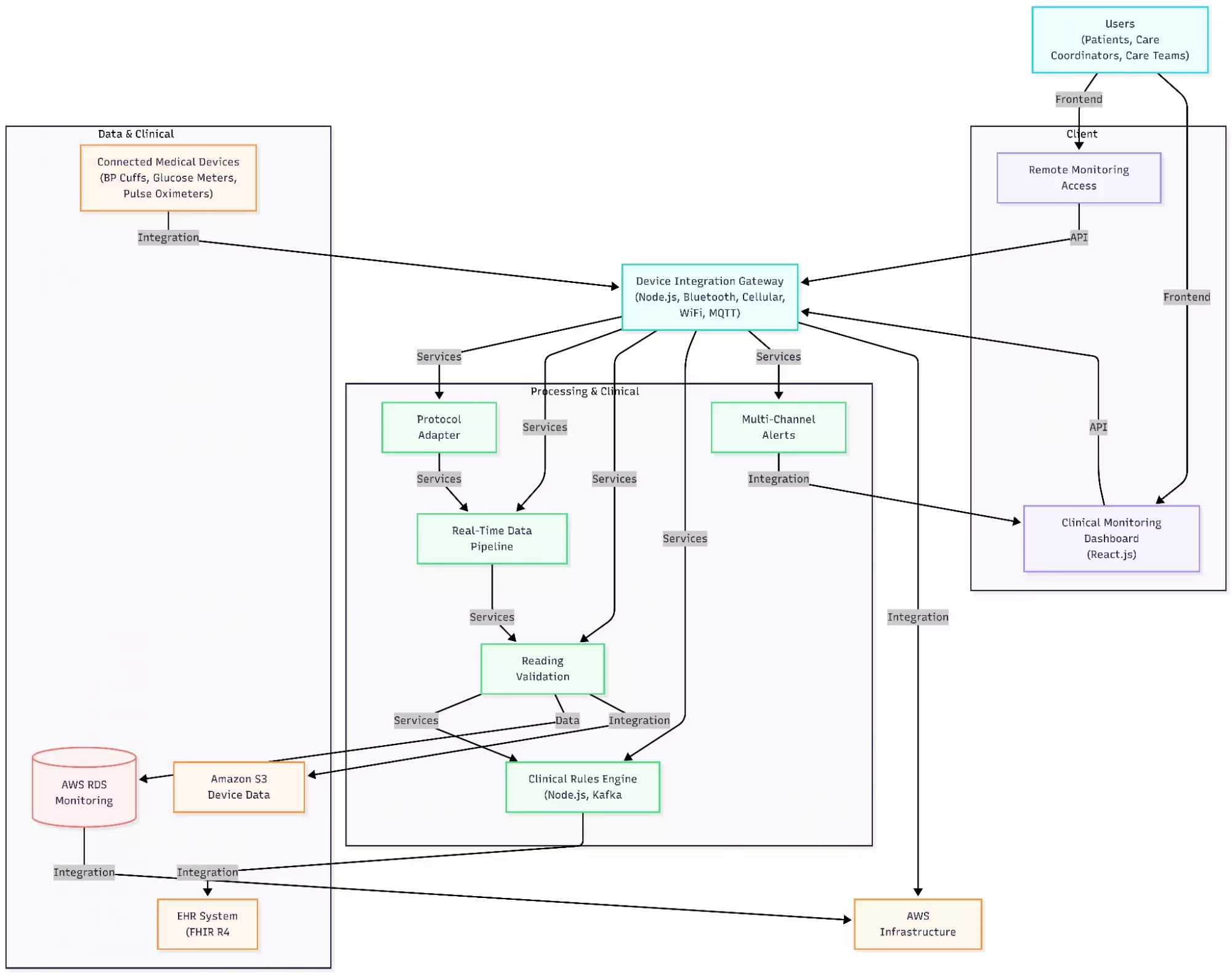
5. Telehealth and Remote Patient Monitoring
Telehealth systems and remote monitoring systems send patient data through a network beyond conventional healthcare institutions. Unsecured accounts, applications, and devices put the patient's data at risk and pose risks to remote care.
In January 2025, the United States Food and Drug Administration issued a safety communication related to cybersecurity concerns on certain models of the Contec and Epsimed patient monitors. According to the FDA, the vulnerabilities in the devices could allow unauthorized control, exposure of patient data, and network vulnerability. As of the time of the communication, no reports of any incidents, injuries, or deaths had been reported from the vulnerabilities.
How cybersecurity helps: Device security configuration, network segregation, robust authentication, software updates, and vulnerability assessment may help secure the medical devices and data.
6. Health Insurance Companies and Claims Processors
Health insurance carriers and claims processors manage information related to patients, policyholders, payments, and communications between payers and providers. In case of a cyber breach, sensitive information might be exposed, and the payment process is likely to be disrupted.
For example, the 2024 Change Healthcare breach involved claims and payments processes on a national level. The incident resulted in a need for the Centers for Medicare & Medicaid Services to create some temporary financial assistance programs for impacted health care organizations.
Benefits of cybersecurity: Encryption, real-time monitoring, fraud detection, third-party risk assessment, access controls, and contingency planning may help to mitigate risks related to the claims process and service disruption.
7. Healthcare Software and Medical Device Manufacturers
Healthcare technology companies manufacture applications, APIs, connected devices, and software that may hold sensitive data or assist in clinical services. Weaknesses in such solutions are potential threats for both manufacturers and healthcare facilities using such products.
The 2025 warning from the FDA concerning the products by Contec and Epsimed patient monitors showed possible cyber vulnerabilities leading to unauthorized access, operation disruption, and exposure of patient information. This case shows how significant it is to deal with cybersecurity vulnerabilities at different stages of the product lifecycle.
Cybersecurity solution: Using secure software development techniques, code review, penetration testing, a vulnerability reporting process, and security updates can assist healthcare technology companies in discovering such vulnerabilities in their products before putting them on the market.
8. Multi-Location Healthcare Networks
Healthcare organizations with multiple hospital, clinic, and diagnostics centers need standardized security protocols to protect their integrated systems and networks.
An incident involving a centralized system or a specific facility can cause chaos in all the other sites.
The recent May 2021 ransomware attack on Ireland's Health Service Executive (HSE), which led to disruption of computers and healthcare services within the national health service, showed the possible impact of a cyberattack on a large-scale organization.
How cybersecurity can assist: Centralized security management, network segmentation, standardization of access control policy, joint incident response, and disaster recovery drills.
Cybersecurity Requirements in Healthcare
Healthcare organizations need security procedures that protect patient information without interfering with healthcare delivery in clinical and administrative areas. The exact security procedures needed will depend on the data accessed, technology used, and regulatory compliance.
Understanding healthcare cybersecurity regulations will help your organisation align security controls with relevant requirements.
Key specifications are:
1. Patient Data Protection
Health records, prescription details, diagnostic results, insurance information, and payment information need to be safeguarded from any kind of tampering or unauthorized disclosure. These can be achieved using encryption, role-based access control, MFA, and access review mechanisms.
2. Regulatory Compliance
Security controls must take into consideration the organization's legal and regulatory compliance. Some examples are as follows:
- HIPAA: Relevant for covered entities and business associates in the US; applies to the use of protected health information.
- GDPR: Relevant for the processing of personal data under its territorial jurisdiction, including health data, which falls under the category of special categories of data.
- Indian DPDP: Applies to digital personal data under the act.
Rather than relying on one certification or security technology to fulfil the obligations, the organization should map relevant obligations to its systems, contracts, data flows, and security policies.
3. Medical Device and System Security
Medical devices, EHR systems, laboratories, and healthcare apps need proper configuration, vulnerability management, access control, and regular security updates. In cases where patching is not immediately possible, compensating controls like network segregation and limited connectivity can help reduce risk.
4. Business Continuity and Disaster Recovery
The healthcare service should be available during any security incident. It is important to have secure backups, a recovery process, an alternative workflow and a downtime plan for critical services such as patient registration, dispensing medication, diagnostic reports, and billing.
5. Third-Party and Integration Security
Healthcare organizations need to evaluate the security of their vendors who process the patients' data or interact with their internal systems. Vendor evaluation, least privilege principle, secure APIs, contractual security requirements, and incident reporting can be useful tools for addressing such risks.
CNeed help securing your healthcare systems and integrations?
Get expert guidance to define the right security requirements from the start.
Best Practices for Healthcare Cybersecurity
After understanding the core needs, healthcare institutions should implement them in consistent security practices.
- MFA and least-privilege access control: Limit access to patient data and administrative applications based on individual needs.
- Patching and vulnerability management: Prioritise internet-accessible systems, known exploited vulnerabilities, and systems that could impact clinical operations.
- Network segmentation: Segregate medical device networks, guest Wi-Fi networks, administrative applications, and other environments as needed.
- Backup isolation and testing: Protect backups from modification and confirm you can restore critical systems.
- Systems should be constantly monitored: Gather and analyze all the relevant security logs, look for anything out of place, and develop an escalation plan.
- Train healthcare personnel: Utilize practical training concerning phishing, suspicious emails, stealing credentials, and securing patient records.
- Evaluate third-party providers and integrations: Analyze third-party access, security, data sharing, and incident response capabilities.
- Incident response plan testing: Conduct drills for ransomware, account compromise, data exposure, and interruption of clinical operations.
This approach is most effective when used as an integrated security strategy. For instance, MFA can be useful in reducing account compromise, but it cannot substitute for vulnerability management, network protection, monitoring, and recovery strategy.
How to Plan Healthcare Cybersecurity Implementation
It is not wise for healthcare organizations to attempt implementing all types of security tools simultaneously. The correct approach is to prioritize systems that pose the greatest risks to patient care, information security, and service availability. Cybersecurity consulting for healthcare can help organizations conduct risk assessments and identify the security controls they need to implement first.
Identify the healthcare cybersecurity regulations and contractual obligations that apply to your organization based on its location, operations, and the types of data it processes. Use these requirements to define policies for data protection, user authentication, security logging, incident reporting, vendor management, and recovery.
Step 1. Assess Existing Systems and Security Risks
Analyze the electronic health records, practice management software integration, medical devices, cloud computing services, APIs, employee logins, and any other third-party integrations of the organization. Look for weaknesses, outdated systems, too much permission, and any missing security controls.
Deliverable: Risk assessment identifying critical assets, potential threats, and prioritized tasks.
Step 2. Define Security and Compliance Requirements
Identify the laws, contracts, and security standards that the organization should comply with. Develop requirements for data protection, user authentication, logging, incident reporting, vendor management, and recovery.
Deliverable: A security and compliance plan that fits within the organization's context.
Step 3. Prioritize Security Controls
Apply the top security controls as per the results of the assessment.
- High priority actions: multi-factor authentication (MFA), backup, endpoint security, patch management for critical vulnerabilities, and privileged user access restriction.
- Medium priority actions: network segmentation, centralized log collection, access control for vendors, and incident response plan.
- Higher-level actions: automated threat identification and security orchestration.
This staged approach will help organizations deal with the biggest risks before moving on to more sophisticated security solutions.
Step 4. Integrate Security With Healthcare Workflows
The security controls should be integrated into the clinical and administrative processes without putting up unnecessary obstacles to the delivery of healthcare services. Conduct identity management testing, EHR access testing, laboratory interface testing, medical device connectivity testing, and disaster recovery testing in a controlled environment.
Step 5. Test, Monitor, and Improve
Perform vulnerability assessments, penetration testing where applicable, restoration of backups, and incident response simulations. Monitor metrics like critical vulnerabilities fixed, MFA implemented, suspicious activities investigated, and time to restore.
Review these metrics regularly and make changes to controls when there is a change in systems, threats, or regulatory requirements.
Cost of Healthcare Cybersecurity Implementation
Healthcare cybersecurity expenses are influenced by factors such as the size of the organization, the infrastructure it already possesses, the number of sites it operates, how sensitive its information is, its compliance responsibilities, and the degree of protection it requires.
The figures below are merely planning guidelines in USD and not actual market averages or quotations. They serve as possible starting points for budgeting and should be tested via risk assessment and project scoping.
| Implementation scope | Illustrative budget | Typical coverage |
| Small clinic | $10,000–$30,000 | Security assessment, MFA, endpoint protection, backups, and basic policies |
| Mid-sized provider or multi-site clinic | $30,000–$100,000 | Centralized monitoring, network controls, vulnerability management, vendor reviews, and incident response planning |
| Hospital or larger healthcare network | $100,000–$300,000+ | Enterprise security integration, advanced monitoring, network segmentation, recovery capabilities, and legacy-system protection |
| Enterprise-wide security transformation | $300,000–1 million+ | Complex infrastructure modernization, multiple facilities, advanced detection, extensive integrations, and organization-wide security programs |
Such ranges serve as guidelines when allocating budgets and should not be interpreted as exact prices. A project aimed at enhancing access controls can be significantly cheaper compared to a project including old system rework, medical devices integrating to boost monitoring and security, and enterprise-wide surveillance.
Factors That Influence Implementation Costs
- Infrastructure complexities: Legacy system modernization, application incompatibilities, and outdated hardware result in more time spent on assessment and mitigation.
- Security technologies: Security licenses, cloud security, endpoint security, monitoring, and managed detection will incur ongoing costs.
- System integration: Integration with existing security products, EHRs, identification systems, medical devices, and other third-party products requires further work.
- Compliance and audit considerations: Gap assessments, compliance documentation, and testing incur costs.
- Human resources: Security experts, incident responders, and employee training add to the cost of deployment and operations.
- Business Continuity Planning (BCP): Backup systems, disaster recovery sites, and business continuity exercises add to the cost.
Initial Implementation vs. Ongoing Costs
The upfront budget is only part of the full cost of ownership. Healthcare organizations must budget for software licenses, security monitoring, managed security services, patching, employee training, independent testing, and recovery practice.
An accurate budget requires that you determine the systems to be secured, the security requirements, the implementation timeline, and the support approach before soliciting proposals.
What Challenges May Arise in Healthcare Cybersecurity Implementation?
Even when health care organizations have identified their security needs, execution can prove challenging. Clinical systems demand high levels of availability, medical equipment may not have update capability, and security modifications need to be compatible with other software and vendors.
1. Legacy Systems and Medical Device Limitations
Challenge: Old clinical systems and medical devices may not have ongoing security patches available or might not have newer forms of authentication. The replacement of these systems will disrupt critical processes.
Solution: Determine the vulnerability and significance of each system. Use mitigating controls like isolation from networks, limiting access, increased surveillance, and limited connectivity as systems are upgraded.
2. Integration With Existing Healthcare Systems
Challenge: The EHR, the laboratory system, the billing system, and third-party apps might have various authentication processes and data exchange protocols. Poor integration could lead to extra vulnerabilities.
Solution: Use secure APIs, strong authentication of services, secure data transport, and least privilege permissions. Perform security testing on integrations and validate data integrity and availability.
3. Balancing Security With Clinical Workflows
Challenge: Complex login processes or excessive restrictions on access may hinder physicians’ efforts to obtain relevant information promptly.
Solution: Use role-based access, properly set session management and secure emergency access. Implement new security features in collaboration with physicians.
4. Limited Budgets and Cybersecurity Expertise
Challenge: Small providers will not have dedicated security teams, whereas large providers need to integrate their security efforts across different facilities and technologies.
Solution: Identify priority controls based on risk, automate monitoring where possible, and consider managed security services where it is not feasible to maintain an in-house team. Phase deployment to spread out costs without leaving any major risks unattended.
5. Incident Response and Service Recovery
Challenge: A security incident can affect patient records, diagnostic information, prescriptions, and financial transactions at the same time. Restoring one system will not always restore the entire process.
Solution: Create incident response and disaster recovery plans involving clinical, IT, legal, and operational representatives. Define your recovery strategy, keep backups, and run exercises that test disruption to your critical healthcare processes.
Healthcare Cybersecurity Consulting: How a Development Partner Can Help
Security software alone may not be enough to safeguard the healthcare infrastructure. Assistance may be required in evaluating the current system, protecting custom applications, implementing security controls, and planning for future maintenance.
The healthcare cybersecurity consulting and development project must cover all these needs through a defined phase-wise approach.
1. Security Assessment and Project Scoping
Analyze the current infrastructure, data flows, integration points, vulnerability exposures, and compliance issues. Identify the key threats and reach an agreement on the systems, results, and cost for this engagement.
2. Security Architecture and Compliance Planning
Design the security architecture, access control mechanisms, encryption needs, logging, backup plan, and incident handling approach. Align the relevant regulatory requirements with the proposed solutions.
3. Secure Development and System Integration
Develop or customize the healthcare applications, implement the authentication and authorisation mechanisms, secure the APIs, and integrate the security capabilities into the existing EHRs and cloud services.
4. Security Testing and Deployment
Arrange for vulnerability assessment, security testing of applications, and deployment validation. Penetration testing and security assessment may be performed independently, if required.
5. Monitoring, Maintenance, and Improvements
Help with continuous remediation of vulnerabilities, security patching, maintenance of integration, and application architecture improvements. Security monitoring and incident response might require a dedicated team internally or externally.
How Suffescom Can Support Healthcare Cybersecurity Projects
Suffescom can assist health organizations in designing and upgrading secure digital systems, incorporating security needs in application development, and dealing with vulnerabilities resulting from legacy systems and third-party interfaces.
Our services may include:
- Custom software development: Develop healthcare software solutions with security requirements embedded in architecture, access control, data management, and testing.
- System integrations: Integrate EHRs, practice management software, lab information systems, and other services through secure integrations.
- Technical compliance: Make sure that technical realization meets requirements, including HIPAA and GDPR, depending on the scope of the project.
- Application security enhancements: Solve any problems with the application security discovered, implement stronger authentication mechanisms, and ensure proper data protection.
- Application maintenance: Support and enhance applications according to changing requirements for security and integrations.
We offer cybersecurity consulting for hospitals that need support with securing healthcare applications, strengthening system integrations, and addressing vulnerabilities during software upgrades.
Planning a healthcare cybersecurity project?
Our team can help define a practical scope, implementation roadmap, and project estimate.
Conclusion
A successful approach involves conducting risk assessment, emphasizing necessary measures, and integrating security into healthcare processes and systems. The organization should also ensure its budget includes regular monitoring, testing, maintenance, and recovery of cybersecurity, instead of seeing it as an implementation-only process.
Healthcare firms developing and upgrading their systems can consider integrating security during the development phase. A consultation with an experienced development team can help identify security priorities early and provide the right head start for building a secure healthcare solution.
FAQs
1. Is HIPAA compliance the same as being secure?
No, HIPAA compliance is only a minimum requirement. It does not make an organization immune to cyber threats. Therefore, it is necessary to complement it with multi-factor authentication and other measures.
2. What are the penalties for a HIPAA violation, and when must a breach be reported?
Punishments depend on the degree of culpability, ranging from innocent ignorance of the rule violation to malicious negligence. The affected person should be notified of this breach without undue delay and within 60 days of becoming aware. Check HHS statistics and state requirements for up-to-date information.
3. How does the cost of a breach compare with the cost of prevention?
Prevention is more cost-effective. There are legal costs, downtime, exposure to regulations, and loss of trust. The IBM study for 2025 shows that organizations utilizing AI and automation in cybersecurity saved an average of $1.9 million per breach.
4. What is the minimum viable security for a small clinic?
MFA, endpoint protection, tested backups, timely patching, restricted admin access and an incident response plan. Budget roughly $10,000-$30,000 as a planning figure, not a quote.
5. How long does a security assessment take, and what do we receive?
A few weeks for a single-office practice, but several months for a multi-site network. You'll receive a risk assessment and remediation roadmap. Verify timelines as part of scoping.
6. Is cloud or on-premises safer for patient data?
Neither one is inherently safer. When using the cloud, you control the configuration, access, and encryption. The on-premises approach leaves patching and availability up to your own team. In either case, have a BAA with any vendor dealing with patient information.
7. How can we use AI tools without exposing patient data?
Only use proven tools with a signed BAA and data retention/access policy. De-identify data whenever possible and implement an approved tools policy for your organization.
8. Do you provide penetration testing?
We deal with secure development, integrations, and application security. Testing and auditing should be done separately, and we will collaborate with your test teams to fix their issues.
9. Do you offer cybersecurity consulting for hospitals?
Yes, we offer cybersecurity consulting for hospitals as part of our healthcare software development and integration support. Our team can help identify application-level security gaps, strengthen integrations, and incorporate appropriate security controls into healthcare systems. Independent security audits and specialized incident response may require dedicated security providers.