+971-8000321216



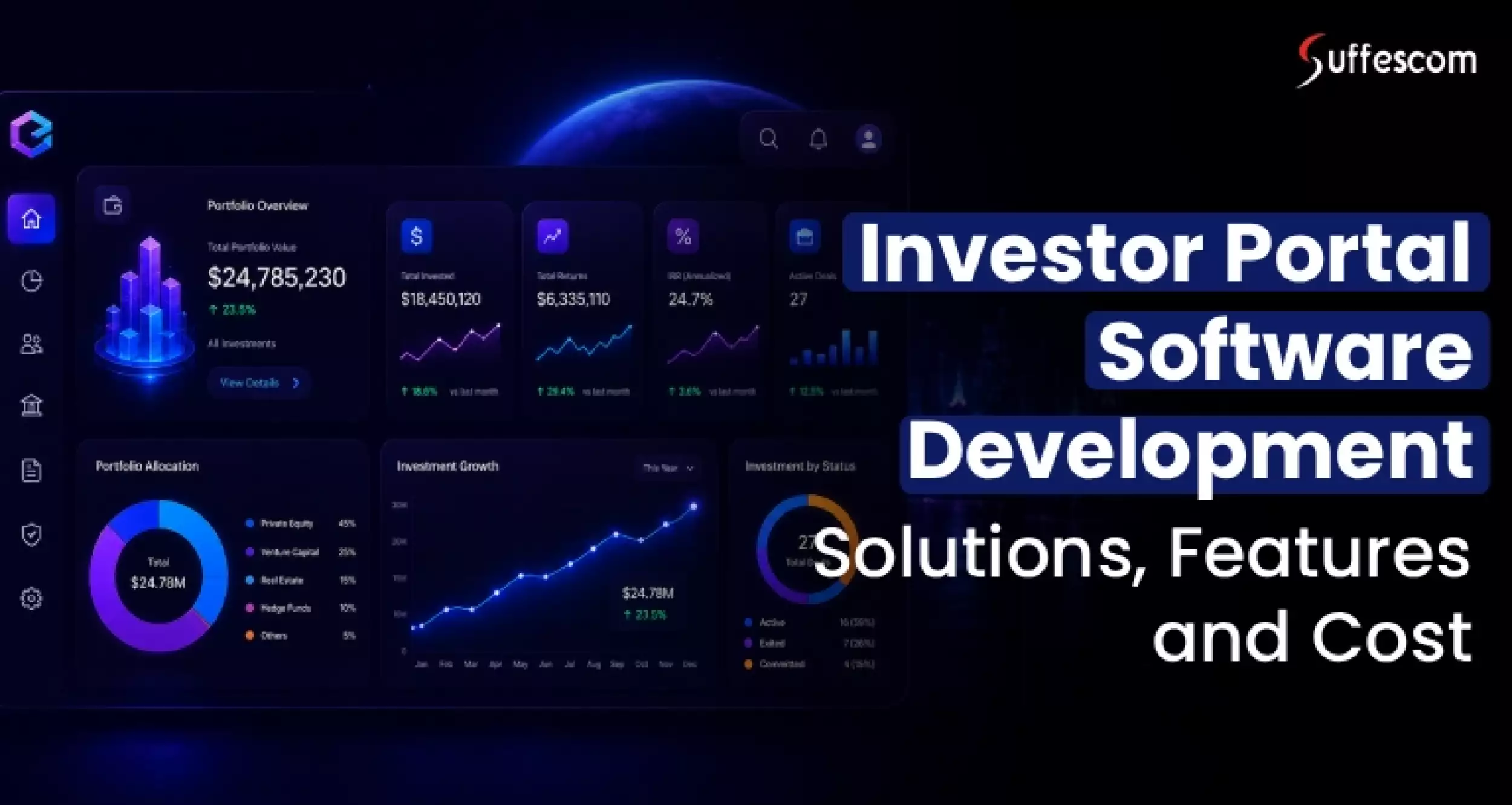
Private equity firms are rapidly moving away from spreadsheets, scattered emails, and manual processes for managing investors. On the other hand, modern investors now expect secure access to fund performance, real-time updates, reports & communication, everything under one roof.
This is where custom investor portal software development solutions emerge as a game-changer for private equity firms. The software helps to:
- Simplify investor management
- Automate reporting
- Improve transparency
- Strengthen data security
By utilizing such systems, organizations can offer investors a seamless experience where everything is accessible in one secure place.
This post discusses the complete custom investor portal software development process for private equity firms and the key factors businesses should consider before building the platform. So, let's get started!
Build Custom Investor Portal Software Today!
What is Private Equity Investor Portal Software?
The private equity investor portal is designed to help investment firms manage portfolio performance, investor relationships, fund reporting, financial documents, along with communications in a single centralized system.
The platform acts as a bridge between private equity firms & investors by offering secure access to:
- Distribution notices
- Capital calls
- Portfolio updates
- Secure messaging
- Compliance records
- Investment reports
- Capital account statements
- Fund performance dashboards
- KYC and onboarding documents
- Tax documents
Rather than manually sending updates via email or maintaining separate systems for fund management and investor communication, private equity firms can automate everything through a custom investor portal.
How Does Investor Portal Software Work
Investor portal software is a centralized digital platform that helps investment firms, private equity companies, venture capital firms, hedge funds, as well as asset managers manage investor operations, financial data, reporting, compliance, and communication from a single place.
Instead of handling investor activities manually through spreadsheets, emails & disconnected systems, the software automates and organizes the complete investment management lifecycle. Look at the how it works:
Investor Data Collection and Management
The software first collects & organizes all investor-related information in a centralized database. It helps firms manage:
- Investor profiles
- Contact information
- Investment preferences
- Risk appetite
- Accreditation status
- Fund participation history
- Compliance records
The system continuously updates investor records, plus maintains a structured database that teams can access anytime. This reduces data duplication and improves investor relationship management.
Digital Onboarding & Compliance Processing
Investor portal software automates the onboarding workflow for new investors. Instead of manual paperwork, the system manages:
- KYC and AML verification
- Identity validation
- Accreditation checks
- Tax information collection
- Document verification
- E-signature approvals
- Regulatory compliance tracking
The platform automatically validates submitted information & stores compliance records securely. This helps firms reduce onboarding delays, lower compliance risks, as well as maintain regulatory standards.
Investment & Fund Management
One of the core functions of investor portal software is to manage investment activities across multiple funds, along with portfolios. The system helps firms track and manage:
- Investor commitments
- Capital allocations
- Fund subscriptions
- Ownership percentages
- Capital calls
- Distribution schedules
- Investment transactions
- Multi-fund structures
It creates a structured workflow for managing investor participation across different investment vehicles while minimizing manual calculations.
Portfolio Performance Monitoring
The platform continuously tracks investment performance by integrating with portfolio management systems, accounting software, and financial databases. It manages & displays:
- Portfolio valuation updates
- ROI calculations
- Asset performance
- Profit and loss tracking
- Fund growth metrics
- Historical performance records
- Distribution summaries
- Benchmark comparisons
This gives investment firms real-time visibility into overall portfolio performance along with investor returns.
Financial Reporting Automation
Investor portal software automates complex reporting operations that investment firms traditionally handle manually. The system generates and manages:
- Investor statements
- Financial summaries
- Capital account reports
- Fund performance reports
- Tax reports
- Audit-ready documents
- Quarterly and annual reports
Reports are generated automatically from live investment data, improving accuracy plus reducing operational workload for finance teams.
Secure Document Management
The software serves as a centralized document repository for firms to manage large volumes of sensitive financial as well as legal documents. It organizes and controls:
- Subscription agreements
- Legal contracts
- Compliance files
- Financial statements
- Tax forms
- Audit documents
- Investor reports
- Due diligence materials
The system also tracks document versions, approval history & access permissions to maintain security and compliance.
Investor Communication Management
Investor portal software streamlines communication between firms and investors through a single platform. It helps manage:
- Investor announcements
- Fund updates
- Capital call notices
- Distribution notifications
- Meeting schedules
- Investor queries
- Event invitations
- Secure messaging
This improves communication transparency and eliminates dependence on scattered email conversations.
Transaction Processing & Capital Flow Tracking
The platform also manages financial transaction workflows & capital movement processes. It helps firms monitor:
- Investment commitments
- Capital contributions
- Fund transfers
- Distribution payouts
- Withdrawal requests
- Payment approvals
- Transaction history
- Cash flow records
Automating these processes reduces operational errors and improves transaction efficiency.
Workflow Automation & Internal Operations
Modern investor portal software automates many repetitive operational tasks across departments. The system manages workflows such as:
- Approval routing
- Document processing
- Compliance reminders
- Investor notifications
- Reporting schedules
- Fund lifecycle management
- Task assignments
- Audit tracking
This improves operational efficiency & overcomes manual administrative dependency.
Business Intelligence & Analytics
Investor portal software also provides advanced analytics that help firms make better business decisions. The platform analyzes:
- Investor engagement trends
- Fund performance insights
- Revenue growth
- Investor retention rates
- Portfolio diversification
- Compliance risks
- Operational efficiency
- Investment forecasting
These insights help firms optimize investment strategies and improve overall fund management performance.
Why Private Equity Firms Need Investor Portal Software Solutions?
The private equity industry has become highly competitive. Investors now demand transparency, accurate reporting, along with digital convenience. Off-the-shelf software often fails to meet the unique operational needs of private equity firms because every fund structure, reporting process, compliance requirement, and investor workflow is different. The custom investor software overcomes these challenges by providing tailored functionality aligned with the firm's operational model. The following are the major reasons:
1. Improved Investor Experience: Investors can easily access the following :
- Investment data
- Fund performance reports
- Documents in real time
2. Centralized Fund Management: A system stores all important pieces of information in one place, including:
- Investor records
- Portfolio data
- Communications
- Compliance documents
- Financial reports
3. Better Operational Efficiency: Automation helps to reduce:
- Manual work (associated with investor onboarding)
- Reporting
- Capital calls
- Document sharing
4. Stronger Data Security: Custom investor portals consist of:
- Advanced encryption
- Role-based access controls
- Multi-factor authentication
- Compliance-driven security frameworks
5. Enhanced Compliance Management: Private equity firms are strict on:
- Financial regulations
- Reporting standards
- Data security & investor privacy
Overall, a custom portal simplifies compliance tracking, along with audit management.
6. Scalable Infrastructure: Custom-built software can easily scale as firms expand their:
- Investor base
- Launch new funds
- Manage additional assets
Core Features of Custom Investor Portal Software for Private Equity
The success of a private equity investor portal depends heavily on its features & usability. The following are the essential modules that modern investor portal software needs:
| Feature Category | Key Capabilities |
| Investor Dashboard | The investor dashboard provides a complete overview of:
|
| Workflow Automation | Automation capabilities improve efficiency by reducing repetitive tasks:
|
| Secure Document Management | Private equity firms handle highly confidential financial documents. A secure document management system allows firms to upload, organize, as well as share:
|
| Investor Onboarding & KYC | Digital onboarding streamlines investor registration and compliance verification:
|
| Capital Call Management | Private equity firms can automate the complete capital call process:
|
| Distribution Management | The software helps firms manage profit distributions efficiently:
|
| Portfolio Performance Analytics | Advanced analytics provide insights into:
|
| Secure Messaging & Communication | Built-in communication systems improve investor engagement:
|
| Fund Accounting Integration | The platform can integrate with accounting systems for:
|
| Multi-Fund Management | Large firms managing multiple investment funds require centralized fund administration. The custom investor portal software development supports:
|
Essential Fund Management Capabilities of Investor Portal Software
Investor portals for private equity are not just communication platforms. They also play a major role in fund management.
Fund Lifecycle Management
The investor portal software supports the entire investment lifecycle:
- Fund formation
- Investor onboarding
- Capital raising
- Portfolio management
- Reporting
- Exit management
- Distribution handling
Cash Flow Tracking
Real-time cash flow visibility helps firms monitor:
- Incoming investments
- Fund expenses
- Capital deployment
- Distribution payments
- Liquidity management
Performance Reporting
Automated reporting helps firms generate:
- Quarterly reports
- Annual statements
- Fund summaries
- Investor reports
- Compliance reports
- Financial analytics
Regulatory Compliance Management
Compliance tools help firms meet industry regulations & reporting obligations. This consists of:
- SEC compliance
- GDPR support
- AML monitoring
- Audit logs
- Investor accreditation tracking
- Data privacy controls
Deal Management
Private equity firms manage investment deals through integrated workflows. These capabilities include:
- Deal sourcing
- Due diligence tracking
- Investment approvals
- Portfolio company monitoring
- Exit tracking
Custom Investor Portal Software Development: Benefits Explained
The following are the advantages of the custom investor portal platform development:
1. Higher Investor Satisfaction: Modern investors prefer self-service platforms that allow them to access information anytime. Custom portals help to improve:
- Transparency
- Accessibility
- Communication
- Investor trust
- User experience
2. Faster Operations: Automation reduces manual tasks, along with administrative overhead. This leads to:
- Faster onboarding
- Quicker reporting
- Better fund tracking
- Reduced paperwork
- Improved productivity
3. Better Decision-Making: Advanced analytics provide real-time financial insights that support smarter investment decisions.
4. Strong Security Protection: Custom platforms come with enterprise-grade security features tailored to the firm's risk profile.
5. Reduced Operational Costs: Although custom development requires an initial investment, it reduces long-term operational costs by minimizing:
- Manual processes
- Third-party software dependencies
6. Scalability for Business Growth: As firms grow, custom software can scale without requiring a complete system replacement.
Technology Stack Used for Investor Portal Software Development
The technology stack depends on project complexity, scalability goals, as well as security requirements:
| Technology Layer | Technologies Commonly Used | Purpose in Investor Portal Software Development |
| Frontend Development |
| Builds responsive & user-friendly investor dashboards and web interfaces |
| Backend Development |
| Handles business logic, APIs, investor data processing & platform functionality |
| Mobile App Development |
| Develops cross-platform and native mobile investor applications |
| Database Management |
| Stores investor records, fund data, transactions & documents securely |
| Cloud Infrastructure |
| Provides scalable, secure, and high-performance cloud hosting |
| AI & Machine Learning |
| Enables predictive analytics, AI chatbots, risk assessment & investment forecasting |
| Business Intelligence & Analytics |
| Generates financial reports, KPI dashboards, and real-time analytics |
| Blockchain Technology |
| Supports secure transactions, smart contracts & tokenized investments |
| API Integration |
| Connects third-party financial tools, CRMs, payment systems, and banking APIs |
| Security Technologies |
| Protects investor data & ensures secure authentication |
| Document Management |
| Manages investor documents, e-signatures, and secure file storage |
| Payment & Banking Integration |
| Enables fund transfers, capital calls & payment processing |
| DevOps & Deployment |
| Automates deployment, scaling, testing, and software updates |
| CRM Integration |
| Helps manage investor relationships & communication workflows |
| Compliance & KYC Tools |
| Supports AML verification, KYC compliance, and identity checks |
| Real-Time Communication |
| Enables notifications, messaging, email alerts, and investor communication |
| Data Visualization |
| Creates interactive investment charts & portfolio visualizations |
| Search & Data Indexing |
| Improves search speed for documents, reports, and investor data |
| Automation Tools |
| Automates repetitive operational & reporting tasks |
| Testing & Quality Assurance |
| Ensures software quality, security, and performance testing |
How to Build a Custom Investor Portal Software?
A structured software development team builds a structured development process to make sure successful project delivery. The following are the major steps that
1. Business Analysis & Purpose: A team of experts analyzes business requirements, including:
- Business goals
- Fund structure
- Investor workflows
- Compliance requirements
- Integration needs
After collecting the required information, the development team moves towards the development process.
2. UI/UX Design: First of all, designers create:
- Wireframes
- Investor dashboards
- User journeys
- Mobile-responsive interfaces
As a result, a user-centric and easy-to-use software interface is ready.
3. Software Architecture Planning: The technical team defines:
- Database structure
- API architecture
- Security frameworks
- Cloud infrastructure
This is an important phase of software development in which the software's core is decided.
4. Frontend & backend Development: After finalizing the technologies, the backend and frontend development teams begin building the modules for the investor portal. It consists of:
- Creating secure user dashboards
- Developing APIs and database architecture
- Building responsive web & mobile interfaces
- Integrating reporting, analytics & communication features
5. Integration: To boost third-party connectivity, the software allows easy integrations with:
- Payment systems
- CRM tools
- Fund accounting software
- Compliance systems
This allows the system to easily connect with other systems or APIs.
6. Testing and QA: Once the entire system is built, it is sent to the testing team to ensure quality checks, including:
- Security testing
- Performance testing
- Functional testing
- Compliance validation
- User acceptance testing
If the system passes the quality check stage, it is ready for deployment.
7. Deployment & Maintenance: When everything goes well, the software is deployed on cloud infrastructure. Also, to keep your system up-to-date over time, experts offer ongoing support:
- System updates
- Bug fixes
- Security patches
- Feature enhancements
- Performance optimization
The custom investor portal software now launches successfully.
AI and Automation in Investor Portal Software
Artificial intelligence is transforming private equity operations. Modern investor portals now include AI-driven features such as:
1. Predictive Analytics: AI helps firms forecast:
- Investment performance
- Market trends
- Risk exposure
- Cash flow patterns
2. Intelligent Reporting: Automated report generation decreases the workload of manual reporting.
3. Chatbots & Virtual Assistants: AI-powered support assistants improve communication with investors.
4. Fraud Detection: Machine learning algorithms help identify suspicious transactions along with security risks.
5. Automated Compliance Monitoring: AI systems can not only continuously monitor compliance activities, but also generate alerts.
How Much Does It Cost to Build a Custom Investor Portal Software?
Explore the development cost of investor portal software for crowdfunding:
| Cost Component | Basic ($15K to $25K): Essential Investor Portal | Mid-Level ($30K to $45K): Custom Investor Management Platform | Advanced ($50K to $80K+): Enterprise Investor Portal Solution |
| Planning & Requirement Analysis | $2,000 to $4,000 | $4,000 to $6,000 | $6,000 to $10,000+ |
| UI/UX Design | $1,500 to $3,000 | $3,000 to $5,000 | $5,000 to $8,000+ |
| Core Software Development | $5,000 to $8,000 | $8,000 to $15,000 | $15,000 to $25,000+ |
| Investor Dashboard Development | $2,000 to $4,000 | $4,000 to $7,000 | $7,000 to $12,000+ |
| Document Management System | $1,500 to $3,000 | $3,000 to $5,000 | $5,000 to $8,000+ |
| Investor Reporting & Analytics | $2,000 to $4,000 | $4,000 to $7,000 | $7,000 to $15,000+ |
| API & Third-Party Integrations | $1,500 to $3,000 | $3,000 to $5,000 | $5,000 to $10,000+ |
| Real-Time Notifications & Communication Tools | $1,500 to $2,500 | $2,500 to $5,000 | $5,000 to $8,000+ |
| Admin Dashboard & Role-Based Access | $1,500 to $3,000 | $3,000 to $5,000 | $5,000 to $8,000+ |
| Security & Compliance Features | $1,500 to $3,000 | $3,000 to $6,000 | $6,000 to $10,000+ |
| AI & Advanced Analytics Features | $2,000 to $4,000 | $4,000 to $8,000 | $8,000 to $15,000+ |
| Testing & Quality Assurance | $1,500 to $3,000 | $3,000 to $5,000 | $5,000 to $8,000+ |
Top Factors That Influence Software Development Cost
The following are the main factors that may affect the development cost of the Investor Portal Software:
- Feature Complexity: Advanced features such as AI analytics, workflow automation, and multi-fund management, along with predictive reporting, increase development costs.
- UI/UX Design: Highly interactive dashboards & premium user experiences require additional design and frontend development efforts.
- Third-Party Integrations: Integrating accounting tools, payment systems, compliance software, and banking APIs adds complexity.
- Security & Compliance: Financial platforms require a strong security architecture & regulatory compliance support.
- Cloud Infrastructure: Hosting, storage, backup systems, and scalability infrastructure affect long-term operational costs.
- Development Team Location: Development costs vary significantly by location and by the software development company's expertise.
Future Trends in Private Equity Investor Portal Software
The private equity technology landscape is evolving rapidly:
Mobile-First Investor Experiences
Investors increasingly expect full mobile accessibility. Modern investors want instant access to their portfolios, fund performance, reports & updates directly from their smartphones. Private equity firms are now focusing on mobile-first investor portals that offer secure logins, real-time notifications, digital document access, along with seamless communication anytime and anywhere.
Blockchain Integration
Blockchain technology can improve:
- Transaction transparency
- Smart contracts
- Digital asset tracking
- Audit trails
Advanced Personalization
Investor portals are becoming more personalized with customized dashboards and recommendations.
Real-Time Reporting
Modern investors want instant access to financial data instead of quarterly updates.
ESG Reporting Integration
Environmental, social, and governance reporting is becoming increasingly important for investment firms.
Data-Driven Investment Intelligence
Advanced analytics and AI-driven insights will continue shaping fund management strategies.
Challenges in Investor Portal Software Development
Despite the advantages, developing an investor portal comes with certain challenges.
- Regulatory Complexity: The financial industry operates under strict regulations that vary across countries as well as regions. Investor portal software needs to comply with standards related to data privacy, anti-money laundering (AML), Know Your Customer (KYC), taxation & financial reporting.
- Data Security Risks: Financial data is highly sensitive and requires robust protection to prevent unauthorized access, cyberattacks, data breaches & financial fraud while maintaining investor trust and regulatory compliance.
- Integration Challenges: Connecting legacy systems with modern platforms can be technically complex.
- User Adoption: Employees and investors may require training for new digital systems.
- Scalability Requirements: The platform must support future growth without performance issues.
Why Choose Suffescom as Your Investor Portal Platform Development Partner?
Selecting the right software development partner plays a major role in the success of your investor portal platform. At Suffescom Solutions, the leading investment software development company, we combine financial industry expertise, advanced technology capabilities, along with long-term support to deliver secure investor portal solutions tailored to modern investment firms.
Financial Industry Experience: We have years of expertise in:
- Fintech development
- Private equity solutions
- Investment platform development
- Compliance-driven systems
This industry knowledge helps us develop investor portal software solutions that align with real-world financial operations, investor expectations, as well as regulatory requirements.
Strong Focus on Security & Compliance: Investor platforms handle highly sensitive financial data. Thus, our engineers implement:
- Advanced cybersecurity practices
- Secure cloud infrastructure
- Encrypted data protection
- Role-based access controls
This ensures maximum platform security, along with investor trust.
Advanced Technical Capabilities: We build future-ready solutions using modern technologies & scalable architectures. Our expertise consists of:
- Cloud-based infrastructure
- Third-party API integrations
- Scalable backend development
- Real-time analytics and reporting
- AI-powered automation capabilities
This makes sure your platform remains flexible, high-performing, as well as ready for future growth.
Fully Customized Investor Portal Solutions: Unlike companies offering rigid template-based software, we develop custom investor portal platforms tailored to your:
- Business model
- Operational workflows
- Investor engagement requirements
This gives your firm greater flexibility, unique branding opportunities, along with a competitive advantage.
Scalable Solutions for Long-Term Growth: As your investor base & operations grow, the platform should scale seamlessly. We build highly scalable solutions that support:
- Portfolio expansion
- Increased transaction volumes
- Evolving business requirements (without compromising performance)
Dedicated Post-Launch Support & Maintenance: Our partnership continues even after deployment. We provide ongoing:
- Technical support
- Security updates
- Performance optimization
- Feature enhancements
- Platform monitoring
This helps maintain platform stability security, as well as long-term operational efficiency.
Launch Your Tailored Investor Portal with Expert Developers!
Frequently Asked Questions
What is investor portal software for private equity?
Investor portal software is a secure digital platform that allows private equity firms to manage investor communications, fund reporting, financial documents, compliance processes, along with investment performance from a centralized system.
How much does custom investor portal software development cost?
The cost to build a custom investor portal software ranges between $40,000 to $60,000+. This cost may also fluctuate based on project requirements, the level of integration, long with customization.
What features should a private equity investor portal include?
The important feature that every investor portal software needs includes:
- Investor dashboards
- Document management
- Capital call management
- Reporting tools
- Compliance tracking
- Secure messaging
- Analytics & workflow automation
Why do private equity firms prefer custom investor portals?
The following are the reasons that compel equity organizations to invest in custom investor portal development solutions:
- Better flexibility
- Stronger security
- Personalized workflows
- Scalability
- Seamless integration (with existing systems)
Can investor portal software support multiple funds?
Of course! Advanced investor portal software supports multi-fund management, consolidated reporting, investor segmentation, as well as cross-fund analytics.
Is investor portal software secure?
Absolutely! Modern investor portals include enterprise-grade security features, including encryption, multi-factor authentication, role-based access controls, and compliance monitoring. This level of security measures protects the software from any cybersecurity attacks and keeps the data secure.
How long does it take to develop an investor portal software?
The selection of the development approach and the level of customization & integration all determine the development timeline for the investor portal software. Generally, it may take:
- A basic level or MVP platform: 3 to 4 months
- Middle-level system: 6 to 8 months
- Advanced & an enterprise-grade system: 12+ months
What are the benefits of investor portal automation?
Automation improves operational efficiency by:
- Reducing manual reporting
- Streamlining onboarding
- Automating compliance workflows
- Improving investor communication
How does AI improve private equity investor portals?
AI helps with predictive analytics, automated reporting, fraud detection, investor support chatbots, as well as intelligent investment insights. This is how an AI streamlines the investment operations.
What industries use investor portal software?
Investor portal software is commonly used by:
- Private equity firms
- Venture capital firms
- Hedge funds
- Real estate investment management for firms
- Asset management companies
- Wealth management firms
What is the role of analytics in investor portals?
Analytics help firms monitor fund performance, evaluate risks, analyze ROI, plus make better investment decisions.
What is the difference between off-the-shelf & custom investor portal software?
Off-the-shelf software offers limited features, while custom software is tailored to specific business workflows, compliance needs, as well as investor experiences.
How does Suffescom help businesses build a robust investor portal software?
Suffescom helps businesses develop enterprise-grade investor portal software tailored for private equity firms, venture capital companies, hedge funds, real estate investment firms & financial institutions. We focus on building highly scalable platforms with features like:
- Secure investor onboarding
- Portfolio management
- Fund performance analytics
- Investor reporting dashboards
- Document management systems
- Real-time communication tools
- AI-powered analytics
- Multi-user role management