Projected RWA Market by 2030
RWA Assets Tokenized On-Chain
Asset Classes We Tokenize
Countries Served
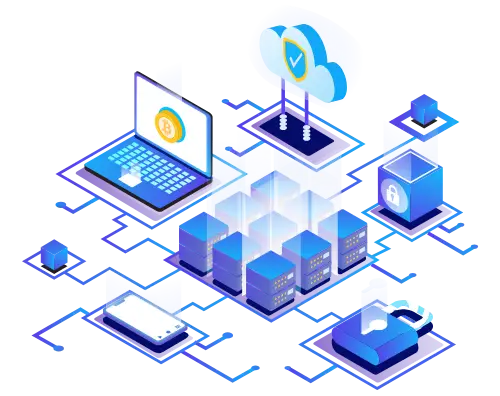
RWA tokenization (Real World Asset tokenization) is a subset of asset tokenization specifically focused on representing physical or traditionally illiquid assets, including property, bonds, private equity, infrastructure, and precious metals, as programmable blockchain tokens. RWA tokenization is distinct from pure crypto assets because it anchors token value to verifiable, off-chain economic value, making it a key bridge between traditional finance (TradFi) and decentralized finance (DeFi).
Market Opportunity
Traditional assets are illiquid, geographically restricted, and accessible only to institutional players. RWA tokenization changes all of that permanently.
Join the tokenization revolution. Launch your compliant, secure asset tokenization platform with proven experts..
Asset Classes
Any asset with measurable, verifiable value can be tokenized. Here are the asset classes our platform supports, with fractional ownership, on-chain settlement, and global market access.
Transforming real estate with blockchain technology. Our platform streamlines property sales, payments, and investment opportunities, making real estate more accessible and efficient with fractional ownership starting from as low as $100.
Physically backed gold and silver tokens with custodian verification enabling digital ownership of precious metals with instant transferability.
High-value artworks divided into accessible fractional shares, opening the $65B global art market to retail investors for the first time.
Tokenize fund shares and LP interests, enabling secondary liquidity for traditionally locked-up private market investments.
Oil, agricultural products, rare earth minerals are tokenized with real-time price feeds and on-chain settlement for global commodity trading.
Fine watches, wine collections, classic cars, and rare items tokenized for fractional ownership and authenticated provenance tracking.
Beyond art, NFTs are revolutionizing the protection and investment in luxury goods and intellectual property. Our platform offers a secure way to tokenize and trade patents, trademarks, copyrights, and royalty streams.
Government and corporate bonds are tokenized for programmable interest payments, faster settlement, and global access for retail investors.
Toll roads, energy projects, and public infrastructure are tokenized to democratize access to stable, long-term infrastructure returns.
Empowering the gaming world by tokenizing in-game characters, assets, and currencies. Players gain actual ownership and value through our innovative platform with true digital asset ownership.
Mining rights and operational shares are tokenized, enabling fractional investment in mineral extraction projects worldwide.
Racehorse ownership is fractionally distributed via tokens, enabling shared investment in bloodstock with transparent earnings distribution.
Effortlessly create and issue digital tokens representing various assets, enhancing liquidity and ownership flexibility in the market.
Showcase and list your tokens on multiple exchanges to boost visibility and facilitate seamless trading for investors.
Seamlessly integrate assets into your platform, ensuring smooth management and operational efficiency across all asset classes.
Leverage our expertise to build asset management solutions that provide comprehensive control and oversight, enhancing the efficiency and security of your investment operations.
Key Concepts
Tokenization and fractionalization are attracting growing attention. Fractional ownership refers to the possession of a part or fraction of an asset that can be subdivided and sold to several buyers. The tokenization process involves converting an asset's proprietorship into a digital token suitable for transacting on a blockchain network.
| Aspect | Tokenization | Fractional Ownership |
|---|---|---|
| Definition | Creating digital tokens on a blockchain that represent ownership of an asset. | Dividing ownership of an asset into smaller shares. |
| Technology | Utilizes blockchain technology for security and efficiency. | Does not necessarily involve technology; it can be traditional or digital. |
| Representation | Digital tokens representing ownership (e.g., NFTs, security tokens). | Physical or digital shares represent a portion of the asset. |
| Fractional Ownership | Tokens often represent fractional ownership of an asset. | Directly involves fractional ownership by splitting the asset. |
| Liquidity | Potentially higher liquidity due to trading on digital platforms. | Liquidity varies; it may be less liquid depending on the asset and market. |
| Accessibility | Can make high-value assets more accessible to a broader audience. | It can provide access to assets by dividing them into smaller ownership shares. |
| Transferability | Tokens can be easily transferred between parties via blockchain. | Transferability depends on the asset type and legal structure. |
| Regulation | Subject to evolving regulatory frameworks, particularly in blockchain and digital assets. | Subject to traditional regulatory frameworks and legal structures. |
| Transparency | High transparency due to the immutable nature of blockchain records. | Transparency depends on the management and record-keeping of fractional ownership arrangements. |
Supported Networks
The right blockchain for your tokenization project depends on your asset class, regulatory requirements, transaction volume, and liquidity strategy. We support all major networks.
Most widely used. Supports ERC-20, ERC-721, ERC-1400, ERC-3643 (T-REX) for security tokens.
Low fees, fast finality. Ideal for high-volume retail tokenization with Ethereum compatibility.
Ultra-high throughput with minimal transaction costs. Best for high-frequency tokenized trading.
Subnet customization enables private, compliance-focused chains for regulated asset tokenization.
Cost-effective BEP-20 tokens. Popular for emerging market tokenization and DeFi integration.
Enterprise/private permissioned blockchain. Ideal for institutional tokenization with strict access controls.
Which Model Fits You?
Both paths deliver a working tokenization platform, but they serve different timelines, budgets, and business goals.
• Built from scratch to your exact specifications
• Proprietary token logic and compliance rules
• Full flexibility across any asset class and blockchain
• Custom UI/UX designed for your investor audience
• Deep integration with your legal and operational systems
• Best for: institutional firms, multi-asset platforms, enterprises
• Timeline: 12–24 weeks
• Cost: $30,000 – $60,000+
• Pre-built core engine launch in weeks, not months
• Full branding, color, and UI customization
• Multi-asset and multi-blockchain support out of the box
• KYC/AML and compliance modules pre-integrated
• Secondary market and investor dashboard included
• Best for: startups, property developers, fund managers
• Timeline: 4–8 weeks
• Cost: $15,000 – $30,000
Book a free 30-minute consultation with our asset tokenization specialists. We'll assess your asset class, advise on token structure, and give you a clear development roadmap at no cost.
Asset tokenization platforms typically consist of several core modules facilitating tokenized asset creation, management, and trading. Here’s an overview of the critical modules commonly found in such platforms:
Users can explore fractional ownership across diverse assets. With their accounts, they access rich, detailed listings showcasing every asset's names and images, in-depth descriptions, pricing information, and specifics on token availability.
Discover a variety of assets and explore detailed information to make informed investment decisions.
Buy and sell tokens within our marketplace, allowing you to adjust your investments as you see fit.
Purchase tokens through our streamlined payment system using BTCPayServer, PayU, Cashfree, CC Avenue, and Axis MPGS and manage them securely in your custodial wallet provided by us.
Benefit from rental income distributed to the user in wrapped Bitcoin, a seamless way to see returns from your investments.
Admin is crucial to the platform’s success, ensuring everything operates smoothly and efficiently.
Oversee user accounts, helping them navigate their investments and resolving any issues they might encounter.
Ensure that all asset listings are accurate, up-to-date, and reflect the current market. Admin’s attention to detail helps users make informed decisions.
Manage platform transactions, from token purchases to sales, ensuring all operations are secure and seamless.
Handle the calculation and distribution of tokens and ensure timely payouts to token holders.
Keep platform content current, including FAQs, terms and conditions, and privacy policies, to maintain transparency and compliance.
Address any technical or operational issues, working to create a secure, efficient, and user-friendly environment for all participants.
Allows Uber for tow truck service providers to create their profile on the app.
Allows service providers to accept or decline a request from customers.
With integrated maps and optimized routes, service providers reach the location in time.
Enables service providers to view their earnings and keep track of payment history.
Helps service providers to easily browse, accept, and reject service requests.
In-built maps helps track the exact location of the vehicle and the mechanic.
This feature helps receive alerts about the latest service requests.
Allows service providers to update their status like on the way, arrived, job done.
Helps in the proper management of the mechanic profiles along with their expertise.
Enables mechanics to accept or reject service requests as per their availability.
GPS integration helps mechanics correctly navigate the customer’s location.
Helps maintain a complete history of jobs performed by the mechanic.
Helps mechanics to set their availability while scheduling their availability for new jobs.
Helps in tracking their earnings on a daily, weekly, and monthly basis.
Offers access to mechanics related to guides, manuals, and other resources apt for jobs.
Mechanics view the reviews provided by customers to improve their services.
Why Tokenize
Asset tokenization development is reshaping the investment landscape, offering a range of benefits that enhance efficiency, transparency, and accessibility. Explore how tokenization can transform your investment strategy:
Tokenization automates various aspects of asset management, significantly reducing administrative and transaction costs. By leveraging smart contracts and blockchain technology, users can streamline compliance, transfer of ownership, and record-keeping processes.
With Asset Tokenization Platform Development, every transaction on a blockchain provides a transparent and immutable ledger. This transparency ensures that all stakeholders have access to accurate and real-time information, enhancing trust and accountability.
Tokenization democratizes access to high-value assets by allowing fractional ownership. Whether real estate, fine art, or technology, tokenization breaks down financial barriers and opens investment opportunities to a diverse audience.
Investors can interact with assets through voting rights, governance tokens, or access to exclusive benefits and services. This added layer of engagement enriches the investment experience and aligns investor interests with the asset's performance and success.
Tokenization improves the liquidity of traditionally illiquid assets by enabling fractional ownership and easier transferability. This increased liquidity allows for more efficient trading and asset management. Investors benefit from quicker transactions and the ability to buy or sell shares of assets quickly.
Asset Tokenization allows investors to diversify their portfolios by investing in various asset types and classes. By breaking down assets into tradable tokens, investors can spread their investments across different sectors and asset categories.
Blockchain-based tokenization enables investors from anywhere in the world to participate in asset markets, removing geographical barriers and expanding the investor base.
Blockchain technology enables near-instant settlement of transactions, reducing settlement times from days to minutes and improving capital efficiency.
Smart contracts enable automated dividend distribution, compliance checks, and governance mechanisms, reducing administrative overhead and human error.
Step-by-Step Process
Here is the full lifecycle of asset tokenization development from asset identification through to secondary market trading.
We identify the asset to be tokenized, such as real estate, art, commodities, or intellectual property. We analyze market demand and potential for the tokenized asset and examine legal and regulatory requirements for tokenization in relevant jurisdictions.
As professionals in the blockchain and legal fields, we understand the importance of developing a legal framework to ensure the token complies with regulations. This includes securities laws, AML/KYC requirements, and preparation of necessary legal documents, including offering memorandums and investor agreements.
Define the token's characteristics, including type (e.g., fungible, non-fungible), rights, and governance features. Develop and deploy smart contracts to manage token issuance, transfers, and other functions. Select a blockchain platform (such as Ethereum, Polygon, or Binance Smart Chain) and create tokens.
Create and mint the tokens according to the predefined specifications. This involves the actual generation of the tokens and their distribution to investors or stakeholders as per the issuance plan. If applicable, facilitate trading by listing tokens on exchanges or trading platforms.
Ensure continuous adherence to regulatory requirements and manage compliance. Maintain communication with token holders, provide updates, and handle inquiries. Oversee the day-to-day operations related to the token and its associated smart contracts.
Develop secondary markets or collaborate with existing ones to establish platforms for buying and selling tokens. Ensure a sufficient volume of assets and funds are available to support trading activities and price discovery.
Conduct audits of smart contracts, transactions, and compliance to ensure integrity and security. Provide transparent reports on token performance, financial status, and regulatory compliance to stakeholders.
Implement updates or enhancements to smart contracts or token features as needed. Manage processes such as token burning (the permanent removal of tokens from circulation), minting (the creation of new tokens), or other lifecycle events.
Technology
Asset Tokenization App Development requires a comprehensive tech stack that ensures the platform's efficiency, scalability, and security. Here's a look at the critical components of the tech stack:
Ethereum
Bitcoin
Hyperledger
Multichain
Quorum
Solana
Solidity
Golang
C++
C
.NET
JAVA
Python
PHP
Swift
Kafka
Vanilla JS
Node JS
Express JS
Docker
Zookeeper
Truffle
MIST
WEB3 JS
Angular JS
React
Simplicity
IPFS
MongoDB
Couch DB
AWS
IBM Bluemix
ETH BaaS
Why Us
Not all blockchain development firms understand the regulatory, financial, and technical complexity of real-world asset tokenization.
Years of hands-on experience in asset tokenization platform development across real estate, commodities, art, and private equity, not just theoretical blockchain knowledge.
We build compliance in from the start, not as an afterthought. KYC/AML onboarding, security token standards (ERC-1400, ERC-3643), and jurisdiction-specific regulatory mapping are core to every project.
Every smart contract we deploy undergoes independent security auditing before going live. For tokenized assets managing real capital, this is non-negotiable, and we treat it that way.
Ethereum, Polygon, Solana, Avalanche, and Hyperledger, we build on the blockchain that fits your asset class and compliance needs, not the one we're most comfortable with.
Whether you need a fast white-label deployment or a fully custom multi-asset tokenization platform, we deliver both with complete flexibility in features, UI, and legal framework integration.
We don't just tokenize assets; we build the liquidity layer. Our secondary market development capability gives your investors the exit options that make tokenization genuinely valuable.
Agile development with weekly build reviews, sprint-based delivery, and complete development transparency, keeping your project on schedule and on budget from kickoff to launch.
We design asset tokenization platforms that are capable of handling high-value assets, large investor volumes, and complex ownership structures without compromising performance or security.
Regulatory environments evolve. Markets shift. We provide ongoing smart contract maintenance, compliance updates, feature additions, and 24/7 technical support to keep your platform competitive.
Client Stories
An asset tokenization platform is a blockchain-based system that converts real-world assets into digital tokens. It allows businesses to create, manage, and distribute tokenized assets securely while giving investors transparent ownership and easier access to investments.
The development timeline depends on the features, compliance requirements, and level of customization. A basic platform can be developed within a few weeks, while a fully customized solution with advanced security and multi-chain support may take longer.
The cost of a blockchain-based asset tokenization platform varies depending on factors such as complexity, features, the development team's expertise, and regulatory compliance requirements. The cost of building an asset tokenization platform ranges between $15,000 and $60,000 for standard solutions.
Industries such as real estate, finance, private equity, commodities, and digital assets benefit the most from tokenization. These sectors use tokenization to improve liquidity, reduce investment barriers, and simplify ownership management.
Asset tokenization platforms use blockchain technology, smart contracts, and encryption-based security systems to protect ownership data and transactions. This makes the platform more transparent and secure compared to traditional asset management systems.
Yes, asset tokenization is not limited to large enterprises. Startups and small businesses can use tokenization to raise capital, offer fractional ownership, and attract global investors without complex financial structures.
Popular blockchain networks used for asset tokenization include Ethereum, Polygon, and other scalable networks that support smart contracts and secure token creation. The choice depends on transaction costs, scalability, and platform requirements.
Yes, tokenization allows assets to be divided into smaller digital shares. This enables investors to purchase fractional ownership rather than the entire asset, making high-value investments more accessible.
A white-label platform provides a ready-to-use solution with built-in features, including token creation, investor management, and compliance support. This helps businesses launch faster, reduce development costs, and focus on growing their platform.
Fret Not! We have Something to Offer.