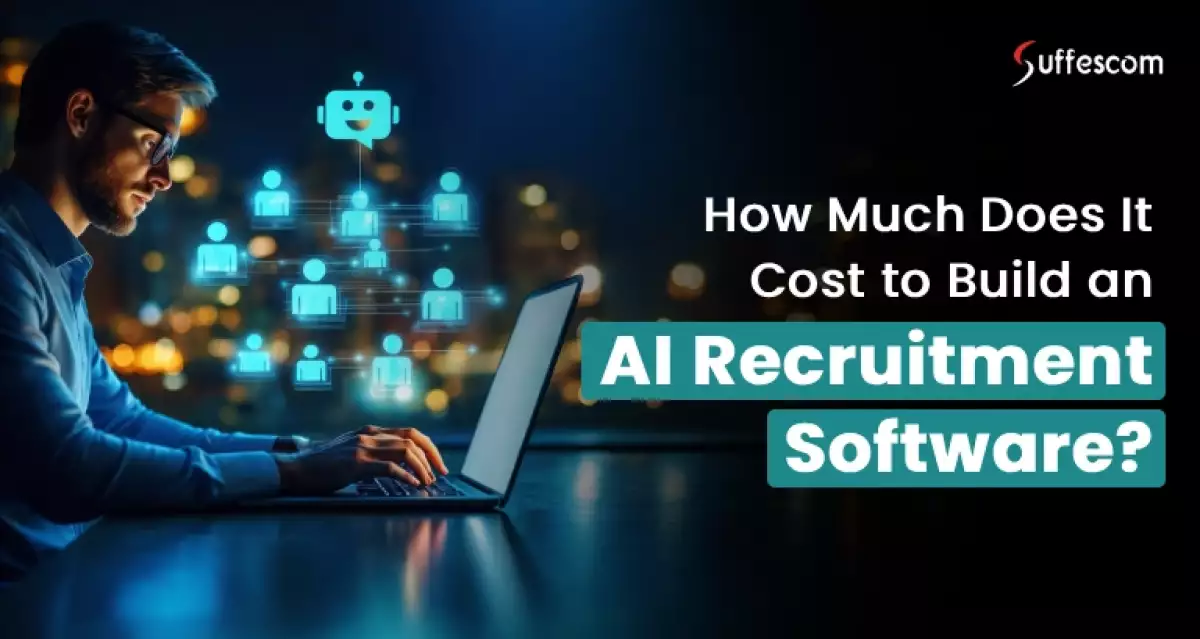
Hiring the right talent has always been challenging, but today speed, accuracy & scalability matter more than ever. Traditional recruitment methods simply can not keep up with the volume of applications or the demand for better candidate matching. That's why forward-thinking businesses are turning to AI-powered recruitment software to transform how they attract, screen & hire talent.
Amid all this, the question arises: What does it actually cost to build an AI recruitment solution that delivers measurable ROI? The answer is not one-size-fits-all.
From basic screening tools to fully automated, enterprise-grade AI recruitment software, the development cost varies depending on several factors. Thus, before making an investment, it's important to understand the cost structure.
So, stay tuned with Suffescom experts to explore the estimated development cost of AI recruitment systems!
Get an AI Recruiting Software Development Cost Estimation from Experts!
Cost Estimation of AI-Powered Recruitment Software
Before building an AI recruitment software, it is important to get a basic idea about its cost. The total cost depends on how advanced your system is. It means that if you want an AI recurring agent to handle basic tasks, you should invest in basic-level AI hiring systems.
However, if you want a system that performs more than basic AI tasks, you must go with middle-level AI hiring software. Also, if you want a perfect enterprise-grade AI Recruiting system, you must choose an advanced system.
Let's break down the costs as per the different levels of AI Recruiting software development:
Basic (MVP – Minimum Viable Product)
The cost to build a basic-level or MVP AI recruiting software ranges from $10,000 to $15,000. It takes 3 to 6 months for completion. Under this level of development, clients enjoy the following features:
- Resume parsing
- Basic candidate filtering
- Simple dashboard
Pro Tip: An ideal choice for startups or companies that want to test an idea before launching.
Mid-Level (Advanced Solution)
Mid-level or advanced AI recruiting tool development costs lie between $15000 to $25000. These systems take 6 to 9 months to complete or deploy. What features does this level of hiring systems bring for you?
- AI-based candidate matching
- Chatbots for communication
- Interview scheduling automation
- Analytics dashboard
Pro Tip: Growing organizations must invest in these solutions for better hiring efficiency.
Enterprise-Level Software
If you are running a large organization or enterprise-grade business, you must invest in enterprise-level recruiting software. Although these systems require significant investments of $25,000 to $40,000+ and 8 to 14+ months for development, they provide complete automation for hiring & other HR tasks. Below are the main features that the system brings to streamline hiring processes and overcome the burden of the HR department:
- Predictive hiring analytics
- Video interview analysis
- Advanced AI models
- Deep integrations (ATS, HRMS, job boards)
Pro Tip: Building such AI bots is the perfect choice for large companies with complex hiring needs, including interview scheduling, etc.
A Quick Disclaimer: According to industry data, enterprise platforms with predictive analytics and deep integrations can exceed $40,000 as per your business needs.
Top Factors That Affect the Cost of Recruitment Software
It is noticeable that creating hiring software, especially AI-powered, does not have a fixed price. An AI-enriched staffing software development cost varies widely because several factors, including technical, business & operational factors, come into play. Let's have a look at the top-notch factors that often affect the cost of recruitment software.
Scope of the Software (MVP vs Advanced vs Enterprise)
This is the biggest cost driver. The chosen level of development of the recruitment agent has a huge impact on the cost of AI-powered recruiting software:
| A Basic ATS or MVP | A Mid-level System | An Enterprise Platform |
|
|
|
Overall, the broader the scope, the higher the cost because more features = more development time as well as resources.
AI Complexity & Intelligence Level
AI has become the backbone of modern recruitment software, but not all AI is the same. The intelligence level you want in your system also plays a major role in determining the overall budget.
Basic AI: The system helps to match keywords or offer rule-based filtering. They only:
- Scan resumes
- Match job descriptions (based on predefined rules)
Moderate AI: These are the advanced versions of the basic level that provide ML-based ranking. They perform:
- AI-based candidate matching
- Automation workflows
Advanced AI: These are the enterprise-grade systems that are far more complex than others. These are trained on cutting-edge technologies, including:
- Natural Language Processing (NLP) to understand resumes
- Machine learning to improve candidate ranking over time
- Video analysis to evaluate communication skills during interviews
Overall, building such intelligent systems requires high-quality data, model training & continuous optimization. This increases both development as well as infrastructure costs. The smarter your AI, the more investment it requires.
Integrations with Existing Systems (ATS, HRMS, APIs)
Recruitment tools rarely work alone. Modern businesses often require a system to connect with other tools they already use. These tools consist of:
- HRMS systems: Help manage employee data seamlessly.
- Job portals (LinkedIn, Indeed): It allows automatic candidate sourcing.
- Video interview or calendar platforms: Help to improve scheduling efficiency.
- CRM tools: Track interactions & streamline communication throughout the hiring process.
As a result, each integration requires API development, testing, as well as ongoing maintenance that influence the budget as:
- API development cost
- Testing cost
- Maintenance complexity
Highly integrated systems cost significantly more to build as well as scale.
Data Availability, Quality & Training Requirements
AI recruitment software depends heavily on data. The quality, structure, along with data availability significantly influence the performance & cost. If your data is already clean & structured, it streamlines the development process.
However, in most real-world cases, data is unorganized, incomplete, or inconsistent. This needs additional effort in data cleaning, labeling, as well as preparation. For AI systems, especially those using machine learning, large volumes of high-quality data are needed for training. In some cases, companies even need domain experts to manually label data.
All these processes require time, tools & expertise, which increase the overall AI-powered recruiting software. Even data preparation alone can consume:
- 15–25% of the total cost in some projects
- Poor data = more rework = higher cost
Development Team and Expertise
Your team structure directly impacts pricing. The cost of developing recruitment software also varies as per your selection of development team you hire. Here, people often make mistakes when saving for expenses.
A team consisting of junior developers may decrease costs, but may lack the ability to deliver the qualitative results that experienced AI engineers do. Advanced hiring platforms often require specialists who are skilled in delivering authentic results. It includes:
- Machine learning engineers
- Backend developers
- NLP experts
- UI/UX designers
Your team structure directly impacts pricing:
- Junior developers → lower cost
- Senior AI engineers → higher cost
- Specialists (NLP, ML, CV) → premium cost
Besides this, your team's development location also matters. For instance, hiring engineers in regions such as Europe or North America is generally more expensive than in nations like India. Thus, it's obvious that your budget will fluctuate based on:
- In-house teams
- Freelancers
- Outsourcing agencies
Last but not least, even though highly skilled professionals demand higher salaries, they also make sure better performance, along with scalability.
User Interface (UI) & User Experience (UX)
Recruitment software is used daily by HR teams, so UX matters. It must not be visually appealing, but also easy to use. A simple, as well as basic interface, may cost less, but it may not provide a smooth user experience.
Modern recruitment platforms often consist of:
- Dashboards
- Analytics charts
- Drag-and-drop features
- Role-based access controls
Designing hiring software with these capabilities requires careful planning, prototyping, along with testing. A well-designed UI/UX not only improves productivity & user satisfaction, but also increases the AI EMS software development cost due to the extra design as well as testing effort involved.
Feature Set & Functional Depth
You may already know that more features = higher cost. The number and complexity of features play a significant role in determining the cost of hiring a recruitment agent. It means the more advanced functionality you add, the more time & effort it takes to develop the system.
| Basic Features | Advanced Features |
| Resume uploads | AI-based screening |
| Job postings | Analytics dashboards |
| Candidate tracking | Automated interview scheduling |
| Interview Scheduling | AI Chatbots |
Each feature comes with backend logic, frontend design, and testing. This leads to additions to the development budget and an expanded time frame, especially when involving AI or automation. This is why feature planning should always be done carefully to balance cost & functionality.
Infrastructure and Cloud Costs
AI recruitment tools need a strong infrastructure, including:
- Servers
- Databases
- Storage
- Computing power
- Cloud hosting (AWS, Azure, GCP)
- AI processing power (GPUs)
If your platform uses AI features like real-time resume parsing or video analysis, it will require more processing power, which increases cloud costs. These are not one-time expenses; they continue as long as the system is running.
Furthermore, scalable infrastructure is also important if you expect your platform to handle a large number of users or candidates. Building such systems requires advanced architecture, which further increases development costs.
Security, Compliance & Data Privacy
Security is a critical factor to handle sensitive information, such as:
- Personal details
- Resumes
- Interview recordings
To protect data, developers implement encryption, secure authentication systems, along with access controls. In addition, companies comply with data protection regulations such as the GDPR & local privacy laws. Here, Compliance adds both:
- Development cost
- Legal cost
Last but not least, compliance requires both technical & legal efforts, which increases the overall AI recruiting tool development cost.
Maintenance, Updates & Model Optimization
Building the software is only the first step. After launch, ongoing maintenance is required to keep the system running smoothly. Most people underestimate the following:
- Bug fixes
- Feature updates
- AI model retraining
- Performance optimization
AI systems, in particular, need continuous updates to stay accurate as well as relevant. Thus, maintenance is a long-term cost that businesses must plan for, as it ensures the software remains effective over time.
Development Timeline
Time = money. Development times also affect the cost of recruitment software. If you want to complete your project quickly before the decided timeline. It may be necessary to hire more developers or to work in parallel teams. This directly leads to the increased expenses.
On the other hand, a longer timeline not only permits slow development but also may overcome immediate costs, plus may delay your go-to-market strategy.
Last but not least, time & cost are closely connected, so businesses need to find the right balance based on their goals.
Customization & Business-Specific Requirements
Every organization has unique hiring workflows. Thus, they require custom workflows or reporting systems, including:
- Industry-specific filters
- Custom dashboards
- Internal workflows
It is important to understand that custom-built solutions are more expensive than generic ones. They need additional development & testing, but they offer better alignment with business needs.
As a result, keep in mind that the more customized your recruitment software is, the higher the cost will be.
Scalability & Future Growth Planning
If your system needs to scale, your recruitment agent must be deemed capable of tackling persistent growth. This consists of:
- Multi-country hiring
- Thousands of candidates
- High traffic
Building such systems requires:
- Better architecture
- Scalable databases
- Load balancing
Creating such systems directly has a huge impact on the overall development cost of hiring an agent. However, it helps avoid major expenses in the future when your business expands.
Pricing Model (Build vs Buy Decision)
Another important factor is whether you choose to build custom software or use an existing SaaS solution. SaaS systems require a subscription fee but have lower upfront costs. SaaS pricing examples:
- $99–$699/user/month
- $10K–$60K/year enterprise
However, custom software requires a higher initial investment but gives full control along with flexibility. This decision impacts both short-term as well as long-term costs, so businesses must evaluate their priorities carefully.
Hidden Costs Often Overlooked
Many businesses underestimate hidden costs, which can significantly increase the total budget. These include:
These may include:
- Data migration
- Training HR teams
- Licensing fees
- Third-party APIs
- Testing & QA cycles
These can add 20%+ extra cost beyond initial estimates. Ignoring these costs can lead to budget overruns, so it is important to plan for them from the beginning.
Request a Tailored Cost Breakdown for Your AI Hiring Platform!
Detailed Cost Breakdown: Where Does Your Budget Actually Go?
There are various components that play different roles in building a robust & efficient recruitment system. When drafting an AI recruitment software budget, companies often consider only the total cost. But knowing the exact spending on various components will hugely help you to make better investment choices.
Let's understand where your money actually goes:
AI Development (25–35% of the total budget)
This is the main part of your recruitment software and usually accounts for the largest part of the budget. AI development means creating smart systems that can identify which candidates fit the job roles & make automatic decisions. Depending on what you want, this indulges:
- Resume parsing and keyword extraction
- Machine learning models for candidate ranking
- Natural Language Processing (NLP) for understanding resumes
- Continuous model training & optimization
The price gets higher as your system gets smarter. For example, a rules-based computer system costs less, whereas sophisticated AI models that learn & improve over time require more money.
Backend Development (20–30%)
The backend acts as the foundation of your software. It handles all the core logic, data processing, and system functionality. This includes:
- Database management
- Server-side logic
- API development
- User authentication and access control
A strong backend makes sure the system runs smoothly, handles large volumes of data, plus remains scalable as your hiring needs grow.
Frontend / UI Development (10–20%)
This is the first screen panel that users interact with. A clean, intuitive UI is critical for recruitment platforms, as HR teams rely on it every day. Frontend development covers:
- Dashboards for recruiters
- Candidate management interfaces
- Analytics and reporting visuals
- Responsive design for different devices
A simple interface costs less, but advanced dashboards with interactive features and a smooth user experience require more time and investment.
Integrations (10–15%)
Modern recruitment software does not work alone. It needs to connect with various third-party tools and platforms to function efficiently. Common integrations include:
- Job portals for candidate sourcing
- HRMS systems for employee data
- Calendar tools for interview scheduling
- CRM systems for candidate communication
Each integration involves API development, testing, along with maintenance, which adds to the overall cost, especially if multiple systems are involved.
Testing and Quality Assurance (10–15%)
Here, the team evaluates whether the software works as expected before launch or need recheck. Skipping it risks serious problems down the line. This stage includes:
- Functional testing
- Performance testing
- Security testing
- Fine-tuning
- Bug fixing & optimization
For AI systems, you must verify prediction accuracy as well as output reliability, which adds complexity to the process.
Cloud Setup & Infrastructure (10–20%)
AI recruitment tools require a reliable infrastructure to store data, run models, plus support users. This consists of:
- Cloud hosting (AWS, Azure, or GCP)
- Databases & storage systems
- Computing power for AI processing (including GPUs)
- Scalability setup for handling growth
Unlike development costs, infrastructure is often an ongoing expense. The more advanced your AI features (like real-time processing or video analysis), the higher your cloud costs will be.
Why Choose Suffescom for AI Recruiting Tool Development Solutions?
As the leading AI recruitment software development agency, we always strive to offer the best development solutions for hiring tools at the best prices. We believe in transparency, the main pillar of any relationship. Look at why you should join hands with us:
- Cost-First Development Approach: We do not just build software; we help you optimize every dollar. Our team of experienced developers suggests only those features that deliver real hiring value, avoiding unnecessary development costs.
- Hiring-Focused AI, Not Just Generic AI: Our solutions are designed specifically for recruitment challenges such as candidate drop-offs, poor matching & slow hiring cycles, not just general automation.
- Faster ROI with Smart Feature Planning: We prioritize features that start delivering results early, so you do not have to wait months to see value from your investment.
- Built for Real Hiring Workflows: We design systems around how recruiters actually work, so your team does not need extensive training or major process changes.
- Flexible Engagement Models: Whether you want to start small or go all-in, we confer flexible development plans that align with your budget, timeline, as well as business goals.
- Data-Driven Decision Support: Our AI systems do not just automate tasks. They help you make better hiring decisions with actionable insights & analytics.
- Focus on Adoption, Not Just Delivery: We make sure your HR team actually uses & benefits from the system, not just deploys it. That means better usability as well as practical implementation.
- Transparent Communication & No Hidden Surprises: From cost estimation to delivery timelines, our professionals keep everything clear. This helps you always know what you are paying for and why.
Book a 30-Minute AI Hiring Strategy Session with Experts!
Frequently Asked Questions
How much does it cost to build AI recruitment software?
The AI recruiting Tool development cost starts at $ 5,000 and can go up to $40,000+ based on your business requirements, level of complexity, cutting-edge features, and integration.
What is the minimum cost to develop an AI hiring system?
A basic MVP (Minimum Viable Product) can cost around $5,000 to $10,000. It offers essential features such as candidate filtering, etc.
Why does the cost of AI recruitment software vary so much?
Costs vary based on several factors, such as:
- AI complexity
- Feature set
- Integrations
- Development team
- Infrastructure requirements
How long does it take to build AI recruitment software?
Development time may fluctuate depending on your requirements. Generally, the system takes from 3 to 12+ months from completion.
What features increase the cost the most?
The following are the main features that have a huge impact on the cost of buying an AI hiring software:
- AI-based candidate matching
- Predictive analytics
- Video interview analysis
- Automation workflows
Is it cheaper to build or buy recruitment software?
Buying (SaaS) has lower upfront costs but recurring fees. However, building custom software requires a higher initial investment but offers greater control along with long-term savings.
What is the cost of AI integration in recruitment software?
AI integration alone can cost between $3,000 to $15,000+, depending on the level of intelligence as well as data processing requirements.
What are the hidden costs in AI recruitment software development?
The following are hidden costs people often overlook, which add 20%+ to the total budget.
- Data preparation
- API usage
- Third-party tools
- Training
- Testing
How does AI complexity affect development cost?
Simple rule-based AI is cheaper. But machine learning & NLP-based systems require more data, training, along with infrastructure, increasing costs.
How much does it cost to maintain AI recruitment software?
Maintenance typically costs 15–20% of the total development cost annually. This consists of updates, bug fixes & AI model improvements.
Does cloud infrastructure add to the cost?
Absolutely! Cloud costs may range from $500 to $5,000 per month. It also varies as per the usage, storage, plus AI processing requirements.
What is the cost difference between MVP & enterprise solutions?
MVPs cost around $5K–$10K, while enterprise solutions can go beyond $25K–$40K+ due to advanced features & integrations.
Do integrations increase the development cost?
Absolutely! The integration of tools like HRMS, job portals, as well as CRM systems results in high costs due to API development, along with maintenance requirements.
Is AI recruitment software a one-time investment?
Your system needs to be updated to meet business demands. Thus, you need to invest in ongoing costs such as maintenance, cloud hosting & AI model updates.
What factors should I consider before budgeting?
You should keep the following factors in mind while planning to invest in AI hiring software:
- AI level
- Integrations
- Team expertise
- Timeline
- Scalability requirements
Can I reduce the cost of building AI recruitment software?
By starting with an MVP, using pre-built APIs, limiting features initially, as well as outsourcing development wisely.
What industries benefit the most from AI recruitment software?
Industries with high hiring needs, such as IT, healthcare, and e-commerce, along with staffing agencies, benefit most.
Is AI recruitment software worth the investment?
Of course! It helps reduce hiring time, improve candidate quality, along with automate repetitive tasks, delivering strong long-term ROI.