+971-8000321216



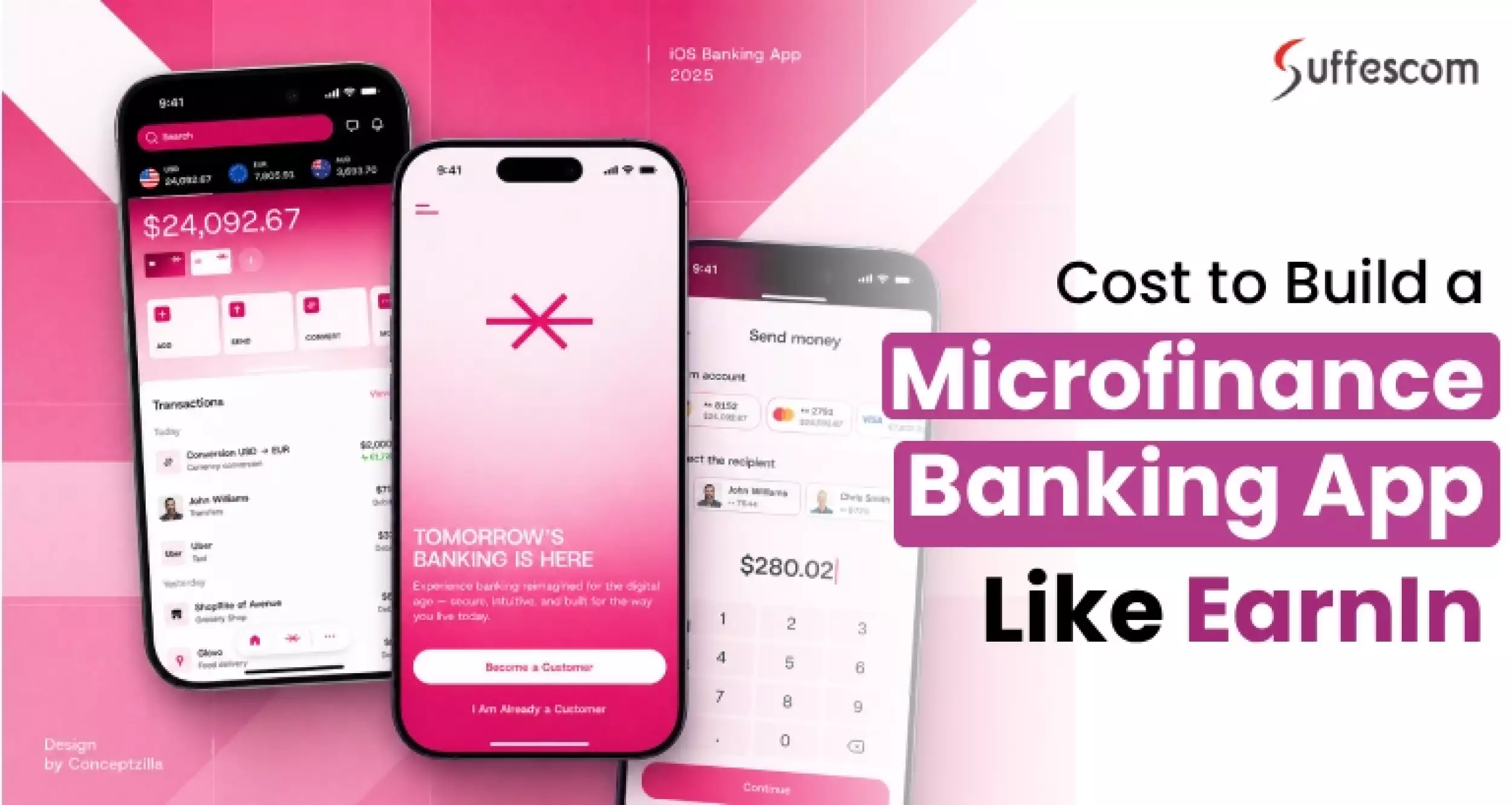
Building a microfinance or earned wage access app like EarnIn costs between $20,000 to $60,000 for the initial build. If you start with an MVP containing only core features, you can expect your investment cost to build microfinance app to be between $20k and $35k. Depending on the type of MVP you demand.
| Tier | Price Range (USD) | Focus & Deliverables |
| MVP (Core Engine) | $20,000 – $30,000+ | Focuses on the "Happy Path": Bank linking (Plaid), a single "Cash Out" feature, and basic identity verification. UI is kept simple using standard components. |
| Mid-Tier (Market Ready) | $30,000 – $45,000+ | Adds automation. Includes real-time notifications, automated fraud flags, a basic admin dashboard to manage users, and faster payment processing. |
| Enterprise (Full Suite) | $45,000 – $60,000+ | The most robust version. Includes multi-factor authentication, advanced data encryption, a refined custom UI/UX, and the infrastructure to handle high traffic. |
Build Your EarnIn-Like App Today
Get a precise cost estimate and feature roadmap for your idea
Microfinance Banking App Development Cost Allocation
To deliver a complete tier build, the budget would be divided approximately as follows:
Backend & API Integration (40% | $8k to $24k+)
This is the app's brain. It handles the logic that calculates how much a user can borrow and communicates with the bank servers.
Mobile Frontend Development (30% | $6k to $18k+)
Using cross-platform tools like Flutter to build one codebase that works for both iOS and Android.
Security & Compliance (20% | $4k to $12k+)
Essential encryption, KYC integration, and secure data storage to ensure you are not a target for hackers.
QA & Project Management (10% | $2k to $6k+)
Testing the app for bugs and ensuring the payment logic never doubles up or fails during a transaction.
Factors Driving Cost to Build Microfinance App like EarnIn
Building a microfinance banking app like EarnIn involves navigating a high-stakes environment where money-in, money-out logic must be flawless.
The baseline entry has shifted towards automated risk assessment and real-time payment rails.
Mobile Platform Architecture
The choice of how you build the shell of the app significantly affects both the initial build and the long-term maintenance.
Native Development
Building separately for iOS and Android doubles the frontend cost but offers the best security and performance.
Cross-Platform
Using Flutter or React Native can save roughly 30% of the frontend budget, but may require custom bridges for high-security biometric features.
Backend Complexity & Feature Scope
The engine of an EarnIn like app development project is the most significant cost driver. Unlike a simple budgeting app, a microfinance platform must calculate real-time debt-to-income ratios and verify work hours.
Real-Time Earning Logic
Building the algorithms that calculate earned but unpaid wages based on GPS data or work-schedule integrations.
Payment Rail Integrations
Moving money via ACH is cheap but slow. Implementing same-day payday app development requires integrating with FedNow or RTP, which adds complexity and higher transactional fees.
Admin & Risk Dashboards
A robust backend to monitor liquidity, manual overrides, and repayment failures.
Security & Regulatory Compliance
Security is a legal requirement because you handle sensitive financial data (PII) and move funds.
KYC/AML Automation
Identify verification and anti-money laundering checks are mandatory. Services like Persona or Onfido cost $5,000 - $25,000 for setup plus per-user fees.
SOC 2 & PCI DSS Compliance
To partner with banks, you must prove your data is secure. Audits and implementation can add $25,000 to $50,000 to your initial cost estimate for microfinance app development.
Data Encryption
End-to-end encryption for bank credentials and transaction history.
Third-Party API Integrations
Modern fintech apps rent much of their infrastructure. While this lowers initial build time, but increases ongoing operational costs.
Bank Aggregators
Vital for linking user bank accounts to track income and expenses.
BaaS
Many startups use providers like Unit or Treasury Prime to handle the actual banking ledger, which can cost $3,000 - $10,000/month.
Credit Scoring
If your app includes credit-building features, you’ll need integrations with credit bureaus such as Experian or TransUnion.
Geolocation
The physical location of your engineering team is a major point for the overall cost estimation of microfinance app development. Fintech requires specialized knowledge of banking protocols and high-security data handling. The cost per hour varies significantly by local landscape and regional availability of senior-level developers.
Onshore Teams
These teams offer deep familiarity with local banking laws and payment rails, but require the highest financial investment.
Nearshore/Offshore Teams
These locations provide significant labor savings, allowing for a broader feature set with the same total development budget.
Domain Expertise
Specialized fintech engineers in any location command higher rates than generalists due to their banking security expertise.
Project Oversight
Global teams often require additional management resources to synchronize time zones and ensure precise communication of financial logic.
Liquidity & Capital Management
This involves the technical infrastructure required to manage the actual pool of cash you are advancing to users.
Predictive AI
Algorithms that forecast daily cash out volumes vs repayment cycles to ensure you never run out of float.
Cost of Capital
The technical backend must track the interest or fees you pay to your own lenders to ensure your margin remains positive.
Disbursement & Speed Logic
Users expect instant access, but the cost varies based on how that instant is achieved technically.
Instant Rails
Integrating with FedNow or RTP for sub-60-second transfer is more expensive than the standard 24-hour window.
Fallback Systems
You must build retry logic that automatically switches payment methods if one network goes down.
Collection & Recovery Engineering
Unlike a standard bank, an EarnIn like same day payday app development project must have aggressive, automated recovery tools.
Smart Scheduling
AI that sniffs the user’s bank account for a balance before triggering a repayment to avoid causing overdraft fees.
Partial Recovery
Logic that allows the system to collect smaller installments if the full repayment amount isn’t available on payday.
Post-Launch Maintenance & Scaling
Fintech apps are never finished. You must budget for the recurring technical overhead required to keep the app live.
DevOps & Hosting
High-availability cloud servers (AWS/Azure) that can handle thousands of simultaneous bank-sync requests.
Ongoing Audits
Budgeting for quarterly penetration testing and annual SOC 2 recertification is a mandatory recurring expense.
Navigating Compliance & Revenue In An EarnIn Clone
The most critical phase of EarnIn clone development is ensuring your revenue model aligns with the latest financial regulations. While the cost to build microfinance app solutions often focuses on UI, the real make-or-break factor is how you classify your advances. To successfully build an app like EarnIn, you must decide between a B2B employer-integrated model or a direct-to-consumer (D2C) approach.
Revenue Models for an EarnIn Like App Development
Modern platforms are moving away from mandatory interest toward more sustainable streams:
Subscription
Many users prefer a flat monthly membership. Factoring this into your EarnIn clone app development allows for predictable revenue while avoiding payday loan labels.
Instant Access Premiums
While standard transfers should be free, your EarnIn like same day payday app development, can charge a small convenience fee for sub-60-second disbursements via FedNow or RTP.
Merchant Interchange
Some EarnIn like app development projects now issue their own debit cards, earning revenue from merchant swipe fees rather than charging the user directly.
Compliance Factor in EarnIn Clone Development
States like California and Connecticut have strict rules on fee caps. A sophisticated EarnIn clone app development project must include geo-fencing logic that adjusts your fee structure automatically based on the user’s location.
This technical hurdle is a primary driver in the cost estimation of microfinance app development.
Furthermore, your EarnIn like same day payday app development must prioritize non-recourse logic. To remain legally an earned wage access tool rather than a loan, your EarnIn clone cannot technically require payment or report to credit bureaus if recovery fails.
Mastering this risk vs regulation balance is the hallmark of high-quality microfinance banking software development, ensuring your platform remains both profitable and protected.
Conclusion
Determining the microfinance banking app development cost requires balancing feature depth with regulatory precision. Whether you launch a lean MVP or a full EarnIn Clone, success hinges on mastering EarnIn like same day payday app development to provide instant liquidity. By focusing on a compliance-first strategy to build app like EarnIn, you ensure long-term scalability. Ultimately, the cost estimation of microfinance app development is an investment in financial empowerment. Mastering the development cost of microfinance app development today positions your platform as a leader in the fintech revolution.
Launch Your Microfinance App with Experts
Turn your fintech idea into a secure, scalable platform
FAQs
1. What is the average microfinance banking app development cost?
The initial microfinance banking app development cost typically ranges from $20k to $60k. An MVP starts around $20k, while a feature-rich enterprise solution with advanced AI risk assessment and real-time payment rails can exceed $60k.
2. How long does it take to build an EarnIn clone?
Developing a high-quality EarnIn clone usually takes 4 to 9 months. The timeline depends on the complexity of your EarnIn clone app development, especially the integration of real-time earning logic and multi-state regulatory compliance features.
3. Which payment rails are best for EarnIn like same day payday app development?
For an EarnIn like same day payday app development, integrating FedNow or RTP is essential for instant disbursements. While ACH is cheaper, these modern rails are the industry standard for providing sub-60-second liquidity to users.
4. What are the primary factors affecting the cost estimation of microfinance app development?
The cost estimation of microfinance app development is driven by backend complexity, security audits (SOC 2/PCI DSS), KYC/AML automation, and the geographic location of your team. Domain expertise in fintech also commands a premium but reduces long-term security risks.
5. Is it better to use Flutter or Native for the EarnIn clone development?
For most startups, EarnIn clone development using Flutter or React Native is recommended. It reduces the microfinance banking app development cost by nearly 30% by using a single codebase for both iOS and Android without sacrificing security.
6. How do EarnIn like app development projects ensure repayment?
Most EarnIn like app development projects use smart scheduling AI. This technology checks the user’s linked bank account to ensure a sufficient balance is available before triggering a repayment, significantly reducing NSF fees.
7. Do I need a banking license for microfinance banking software development?
Not necessarily. Most firms engaging in microfinance banking software development partner with a BaaS provider. This allows you to operate under their license. Though it adds a recurring monthly fee to your operational budget.
8. How does an EarnIn clone maintain regulatory compliance?
An EarnIn clone stays compliant by utilizing non-recourse logic, meaning the advance is not legally a loan. High-quality EarnIn clone development also includes geofencing to automatically adapt fee structures to specific state laws.